


This post may contain affiliate links. If you buy thru these links, we may earn a commission at no additional cost to you.
Want to find rare coins in your pocket change and make some real money in the process?

A lot of folks ask me what types of coins in circulation they should be looking for to make money.
It’s amazing to think how many coins are floating around in circulation right now that are worth many times over their face value. Some are even worth $50, $100, $500 or more!
Crazy, right?
Rare coins you should always look for in pocket change:
- 1914-D Lincoln cent
- 1922 Plain Lincoln cent
- 1955 Doubled Die Lincoln cent
- 1916-D Mercury dime
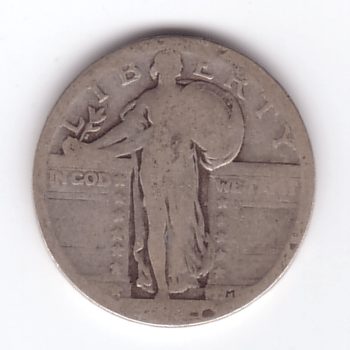
- 1916 Standing Liberty quarter
Other rare coins that are sometimes encountered in coin collecting:
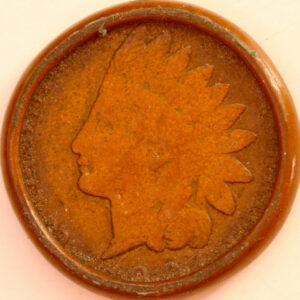
- 1877 Indian Head penny ($850-$8,500)
- 1909-S V.D.B. penny ($750-$4,500)
- 1916-D Mercury dime ($1,200-$35,000)
- 1916 Standing Liberty quarter ($4,500-$35,000)
Those are just a few of the rare US coins that you may find either in spare change or in estates!
See the top 9 rare coins that collectors go gaga over!
While I’ll never say finding these coins will be easy (it won’t be — trust me), I can tell you there are legitimate rare coins in circulation at this moment and all you’ve got to do is look for them.
Here’s how…
5 Best Ways To Find Rare Coins In Circulation
Here are my 5 detailed tips regarding the types of coins you should be looking for and how to find them in your spare change:
#1 – Look For Error Coins
Error coins are those that were made incorrectly by the U.S. Mint. The mistake is usually limited to just one, two, or a few coins that were struck incorrectly due to a mishap that took place at that exact moment on the coin press.
These are the types of error coins you’re most likely to find:
- Broad strikes
- Off-center strikes
- Indents
- Machine doubling and double strikes
- Clashed dies
- Clipped planchets
- Brockages
- Cuds
- Capped dies
- Off-metal strikes
- Blank coins
Some of these errors (such as off-center coins) are sometimes worth only a few dollars. Others (like off-metal errors) are typically worth hundreds and even thousands of dollars.
Check out our complete list of U.S. error coins… by denomination.
#2 – Watch For Coins With Die Varieties
Unlike an error coin (which is generally created either in the process of preparing planchets / coin blanks or when a die strikes a blank planchet), a coin with a die variety is one of many coins created in a row that contain the same design mistake.
Among the most popular types of die varieties are doubled die coins. And boy, do collectors like looking for these!
Unlike double-struck error coins, which are created when the blank planchet is struck multiple times by the die, a doubled die coin is made when the hub (a device that impresses an image upon a die) accidentally doubles part or all of the design on the die.
This doubling may become apparent if the die rotated during the creation process.
Examples of die varieties to look for:
- 1909-S “Horizontal S” Lincoln Cent
- 1937-D 3-Legged Buffalo Nickel
- 1982 No-P Roosevelt Dime
- 2004-D Wisconsin Quarter With Extra Leaf
- 1982 Kennedy Half Dollar No “FG” Designer Initials
- 1888-O “Hot Lips” Morgan Dollar
- 1955 Doubled Die Lincoln Cent
While you won’t necessarily find any of the older coin varieties listed above in pocket change, the pieces mentioned here will at least give you an idea as to the sheer number of coin design varieties that exist.
Many die varieties are worth many times over face value — such as the 1982 No-P Roosevelt dime. It’s one of the more valuable die varieties you are most likely to find in circulation, and it has a value of $100 or more!
Learn how coin errors & varieties are different.
#3 – Look For Old Coins
Most of the numismatic questions I receive concern the values of old coins and rare coins.
Let’s face it, old coins and rare coins usually get the most attention when it comes to the realm of valuable coins.
Numismatically untrained individuals may not realize how much value and true rarity lay behind some types of obscure modern die varieties or lesser-known error coins.
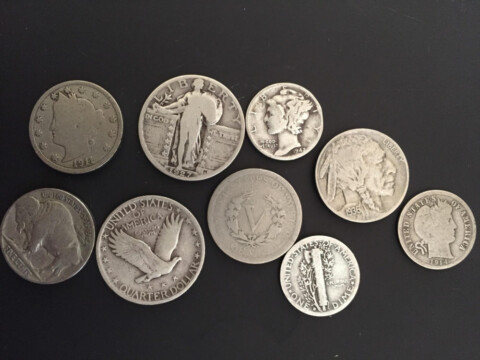
Yet, many who have little knowledge of coins from the collector perspective may think they’ve hit it rich if they land a 1941 Lincoln penny or a 1921 Morgan dollar — both old, yet very common coins.
It’s pretty natural (and forgivable) to think that the older a coin is, the more it’s worth. But that doesn’t always ring true in numismatics. You have to know which specific old coins are rare!
Listing all old, rare coins is unfeasible here — due to the sheer length of such a list. But below are links to our best articles, by denomination, that can help you see the really important old coins you should be looking for in your loose change.
These U.S. coins are worth much more than their face value:
- Most Valuable Pennies
- Most Valuable Nickels
- Most Valuable Dimes
- Most Valuable Quarters
- Most Valuable Half Dollars
- Most Valuable Silver Dollars
Some rare, old coins like the 1909-S VDB Lincoln cent are worth $750 to $4,500… or more.
One of the rarest old coins is the 1794 Flowing Hair dollar. The highest-graded specimen of that series became the most valuable coin sold for nearly a decade when it commanded more than $10 million at auction in 2013!
#4 – Watch For Silver Coins And Gold Coins
Conventional wisdom may tell you that you’ll never find silver coins or gold coins in pocket change.
While it’s true that it’s extremely unlikely that you’ll find any gold coins in your spare change… to help inspire you on the very real possibility of finding a gold coin in circulation these days, check out this cool article by numismatic expert Dave Harper.
Silver coins are relatively easier to find in circulation than gold coins. Do note that I said “relatively” — because you may need to go through thousands of dimes, quarters, and half dollars before finding your first silver coin.
But you can find silver coins in circulation, as I show in the video below profiling my roll search finds from a local bank:
Here’s a list of the most valuable U.S. silver coins.
#5 – Look Through Bank Rolls For Rare & Valuable Coins
In the video above, you’ll notice that I found all those silver Kennedy half dollars by searching through bank rolls.
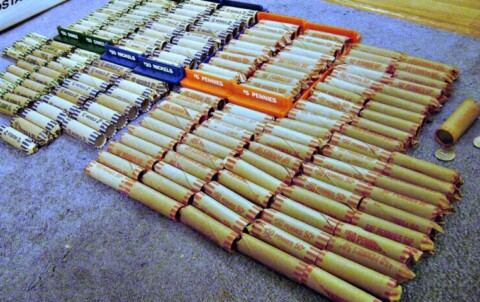
How do you get coin rolls to search through?
It’s really as simple as going to your bank!
In fact, almost any coin collecting pro will tell you that looking through bank rolls (or bags) of coins is your best bet in finding old, rare, or otherwise valuable coins.
Roll searching isn’t expensive — since you can return the coins you don’t want to keep. (You can exchange them for cash… or spend that cash to buy more rolls of coins to search!) The only cost to you, really, is the face value of the coins you wish to keep.
The most difficult part in roll searching is the time it takes to go through hundreds (or thousands) of coins for the chance of finding a few possibly rare coins.
Of course, the fun of roll searching is the thrill of the hunt!
TIP: You could also find old rare coins in your attic, basement, or old coin jars. Or, you can use a metal detector to look for buried coins. That’s how one person found a rare 1652 Massachusetts sixpence coin worth more than $400,000 in a potato field!
How To Determine If You Have A Rare Coin & Its Value
The best way to identify which coins are rare is to buy a really good book on United States coins. I like A Guide Book of United States Coins by R.S. Yeoman and Kenneth Bressett.
This book is especially good for those who have no background in U.S. coins but want to see if the coins they have found are rare. Almost everything you could possibly want to know about every coin is included within the pages of this book!
Simply compare the dates and designs of your coins to those in the book, and you will quickly get some idea as to how rare your coins are — based on mintage numbers and their relative prices.
Of course, the condition of your coins will greatly determine their values. This same book briefly details how to grade coins based on wear.
You may want to have a professional coin dealer or a 3rd-party grading service determine if your coins are authentic. (They can also determine the grade and overall condition of your coins.)
The Professional Coin Grading Service maintains a website that includes current coin prices. This is the resource that was used to list prices for the rare coins mentioned above.
How To Turn Rare Coins Into Cash
OK, so let’s say you’ve hit the jackpot by finding a 1909-S VDB Lincoln cent. How do you transform that penny into $750+ cash in your pocket?
You sell it to a coin collector or a coin dealer!
Pawn shops and jewelers are the LAST places to sell coins — because, in general, the staff at those places aren’t knowledgeable on coins. And they won’t pay you as much as you could get from a reputable coin dealer with a lot of available buying capital.
If you’re looking for reputable coin dealers in your neck of the woods, check out the Professional Numismatists Guild website, which has a great list of coin dealers across the United States. While the list doesn’t include every coin dealer, it’s a great springboard for finding one near you. (Here’s what you can expect when meeting with a coin dealer to sell coins.)
If you can’t find a coin dealer convenient to you, or if you prefer to sell your rare coins directly to another coin collector, then you might consider selling your coins on eBay. Just be sure to carefully check the collector’s ratings on eBay first.
READ NEXT: 10 Famous Cheap Coins Most People Want To Collect




Leave a Comment