



US Circulating Coins
If you’re collecting coins from pocket change, then you’re probably wondering: “What kinds of coins can I find in circulation?”
While it is theoretically possible to find any legal tender coin in circulation (including old coins and even rare coins), the likelihood of finding such pieces in your spare change is small… but not impossible.
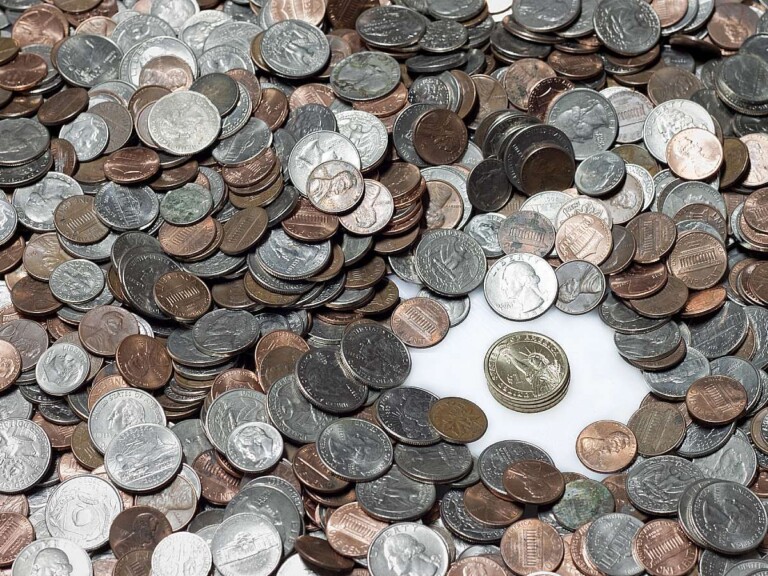
The U.S. coins that can be found in circulation today are primarily:
- Pennies, nickels, dimes, and quarters
- Coins struck during the last few decades
Half-dollars have not been regularly seen in circulation in many years — but can be found at banks.
Dollar coins have yet to reach their circulation potential. Many can be found at banks, some stores, and certain vending machines which operate for transit authorities and the U.S. Postal Service.
MUST READ: Why U.S. Dollar Coins Are Not Circulating
A List Of U.S. Coins In Circulation
Here’s a short list of the specific types of pennies, nickels, dimes, and quarters that are commonly found in circulation today:
- Lincoln cents generally from the 1930s-40s to the present
- Jefferson nickels first minted in 1938
- Roosevelt dimes minted from 1965 to the present
- Washington quarters minted from 1965 to the present (this includes 50 State Quarters, America the Beautiful Quarters, and American Women Quarters)
(See details about the specific coins you should be looking for — by denomination — toward the end of this article.)
All the above denominations have yielded error coins (those which bear mistakes while being printed at the U.S. Mint) that can be worth anywhere from face value to thousands of dollars!
By the way, you may want to keep your eye out for foreign coins too — which occasionally pop up in U.S. circulation!
It is highly possible to find Mexican coins in U.S. regions near the US-Mexico border.
And Canadian coins frequently turn up near the northern border and in other locations where Canadians frequently shop and visit.
Are There Any Silver Coins In U.S. Circulation Today?
Looking at the list of U.S. coins above and their accompanying dates, you may realize that there is a rather limited range of available dates — especially the case with the dime and the quarter.
While Washington first appeared on the quarter in 1932 and the Roosevelt dime was first struck in 1946, it is improbable that you will find any of those early dimes and quarters in circulation today.
The reason?
They were minted from a 90% silver composition.
These coins were virtually eliminated from circulation decades ago as hoarders, speculators, collectors, and others looking to hang on to silver coins pulled them from circulation — due to the rising value of the metal in these coins.
The same applies to silver half dollars and silver dollars of decades ago, too.
The last silver dimes and quarters were struck in 1964. Hence, you will find that collecting dimes and quarters with dates from before 1965 is nearly impossible — if done solely from searching coins in circulation.
While silver dimes and quarters do turn up every now and then, the availability of these coins from circulation is negligible.
Here’s a list of the most valuable coins in circulation that you should hold onto and not spend!
Details About The U.S. Coins Found In Circulation
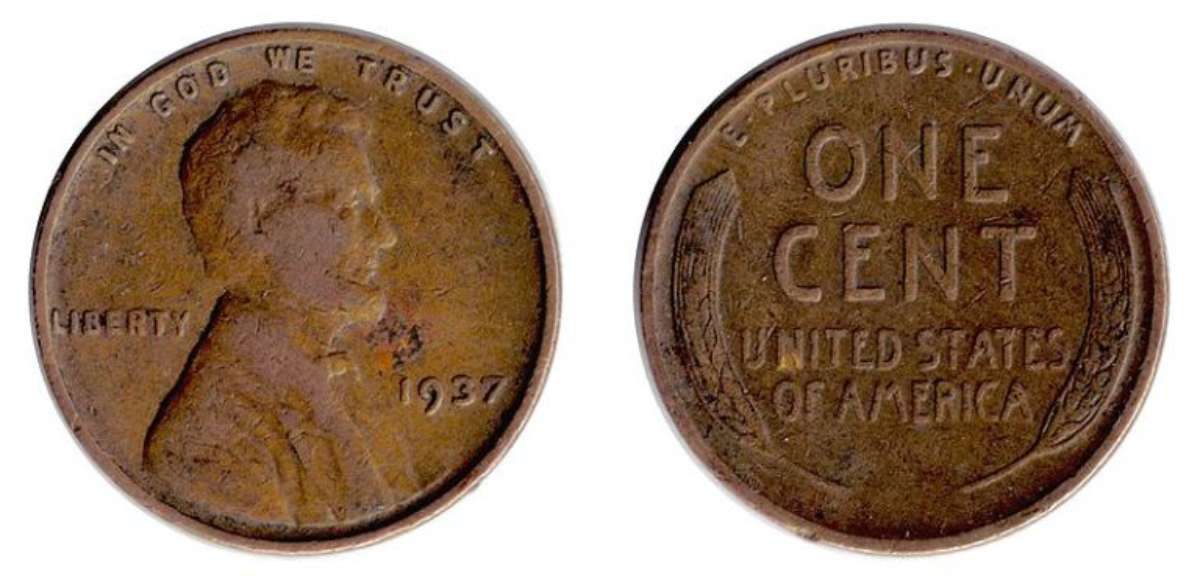
Lincoln pennies first appeared in 1909. While pennies with earlier dates than those from the 1930s or 1940s show up in spare change on occasion, those from the early decades of the Lincoln cent series generally saw far lower mintages than those of the 1930s — especially those from the 1940s and later. These old pennies therefore became much scarcer in circulation than the more recent pennies, which saw mintages of a billion or more by the mid-1940s. Any Lincoln cent dated before 1959 is of the “Wheat” back design.
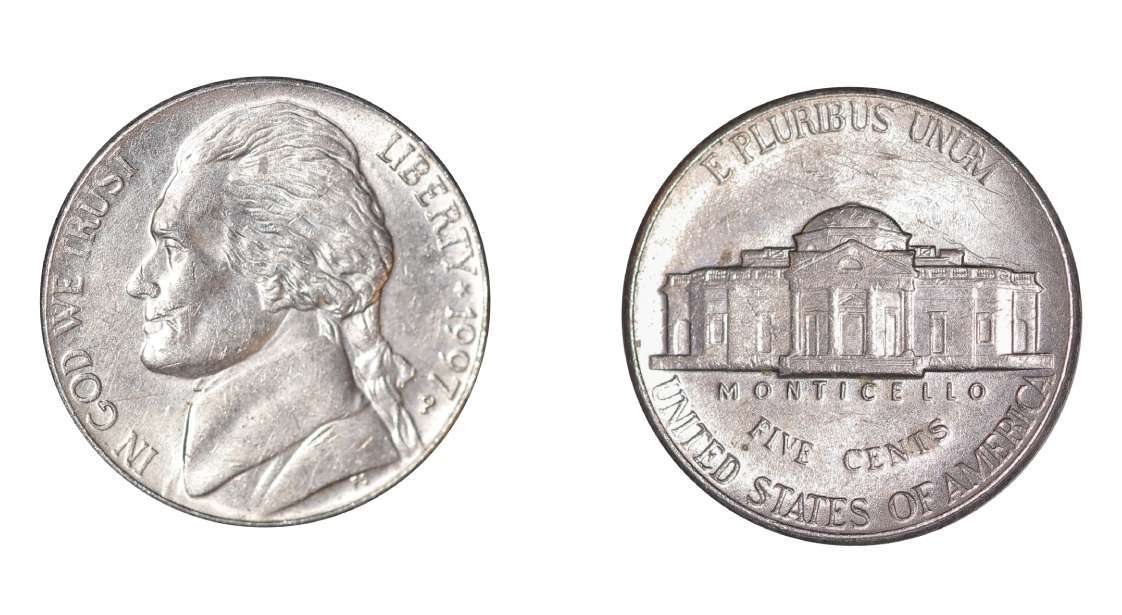
Jefferson nickels debuted in 1938, but in a few short years would yield a variety of high intrinsic value due to the rationing of nickel for the war effort. To comply with ration codes, the U.S. Mint had to begin making 5-cent pieces from a combination of silver, copper, and manganese. Silver Jefferson nickels, struck from 1942 to 1945, bear a large mintmark over the dome of Monticello, and thus are easily recognized from the “regular” Jefferson nickels which do not have a mintmark on the top half of the reverse. As is the case with silver dimes and quarters, silver Jefferson nickels are difficult to find in circulation — though they do appear from time to time.
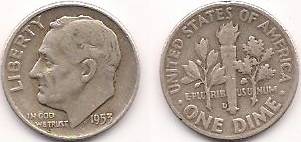
Roosevelt dimes debuted in 1946 following the death of President Franklin D. Roosevelt. Like quarters and half dollars from the same era, Roosevelt dimes were struck from a 90% silver composition through 1964 — before the U.S. Mint transitioned the coin to a copper-nickel clad blend in 1965. While you might occasionally run across an earlier Mercury dime (struck from 1916 through 1945) in a roll of coins, early silver Roosevelt dimes from the 1940s and 1950s are by far the most common pre-1965 silver coins to still turn up in loose change today.
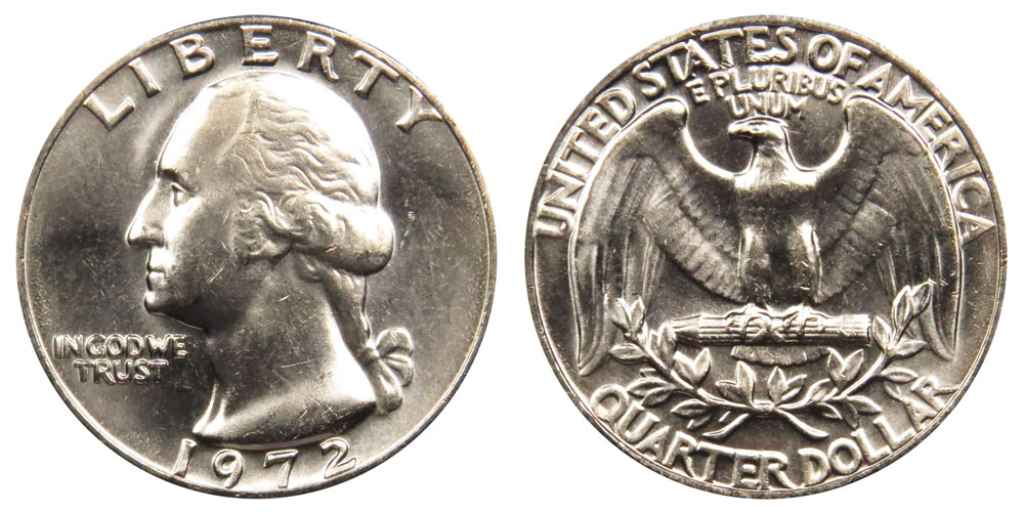
Washington quarters first appeared in 1932 to honor George Washington’s 200th birthday. Like dimes, all Washington quarters dated 1964 and earlier contain 90% silver, making them instant keepers for their precious metal value alone. The quarter denomination experienced a massive resurgence in popularity starting in 1999 with the launch of the 50 State quarters program, followed by the America the Beautiful quarters and the American Women quarters. While most modern clad quarters are common, roll hunters actively search for scarce special issues, such as the 2019 and 2020 quarters bearing a tiny “W” mintmark from the West Point Mint — which were released directly into circulation in limited quantities of just 2 million per design.
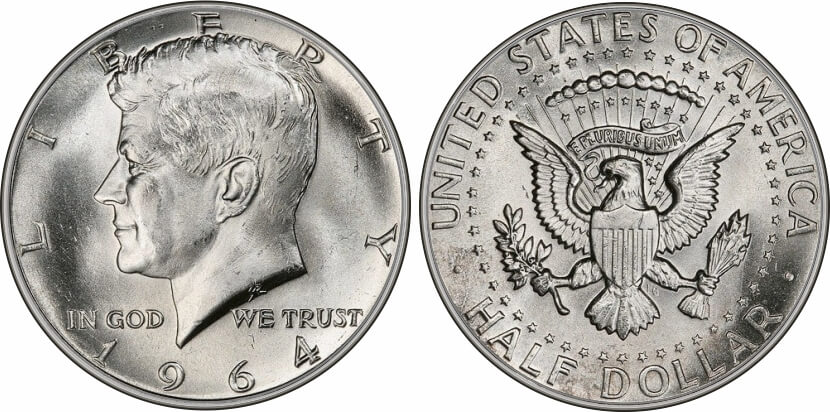
Kennedy half dollars debuted in 1964 following the assassination of President John F. Kennedy, making the inaugural 1964 issue the only regularly circulating 90% silver Kennedy half dollar. When the U.S. Mint removed silver from dimes and quarters in 1965, the Kennedy half dollar was given a temporary reprieve — retaining a reduced 40% silver composition from 1965 through 1970, before finally switching to copper-nickel clad in 1971. Although half dollars rarely circulate in everyday cash transactions today, you can still find both 90% and 40% silver halves sitting in bank rolls or saved in family coin jars.
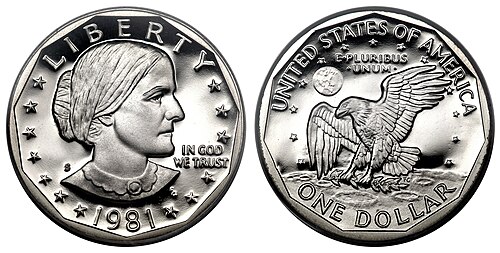
Dollar coins in circulation today trace their roots back to the large Eisenhower dollars of 1971 through 1978 and the smaller Susan B. Anthony dollars introduced in 1979. Starting in 2000 with the Sacagawea “golden” dollar, the U.S. Mint shifted to a manganese-brass alloy over a copper core — giving dollar coins a distinctive golden color without containing any actual gold. While Sacagawea, Native American, and Presidential dollar coins see limited use in everyday retail, millions remain in circulation and can regularly be pulled from vending machines, public transportation stations, and bank teller drawers. Unfortunately, you aren’t likely to find many silver dollars in circulation since people have been saving these for decades.
Modern Coins In Circulation
Keep in mind that modern-day circulation also yields coins like:
- The 50 state quarters honoring each statehood in the United States
- The 1976 Bicentennial quarter commemorating America’s 200th anniversary
- The 4 special commemorative pennies honoring the bicentennial of Lincoln’s birth
All of these coins were released into general circulation, and they are relatively easy to find today.
Reasons To Collect Modern Coins (1950-Present)
Here’s a playlist of videos that I put together for new collectors.
These videos will continue to play one after the other — to help you get started in the hobby:
READ NEXT: Best Places To Find Valuable Coins In Circulation


Leave a Comment