

This post may contain affiliate links. If you buy thru these links, we may earn a commission at no additional cost to you.
Curious about how to submit your coins to Professional Coin Grading Service, a third-party coin grader popularly known by its acronym PCGS? You’re not alone!
We received this question from a reader:
“Who and where do you guys and gals get your coins graded? I tried to figure how to on Professional Coin Grading Service and I couldn’t make heads or tails on how to do that.“
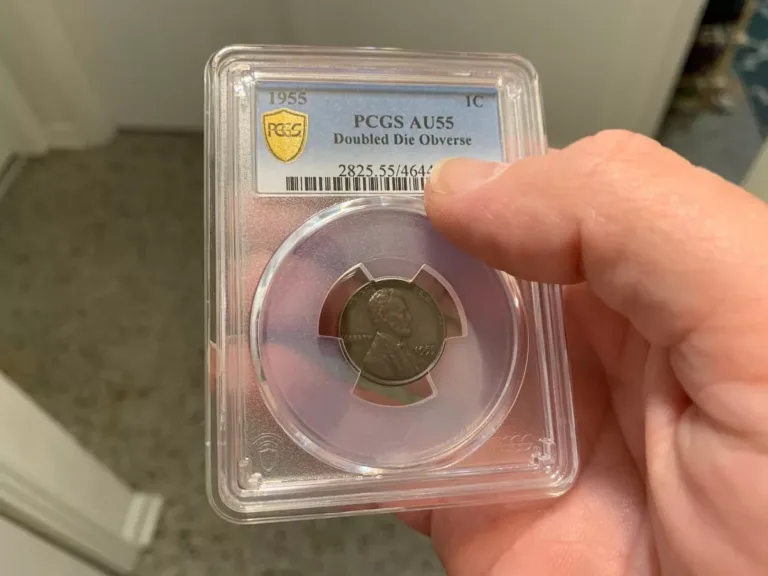
I’ve decided to demonstrate this process by submitting one of my own coins (a 1955 doubled die Lincoln penny) to PCGS for grading.
What You Need To Know About Coin Grading Services
Wondering why you should get your coins graded and slabbed by a third-party coin grader?
These are the benefits of getting a coin slabbed:
- An independent firm not associated with buying or selling coins is determining the authenticity of the coin. So, when it is encapsulated by the firm, they are putting their guarantee behind it that the coin is genuine.
- A coin grading service will determine the grade of the coin based on the presence or absence of surface wear.
- Grading services will (for an additional fee) also attribute any varieties or errors, as well as other anomalies on the coin that could add value or interest to the coin.
A coin that has been graded and encapsulated by a reputable coin grading service will usually trade for more and garner more interest from buyers than that same coin if it were “raw” (or unholdered).
NOTE: The holder itself doesn’t necessarily add value to a coin. (The coin is worth what it’s worth.) However, a grading service may help ensure that a coin sells for a price closer to its value — because people who trust the grading service will have more confidence in buying a coin encapsulated by that firm trusting the coin to be verified by a third party as being authentic and accurately graded.
Is Getting A Coin Graded The Same As Getting A Coin Certified?
In the traditional sense, grading a coin is NOT the same thing as getting a coin certified.
Essentially, anyone can grade a coin… in the most basic sense. (Even you! Here’s how to grade your own coins.)
However, since the introduction of third-party coin grading during the late 20th century, the phrase “get a coin graded” typically means submitting it to a third-party coin grader — who will professionally authenticate, grade, and encapsulate the coin.
This leads us to another point: getting a coin certified.
Many people take this to mean getting a coin authenticated, evaluated, and encapsulated by a third-party grader. So yes, in the most general sense, grading and certification of coins are the same thing.
Technically, however, “certification” does not necessarily mean that the coin is going to receive a grade. Nor does it mean the coin will be sealed into a holder.
In some cases, a third-party grader will not grade a coin — because it has been cleaned, altered, or otherwise does not qualify for a grade.
In other cases, the coin will receive a grade, but will not be sealed in that company’s holder for one reason or another (usually by special request of the customer).
Before Submitting A Coin To PCGS…
If you want to submit a coin to PCGS, you must do ONE of the following:
- Become a member of the PCGS Collectors Club — so you can have full access to all grading services
- Submit your coin for PCGS holdering through a PCGS Authorized Dealer
- Become a PCGS Authorized Dealer — so you can submit coins for yourself and others
MONEY-SAVING TIP: While many collectors decide to submit their coins to PCGS through a PCGS Authorized Dealer, it may be more cost-effective to become a PCGS Collectors Club member if your plan is to submit a lot of coins over the course of time. Depending on the membership tier you choose, you can receive vouchers for free or reduced-cost submissions — saving you a lot of money over the long haul.
How To Send Coins To PCGS For Grading
If you submit a coin to PCGS yourself (not through an Authorized PCGS Dealer), here’s what you’ll need to do:
- Visit the PCGS Online Submission Center.
- Fill out a PCGS Submission form, following the step-by-step PCGS coin submission process.
- Make sure your coin is properly packed and then send it to PCGS via registered & insured mail through the U.S. Postal Service or FedEx Ground.
How Much Does PCGS Charge To Grade A Coin?
This is very hard to answer because there are so many different factors about the coin(s) being submitted that affect the cost — such as:
- The type of coin grading service you want
- The type of coin you are submitting
- The value of your coin
- How quickly you need the coin returned to you
Generally speaking though, I’d say the cost ranges from $25 to $65 per coin — with some services costing a little more and some costing a little less.
To find out what it will cost to have your coins graded by PCGS, you will need to consult the PCGS fees and services webpage with a specific coin in mind.
How Long Does It Take PCGS To Grade A Coin?
The length of time it takes for PCGS to process your order depends on a multitude of variables, including:
- The type of PCGS service you select
- How many coins you submit
- Where the coins are from
- Whether they require special variety / error attribution or other special handling
- The result the coins receive
A few unforseen things that could affect how quickly you will get your coins back are:
- Shipping carrier issues
- Spikes in customer demand
- Supply-chain challenges
In my case, it took about 2 months for me to ship my coin to PCGS, have it graded and holdered (slabbed), and then sent back to me.
My Best Tips For Submitting Coins To PCGS
Want to know how to ship coins to PCGS like a pro?
Here are some things you can do to make your PCGS coin submission go smoothly:
- Submit your coins in Mylar flips — Do not send them in stapled cardboard 2×2 holders, coin tubes, or vinyl flips that contain PVC (which can damage your coins and others that it comes in contact with).
- Don’t overdo the tape! — While you should secure your coins using a sheet of bubble wrap or styrofoam to protect them during shipment, don’t go overboard. Don’t use too much tape or other packing materials.
- Keep things organized — Place a small white sticker on the outside of each Mylar flip containing each coin (remember, just one coin per flip!) numbered with the line number on the order form corresponding to that coin. If you’ve got multiple coins in the order, place them in the same sequence as listed on the submission form.
- Don’t forget the submission form and payment! — Include the submission form / PCGS vouchers, and payment in the shipping carton, but do NOT tape them to the outside of the package under the packing tape.
- Pack everything securely — Seal your package well and make sure there is no way your coins could slip through any of the packing materials. Remember, if you’re sending your order via Registered Mail, then use paper tape.
IMPORTANT:
When it comes to sending coins, I’ve been telling people this forever: Do NOT write the words “coin,” “coins,” “money,” “numismatics,” “valuable,” or anything else that can clue other people into what might be inside the package. This advice applies no matter where you are sending your coins.
In the case of mailing coins to PCGS, do NOT write Professional Coin Grading Service on the outside of the package. Instead, use the acronym “PCGS.”
If you have any questions about your PCGS submission, be sure to contact PCGS Customer Service directly.

Leave a Comment