


Errors vs. Varieties
I bet you’ve heard about error coins and varieties. But do you know the difference between an error and a variety?
While they may seem similar, errors and varieties are technically quite different and are created in different ways.
Today I’m going to explain how U.S. coin errors and varieties differ — and what these types of coins are worth!
Aren’t Error Coins & Variety Coins Kinda The Same?

You find a weird coin in your pocket change…
It’s an error, right? Maybe a variety.
Hmm… What’s the difference? Does it matter? A weird coin is a weird coin, right? Certainly not all weird coins are errors.
Or are they?
Many coin collectors confuse these terms, using them interchangeably.
Errors and varieties are two types of distinctive coins that differ in some intended or unintended way from the coin’s basic design.
While some varieties are errors, no error is ever technically a variety!
As you’ll see in this article, the difference between varieties and errors largely comes down to how the mistake or odd distinction was created on the coin.
Coin Errors Explained
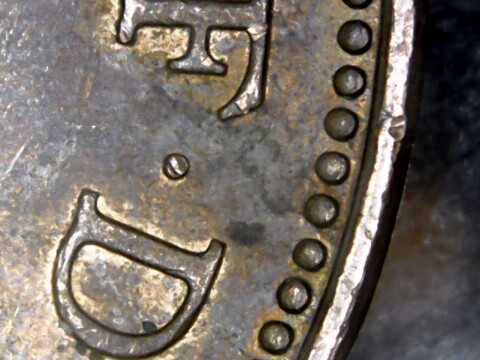
U.S. Mint errors are coins with oddities caused by either human or mechanical mistakes.
The errors are normally confined to just one specific coin or perhaps a few struck one after another.
Here are the types of error coins, and what they’re worth today…
Types of Error Coins
- Die Errors
- Die Breaks
Many defective or aging coin dies have cracks, and these will show on the coin as raised lines or lumps of metal known as die cuds and die breaks. These errors are worth $5+. - 1909-1958 “BIE” Lincoln Wheat pennies — $3+
- 1999-P Delaware Spitting Horse quarter — $5+
- 1888-O Scarface Morgan dollar (major die crack across Liberty’s face, jaw, and neck) — $2,500+
- Planchet Errors
- Blank Planchets
These are coins not struck by dies, so they have no heads or tails. Values are $3+. - Blank copper Lincoln cent — $3+
- Blank steel Lincoln cent — $50+
- Blank zinc Lincoln cent — $3+
- Blank Jefferson nickel — $10+
- Blank silver Roosevelt dime — $40+
- Blank clad Roosevelt dime — $4+
- Blank silver Washington quarter — $150+
- Blank clad Washington quarter — $7+
- Blank 40% silver Kennedy half dollar — $150+
- Blank clad Kennedy half dollar — $100+
- Blank Eisenhower dollar — $125+
- Blank Susan B. Anthony dollar — $150+
- Blank “golden” dollar (year 2000 to present) — $150+
- Clipped Planchets
Coins with straight- or crescent-shaped edges are caused by being mis-cut. These errors are worth $3+. - Clipped copper Lincoln cent — $3+
- Clipped steel Lincoln cent — $15+
- Clipped zinc Lincoln cent — $3+
- Clipped Jefferson nickel — $3+
- Clipped silver Roosevelt dime — $7+
- Clipped clad Roosevelt dime — $3+
- Clipped silver Washington quarter — $10+
- Clipped clad Washington quarter — $4+
- Clipped 40% silver Kennedy half dollar — $15+
- Clipped clad Kennedy half dollar — $10+
- Clipped Eisenhower dollar — $20+
- Clipped Susan B. Anthony dollar — $20+
- Clipped “golden” dollar (year 2000 to present) — $75+
- Off-Metal Or Wrong Planchet Errors
These particularly rare errors happen when a coin is struck on a planchet that was intended for another coin (such as a Jefferson nickel design being struck on a planchet for a Lincoln cent). Wrong planchet and off-metal errors are worth approximately $200+. - Lincoln cent on silver dime — $750+
- Lincoln cent on clad dime — $350+
- Jefferson nickel on steel cent — $3,000+
- Jefferson nickel on copper cent — $250+
- Jefferson nickel on zinc cent — $300+
- Jefferson nickel on silver dime — $400+
- Jefferson nickel on clad dime — $300+
- Washington quarter on zinc cent — $6,500
- Washington quarter on copper cent — $850+
- Washington quarter on nickel — $400+
- Washington quarter on dime — $1,250+
- Kennedy half dollar on copper cent — $2,500+
- Kennedy half dollar on nickel — $1,000+
- Kennedy half dollar on dime — $1,750+
- Kennedy half dollar on quarter — $500+
- Eisenhower dollar on copper cent — $10,000+
- Eisenhower dollar on nickel — $8,500+
- Eisenhower dollar on dime — $9,000+
- Eisenhower dollar on quarter — $5,000+
- Eisenhower dollar on half dollar — $2,000+
- Susan B. Anthony dollar on copper cent — $3,000+
- Susan B. Anthony dollar on nickel — $4,500+
- Susan B. Anthony dollar on quarter — $1,000+
- “Golden” dollar design on cent — $8,500+
- “Golden” dollar design on nickel — $8,500+
- “Golden” dollar design on dime — $8,500+
- “Golden” dollar design on quarter — $3,000+
- Strike Errors
- Broadstrikes
When a coin isn’t struck in its retaining collar, the coin will be flatter and wider than usual and will not show a finished rim. Broadstrikes may be struck centered or off-center but will show all lettering and design details. Values start at $5+. - Copper Lincoln cent — $7+
- Steel Lincoln cent — $30+
- Zinc Lincoln cent — $5+
- Jefferson nickel — $10+
- Silver Roosevelt dime — $40+
- Clad Roosevelt dime — $10+
- Silver Washington quarter — $150+
- Clad Washington quarter — $15+
- 40% silver Kennedy half dollar — $150+
- Clad Kennedy half dollar — $50+
- Eisenhower dollar — $100+
- Susan B. Anthony dollar — $75+
- “Golden” dollar (2000 to present) — $250+
- Brockages
If a coin stays adhered to a die instead of ejecting as usual, the stuck coin will subsequently strike the next planchet in line, impressing a mirror image of the same side of the coin onto the next coin. This can result in a coin with effectively two heads or two tails. Brockage errors are worth $50+. - Copper Lincoln cent — $50+
- Steel Lincoln cent — $250+
- Zinc Lincoln cent — $50+
- Jefferson nickel — $50+
- Silver Roosevelt dime — $75+
- Clad Roosevelt dime — $50+
- Silver Washington quarter — $250+
- Clad Washington quarter — $70+
- 40% silver Kennedy half dollar — $400+
- Clad Kennedy half dollar — $250+
- Eisenhower dollar — $1,000+
- Susan B. Anthony dollar — $300+
- “Golden” dollar (2000 to present) — $400+
- Multiple Strikes
Coins that aren’t properly ejected may be struck multiple times by the same die, creating a multiple strike error. (These are not the same thing as a doubled die — which is a variety originating with the creation of a die.) Multiple strikes are worth $35+. - Copper Lincoln cent — $50+
- Steel Lincoln cent — $250+
- Zinc Lincoln cent — $35+
- Jefferson nickel — $50+
- Silver Roosevelt dime — $200+
- Clad Roosevelt dime — $50+
- Silver Washington quarter — $350+
- Clad Washington quarter — $150+
- 40% silver Kennedy half dollar — $1,000+
- Clad Kennedy half dollar — $550+
- Eisenhower dollar — $1,000+
- Susan B. Anthony dollar — $500+
- “Golden” dollar (2000 to present) — $2,000+
- Off-Center Errors
When a coin isn’t properly contained in its collar or isn’t centered, the dies will hit the coin off square, and part of the design will be missing. Off-center errors are most collectible when about 5% to 10% (or more) of the design is missing. The values for such errors increase depending on the coin and percentage off-center, but they start around $10. - Copper Lincoln cent — $10+
- Steel Lincoln cent — $75+
- Zinc Lincoln cent — $10+
- Jefferson nickel — $20+
- Silver Roosevelt dime — $125+
- Clad Roosevelt dime — $15+
- Silver Washington quarter — $300+
- Clad Washington quarter — $50+
- 40% silver Kennedy half dollar — $400+
- Clad Kennedy half dollar — $200+
- Eisenhower dollar — $500+
- Susan B. Anthony dollar — $250+
- “Golden” dollar (2000 to present) — $1,250+
- Other Types Of Errors
- Double Denominations
Somewhat synonymous with the wrong planchet error (mentioned above) and the mule error (mentioned below), a double denomination coin has been struck twice by dies of two different denominations. This error can only happen on coins previously struck as a smaller denomination. Thus a Roosevelt dime later struck by Lincoln cent dies is one possible double denomination. Or a Jefferson nickel that later passed through the Washington quarter dies is another. Double denomination errors showing a strong impression of the original design are worth more. Values for these very rare and desirable errors start at $1,000+. Here are some examples: - 1984 Lincoln cent double denomination on struck dime planchet — $1,150
- 2000 Lincoln cent struck on 2000 New Hampshire quarter double denomination — $19,200
- 1979-P Susan B. Anthony dollar overstruck on 1978 quarter double denomination — $13,200
- Mules
One of the rarest and most valuable types of errors is a mule. A mule error marries an obverse and reverse that were never intended to be paired. Very few United States coins are legitimate mules, but they include: - The 2000 Sacagawea mule dollar coin is the most famous confirmed United States mule error coin — $100,000+
- Another is the 1959-D Lincoln wheat penny — $50,000+
- Strikethrough Errors
Sometimes grease, oil, or other foreign matter will get into a die — obscuring that part of the design from being properly and fully struck onto a coin. Strikethrough coins are often identified by a certain part of the coin’s design or lettering being missing (or only faintly visible). Strikethrough errors are worth $10+ and vary in value and rarity depending on the coin type, strikethrough material, and prominence or magnitude of the strikethrough error itself. Some examples include: - 1897 $1 Morgan Dollar strikethrough grease — $184
- 1923-S Peace Dollar strikethrough scrap metal — $632.50
- 1986 Silver Eagle strikethrough sand disk — $977.50
- Transitional Errors
These occur when a coin type is about to be (or has recently been) through an intended change. However, a mistake in placing the wrong die on the press or feeding the wrong planchets into the presses causes an error in which there is a blending of both the previous design and the new coin design (or content specifications). The rarest and most famous transitional errors are valued between $3,500 and $100,000:
- 1943 Lincoln bronze penny — $100,000+
- 1944 Lincoln steel penny — $85,000
- 1982-D Lincoln Small Date bronze penny — $10,000+
- 1965 Roosevelt silver dime — $3,500+
- 1965 Washington silver quarter — $10,000+
Here’s a list of all U.S. coin errors (those you can find in pocket change and those which are harder to find).
Coin Varieties Explained
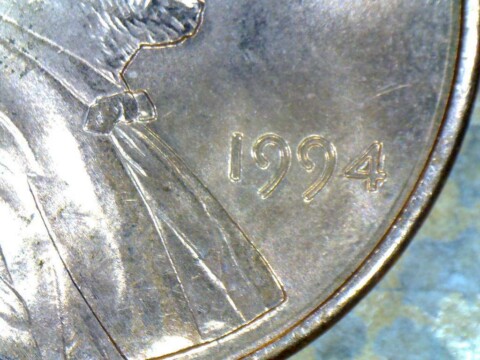
Varieties involve intentional and unintentional characteristics relating to a particular die.
Furthermore, they may be replicated on many coins at a time — as many as thousands!
Here are the types of coin varieties, and what they’re worth today…
Types of Variety Coins
- Date & Mintmark Varieties
There are many coins with some interesting varieties involving the size and shaping of their dates and/or mintmarks.
Here are the most common examples:
- 1960 and 1960-D large and small date Lincoln pennies
- 1960 Lincoln small date penny — $2+
- 1960-D Lincoln small date penny — 10 cents+
- 1960 Lincoln large date penny — 10 cents+
- 1960-D Lincoln large date — 10 cents+
- 1970-S large and small date Lincoln pennies
- 1970-S Lincoln small date penny — $25+
- 1970-S Lincoln large date penny — 10 cents+
- 1982 and 1982-D bronze and zinc, large and small date pennies
- 1982 Lincoln bronze large date — 20 cents+
- 1982 Lincoln bronze small date — 40 cents+
- 1982 Lincoln zinc large date — 40 cents+
- 1982 Lincoln zinc small date — 75 cents+
- 1982-D Lincoln bronze large date — 20 cents+
- 1982-D Lincoln zinc large date — 30 cents+
- 1982-D Lincoln zinc small date — 25 cents+
- 1913 Buffalo nickels (Mound: Variety I and Line: Variety II)
- 1913 Buffalo Variety I nickel — $9+
- 1913-D Buffalo Variety I nickel — $12+
- 1913-S Buffalo Variety I nickel — $35+
- 1913 Buffalo Variety II nickel — $8+
- 1913-D Buffalo Variety II nickel — $100+
- 1913-S Buffalo Variety II nickel — $300+
- 1945 Micro-S Mercury dime — $3+
- 1917 Standing Liberty quarters (Exposed Breast: Type I and Chain Mail: Type II)
- 1917 Standing Liberty Variety I quarter — $15+
- 1917-D Standing Liberty Variety I quarter — $20+
- 1917-S Standing Liberty Variety I quarter — $25+
- 1917 Standing Liberty Variety II quarter — $18+
- 1917-D Standing Liberty Variety II quarter — $25+
- 1917-S Standing Liberty Variety II quarter — $30+
- 1964 Heavily Accented Hair proof Kennedy half dollar — $35+
- 1972 Eisenhower dollar varieties
- 1972 Eisenhower Variety I dollar (flattened Earth and 3 islands off Florida) — $5+
- 1972 Eisenhower Variety II dollar (high relief with round Earth and indistinct islands) — $75+
- 1972 Eisenhower Variety III dollar (high relief) — $5+
*Values above are for coins grading uncirculated or better, EXCEPT for coins minted before 1960 — which refer to coins in typical circulated grades.
- Doubled Die Varieties
A coin’s design is impressed into a die by a hub. Usually a die is stamped once by a hub — sometimes twice. If on that second impression, the hub and newly created die are slightly rotated from the orientation of the previous hubbing, a doubled die will occur.
The result is a slightly overlapped misalignment of the same design twice on the coin. (This is very different from machine doubling — which often looks similar.)
If a doubled die goes unnoticed by U.S. Mint officials, it may eventually strike dozens, hundreds, even thousands of doubled die coins before it’s finally removed from service.
The most popular doubled die coins are:
- 1955 Lincoln doubled die penny — $1,100+
- 1969-S Lincoln doubled die penny — $25,000+
- 1972 Lincoln doubled die penny — $250+
- 1983 Lincoln doubled die penny — $200+
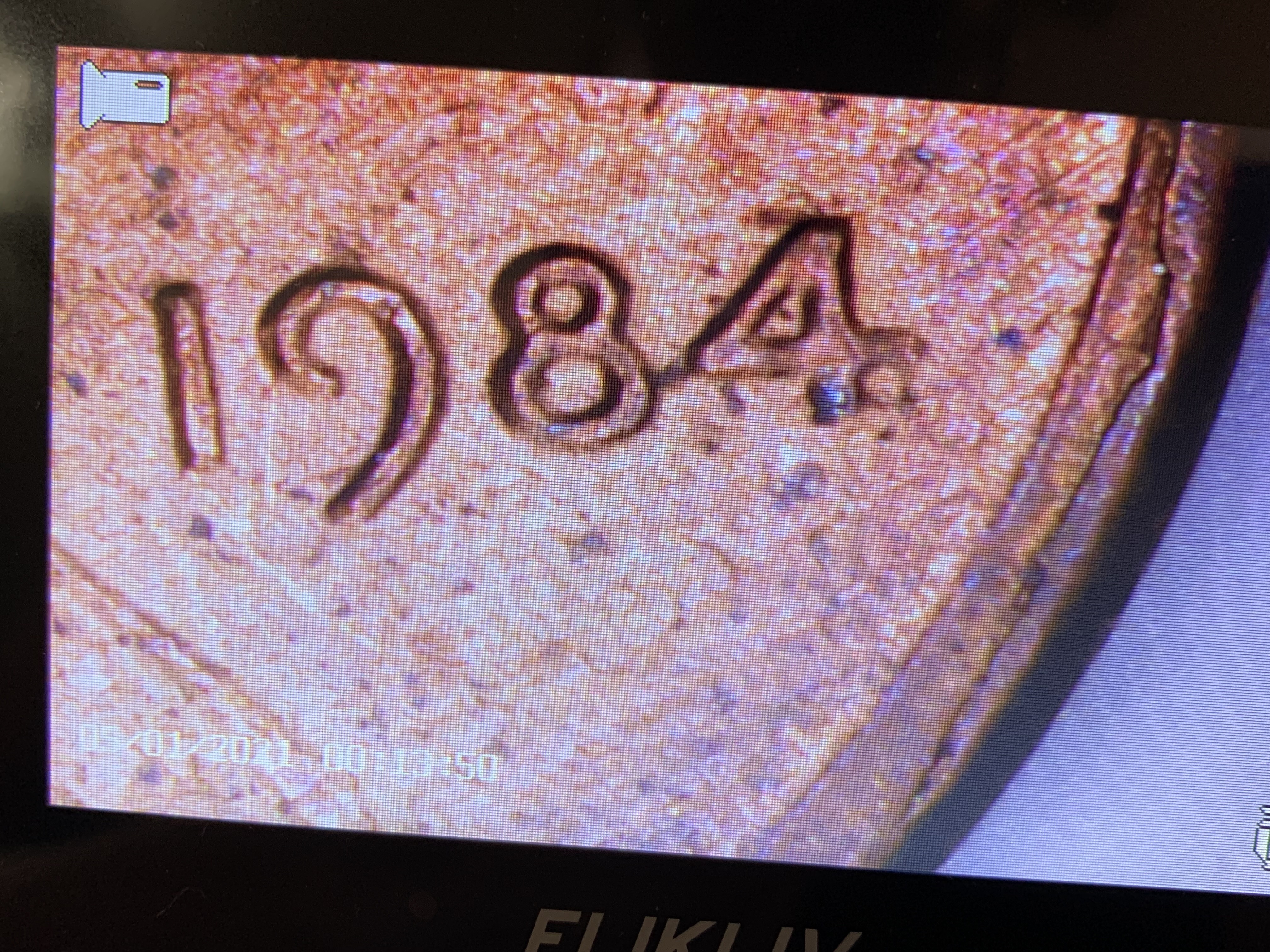
- 1984 Lincoln doubled die penny — $125+
- 1995 Lincoln doubled die penny — $50+
- 1943-P Jefferson doubled eye nickel — $20+
- 1964-D Roosevelt doubled die dime — $80+
- 1937 Washington doubled die quarter — $500+
- 1942-D Washington doubled die quarter — $300+
- 1943 Washington doubled die quarter — $250+
- 1943-S Washington doubled die quarter — $150+
- Missing Mintmark & Design Feature Varieties
Coin dies experience a lot of stress during their lifespan, and sometimes these hard-working pieces of steel get damaged in use. Mint officials can make repairs to the dies to help them last longer — including polishing them to buff out the damage.
Often this die polishing inadvertently removes more than just the damaged areas. Over-polishing has resulted in a number of interesting and valuable variety coins, including:
- 1922 Lincoln Plain, No-D Lincoln penny — $500+
- 1937-D Buffalo 3-Legged nickel — $500+
- 1982 Kennedy No FG (designer Frank Gasparro’s initials) half dollar — $20+
While many missing details on coins are caused by overzealous polishing of the coin dies, not all of them are. One of the most common types of missing-detail coin varieties involves an absent mintmark. There are several types of collectible proof coins with missing mintmarks, and even some business-strike coins.
The most sought-after missing mintmark coins are:
- 1990 Lincoln No-S proof penny — $3,000+
- 1971 Jefferson No-S proof nickel — $900+
- 1968 Roosevelt No-S proof dime — $20,000+
- 1975 Roosevelt No-S proof dime — $475,000+
- 1982 Roosevelt No-P dime — $50+
- 1983 Roosevelt No-S proof dime — $500+
- Repunched Mintmark Varieties
Until the late 1980s and early ’90s, mint marks were individually punched onto working dies by hand. These hand-punched mintmarks weren’t always stamped correctly onto the dies — which often led to mint marks that were not placed in the correct position.
To correct the situation, mint officials repunched the mint mark in the correct position. Most often this resulted in two appearances of the mintmark in the same approximate location. On occasion, there would be two or more repunchings — leaving 3 or more impressions of the mint mark in slightly (or sometimes dramatically) different positions.
There are literally thousands of different, distinct varieties stemming directly from the position of mintmarks on various U.S. coins. Common, obscure repunched mintmark varieties are worth about $3 to $5.
A few of the most widely collected repunched mintmark varieties include:
- 1909-S Over Horizontal S Lincoln penny — $100+
- 1943-D Boldly Doubled Mintmark Lincoln penny — $35+
- 1954-S Over D Jefferson nickel — $20+
- 1955-D Over S Jefferson nickel — $35+
- 1879-CC Over CC Morgan dollar — $300+
- 1900-O Over CC Morgan dollar — $55+
Here’s a complete list of all U.S. coin varieties by denomination — from half cents to dollar coins (including commemoratives, Gold Eagles, American Eagles, and Bullion coins).
See… Error Coins & Variety Coins Really ARE Different!
Now, that doesn’t mean there aren’t some collectors who will still refer to varieties (such as doubled dies and missing mintmarks) as errors. Because, in a sense, those really are errors. Doubled dies, missing mintmarks, and other similar anomalies were not necessarily intended to occur.
Often, these are called error-varieties. And, really, that’s a fair term.
But when it comes down to making the call on exactly what error coins versus variety coins are… hopefully this article has helped make those numismatic distinctions much easier for you to determine!
READ NEXT: 3 Error Coin Lists: (1) Rare Coin Errors (2) Common Coin Errors (3) Coin Errors by Denomination




Leave a Comment