

Start Here

Values

Buying & Selling

Rare U.S. Coins

How To's

Myths & History

Proof Coins & Proof Sets: How They’re Made, How Much They’re Worth & Where To Get Them

by Joshua McMorrow-Hernandez

This post may contain affiliate links. If you buy thru these links, we may earn a commission at no additional cost to you.


Do you know what a proof coin is?

Are you wondering how to tell if a coin is “proof” grade or not?

Proof does not refer to a particular grade. Rather, proof refers to the result when a coin is manufactured in a special way.

Proof coins represent the finest, the very best, that any U.S. Mint has to offer in terms of quality, care, and attention to detail when it comes to producing a coin.

How Proof Coins Are Made

1999-proof-coin-american-platinum-eagle.jpg

Proof coins vary greatly from their business strike (regular, circulation-quality) counterparts.

Business strikes are produced by the multi-millions nowadays — by machines which process the coins many at a time, then pile them together in heaps as they wait to be sorted, counted, and bagged for shipment to banks.

However, proof coins take a different path in the minting process:

  • The life of a proof coin starts off with being highly polished — polished enough to produce a mirror-like finish.
  • These polished blanks (also called planchets) are then inspected for any flaws.
  • Then, the polished blanks are hand-fed into a striking machine.
  • A polished die (the “stamp,” as some would think of it) impresses an image onto the coin.
  • However, the die does not strike the coin just once (as is the usual case for regular circulation coins). In fact, a proof coin will be struck multiple times — purposefully — so that the most minute details will be fully struck. This results in a coin of magnificent sharpness.
  • Afterwards, these proof coins are carefully handled (any hands which pick these coins up are gloved, by the way) and then packaged inside of a special container designed to keep the coins safe from dust, moisture, and other hazards.

U.S. Mint Proof Sets

The United States has been producing proof coins since the 19th century, but only since 1936 has the U.S. Mint produced the proof sets that we know today.

Proof sets have seen interruptions in production. This is particularly noted during the war years of the 1940s and right up until 1950.

Proof sets also were on hiatus during the years of 1965-1967 — when the U.S. Mint was nursing a coin shortage crisis and assembled Special Mint Sets (sets of coins which possess a “proof-like” finish but clearly lack the quality of the proof coins from earlier or later years).

Until 1968, the Philadelphia mint handled proof coin duties.

Since 1968, the San Francisco mint has been the main facility for striking proof coins, except for a few exceptions.

How Proof Sets Are Sold

While the proof sets produced between 1936 and 1955 were housed in cardboard, and some from 1955 and all from 1956 through 1964 were sold in cellophane containers, Special Mint Sets were housed in hard plastic cases.

Such was the situation when the U.S. Mint returned to regular proof set production beginning in 1968. All proof sets since 1968 have been housed in a small variety of hard plastic containers.

From 1973 through 1982, these proof sets (housed in red and black containers) actually were sold with a panel which, when positioned correctly, allows the proof set to stand displayed on a desk or a shelf. However, most years of the proof sets issued since 1968 do not include this feature.

Proof sets struck in the current year can always be purchased directly from the U.S. Mint. Proof sets from previous years can be bought from most coin dealers.

How Much Are Proof Coins Worth?

Many people believe that proof coins are of special monetary value.

In fact, some are — especially error proof coins (those which have an unintentionally missing mintmark or other mistakes).

While there are a few varieties which have led certain proof coins to escalate in value (such as certain 1979 and 1981 Susan B. Anthony dollars which have clearer “S” mintmarks than other proof dollars minted during those years), proof coins — especially the modern proof coins struck since the 1960s — have been struck with mintage numbers passing one million or more. Therefore, they are neither rare nor highly valuable — generally speaking.

By the way, to further illustrate the point that “proof” is not a grade…

Consider the fact that many proof coins have been broken out of their containers over the years and have entered into circulation. These proof coins are indeed still considered proof coins, but they will be graded by the amount of wear that they bear.

1981-Proof-Set-by-Joshua.jpg
PUBLISHED April 14, 2025
UPDATED September 2, 2026

Joshua McMorrow-Hernandez

Numismatic Specialist

Hi, I’m Josh! I’m the Editor here at the US Coins Guide. My love for coins began when I was 11 years old. I primarily collect and study U.S. coins produced during the 20th century.

I’m a member of the American Numismatic Association (ANA) and the Numismatic Literary Guild (NLG). I have won multiple awards from the NLG for my work as a coin journalist. I’m also the editor at the Florida United Numismatists Club (FUN Topics magazine), and author of Images of America: The United States Mint in Philadelphia (a book that explores the colorful history of the Philadelphia Mint). I’ve contributed hundreds of articles for various coin publications including COINage, The Numismatist, Numismatic News, Coin Dealer Newsletter, Coin Values, and CoinWeek.

I’ve authored over 1,000 articles here at the US Coins Guide (many with over 50K shares).

I welcome your coin questions!

43 responses to “Proof Coins & Proof Sets: How They’re Made, How Much They’re Worth & Where To Get Them”

  1. Gulinky Lu Avatar

    For proof pennies, how to you identify them?

    1. JoshuaTheFunTimesGuide Avatar
      JoshuaTheFunTimesGuide

      Hi, Gulinky —

      Proof pennies made since 1968 have “S” mintmarks AND finely detailed surfaces and designs; their rims are also more squared than regular, business-strike cents. In other words, the rims are more sharply defined than those on regular-issue cents.

      Another major thing to look for with modern proof cents is the way their surfaces appear in terms of shine and luster. The flat surfaces of proof pennies (the fields) are deeply polished and mirror like. The devices (design, lettering, etc.) are frosted in appearance.

      I hope this helps! Please let me know if you need further clarification.

      Best,
      Josh

      1. Gulinky Lu Avatar

        So by your comment, you are telling me that the two 2015, three 2014 (one with a D), 2013, 1993, 2012 and 2006 pennies I thought they were proof aren’t proof…right?

        1. John Dunkle Avatar
          John Dunkle

          The D is not proof. Only S mint marks are proof. Unless the mint screwed up in your favor. There’s always hope. It’s happened before.

  2. John Dunkle Avatar
    John Dunkle

    I bought 4 2009 proof sets from the mint when they were first offered. I gave 3 away as Christmas gifts that year to family members. Out of curiosity I took a close look at my set two years ago and discovered that the Jefferson njckle was clash died on both sides. I sent it to the ANACS for certification and they reported it as PF69 and strongly clashed dies. Every time I look at it I find more clashes. The greatest is Jeffersons eyes visable under the steps of Monticello. I listed it on E Bay last year mostly to see if anyone else found one. I have heard nothing since then. Plus, the other 3 sets I bought are not clashed. Plus, I even bought on EBay two other 2009 nickles and neither were clashed. Has anyone else heard or seen another one to date? Just curious.

    1. JoshuaTheFunTimesGuide Avatar
      JoshuaTheFunTimesGuide

      Hi, John —

      I haven’t personally seen other examples or know of others, but perhaps another readers may have… Wow — what a find!

      Good luck!
      Josh

  3. Gulinky Lu Avatar

    I’ve been coin roll hunting a few times. And I’ve found a possible complete mint set of 1994 proofs! There were all in MS-70 condition. And I’ve found them where they belong (penny proof in a penny roll; nickel proof in a nickel roll etc.)

    How much is the penny, nickel, dime, quarter and half dollar worth-without errors?

    1. JoshuaTheFunTimesGuide Avatar
      JoshuaTheFunTimesGuide

      What a find, Gulinky! A regular 1994 proof set is worth $5 to $8, though a set compiled through circulation finds may be worth more to collectors who enjoy such sets. It’s actually quite unusual to find proofs through circulation — it’s really difficult to suggest what such a set could be worth since they don’t turn up most times through circulation.

      I hope my info helps a little,
      Josh

  4. Jesse Allen Bates Avatar
    Jesse Allen Bates

    I found a 1942 wheat penny i seen that when i googled it few popped up for sell over 1000$ how would i know whether mine is valuable cause it looks identical to me please help

    1. JoshuaTheFunTimesGuide Avatar
      JoshuaTheFunTimesGuide

      Hi, Jesse —

      If you found your 1942 cent in pocket change and it has any signs of wear on it, the most it would actually be worth is somewhere in the neighborhood of 5 to 10 cents. Unfortunately the $1,000 price quote is applicable only to the finest uncirculated, or mint condition, 1942 cents that are out there — and none of those will be found in circulation.

      Thank you for your question!
      Josh

  5. Jesse Allen Bates Avatar
    Jesse Allen Bates

    A buddy of mine wants to sell me an estimated count of 500 wheat head pennies for $50 is that a good deal or not a good deal

    1. JoshuaTheFunTimesGuide Avatar
      JoshuaTheFunTimesGuide

      Hi, Jesse —

      It depends on what type of coins are in the lot. If they’re mostly common dates ranging from 1934 onward to 1958, then $50 is perhaps a few bucks more than I’d be willing to pay. If, however, the 500 coins include some earlier dates and mintmarked pieces from the 1910s and 1920s, then I believe the $50 price is very fair. Bear in mind, there will be several repeats in that 500-piece lot, because even counting all the proofs and major die varieties there were only about 160 different wheat cent issues made from 1909 through 1958. Most wheat cent grab bags with 500 coins don’t normally come with more than perhaps 75 to 90 different issues, mostly common ones from the last 25 years or so of the series.

      Good luck! Hope you find some valuable dates!
      Josh

  6. Emerson StaAna Avatar
    Emerson StaAna

    I have 1970 penny with s on the bottom is it rare?

    1. JoshuaTheFunTimesGuide Avatar
      JoshuaTheFunTimesGuide

      Hi, Emerson —

      Circulated 1970-S large date Lincoln cents are common and worth 2 cents each for their copper value, but it could also very well could be a scarce 1970-S small date cent; that coin has a value of about $15 and up. I’ll need to please see a photo of the coin to be sure of exactly what you have.

      Thank you!
      Josh

      1. Emerson StaAna Avatar
        Emerson StaAna

        other people said that my 1970-s is a large date.
        i have plenty of lincoln penny and im still searching for any rare/errors.
        how about this 1990? https://uploads.disquscdn.com/images/63b8ab5789103499cd57cbe0207e0b82fc47ccaa87399bb4018a6c3a06a5c385.jpg

        1. JoshuaTheFunTimesGuide Avatar
          JoshuaTheFunTimesGuide

          Hello, Emerson —

          I’m afraid these five 1990 Lincoln cents with no mintmark are regular-issue 1990 Philadelphia Mint cents, not 1990 no-S proof pennies as I presume you probably hoped. The 1990 no-S proof Lincoln cents were issued only in special collector sets, and that’s where they will be found, unfortunately not in pocket change. While the coins pictured are each worth face value, here’s a list of valuable coins you can find in pocket change here: https://uscoinsguide.com/us-coins/

          Good luck!
          Josh

          1. JoshuaTheFunTimesGuide Avatar
            JoshuaTheFunTimesGuide

            Hello, Emerson —

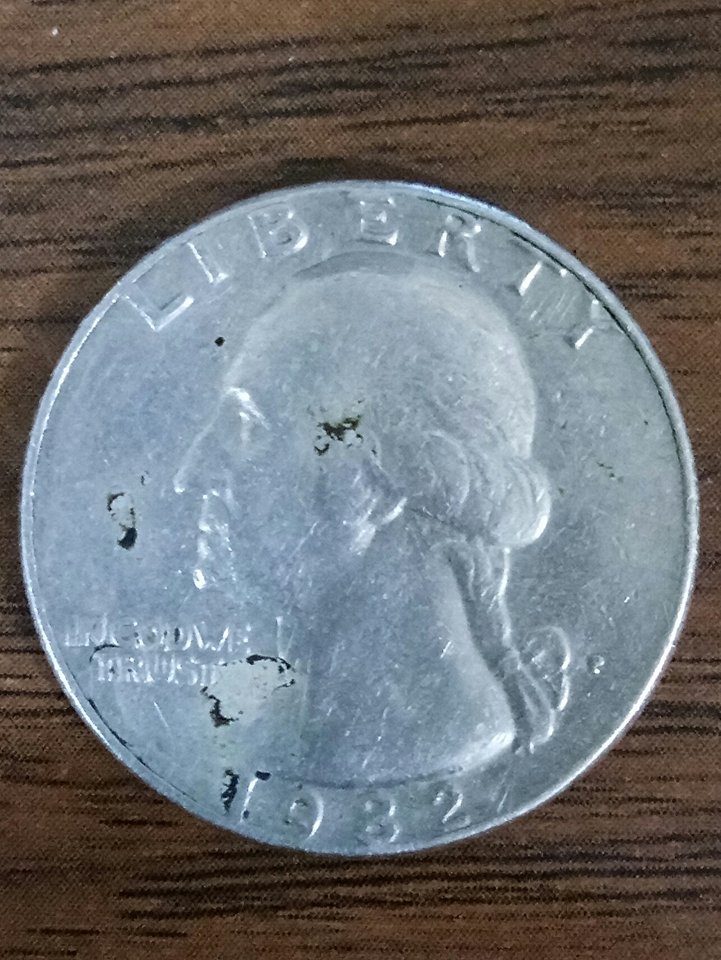
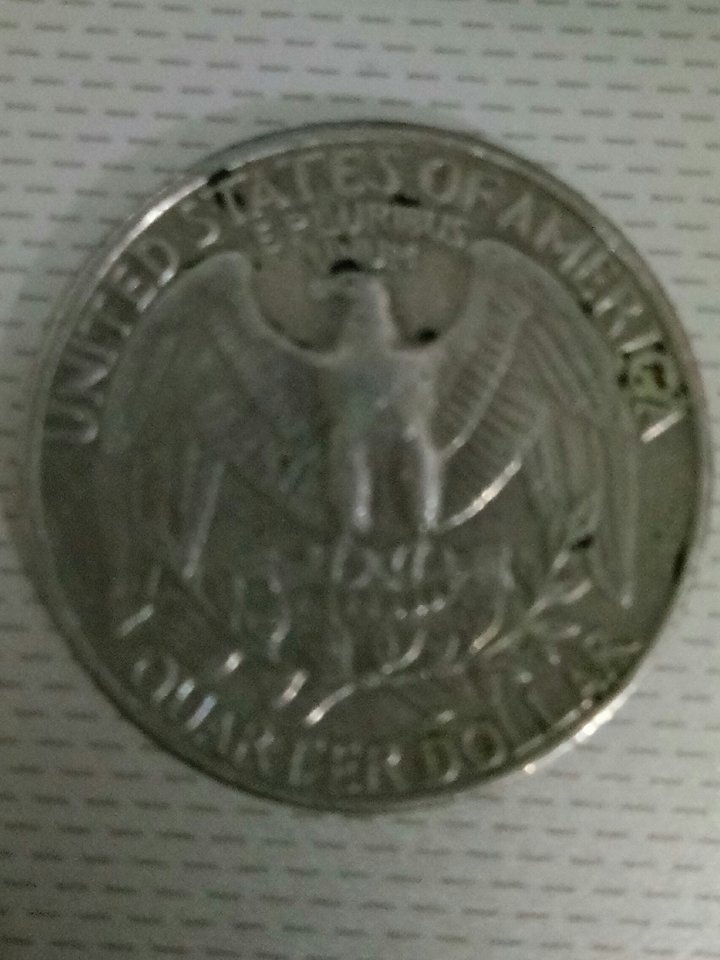
            While lightly circulated 1982-P Washington quarters are worth a little more than face value (40 to 60 cents), thus one seems to have some post-Mint/environmental damage and is worth face value.

            I hope this info is helpful,
            Josh

          2. JoshuaTheFunTimesGuide Avatar
            JoshuaTheFunTimesGuide

            Hello, Emerson —

            I’m afraid I’m not too knowledgeable about these particular coins. If anyone else is willing to provide any insight on these pieces by all means please let Emerson know!

            Thank you,
            Josh

          3. JoshuaTheFunTimesGuide Avatar
            JoshuaTheFunTimesGuide

            Hi, Emerson —

            Based on what I see in this image, both are typical, circulated Philadelphia-mint Roosevelt dimes. Note the 1978 has no “P” mintmark while the 1989 dime does; this illustrates the addition of the “P” mintmark on Roosevelt dimes in 1980. Each of the dimes pictured here is worth 10 cents.

            Best wishes,
            Josh

          4. Emerson StaAna Avatar
            Emerson StaAna

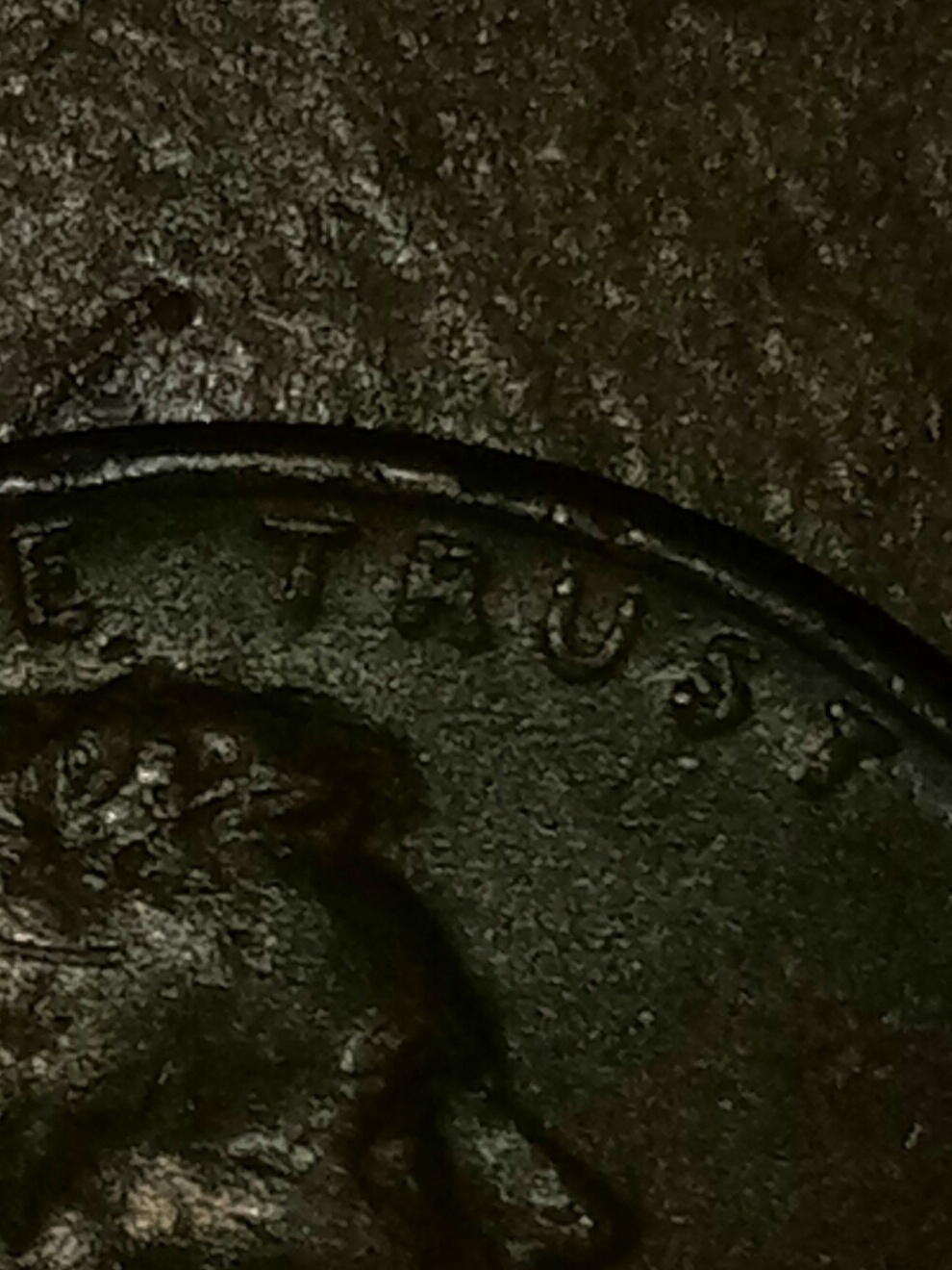
            Thank you for the knowledge sir Josh, i found a coin its 1970s lincoln cent, can you tell me if is it doubling in the “trust” word? https://uploads.disquscdn.com/images/3faff38a8ebcb4961536311bec1acd9556c29163b2e21d5f5dcc24d4bce6425f.jpg

          5. JoshuaTheFunTimesGuide Avatar
            JoshuaTheFunTimesGuide

            Hello, Emerson —

            It’s my pleasure to help. I’m trying to decipher the doubling in “TRUST” on this coin but I’m afraid the image is too dark for me to really see what I need to see. Would you mind uploading a brighter, clearer image of the coin, please?

            Thank you,
            Josh

          6. Emerson StaAna Avatar
            Emerson StaAna

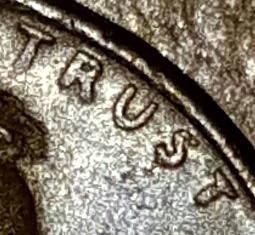
            This is the 1970 coin, i have a new batch of qorld coin what website can i search for coin values https://uploads.disquscdn.com/images/e19cf52b448c926884e58ccac798c4c8251ca47db4e29818c7da359a16d187bb.jpg

          7. JoshuaTheFunTimesGuide Avatar
            JoshuaTheFunTimesGuide

            Hi, Emerson —

            This is a much better photo – thank you! I see what looks like some possible post-Mint damage/grooves along the tops of the letters ST and bottom of the U. I don’t believe, based on what I see in this photo, that this coin has any doubling. I suggest hanging on to it anyway for a closer, in-hand evaluation. Besides, it’s worth twice its metal value anyway due to its copper content.

            Neat find,
            Josh

    1. JoshuaTheFunTimesGuide Avatar
      JoshuaTheFunTimesGuide

      Hello, Lori —

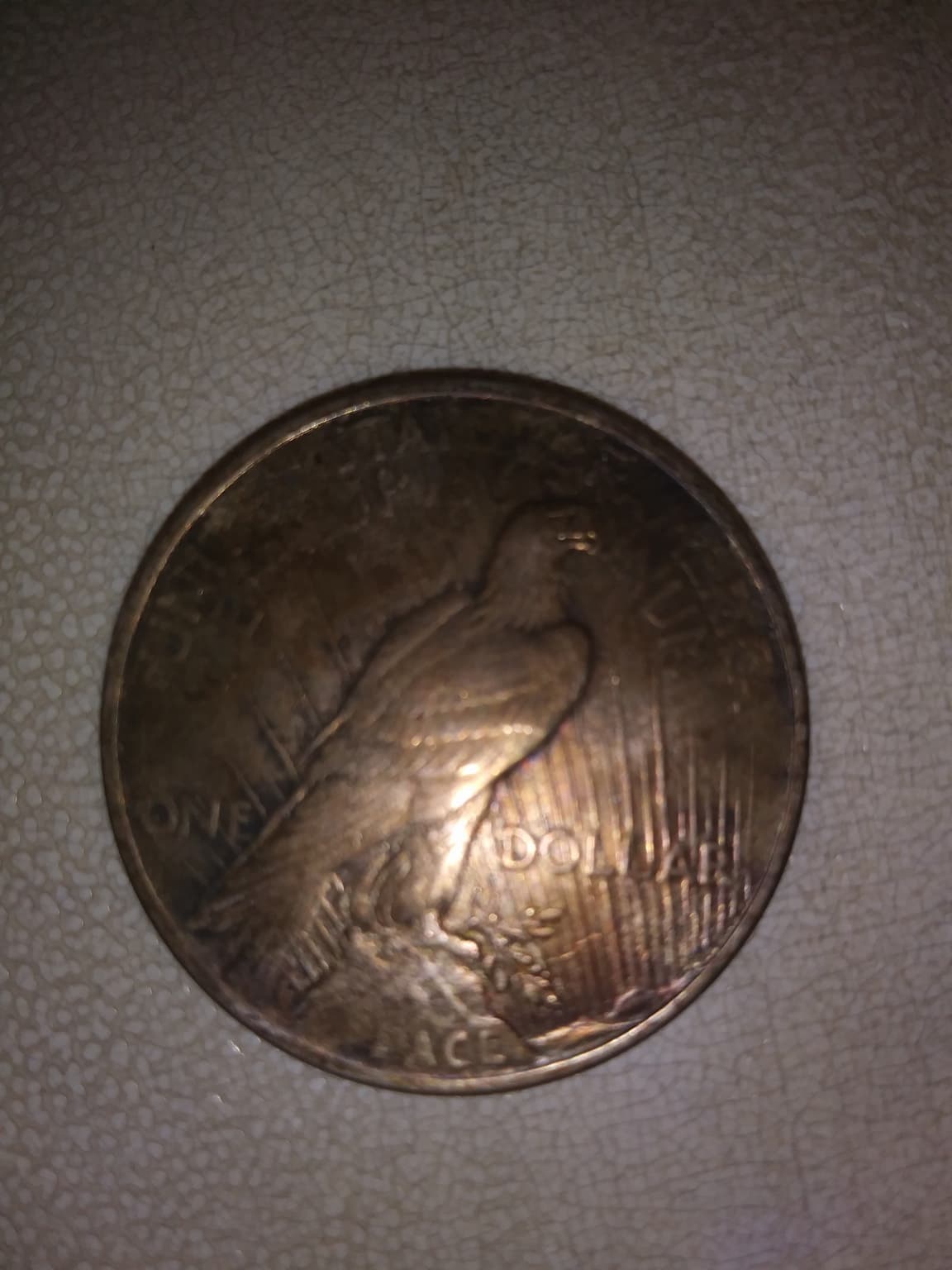
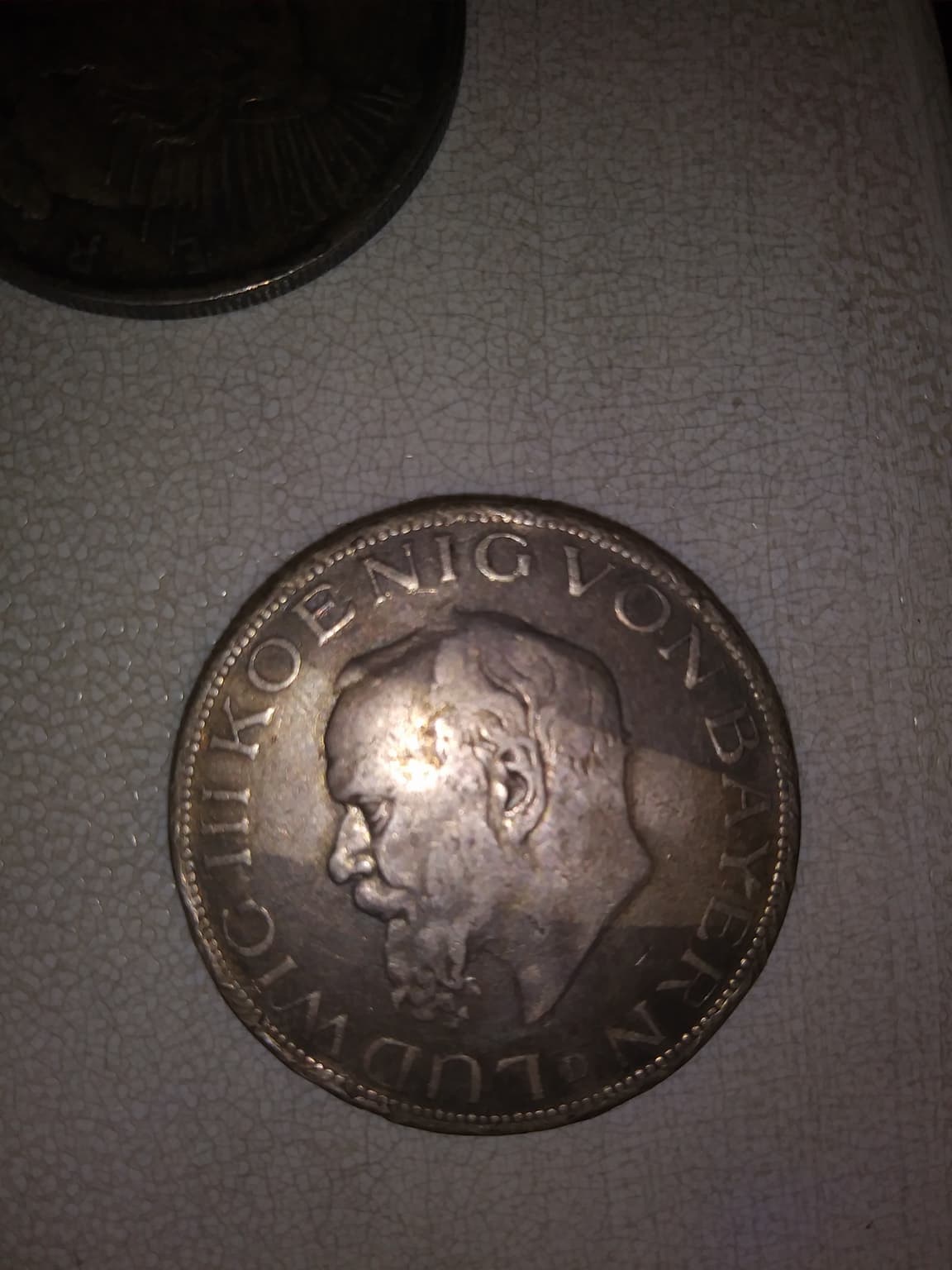
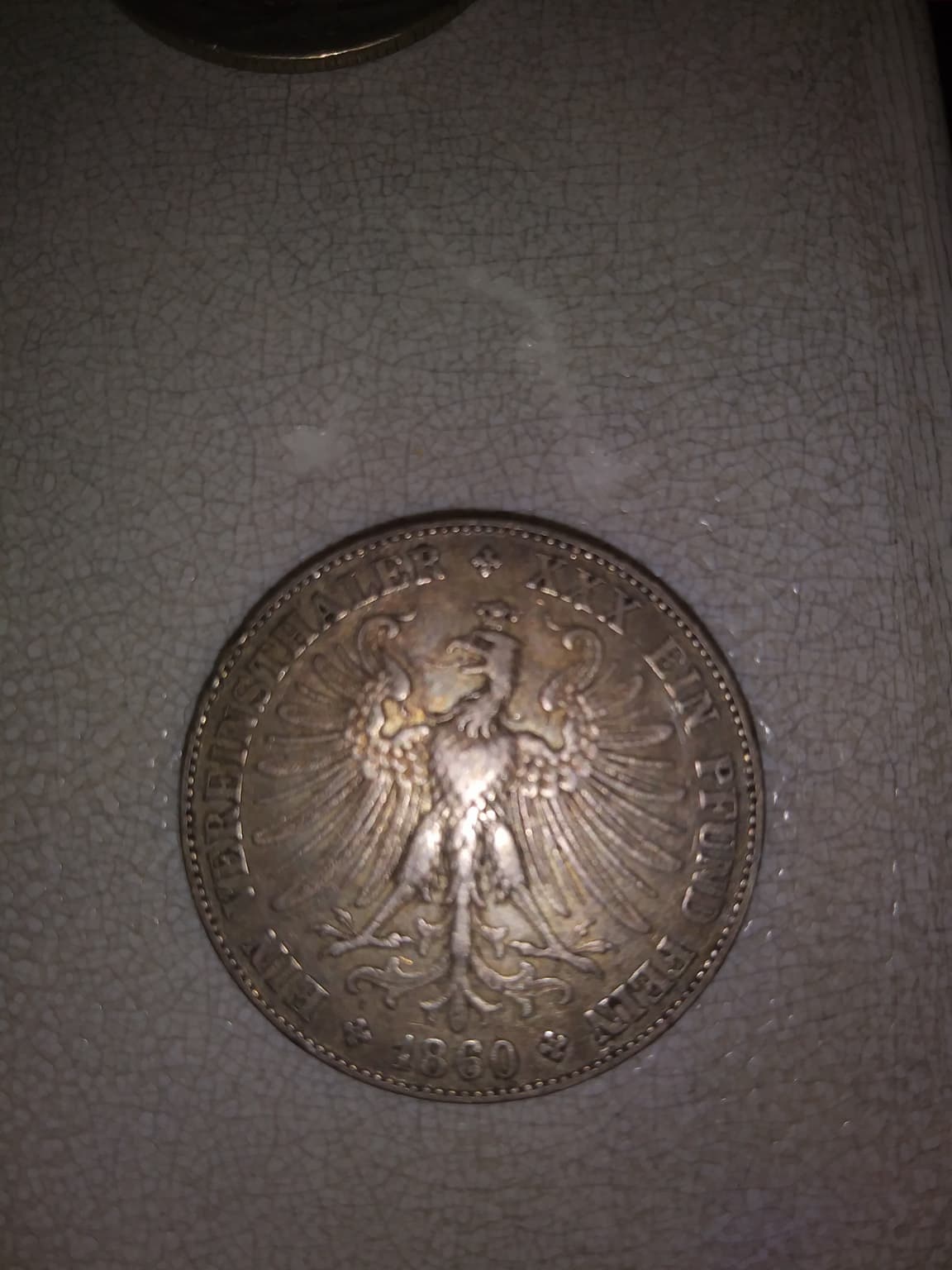
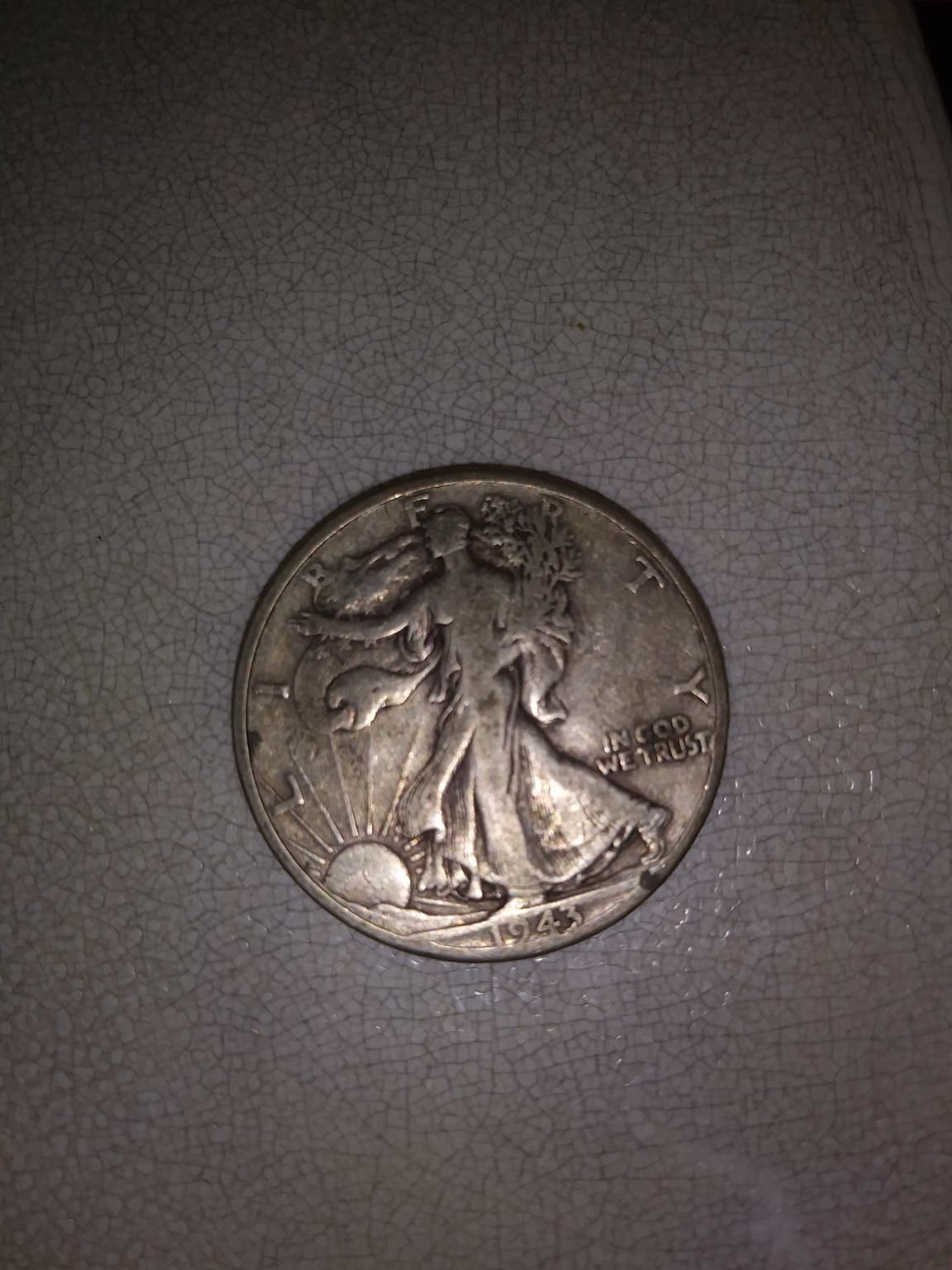
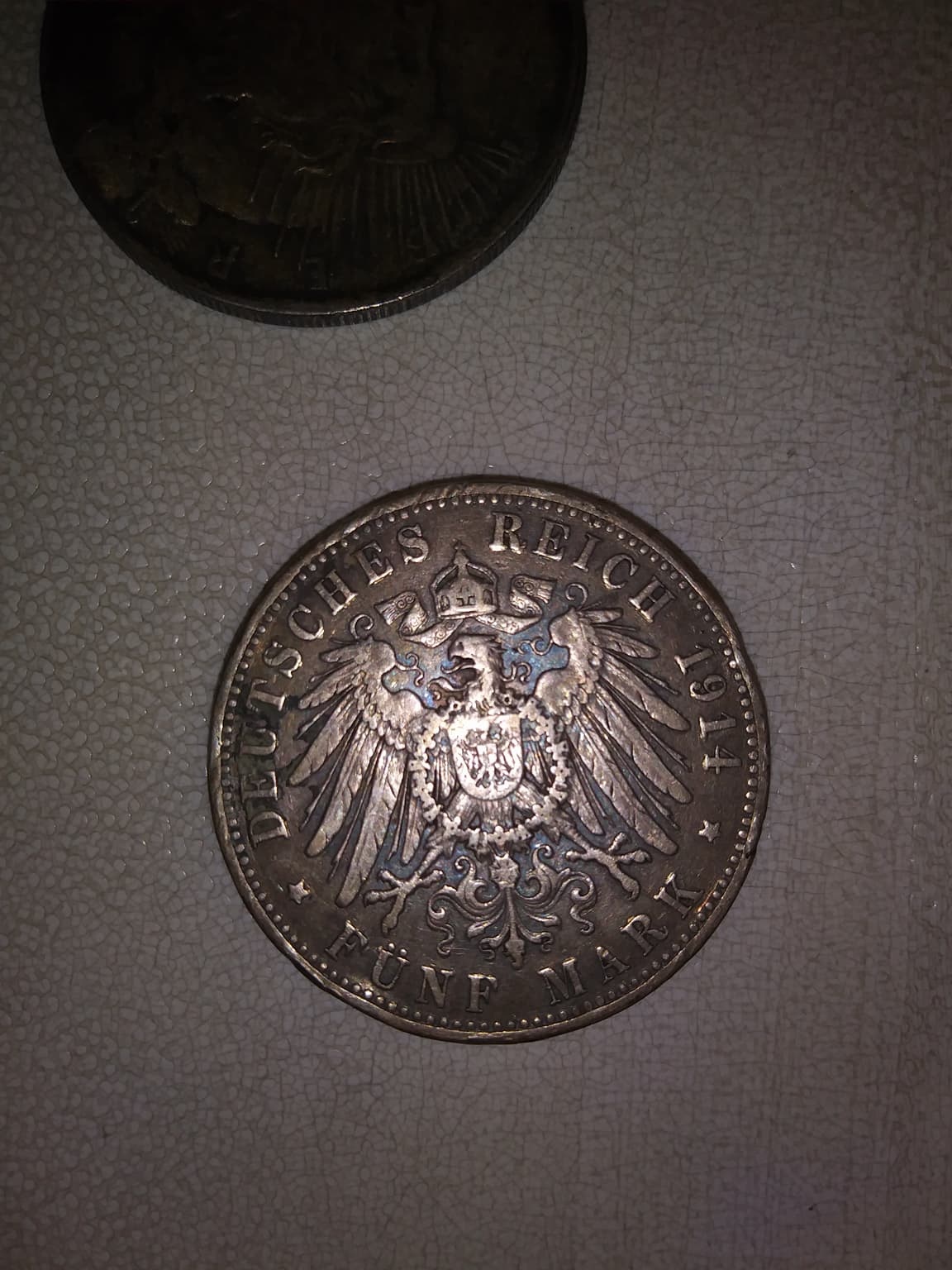
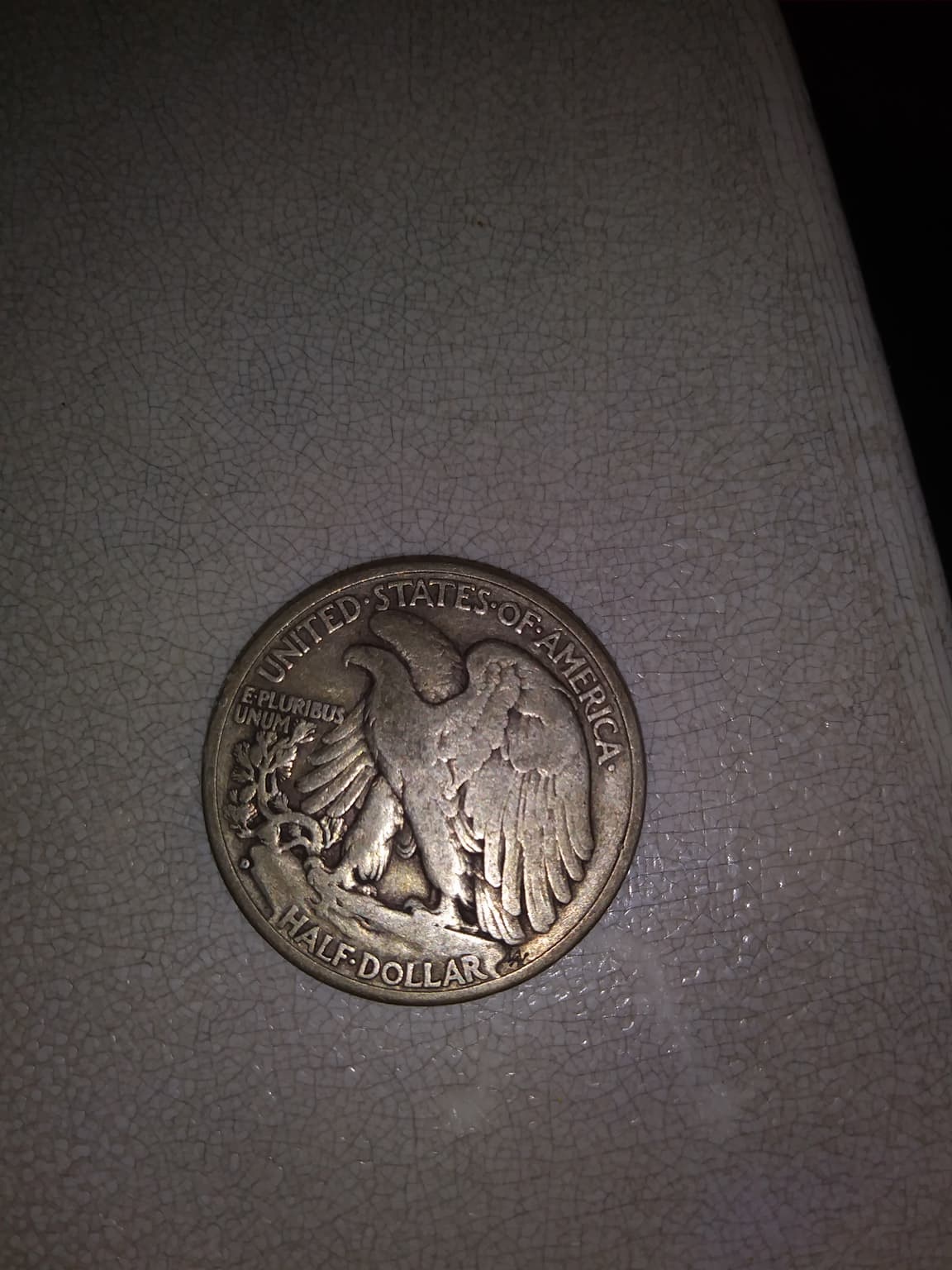
      I’m not too sure on the German coins (my areas of expertise are generally US and Canada) but the 1943-D Walking Liberty half dollar is worth roughly $6 while the 1924 Peace dollar is worth about $18.

      Nice coins!
      Josh

  7. Arthur Avatar
    Arthur

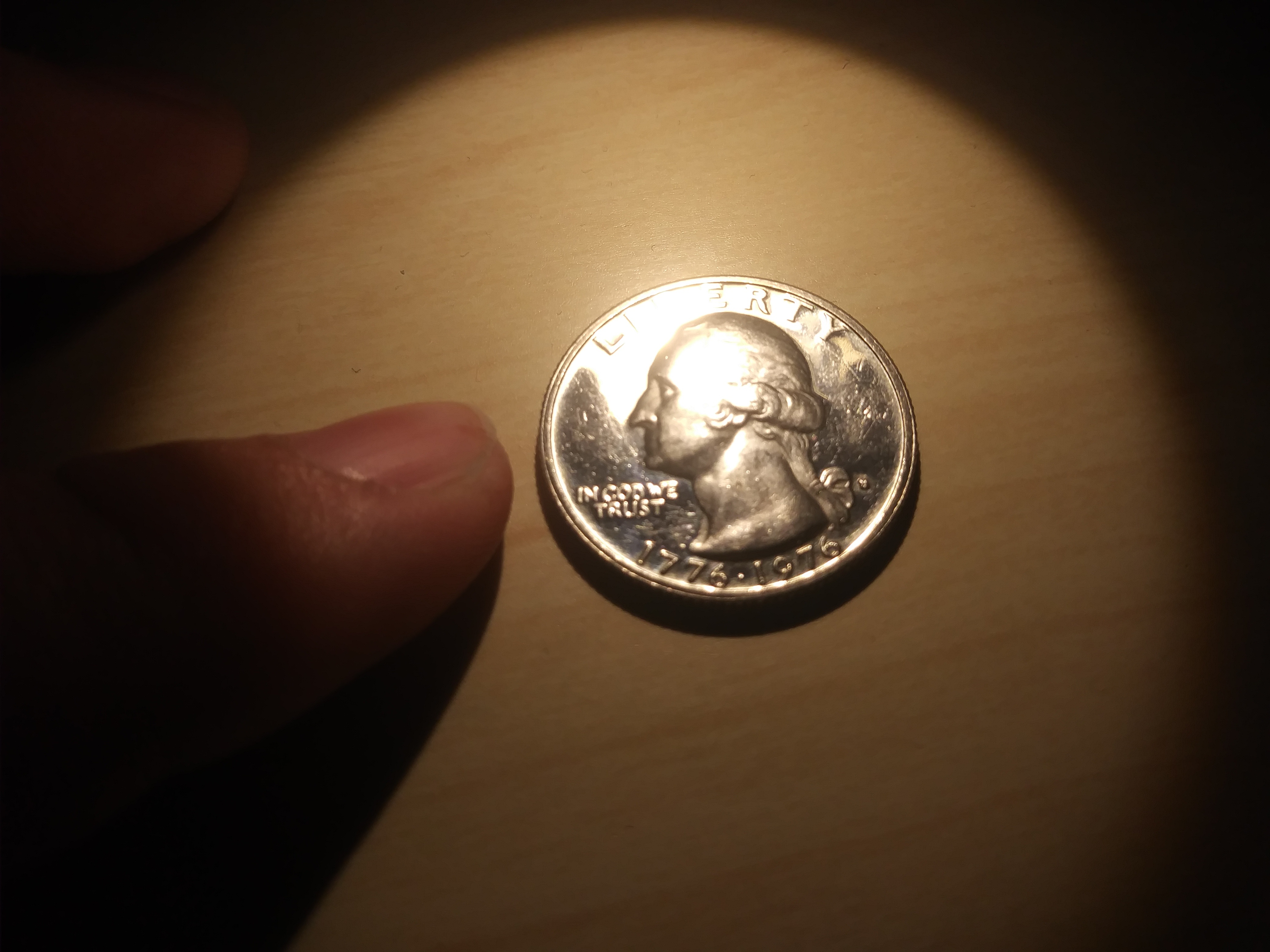
    I’m not sure its gonna attach, but I found a bicentennial quarter S-mark a while ago, I would guess it to be no lower than a 67 grade, what might this be worth?

    1. JoshuaTheFunTimesGuide Avatar
      JoshuaTheFunTimesGuide

      Hi, Arthur!

      You found a 1976-S proof quarter that had been removed from its original proof collector set from the mint and spent as money. Its worth about 75 cents to $1, but what I think is neat is that you happened to find it in circulation. I’d say it’s a keeper with a story if you ask me!

      Best,
      Josh

  8. Jojo Ritter Avatar
    Jojo Ritter

    How much do u think I could sell these for and how fast do u think I could sell them? Just curious of an opinion of a professional on coins. (1942 d wheat penny) (1945 wheat penny without a mint mark) and ( 2 indian head pennys from 1901 and 1906) any idea?

    1. JoshuaTheFunTimesGuide Avatar
      JoshuaTheFunTimesGuide

      Hi, Jojo —

      Without knowing the condition of these coins, I’ll assume they are in average circulated condition, with no errors or varieties, and are problem free (NOT cleaned, heavily scratched, etc.). The cumulative value of these coins is approximately $2 to $3… As many coin shops are closed right now you may be best served selling them on eBay.

      I hope this info helps,
      Josh

  9. Jamie Elmore Avatar
    Jamie Elmore

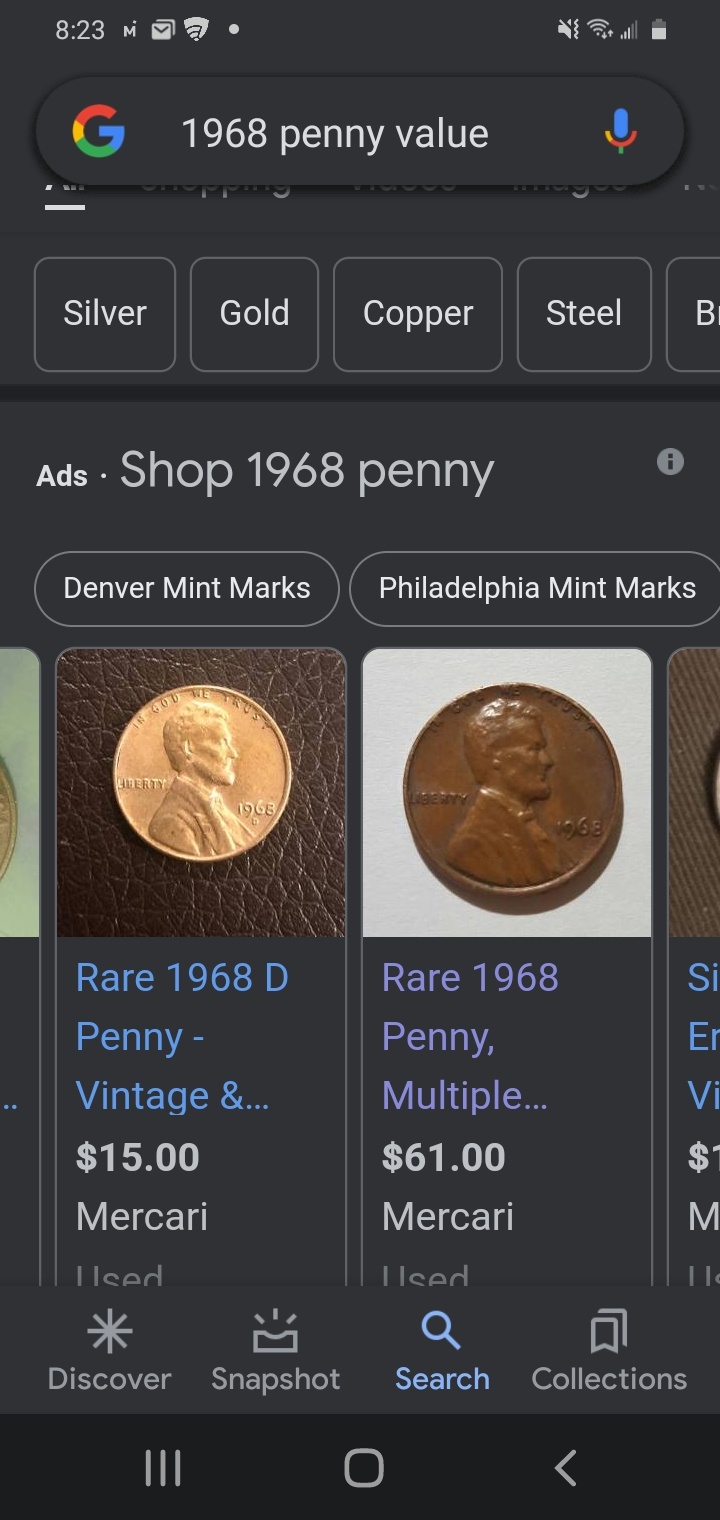
    Hello I have a 1968 penny and the L is in the rim and the in good we trust is also.and its double die .and it has no mint mark.I was told it was worth a lot do you know if it is?

    1. JoshuaTheFunTimesGuide Avatar
      JoshuaTheFunTimesGuide

      Hi, Jamie —

      Would you please post a clear photo of the coin here so I can take a closer look?

      Thanks,
      Josh

      1. Jamie Elmore Avatar
        Jamie Elmore

        Here it is

      2. Jamie Elmore Avatar
        Jamie Elmore

        How do I put a picture on here

        1. JoshuaTheFunTimesGuide Avatar
          JoshuaTheFunTimesGuide

          Hi Jamie,

          Here are instructions on how to upload images to Disqus: https://help.disqus.com/en/articles/1717234-adding-images-and-videos

          Best of luck,
          Josh

          1. Jamie Elmore Avatar
            Jamie Elmore

            Did you see the penny what do u think?

        1. JoshuaTheFunTimesGuide Avatar
          JoshuaTheFunTimesGuide

          Hi, Jamie —

          This is a 1968 penny from the Philadelphia Mint worth 2-3 cents for its copper value.

          Best,
          Josh

          1. JoshuaTheFunTimesGuide Avatar
            JoshuaTheFunTimesGuide

            Jamie,

            These people/companies are listing those coins for many times more than are really worth. Doesn’t mean they’re going to sell for those prices.

            I strongly advise you to avoid looking to websites like those for info on coin values. If you want to know what coins are really worth stick to price guides like ours or those on other reputable coin info sites, buy coin price guides at the book store, or turn to trustworthy coin dealers for this info.

            Best of luck,
            Josh

Leave a Comment

Content Widget