


Wondering how to tell if a coin is an error or not?
Do you know the basic “signs” you should be looking for on U.S. error coins?
Following is a list of characteristics that are most commonly found on U.S. error coins.
You’ll want to look for these very specific features first when trying to determine if you have an error coin on your hands or not.
Specifically, I’m going to tell you:
- What features you should be looking for to identify error coins
- How much error coins are worth
- Which coins with errors you should hold onto
While I can’t guarantee that all of the coins you find which exhibit these distinctive characteristics will be legit U.S. error coins… this Coin Errors List summarizes the types of things you should be looking for.
Use it to hone in on the coins in your collection that have the possibility of being real U.S. Mint errors.
Coin Errors List Of Features To Look For
#1 – Doubled Lettering Or Doubled Design
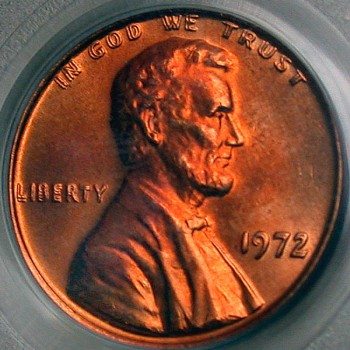
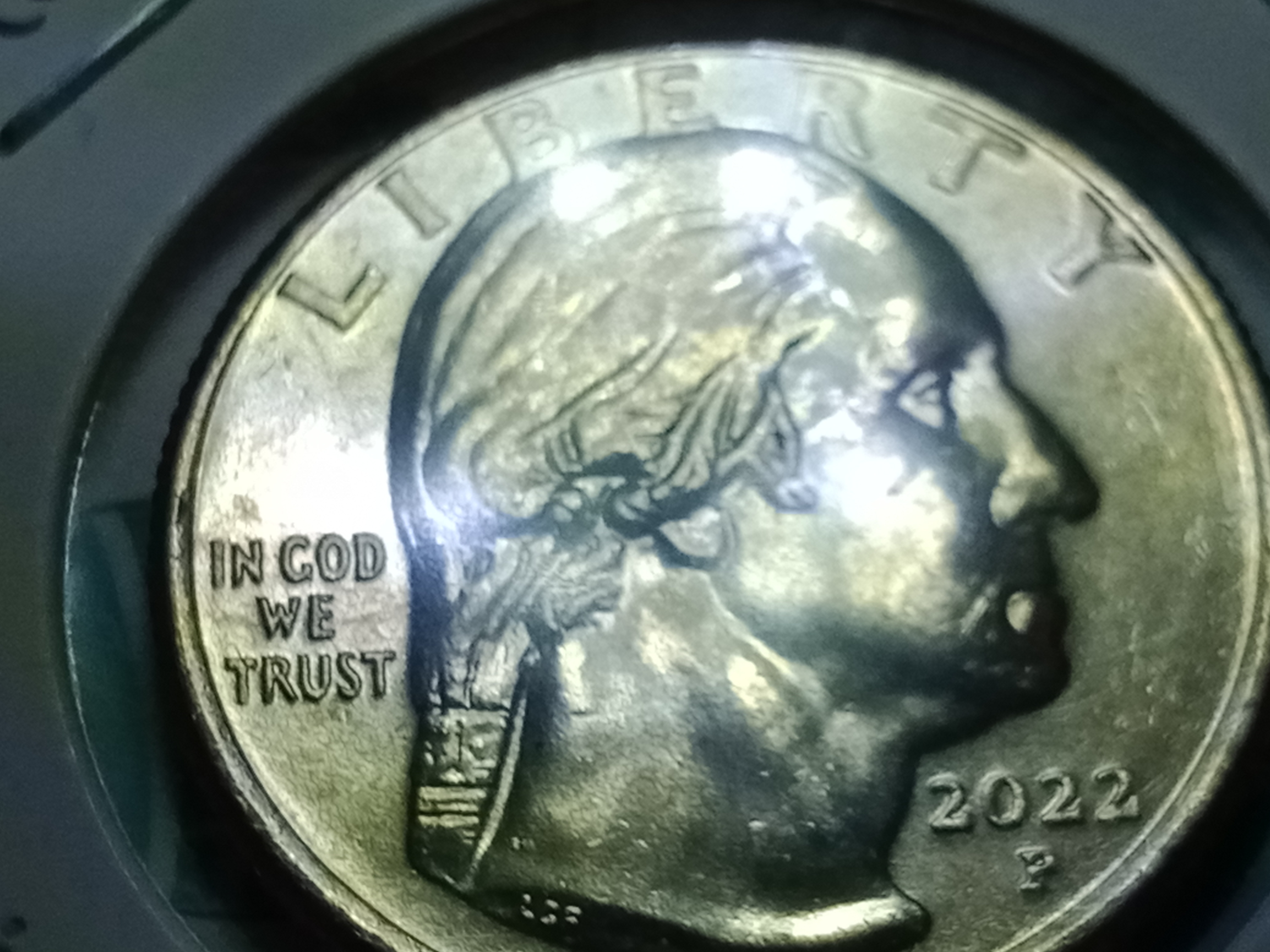
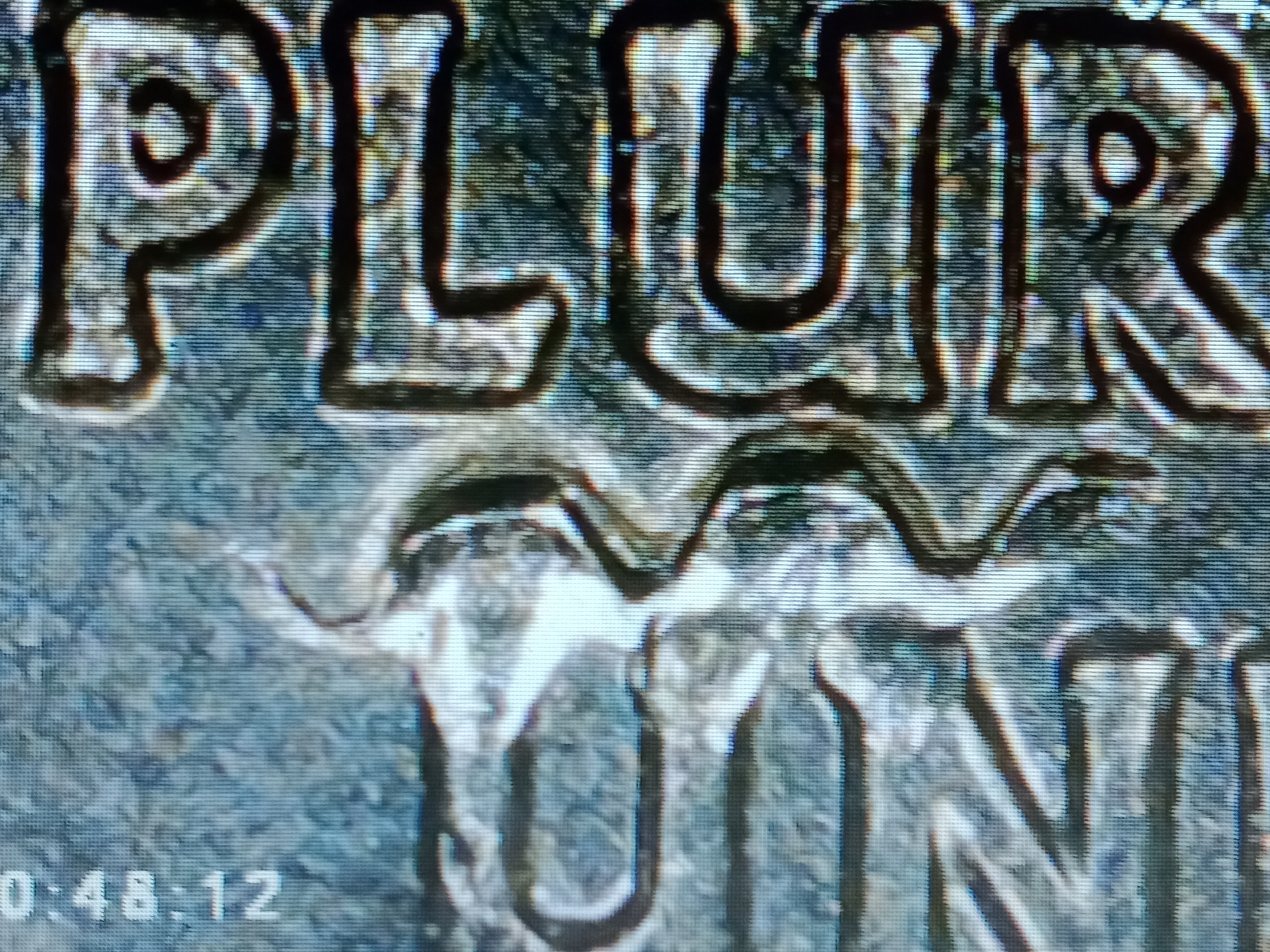
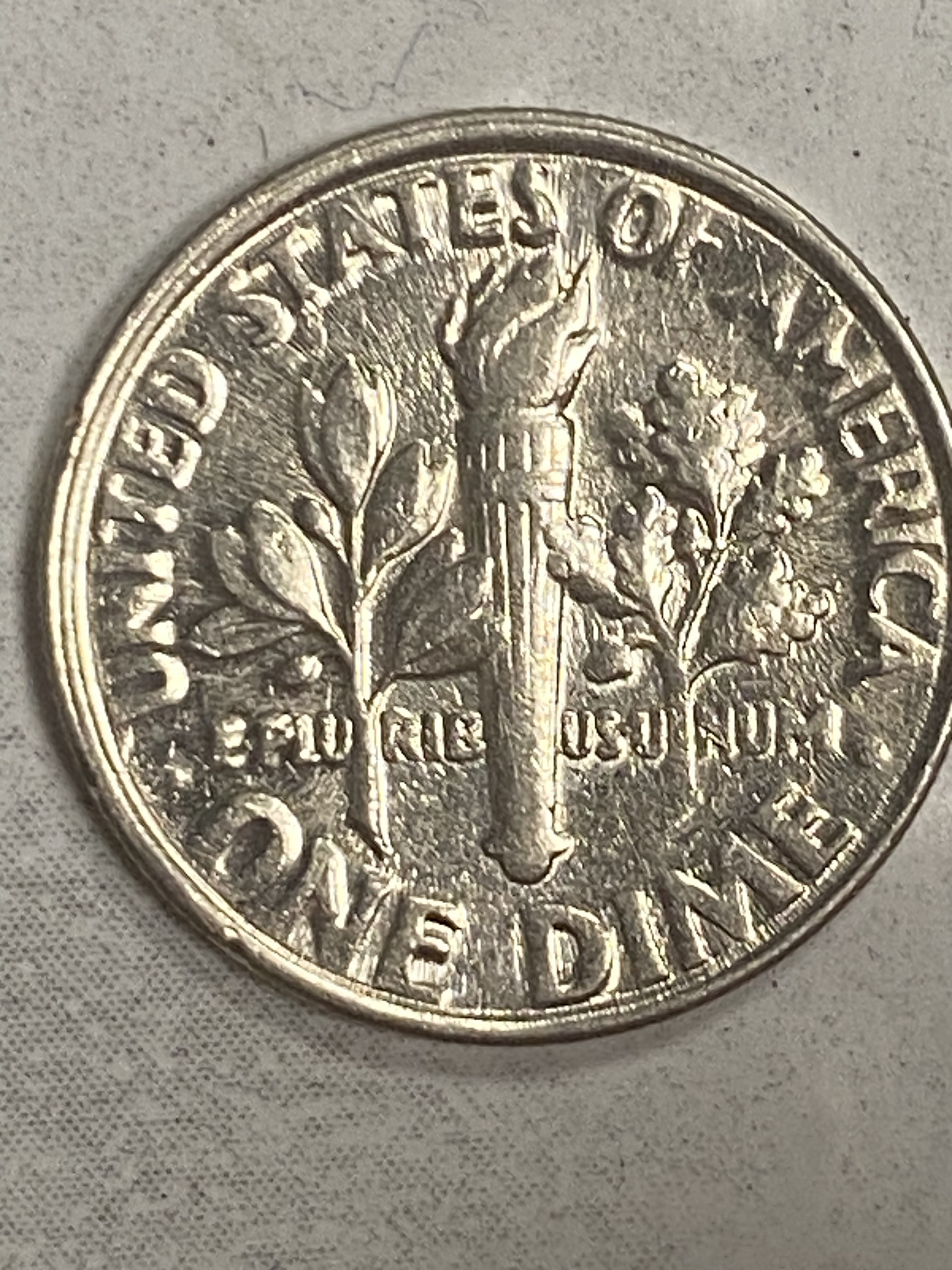
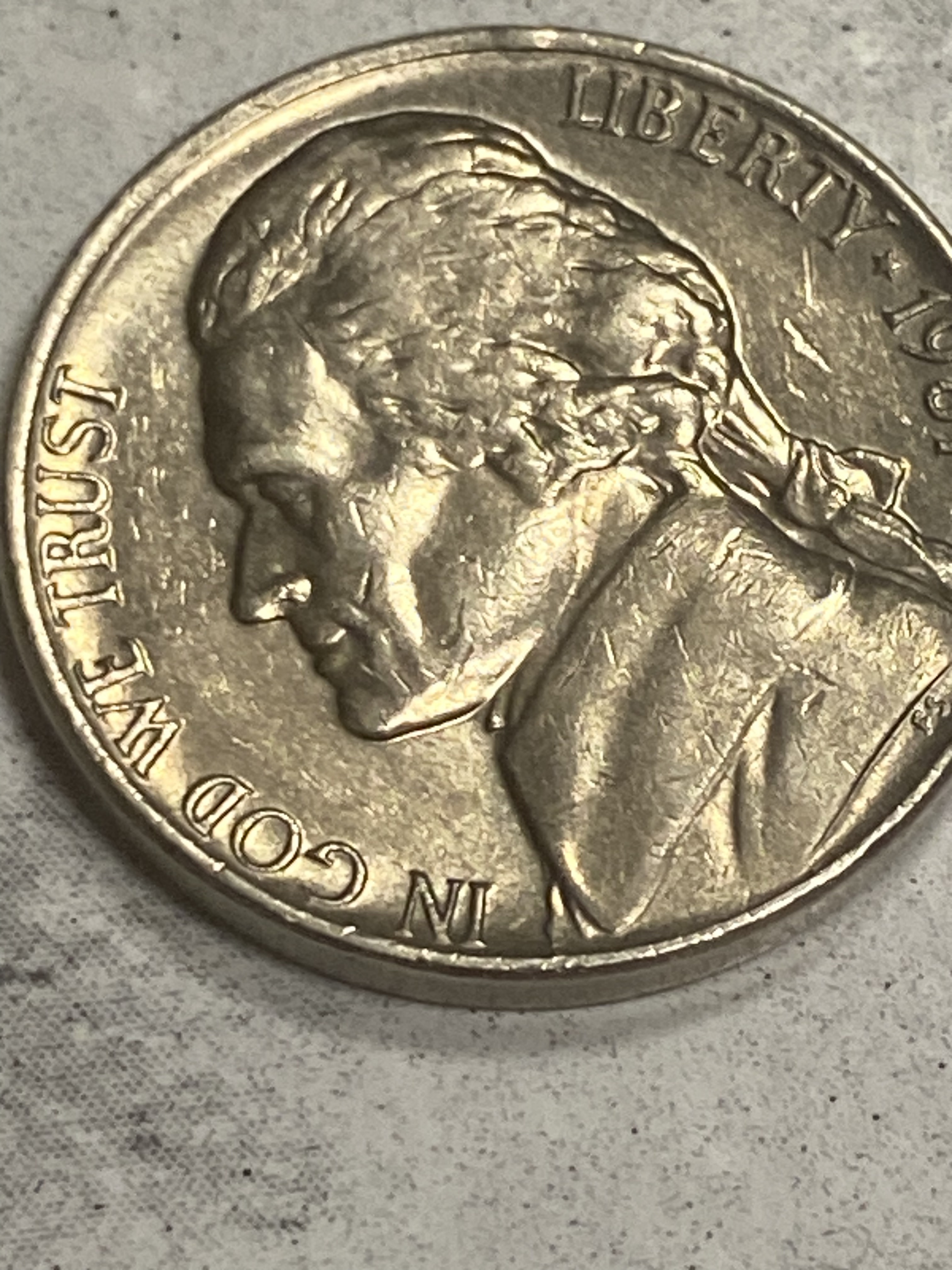
Doubling of letters, numbers, or other details on a coin can be indicative of an error.
The most common areas to look for doubling on a coin are:
- The coin’s date
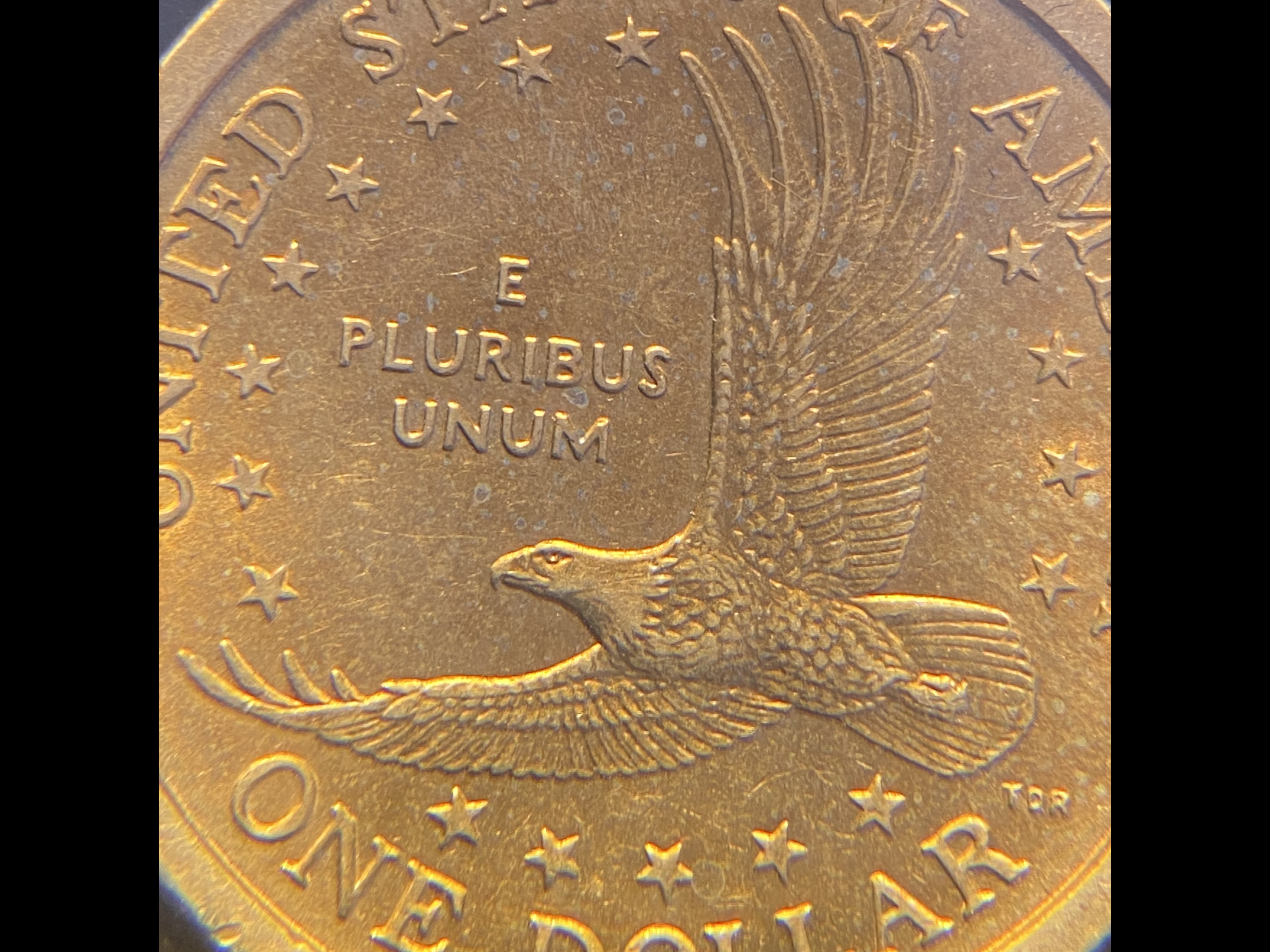
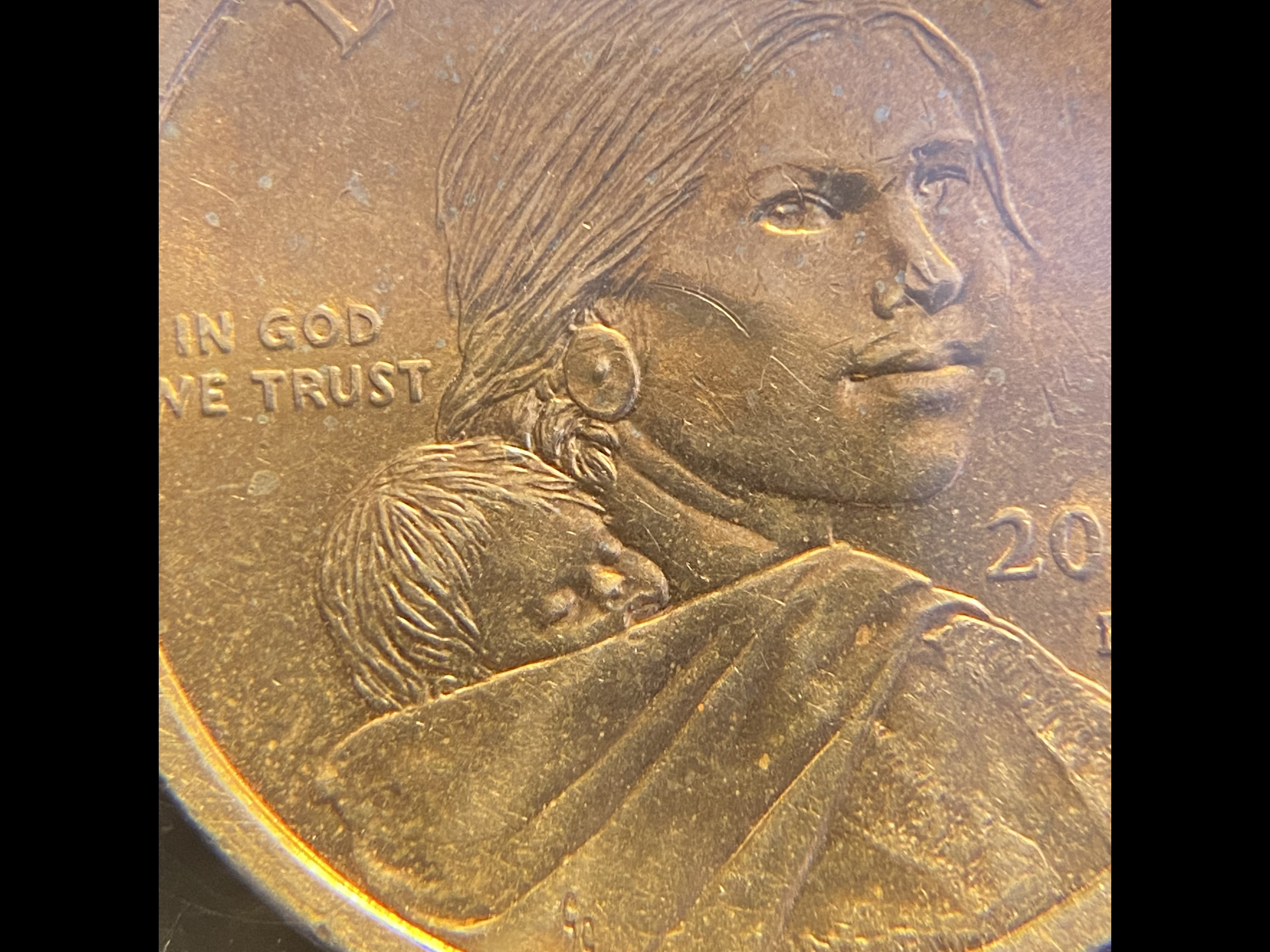
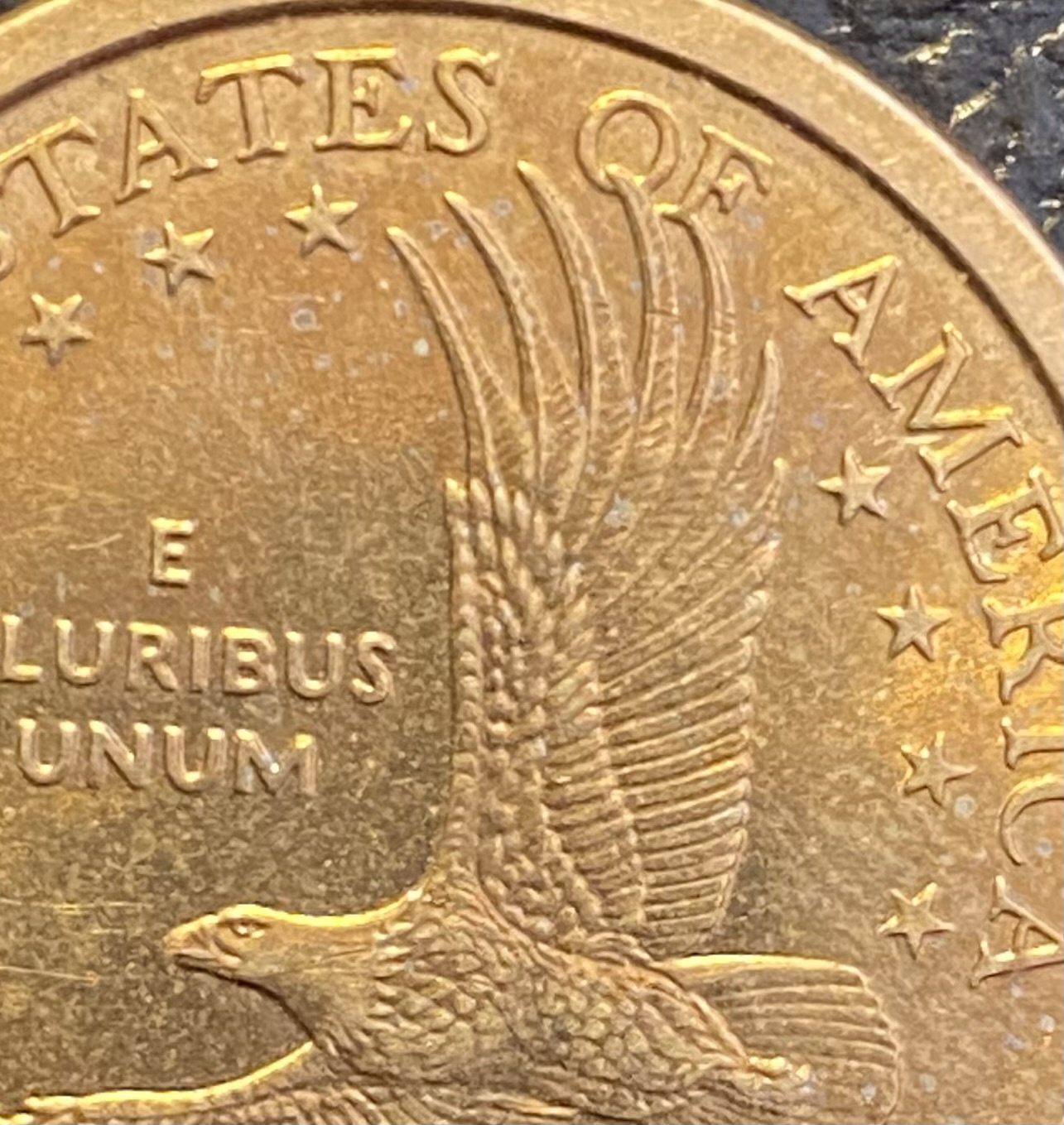
- Inscriptions such as “IN GOD WE TRUST,” “UNITED STATES OF AMERICA,” or “E PLURIBUS UNUM”
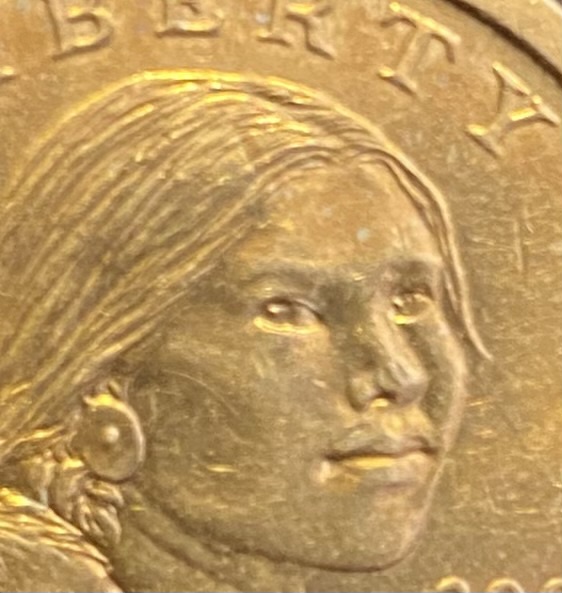
- Significant areas of the design — such as an eye, mouth, ear, or hair details
Although some coins with doubling aren’t necessarily errors (minor shelf-like doubling is simply machine chatter), those that are can be quite valuable.
The rarest and most popular type of doubling error is known as a doubled die. Doubled die coins are caused during the process of creating the die that turns blank coins into money.
Doubled-dies are definitely U.S. error coins that you should hold onto — some are worth more than $1,000!
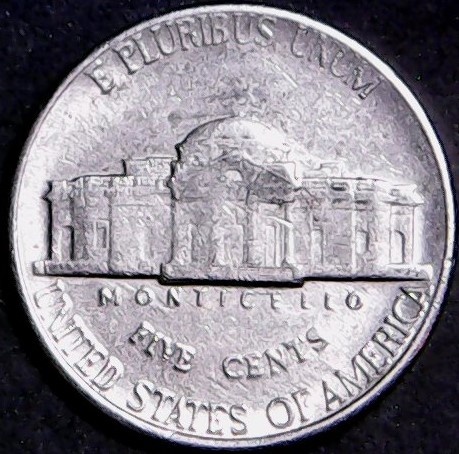
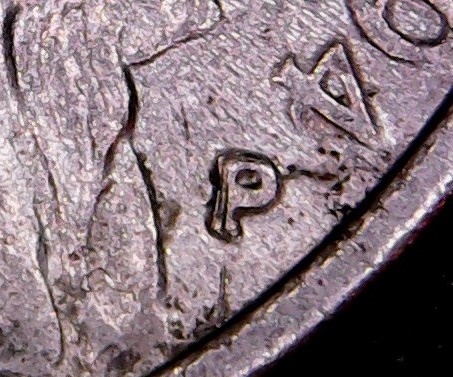
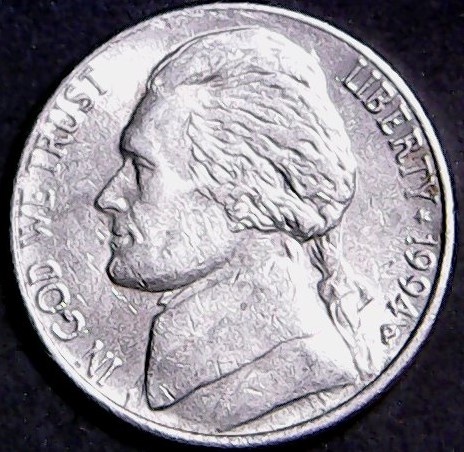
Doubled die error coins are sometimes confused with repunched mintmark error coins. However, they are not the same. The difference depends on the point at which the doubling occurred during the minting process. Specifically, a doubled die coin is created when the hub that puts the design on the die makes 2 impressions on the die at slightly different angles. A repunched mintmark coin is created when the letter punch leaves 2 impressions at different angles or slightly different locations.
#2 – An Off-Center Design
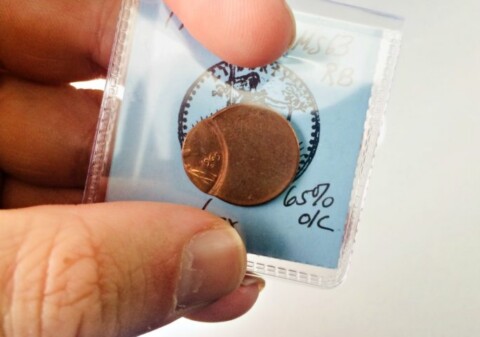
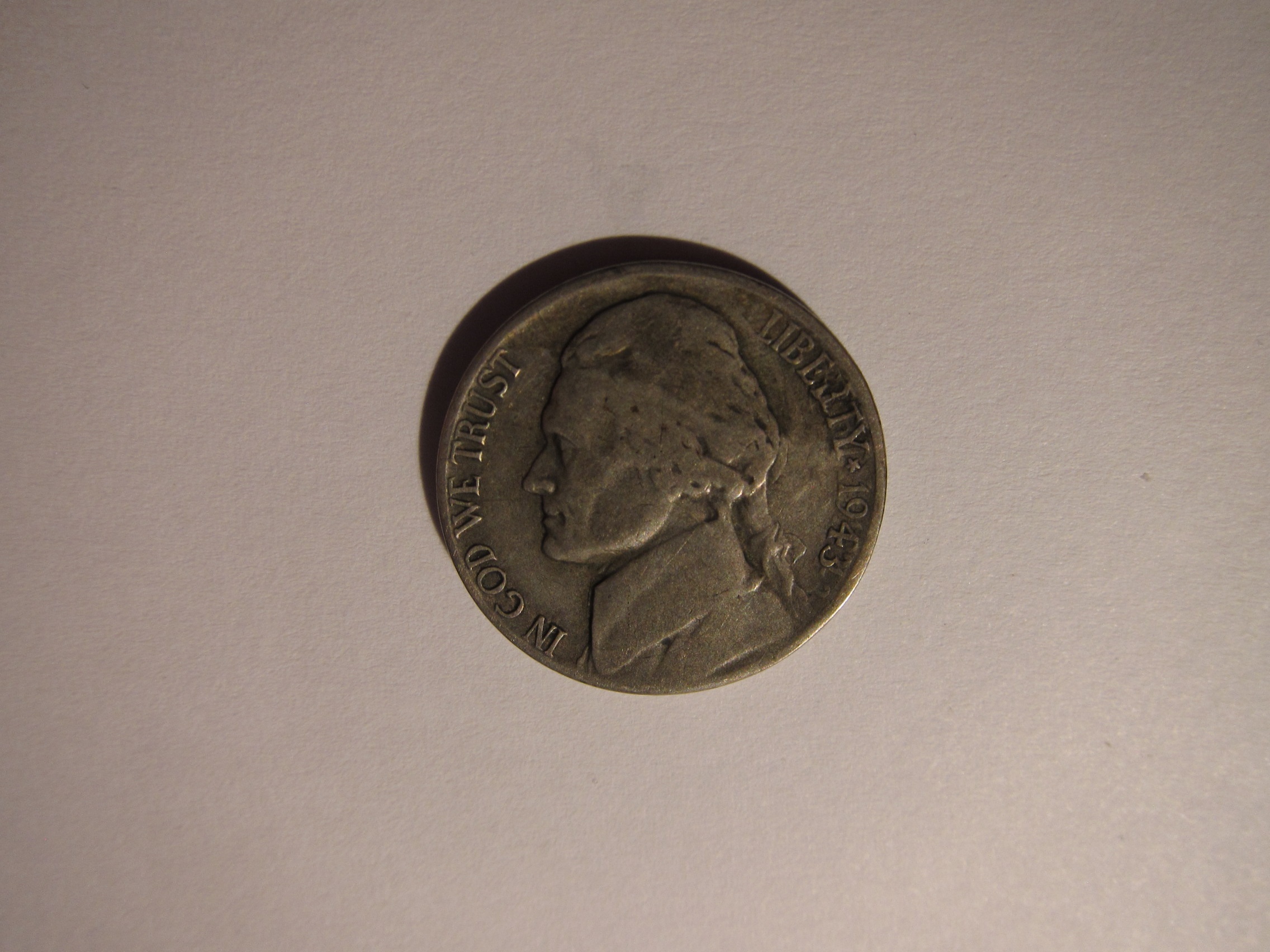
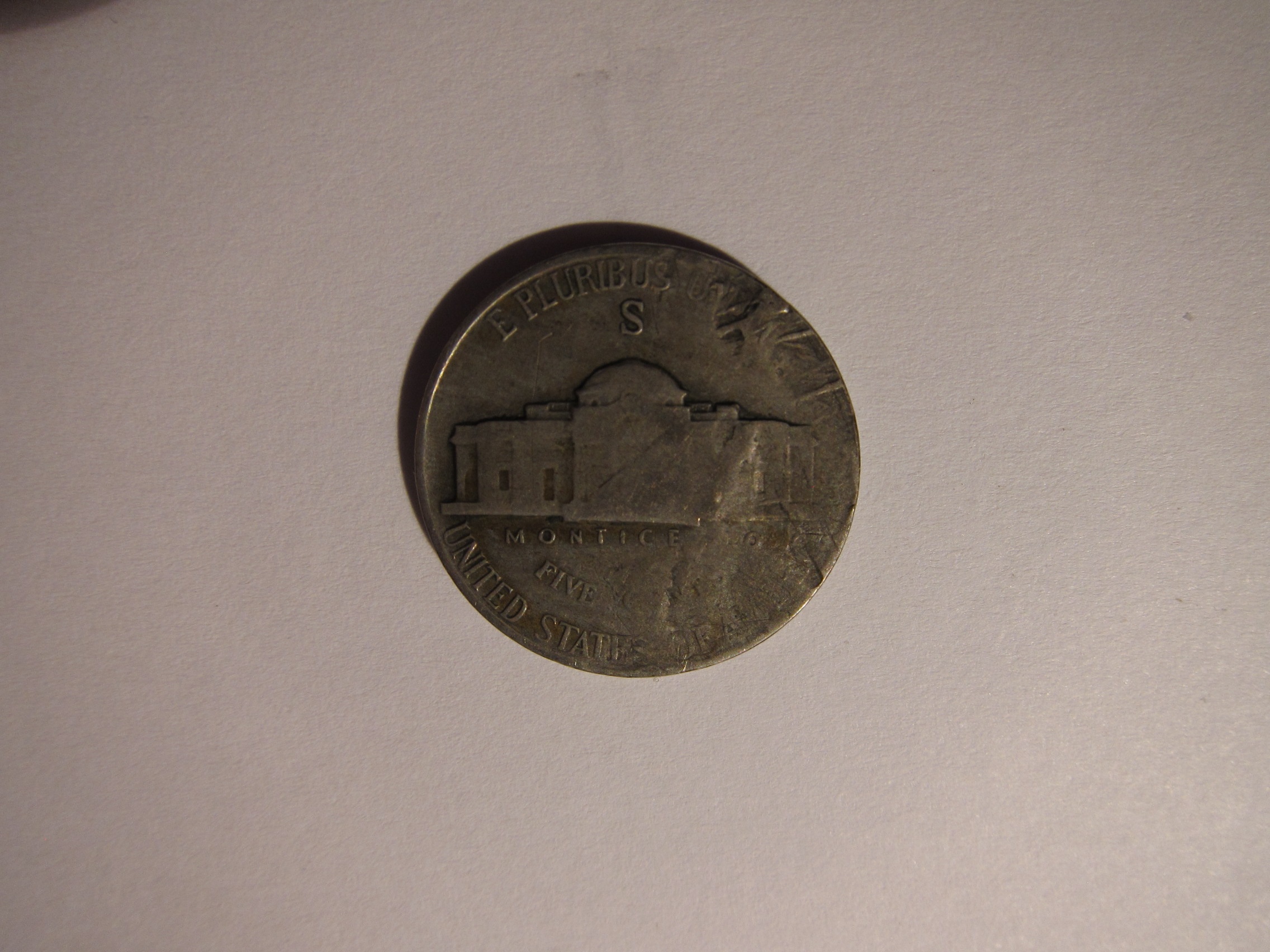
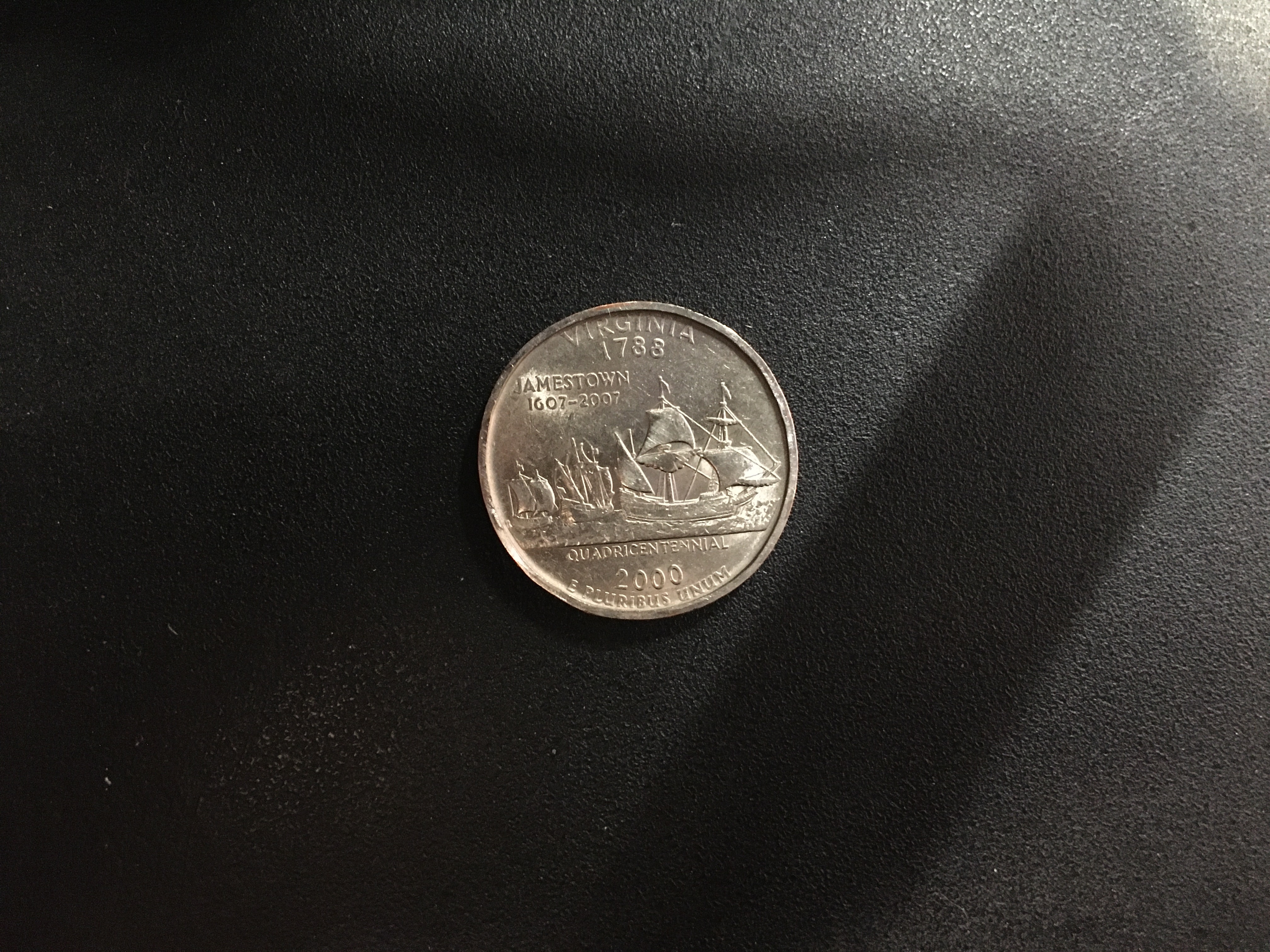
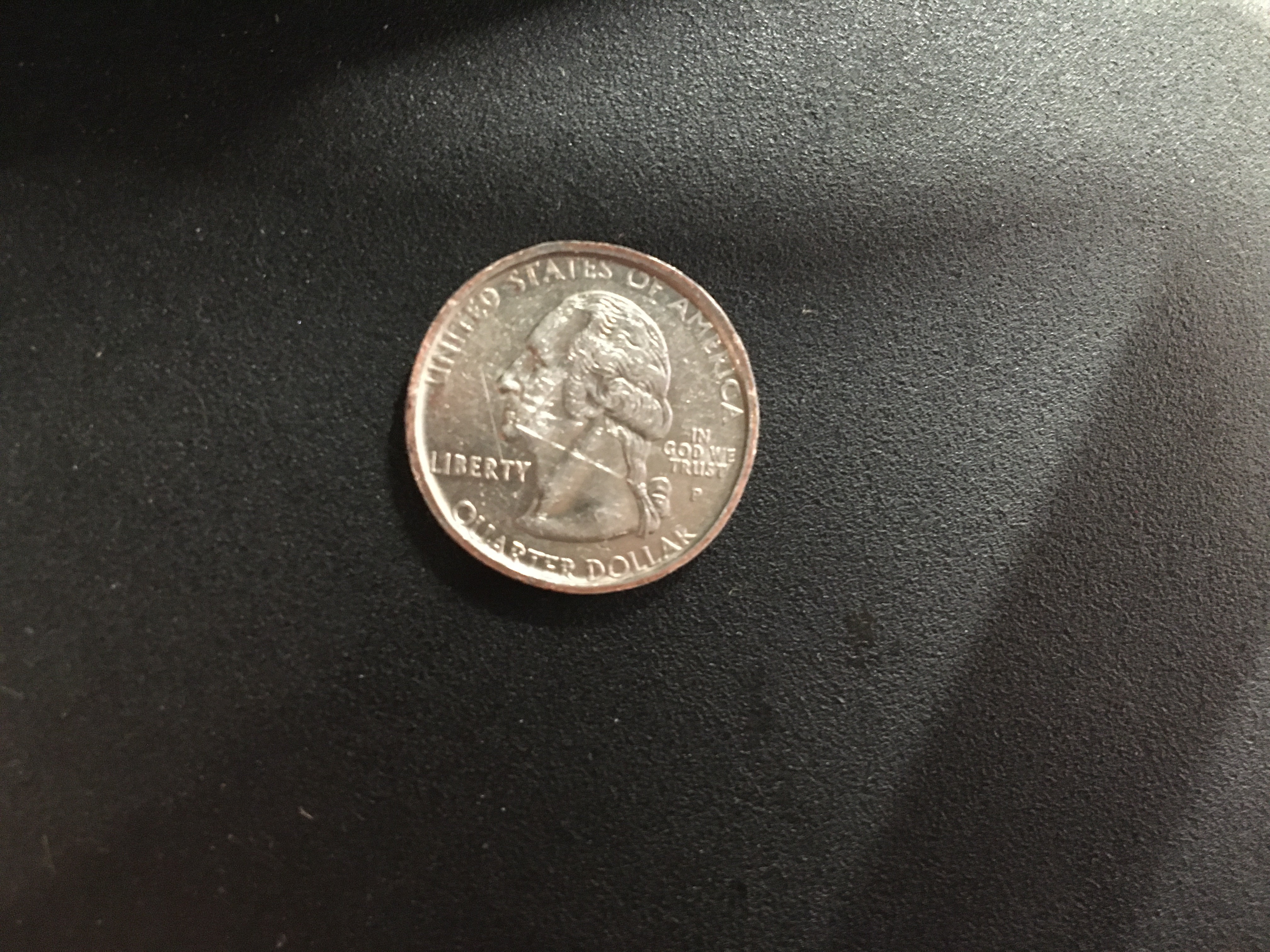
One of the most obvious types of errors occurs when a coin is struck off center.
An off-center strike appears as a crescent-shaped area of blank metal on the coin.
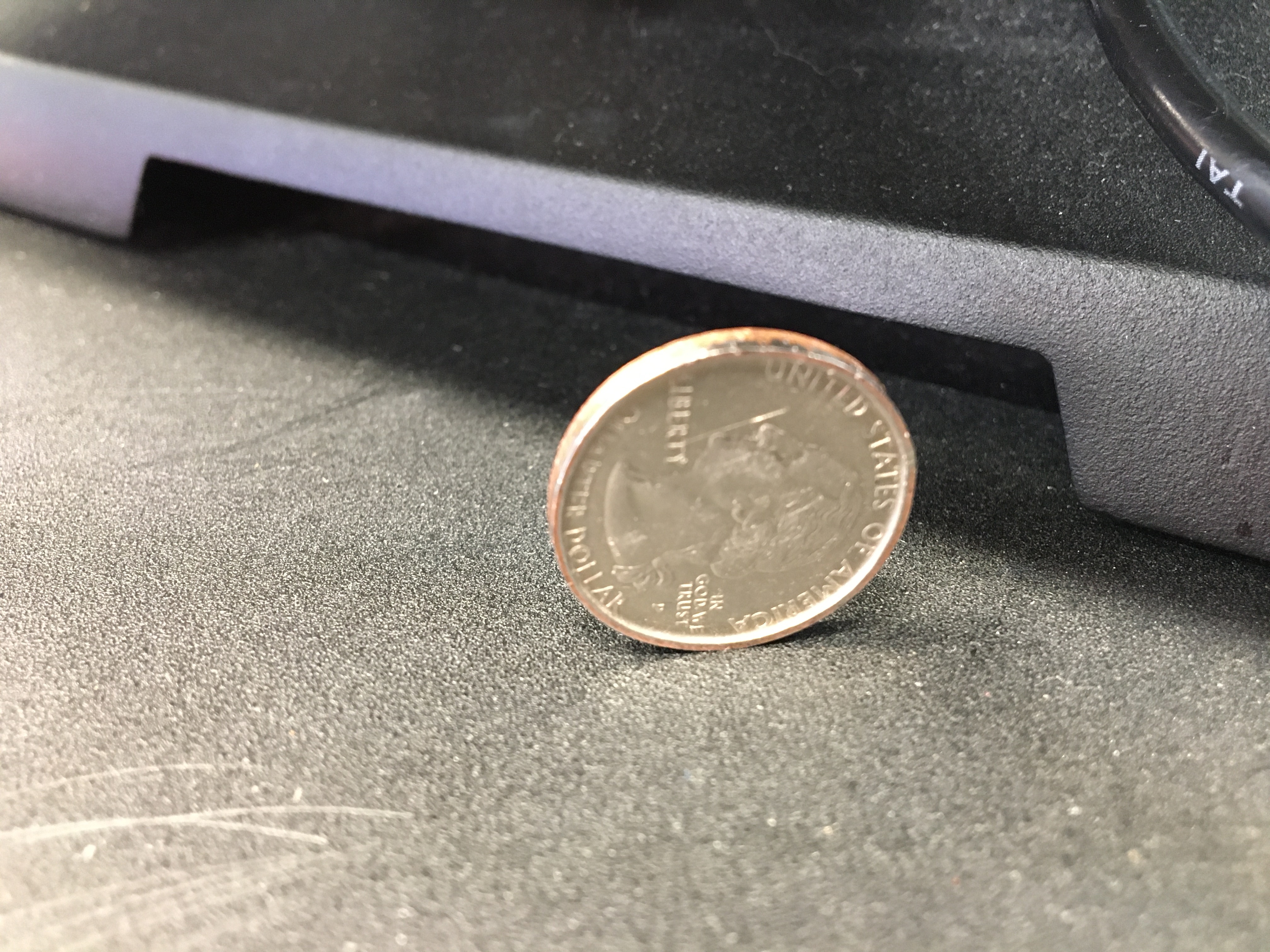
Sometimes, the rim (raised lip of metal around the edge of the design) will appear to be thicker on one side of the design than the other.
Off-center coins are very common, but they are still technically errors and worth keeping.
The most drastic off-center coins are worth $50 or more!
#3 – Unusual Raised Straight Or Squiggly Lines
If you see any raised lines or markings on a coin that don’t look ordinary, they could be due to an error.
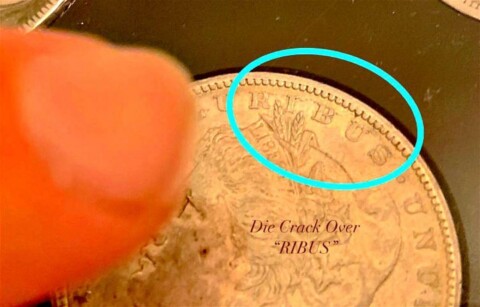
Not all raised lines are errors, however:
- Sometimes, the raised lines are caused by polishing marks transferred from the die onto the coin — these aren’t really valuable or scarce.
- Other times, raised lines are made from old or aging dies that begin to crack. When the break marks transfer onto a coin as raised lines and markings — these error coins are often quite valuable.
So, hang onto any coin you see that shows a raised marking. Then, evaluate it further to see if what you have is a type of error known as a die crack or die break.
The most bizarre die breaks are quite rare and collectible — with some worth more than $100!
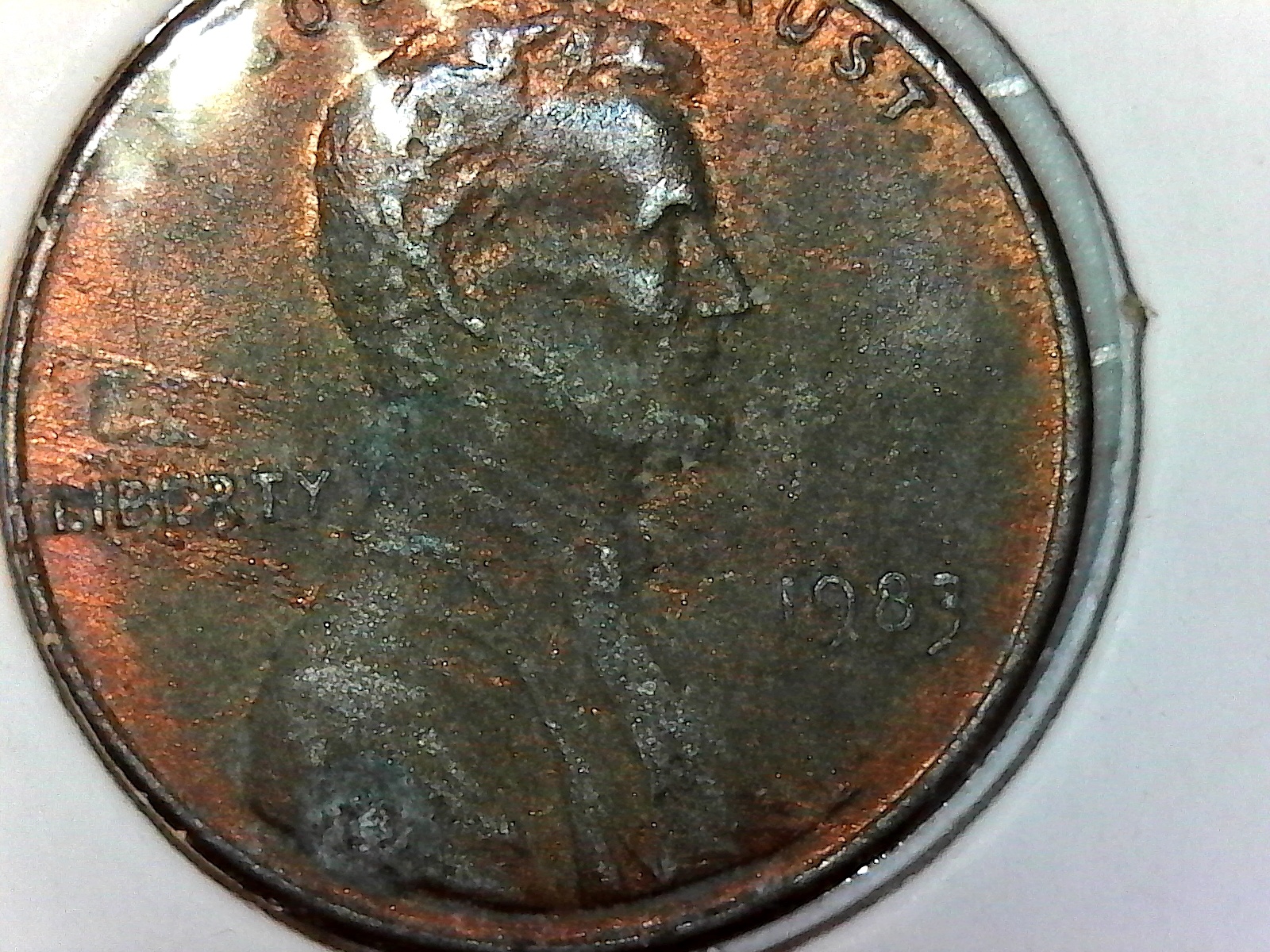
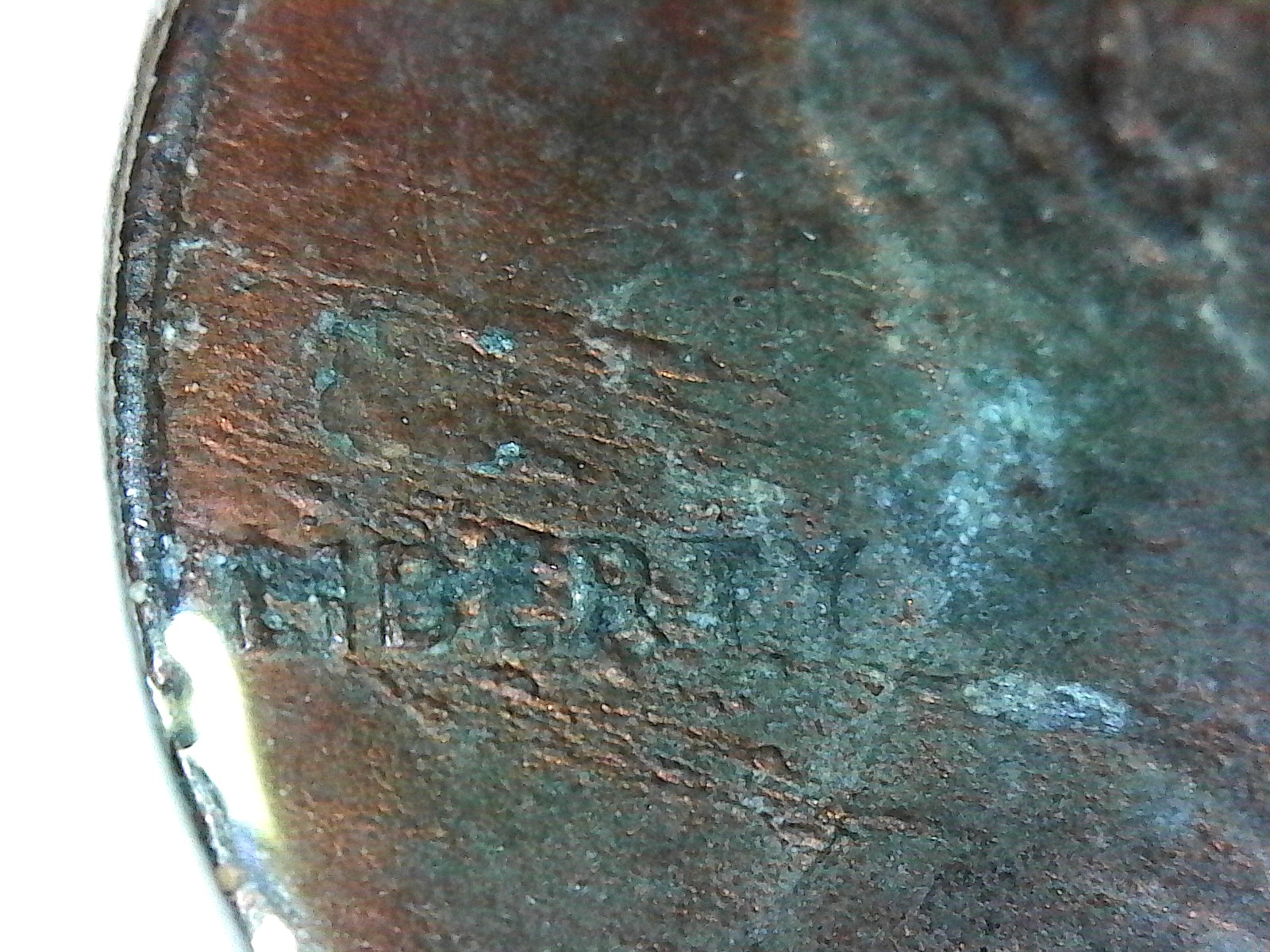
A very popular type of die crack is one that forms between the “B” and “E” of “LIBERTY” on the obverse of a Lincoln cent — just to the left of Lincoln. These are called BIE varieties because the small, vertical die crack seems to take the form of a capital letter “I.” BIE varieties are typically worth $5 to $10.
#4 – Missing Mintmarks, Numbers, Or Letters
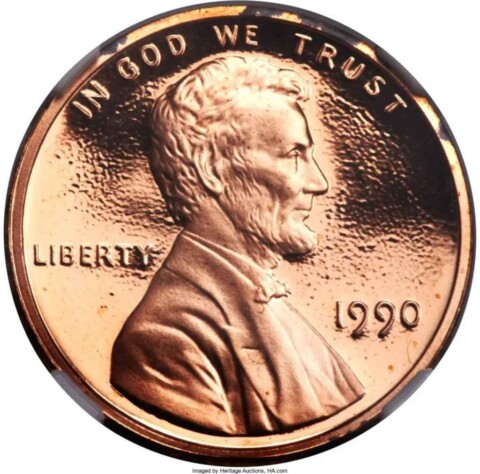
A lot of people find coins that have a letter, mintmark, number, or other design element that appears to be partially (or even completely) missing.
Missing lettering and numbers are often caused by heavy, uneven wear — or even someone intentionally removing the detail on that part of the coin.
Sometimes such things are normal and common. And sometimes they’re valuable errors that are worth holding aside.
Many times, a certain portion of the design is missing because foreign matter got onto the die and obscured that part of the design from being properly struck onto the blank coin. These so-called strikethrough errors that involve missing numbers, letters, or other elements are definitely coins that you should hold onto.
Strike-through error coins are usually worth more than $250!
#5 – Bubbles Or Raised Spots
Bubbles sometimes appear on coins because they’ve been exposed to intense heat — such as a fire or blowtorch. (Yes, some folks blow torch their coins — don’t ask me why!)
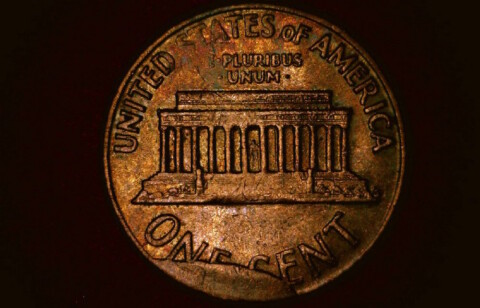
- In most cases… if you find a coin with bubbles or ripples in the metal, it’s because the coin has been damaged by intense heat, such as fire.
- On copper-nickel clad coins… bubbles can be caused by gasses trapped between the layers of cladding.
- On pennies made since 1982… tiny bubbles and ripples are due to imperfections in bonding of the outer copper layer on the zinc core inside the coins — and such bubbles do not add value to the coin unless they are particularly large or numerous.
The best thing to do is to hang onto all coins that have bubbles, ripples, and other raised dimples for further investigation.
Bubbled coins are usually worth $10 to $50 — sometimes even more.
NOTE: Some die cracks take the apparent form of bubbles (as seen above). Such a die crack is known as a die cud and is worth about $100 and up.
#6 – Surface Areas That Have Peeled Away
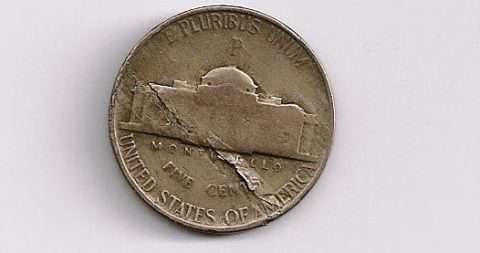
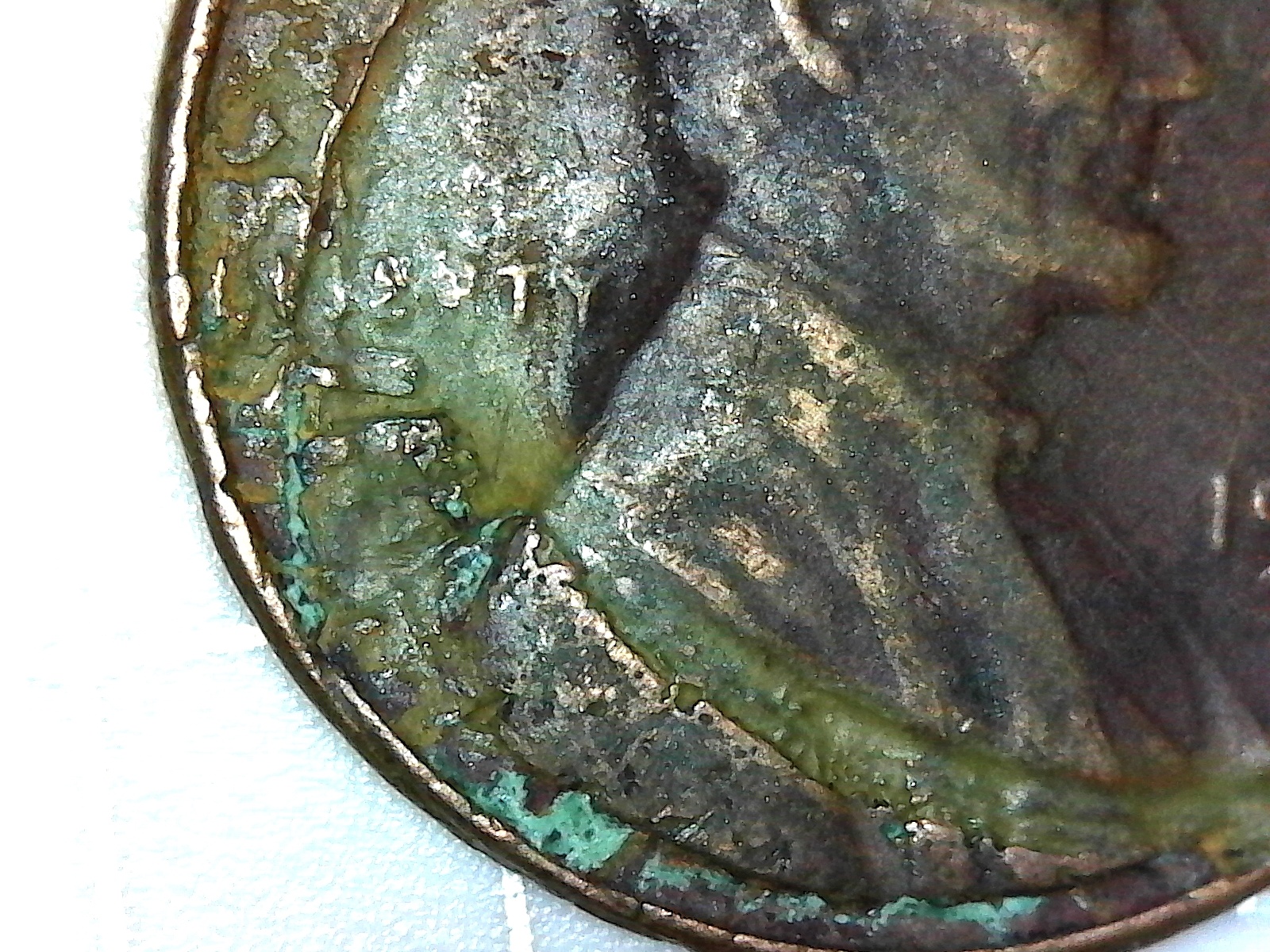
Imperfections in chemical bonding of the different layers of metal on a coin can lead to them peeling off — either during or after the minting process.
If you find a coin that seems to have layers of metal missing, hold it aside for further evaluation. You’ll need to determine it’s just environmental damage or if it’s a type of U.S. Mint mistake known as a lamination error.
Lamination errors can be worth $10 and up.
#7 – The Wrong Color
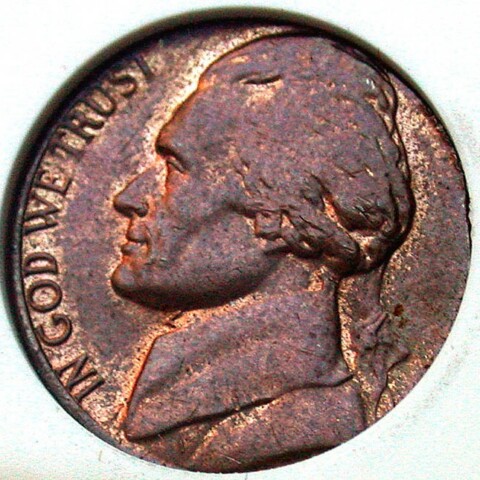
Have you found a silver coin (like the well-known silver penny) or another coin with odd coloration?
Keep it!
That could be a valuable error — such as a coin that was struck on the wrong metal (known as a wrong planchet error).
You’ll need to have the coin professionally tested to determine if it’s a genuine error or if it was simply altered after the coin left the Mint.
Coins like this are worth checking twice — because many off-metal errors are worth $500 or more!
#8 – The Wrong Size Or Shape
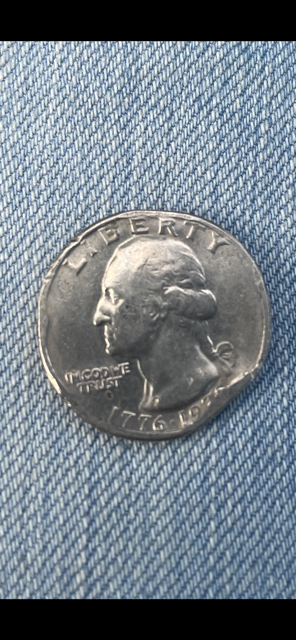
Found a penny that looks too big? Or a quarter that’s an odd shape?
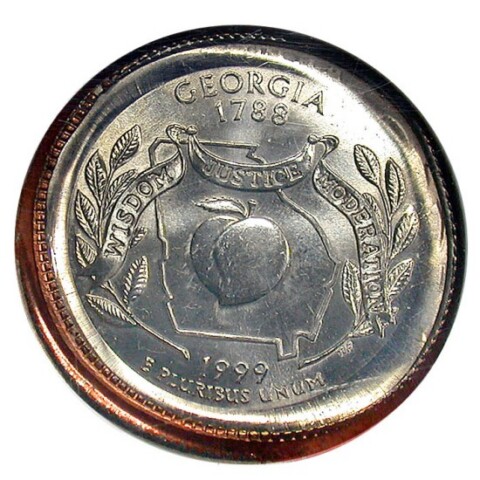
So many weird things can happen to a coin when mistakes take place during the minting process.
Many different types of errors can lead to a coin being the wrong size or shape, including:
The bottom line is if you find a coin that is too large, too small, or not perfectly round… keep it for further investigation!
U.S. error coins like this can be worth $50 or more.
#9 – Rim Or Edge Oddities
There are several different kinds of errors that can cause the rim or edge of a coin not to look right.
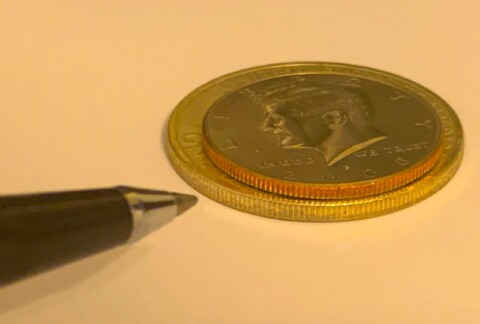
These are 5 of the most common types of rim errors:
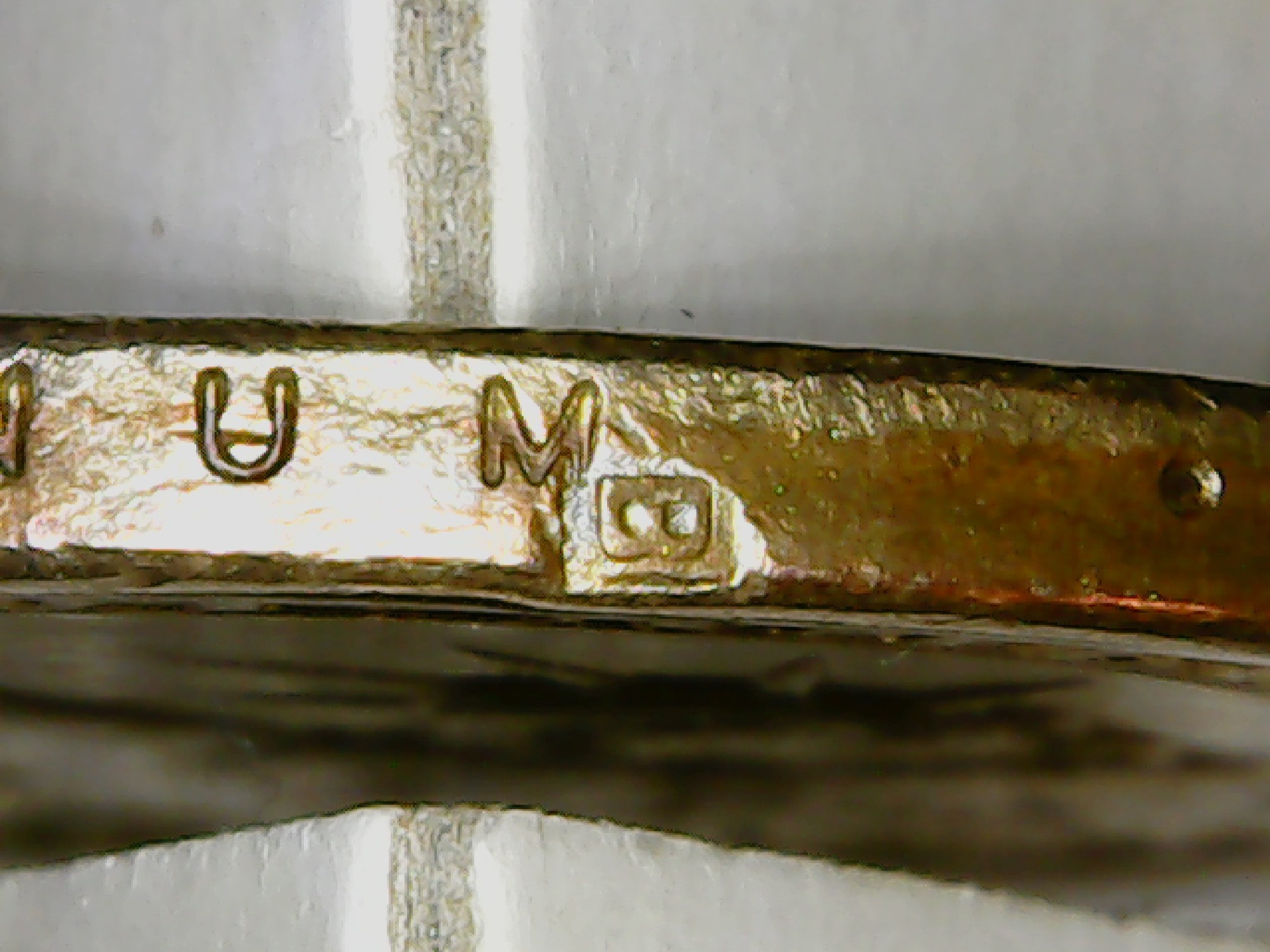
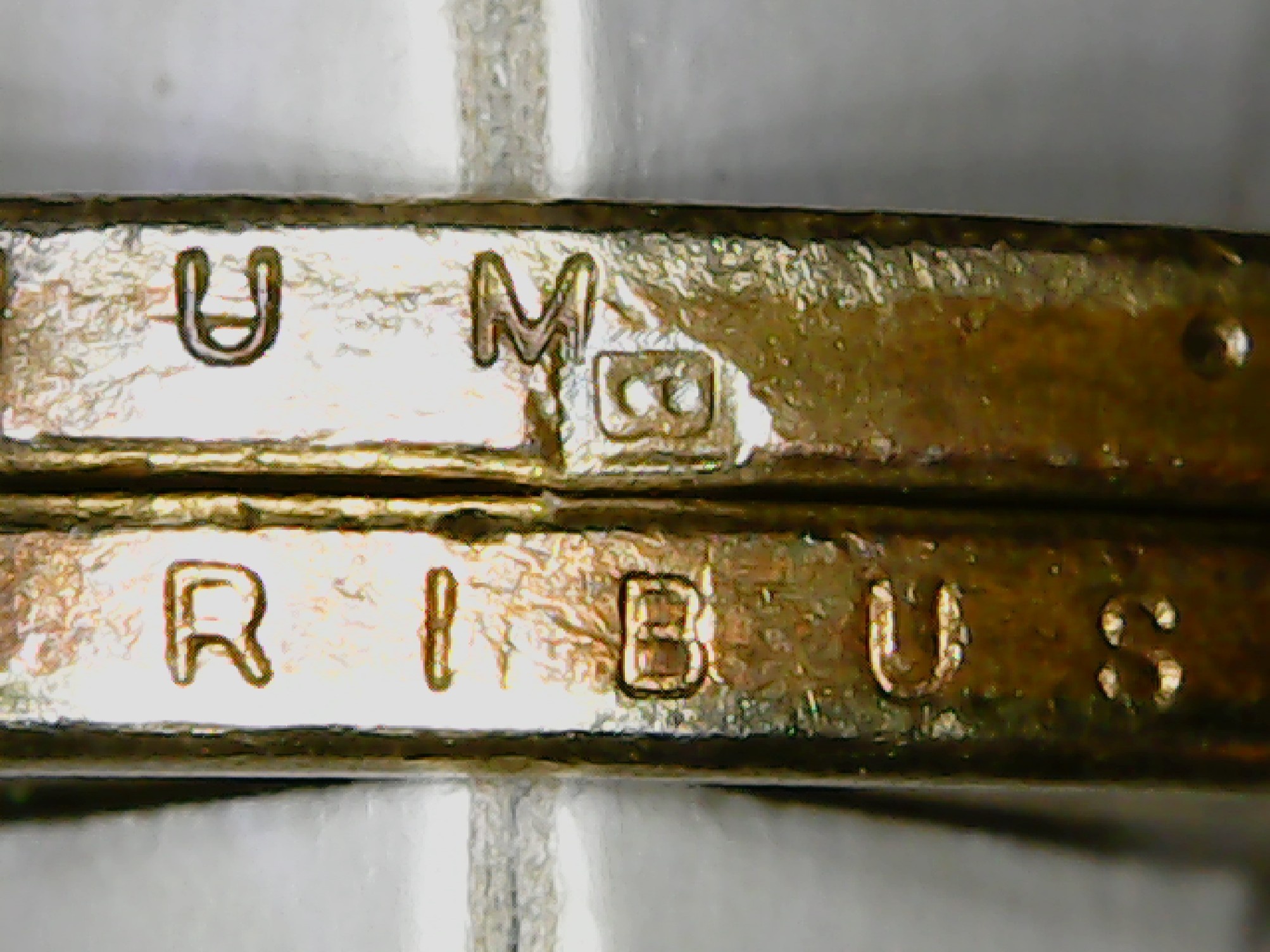
These are the 2 main types of edge errors known to exist:
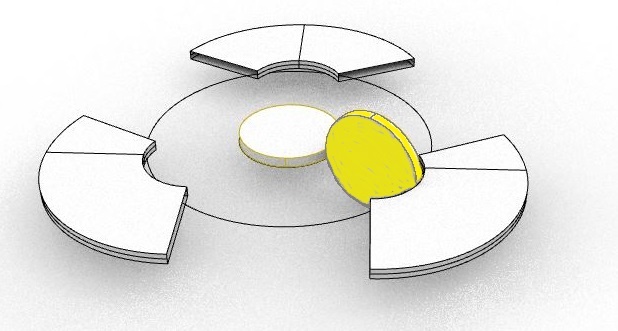
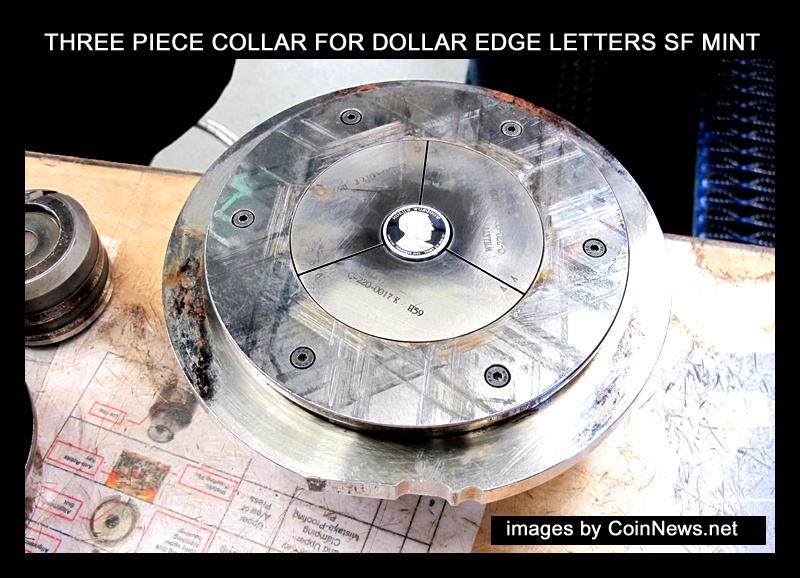
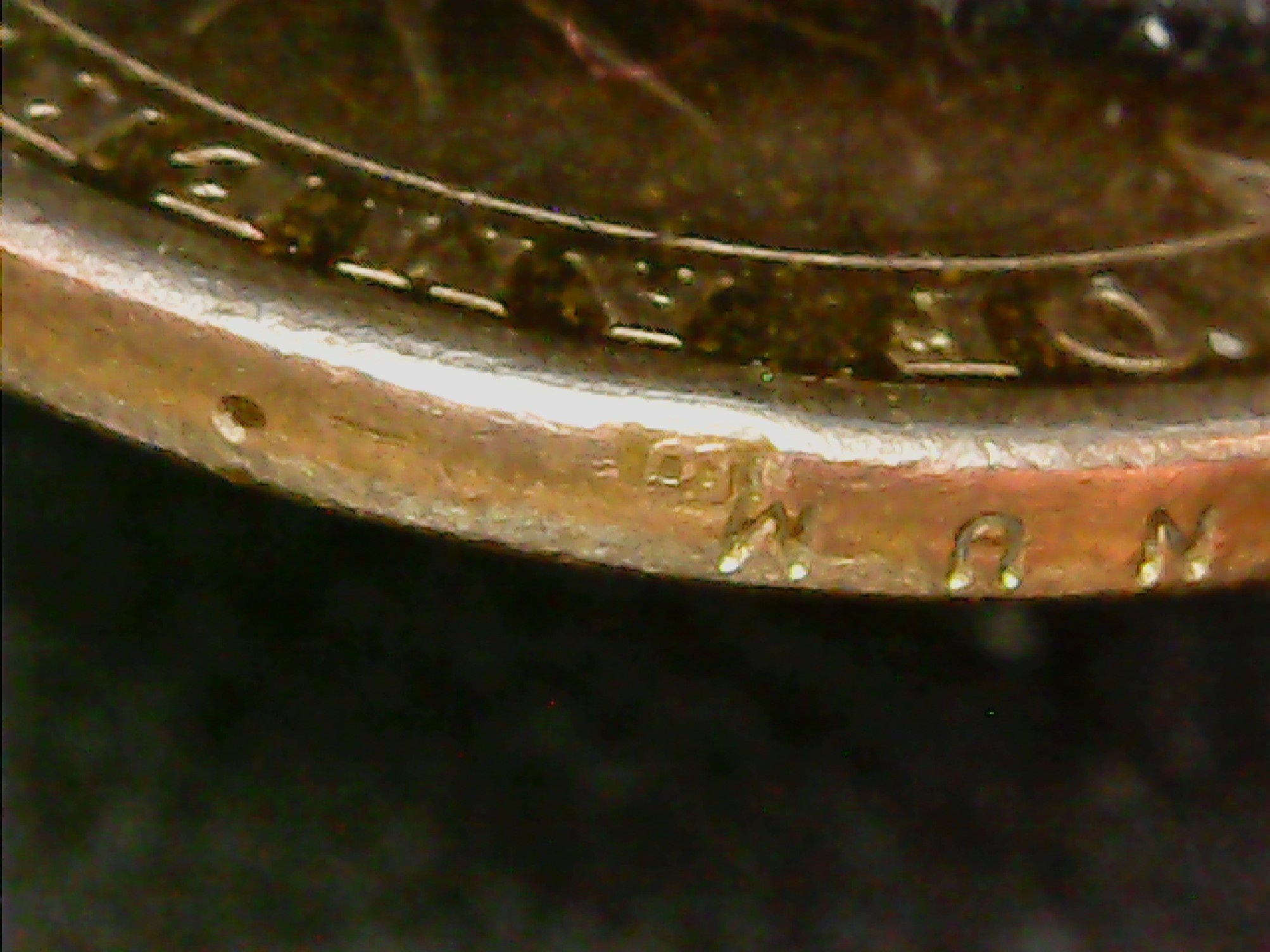
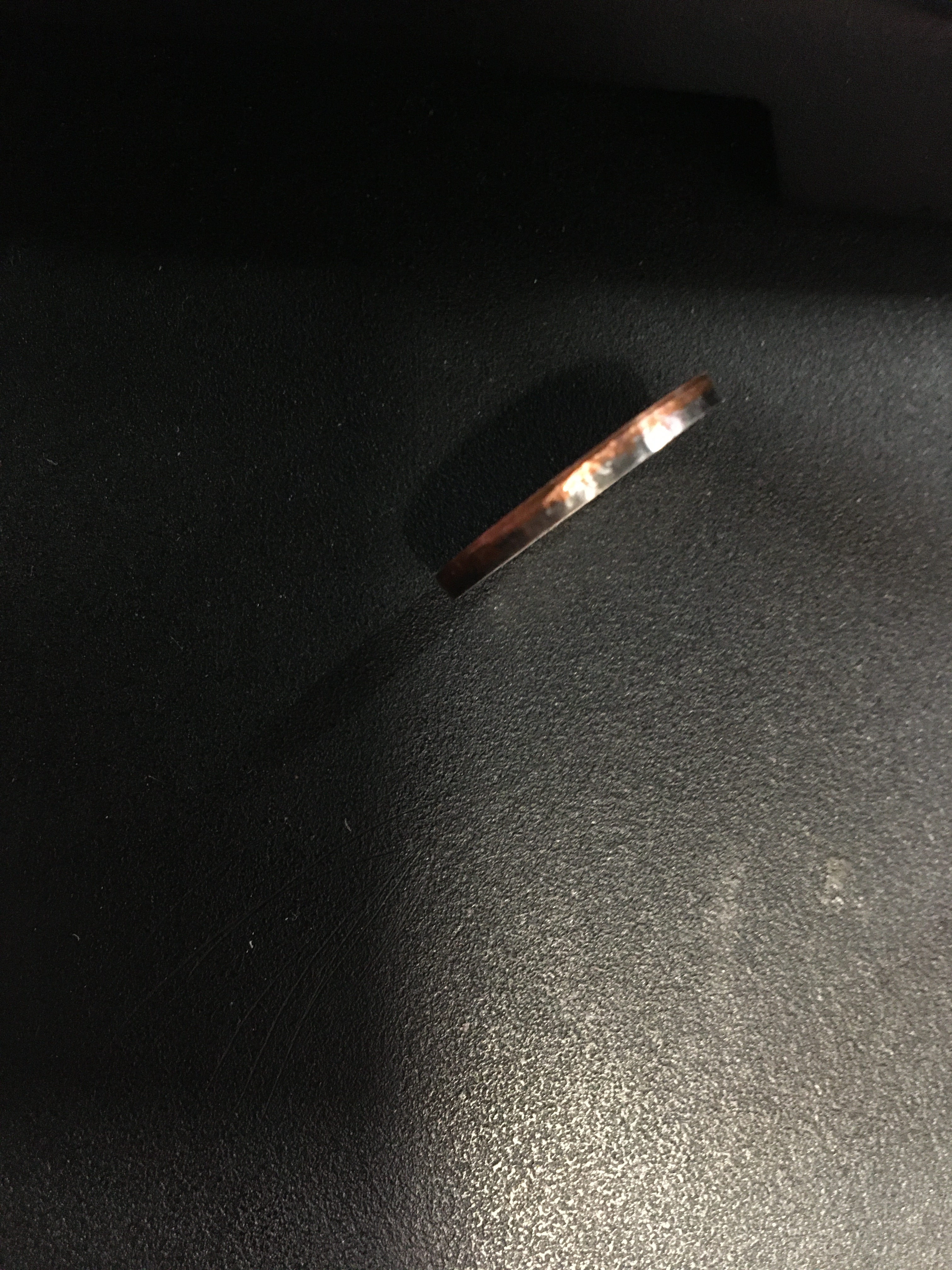
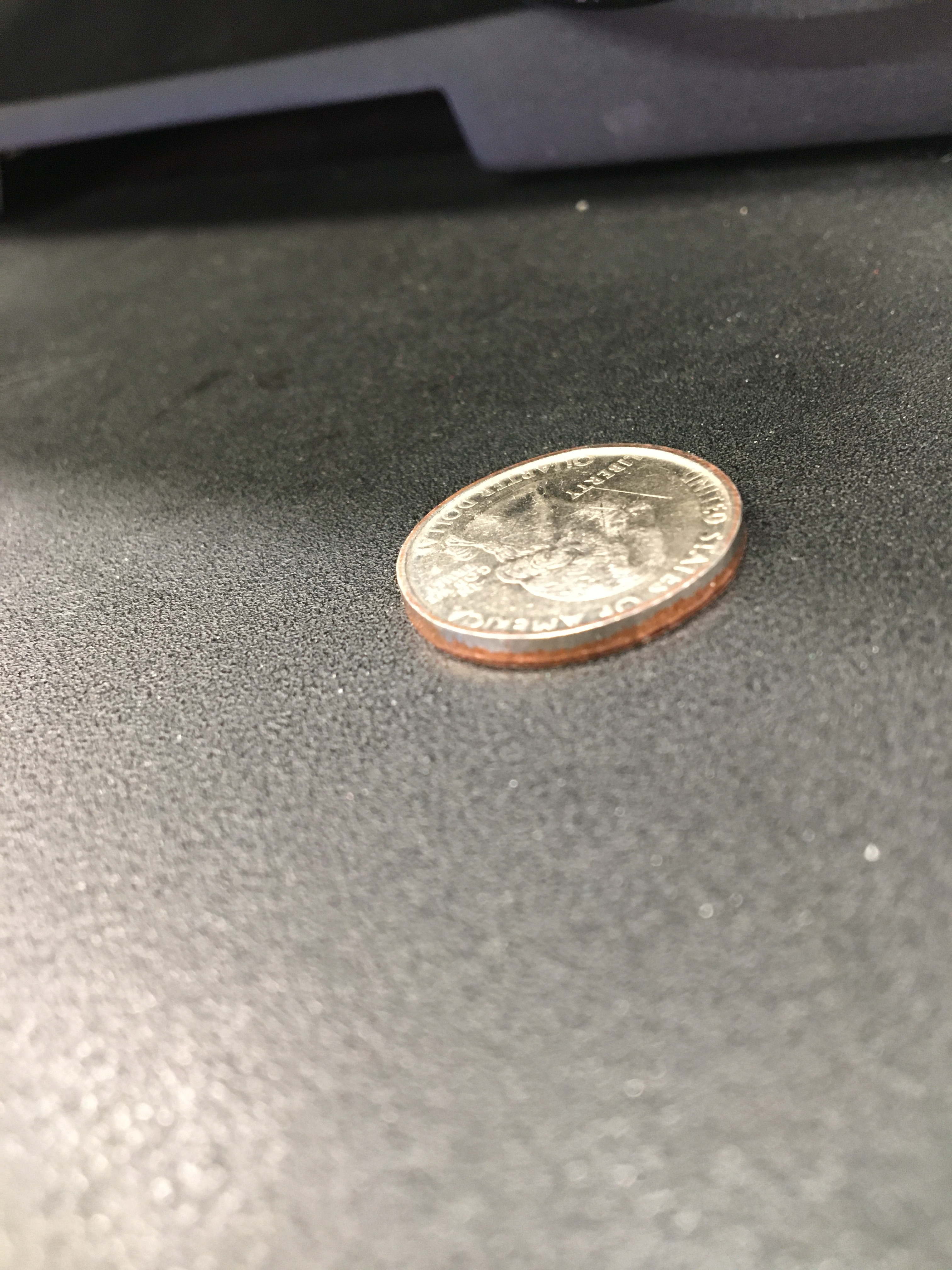
- The coin is missing the reeded edges (those little vertical lines along the edge of the coin) or edge lettering (letters that are supposed to be on the outer edge).
- The orange copper stripe is missing from the outer edge of a copper-nickel clad coin.
Keep any coin that has a weird-looking edge or rim, and take the time to check it out more closely.
If the coin is a real error, it could be worth $100 — or even more!
Here’s the difference between the rim vs the edge of a coin.
The list of error coins above isn’t all-inclusive, but it’s a good starting point to help you identify the types of errors you’re most likely to encounter in pocket change. Here’s a list of all U.S. error coins that exist.
How Much Of A Premium Does An Error Add To Value?
Whenever someone asks me, “How much is an error coin worth?” I always tell them the same thing: There is no single percentage or magic rule of thumb when it comes to error and variety values.
In our hobby, the specific premium that an error or variety adds to a coin’s value depends on these 3 factors:
- Dramatic visual impact
- Scarcity
- Whether the date is still visible
To give you a better idea of how much money an error or variety adds to a coin’s value, here’s how the marketplace breaks it down:
Minor / Common Oddities ($1 to $20 Premium)
These are tiny mistakes that happen all the time when the U.S. Mint is pumping out billions of coins. They’re great for beginner collections, but they won’t make you rich:
- Die Cracks & Small Die Chips — A thin raised line across the coin or a small metal lump (like a “BIE” penny or a small “Pooping Horse” quarter chip) usually adds anywhere from $1 to $5.
- Minor Strike-Throughs — A tiny bit of grease blocking a single letter or number might add $2 to $10, provided the rest of the coin is in decent shape.
Moderate / Popular Varieties ($20 to $150 Premium)
This is where error coin hunting gets really fun when you’re looking through coin rolls. These are obvious mistakes that collectors actively chase to fill specialty album slots:
- Broadstrikes & Uncentered Strikes: A coin that skipped the collar die and pancaked out usually commands $15 to $50+ on modern clad coins, and $120+ if it’s on pre-1965 silver.
- Repunched Mintmarks (RPMs) & Over Mintmarks (OMMs): Clear secondary mintmark strikes (like a 1951-D Over S Penny or 1957-D Penny with a repunched mintmark) generally fetch $10 to $50+ raw.
- Distinct Die Breaks / Die Cuds: A massive chunk missing from the die right along the outer rim (a “cud”) usually brings $20 to $75+ depending on size.
Major / Dramatic Errors ($100 to $1,000+ Premium)
These are glaring, undeniable mint blunders that were never supposed to leave the building. You could almost spot these from across the room without a magnifying glass:
- Off-Center Strikes (15% to 50% Off): If a coin is struck visibly off-center and still shows a full, readable date, it easily brings $50 to $200+ on pennies and quarters… and often much more on larger denominations.
- Wrong Planchet / Transitional Errors: Striking a design on the wrong metal blank (like a 1983 penny struck on a leftover copper blank, or a quarter struck on a nickel planchet) instantly jumps into the $200 to $1,000+ territory.
- Major Doubled Dies (DDO/DDR): True hub doubling with sharp separation (like these DDOs: the 1955 doubled die penny and 1972 doubled die penny and this DDR: the 1983 doubled die penny) ranges from $100 to $1,000+ depending on the specific die variety and condition grade.
Ultra-Rarities ($10,000 to $100,000+ Jackpot)
These are legendary “freak” accidents — like the famous 1943 bronze Lincoln cent, the 2000 Sacagawea/Quarter Mule, or multi-struck proof error coins. They happen once in a generation, make the front-page news, and trade at high-end auction houses for serious 5- or 6-figure money!
Modern errors (on coins made after 2000) are sometimes harder to find due to better U.S. Mint quality control. Therefore, higher premiums are sometimes realized for modern errors as compared to similar older ones.
Even a major error coin will lose value if it’s heavily worn, scratched, or corroded from being in circulation.
And whatever you do… DON’T clean your coins! That’s the quickest way to deplete the value of any coin — whether it’s an error coin or not.
What To Do Next… If You Think You Have Error Coins
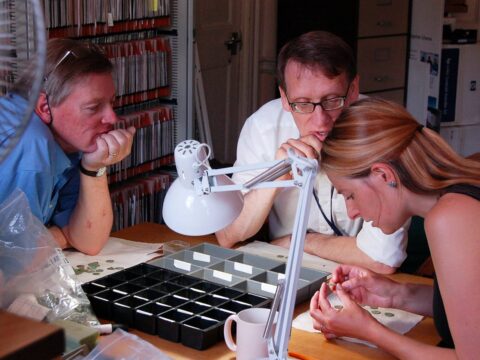
OK, so I’ve given you a long list of U.S. error coin characteristics and helped you determine how to tell if a coin is an error or not.
Now you’ve probably got a small pile of odd-looking coins and you’re wondering what to do with them next.
Keep in mind, there’s a very good chance that most of the coins you’ve been holding aside are not actual errors, but are just common damaged coins that may resemble errors.
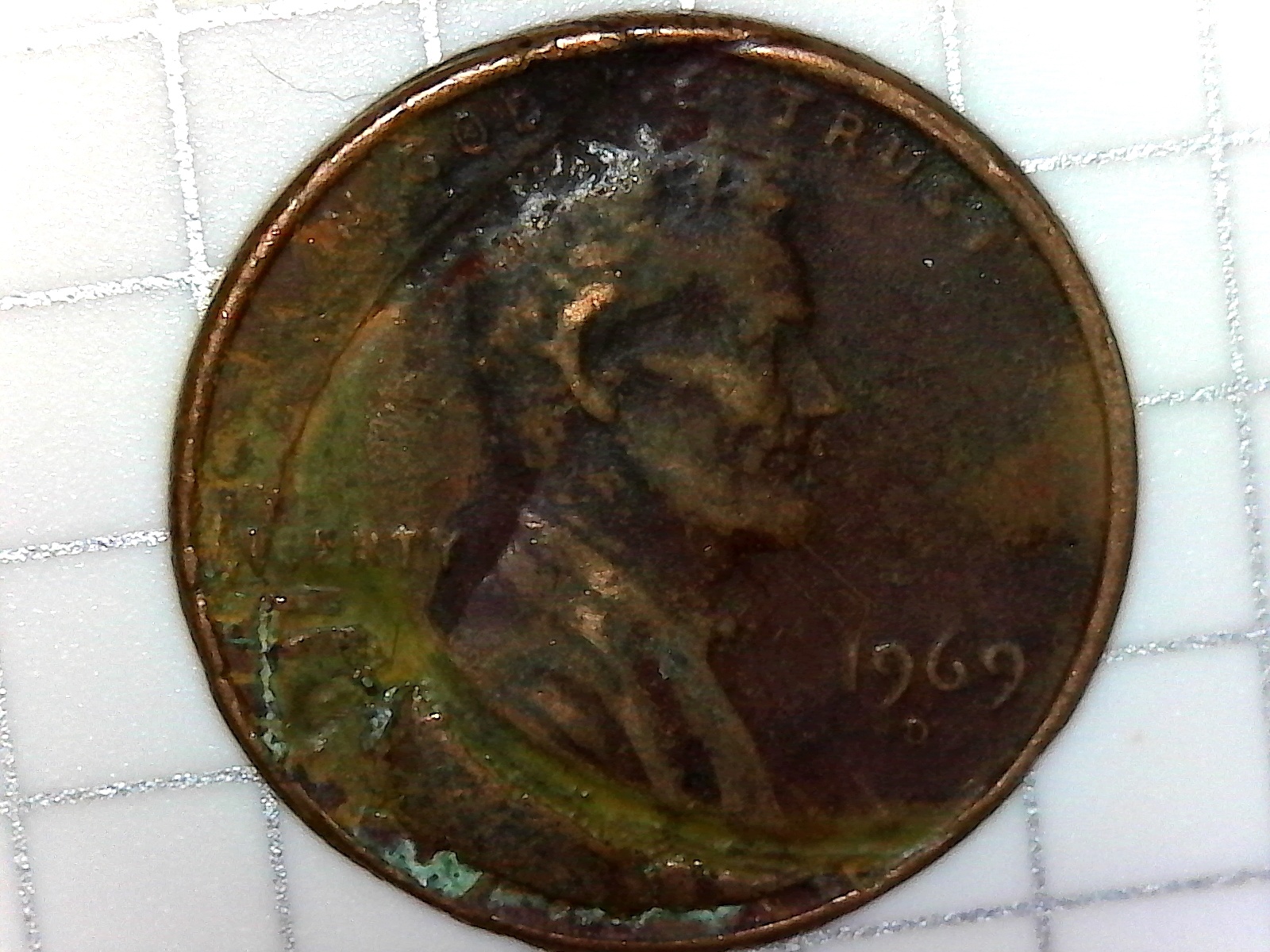
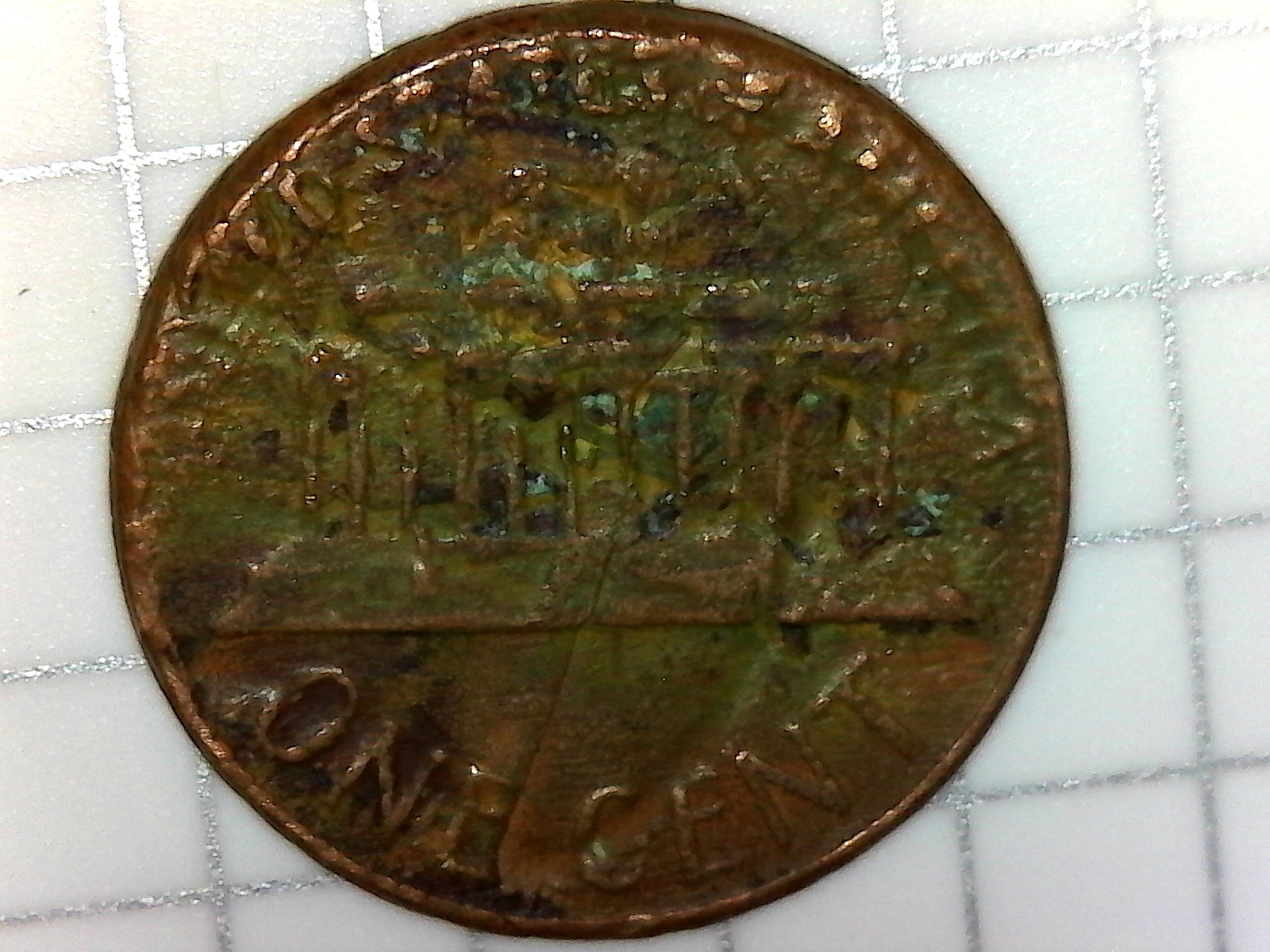
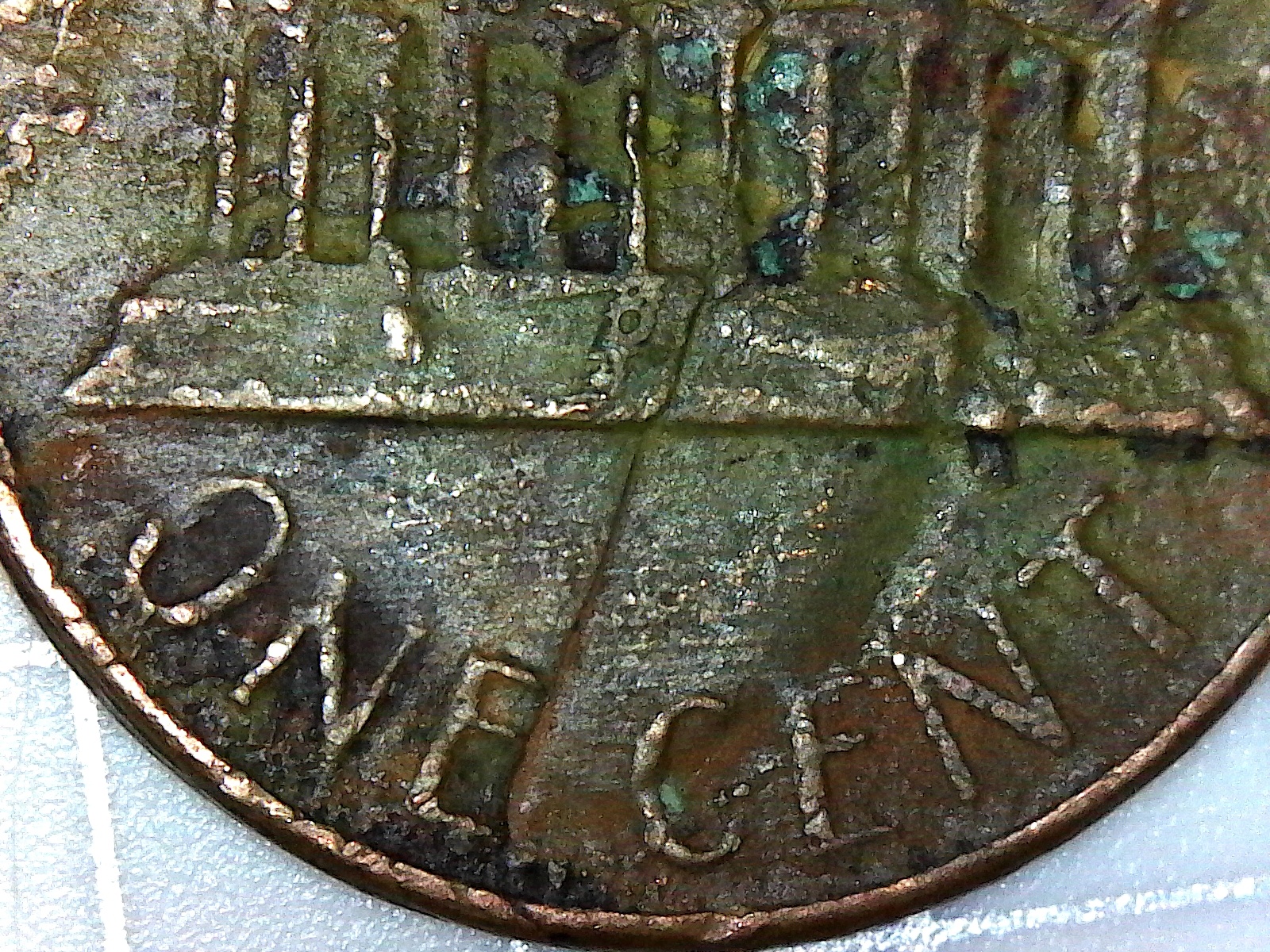
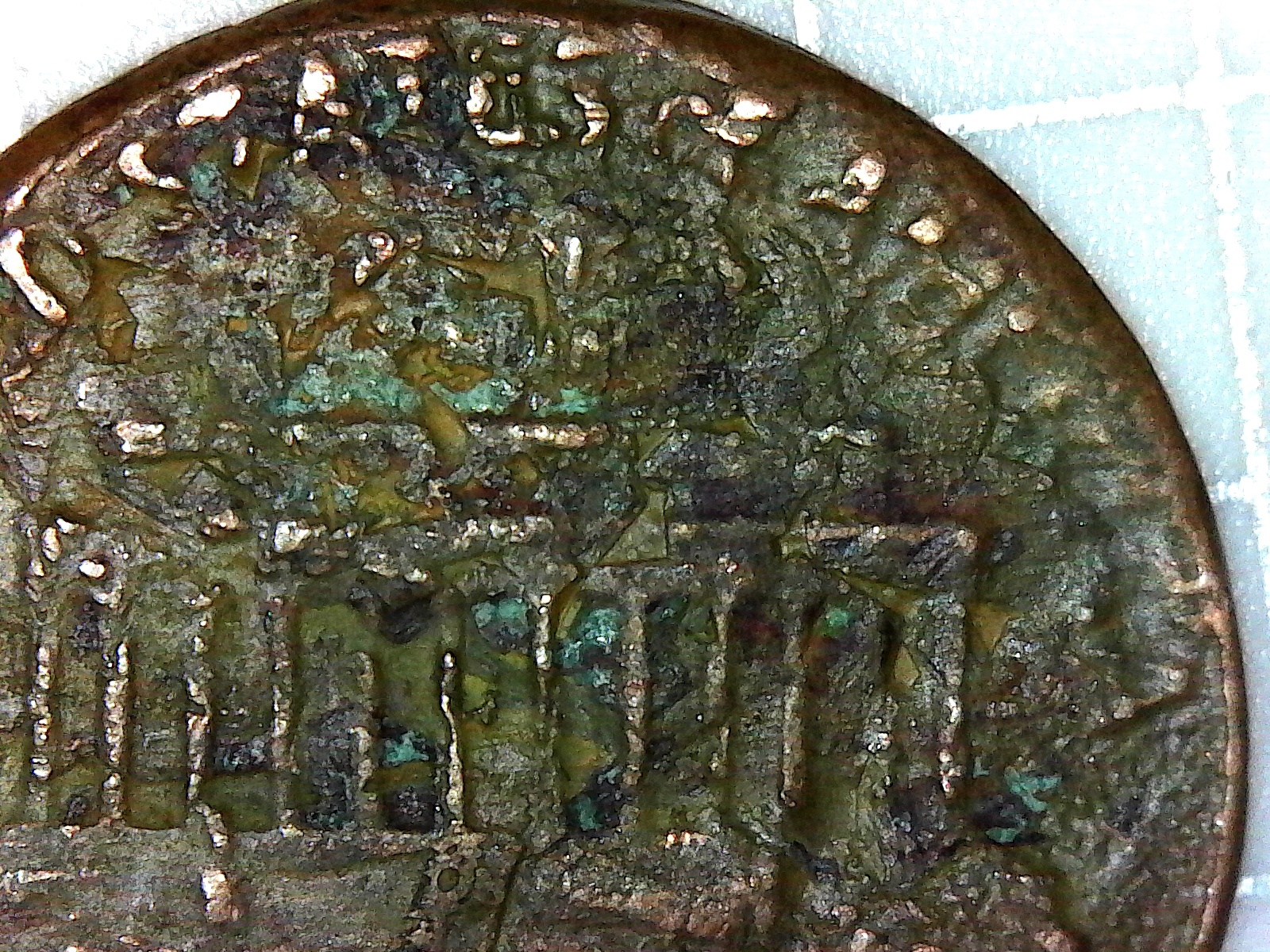
It’s most certainly not always easy to tell a valuable error coin from a regular coin with damage. (Unfortunately, many of the coins that people ask me about and believe are errors really are not errors — most are simply damaged.)
But going through your coins to see if what you have is common coinage or truly collectible is part of the numismatic process!
- First, you’ve got to look for coins with unusual characteristics.
- Then, you’ve got to do a little research to see if you’ve found true errors or not.
The bottom line…
If your coin happens to display one or more of the above features, you should definitely investigate further to see if it really is a valuable error coin or simply a regular coin that looks like an error.
Your next step is to ask an expert for advice.
There are many excellent variety and error coin experts, including:
- Combined Organizations of Numismatic Error Collectors of America (CONECA)
- Professional Coin Grading Service (PCGS)
- Numismatic Guaranty Company (NGC)
- Certified Acceptance Corporation Grading (CACG)
- Independent Coin Graders (ICG)
- American Numismatic Association Certification Service (ANACS)
Even if you didn’t have any luck finding U.S. error coins this time around, keep searching. Part of the fun of coin collecting is the thrill of the hunt!
They’re rare and valuable coins for a reason.
And when you do find them… the excitement factor is simply off the charts. It’s awesome to find a rare, valuable error coin in your pocket change. It’s like finding a needle in a haystack — and you’ll have a cool story to tell all your friends!
READ NEXT: The Difference Between Errors And Varieties





Leave a Comment