

Start Here

Values

Buying & Selling

Rare U.S. Coins

How To's

Myths & History

Coin Damage vs. Mint Errors: PMD, PSD & Value

by Joshua McMorrow-Hernandez

If you’re a coin collector, numismatist, or somebody who has worked a bit with coins, then you may have heard the acronym PMD.

If you haven’t, then you may be wondering, “What is PMD?”

It stands for Post Mint Damage, and refers to any damage a coin has suffered after leaving the Mint.

The 1943 Jefferson nickel has a common form of PMD -- Post Mint Damage -- a hole that wasn't there when the coin left the U.S. Mint.

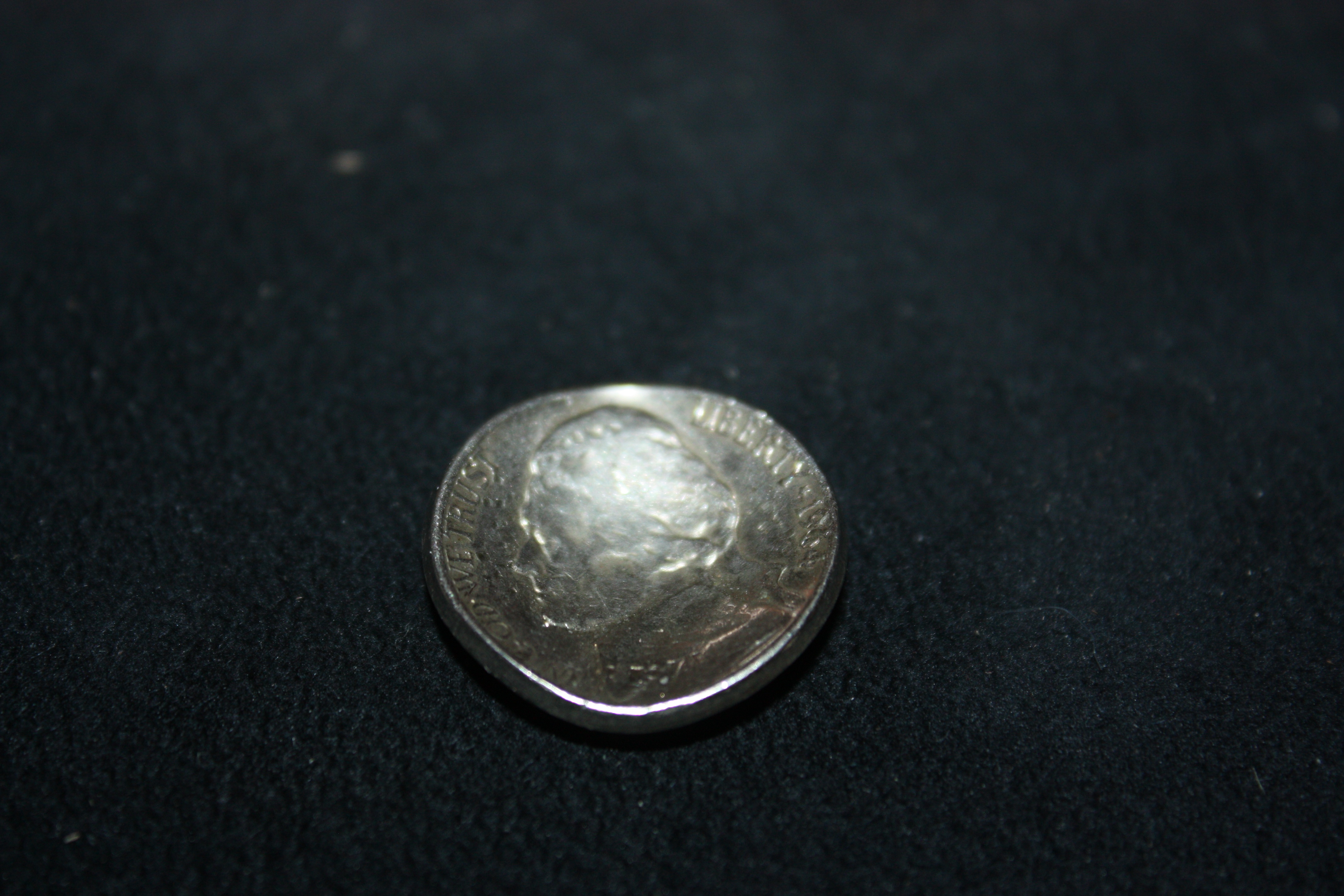
Common examples of damaged coins (those with PMD) are any U.S. coins with:

  • Heavy scratches or gouges
  • Dents and dings on the rim
  • Odd lettering or stamps on a coin
  • Gold plating or strange coloring
  • Tall or deep rims
  • Holes and bumps
  • And almost anything else unusual that goes into the coin’s surface

…that were not there when the coin left the U.S. Mint.

Post Mint Damage (PMD) and Post Strike Damage (PSD) are often mistaken for errors on U.S. coins.

I’m going to help you tell the difference!

Error Coins vs. Damaged Coins

A lot of people think that circles, lines, or grooves on a coin make the coin rare and valuable. However, these are not coin errors.

Coins experience so much wear and tear throughout their lives, and many end up taking quite a beating in the process — resulting in Post Mint Damaged coins.

Sometimes, signs of coin damage look unusual to an unassuming coin collector who mistakes PMD (or PSD) as a Mint error, or a legit mistake that was made at the U.S. Mint.

Being able to tell Post Strike Damage apart from a strike error takes years of experience. But here are a few ways to determine if your coin has U.S. Mint errors or if it has Post Mint Damage:

  • If the “error” cuts into the coin (it goes into the surface rather than being raised), then it’s probably Post Mint Damage.
  • If the coin has a raised blob of metal next to or near a groove or cut, that’s probably Post Strike Damage.
  • If it’s a two-headed coin (with the face of a penny on one side and a dime on the other side), that’s an altered coin made for magicians — which is considered Post Strike Damage.
  • If there is doubling on the coin… it’s tricky. In most cases, doubling is not caused by the coin being a doubled die (a Mint error), but rather damage from the strike itself. So, if you see doubling all over the coin (and definitely if it appears on both sides), then it’s not a Mint error known as a doubled die. It is machine doubling instead.

Cleaning Coins Causes Post Mint Damage

Another major cause of Post Mint Damage is cleaning.

Yes, cleaning your coins actually damages them!

While many people think it’s a good thing to clean their “dirty” or old coins, it’s actually one of the worst things you can do.

Cleaning a coin not only alters its natural appearance, but it can also remove a tiny layer of metal from the surface of the coin — forever ruining it. (This is especially true when using abrasives such as toothpaste, baking soda, salt, or even a pencil eraser.)

The bottom line… leave your coins in their natural state. Do NOT clean your coins!

What Should You Do With PMD Coins?

Unfortunately, there isn’t much you can do with Post Mint Damage except enjoy the damaged coin for what it is — a broken coin that needs a home and some love.

You can’t “fix” PMD coins.

There are so-called coin doctors who can patch up holes in coins, remove dents, fill scratches, and even restore color to cleaned coins. However, since this expensive work is largely done to make a damaged coin look new and often has deceptive intentions, not many people have much respect for coin doctors. (Especially when their work is done to erase any blatant signs of damage… so the coins can masquerade as problem-free coins and potentially be sold for the same price as problem-free pieces!)

That doesn’t mean damaged coins are worthless though.

Damaged coins make terrific “fillers” for hard-to-find coins in your collection! Since PMD coins can often be bought cheaply, they’re great for filling holes in your coin folders and coin albums — where otherwise rare and/or expensive coins would go.

Post Mint Damaged coins (also referred to as cull coins) cost only a fraction of the price of similar coins in problem-free condition. This makes PMD coins desirable for coin collectors on a budget who want to buy old coins or rare coins without paying full price for them!

One thing to keep in mind (especially if you’re hoping to make an eventual profit on your coins) is that damaged coins don’t usually increase in value as quickly as problem-free coins. Therefore, it might be best to save up your money and buy a nice, problem-free example when you have the money to do so.

What’s The Value Of Damaged Coins?

The general rule on coin values is that coins are ultimately worth whatever someone will pay for them.

In the case of damaged coins, values vary depending on the:

  • Severity of the damage
  • Location of the damage
  • Rarity of the coin
  • Overall demand for the coin

Damaged 20th-century silver and gold coins are often only worth the value of the metal in the coin (or their spot value).

However, damaged rare coins are usually worth much more than their metal value:

  • Take the 1909-S VDB penny, which has about 2 cents of copper value. Even a corroded 1909-S VDB cent that has been cleaned, bent, and has holes (a pretty ugly-looking 1909-S VDB penny, really…) might be worth $100 to $200 as a filler piece — because demand for the rare Lincoln penny is so high.
  • A porous, bent 1793 Chain cent (a very rare penny that was the very first official Federal United States coin) can bring $1,000 or more, so long as it’s identifiable as a Chain cent.
  • Holed, cleaned Draped Bust silver dollars from the 1790s or early 1800s often sell for $300 to $500.

So, yes… values for damaged coins range all over the board. Just remember, one collector’s trash is another’s treasure!

The Bottom Line…

The takeaway here is that you need to know the difference between legit error coins and coins that simply have Post Mint Damage — because not all coins with strange-looking oddities are errors. In fact, most are not errors.

I always tell people that a good way to tell if if a coin has post-Mint damage or if it’s a legitimate error coins is this:

  • If you see doubling, raised lines or bumps, or parts of the design missing, then we’re possibly talking about some real errors.
  • If the “weird” thing about the coin is going in to the surface — like a nick, scratch, or hole — then it’s almost certainly post-Mint damage.

Common sense should tell you that most of the odd-looking coins you find in pocket change, coin rolls, or elsewhere in circulation are not errors — because error coins are generally rare. You’re not supposed to be finding a bunch of error coins all the time in circulation. Nobody’s luck is that good!

Yes, it’s a good idea to check your change looking for rare and valuable errors — but be mindful before submitting photos of every odd coin you find to an error coin expert. Chances are your coin is not an error. There are countless damaged coins floating around out there.

In most cases, the “error” you think you’ve found on a coin is simply Post Mint Damage — this is extremely common!

So, it’s good to learn the differences between damaged coins and error coins from the experts by asking questions. But any good numismatist or budding error expert has to do some work for themselves, too.

The best thing to do is to take the time to research the world of error coins. Find out what error coins are out there and what they look like. Study, study, study! It may take years before you feel like you know what you’re talking about with regard to error coins — but before you know it, you’ll be doing an excellent job at discovering exciting error coins on your own!

PUBLISHED April 16, 2025
UPDATED August 6, 2026

Joshua McMorrow-Hernandez

Numismatic Specialist

Hi, I’m Josh! I’m the Editor here at the US Coins Guide. My love for coins began when I was 11 years old. I primarily collect and study U.S. coins produced during the 20th century.

I’m a member of the American Numismatic Association (ANA) and the Numismatic Literary Guild (NLG). I have won multiple awards from the NLG for my work as a coin journalist. I’m also the editor at the Florida United Numismatists Club (FUN Topics magazine), and author of Images of America: The United States Mint in Philadelphia (a book that explores the colorful history of the Philadelphia Mint). I’ve contributed hundreds of articles for various coin publications including COINage, The Numismatist, Numismatic News, Coin Dealer Newsletter, Coin Values, and CoinWeek.

I’ve authored over 1,000 articles here at the US Coins Guide (many with over 50K shares).

I welcome your coin questions!

60 responses to “Coin Damage vs. Mint Errors: PMD, PSD & Value”

  1. jan Avatar
    jan

    what does BU mean

    1.  Avatar
      Anonymous

      Hi Jan,

      ‘BU’ means Brilliant Uncirculated and often refers to a coin grading Mint State 62 to about Mint State 64.

    2.  Avatar
      Anonymous

      Hi Jan,

      ‘BU’ means Brilliant Uncirculated and often refers to a coin grading Mint State 62 to about Mint State 64.

  2. jan Avatar
    jan

    what does BU mean

  3. elijah Avatar
    elijah

    I have a quarter where the I is pushed toward the n to form a w in the “in god we trust ” what is that?

    1. JoshuaTheFunTimesGuide Avatar
      JoshuaTheFunTimesGuide

      Hi, Elijah —

      Would you please post a photo of this piece?

      Thanks,
      Josh

  4. Marline Cruz Avatar
    Marline Cruz

    Pmd? Also multiple bumps same ones on letter N also on crown 1925 1sol Peru lima help also like to know value

    1. JoshuaTheFunTimesGuide Avatar
      JoshuaTheFunTimesGuide

      Based on the photo, I’d say that’s a good call, Marline. I think the metal was shoved toward one side of the edge.

      1. Marline Cruz Avatar
        Marline Cruz

        Any value or if I like to sell how much will be a fair price?

  5. Rodrigo Del Rio Avatar
    Rodrigo Del Rio

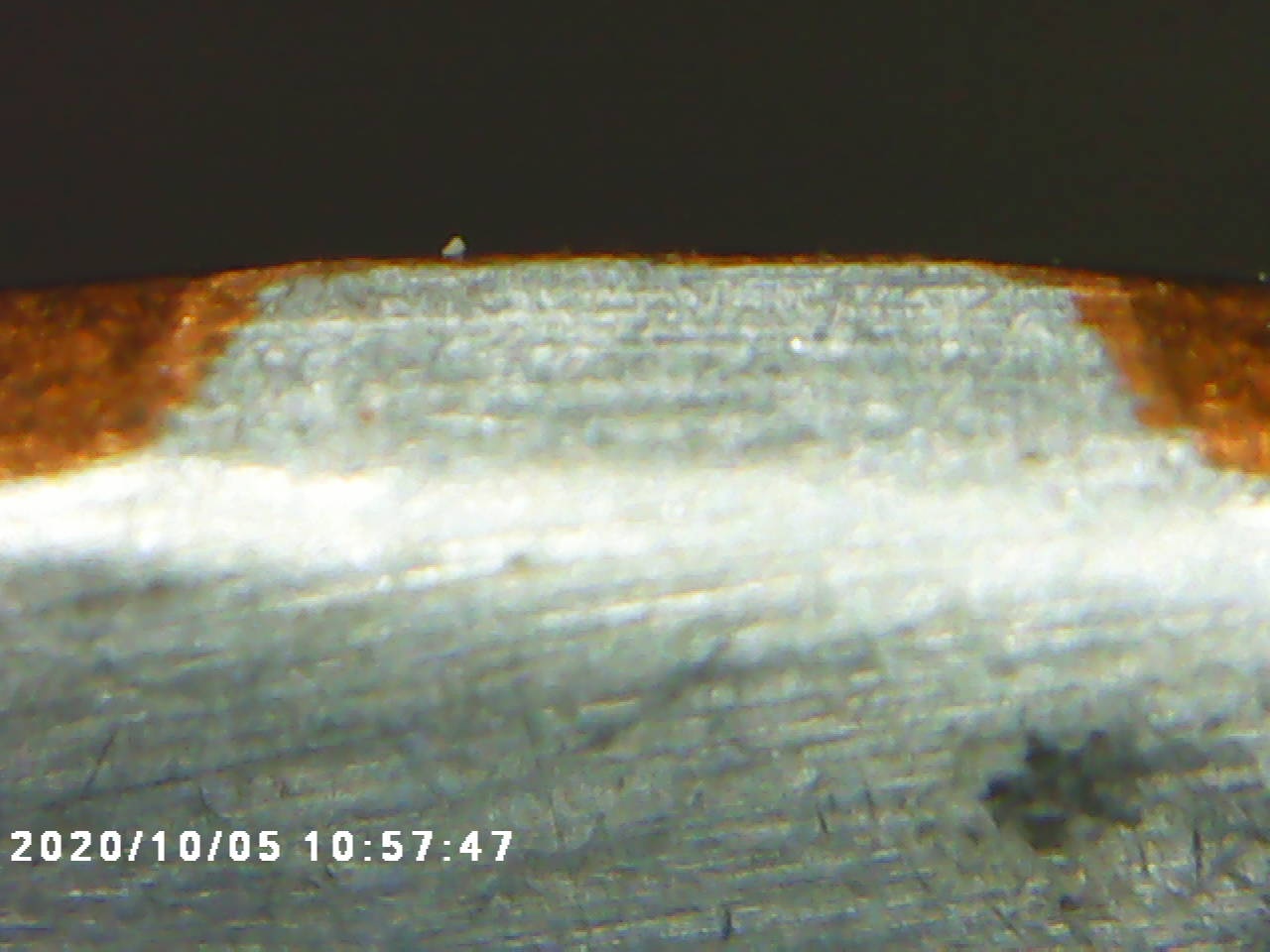
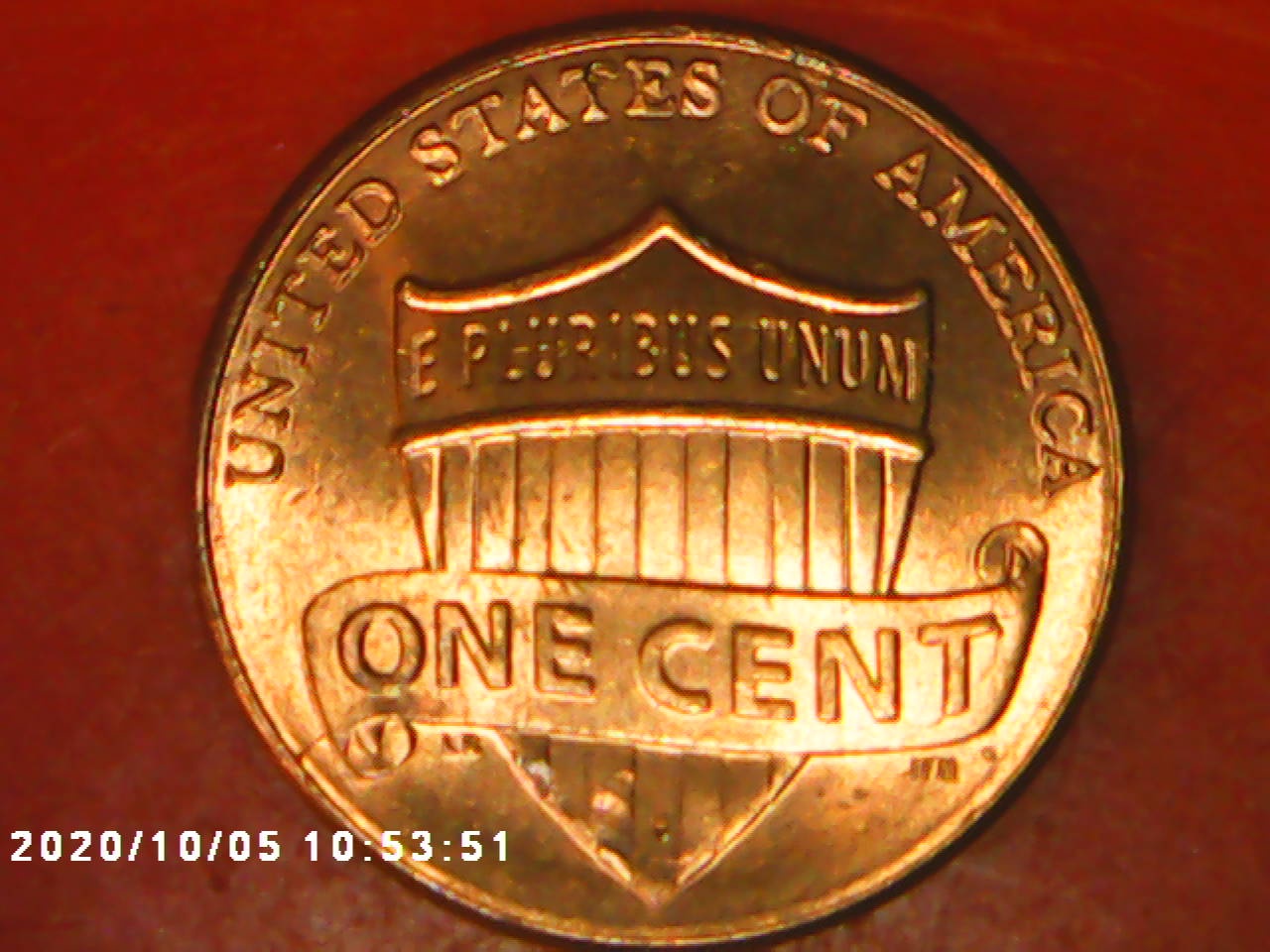
    Heres a piece worth checking it out. Lincoln cent… grease struck? then on ONE CENT i can say has a light DD.. not machine doubling… any ideas?

    https://uploads.disquscdn.com/images/b15f00e5121d55d4f66cfdf1e00d6f60a243ac64d7b37270824731c4ac6274be.jpg
    https://uploads.disquscdn.com/images/6e65bbdf54aae2f0543b02485d8884d47863a086d9b0dbc90287b58165296366.jpg

    1. Rodrigo Del Rio Avatar
      Rodrigo Del Rio

      leave it 15 minutes in acetone but remained mostly the same… so thats the final piece. Check inside building has extra die too…

      1. JoshuaTheFunTimesGuide Avatar
        JoshuaTheFunTimesGuide

        This one is stumping me, Rodrigo! It looks like post-Mint damage, but I’m not sure on what caused it. It might need an in-hand evaluation for some more clues.

        1. Rodrigo Del Rio Avatar
          Rodrigo Del Rio

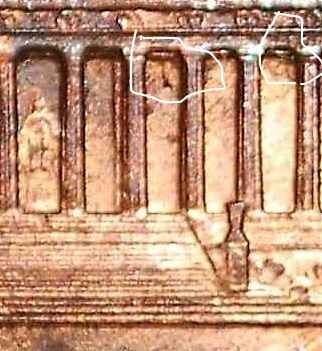
          check this out on this coin reverse if u missed these details on building… never saw die in that part of coins…

          https://uploads.disquscdn.com/images/b3bfbcc15fd7fa56478fcc6e5f878f77bbbb9e3b649b5d2b56e88b3e977daf26.jpg

          1. JoshuaTheFunTimesGuide Avatar
            JoshuaTheFunTimesGuide

            Hey, Rodrigo —

            If what you’re pointing out are the background details inside the Lincoln Memorial, those are normal. I’m not sure what the little knob hanging down is. It’s very faint. I would think if it were an extra column, it would be seen in its entirety, and not just a small segment of it. Hmm…

            Thank you for reaching out,
            Josh

    2. JoshuaTheFunTimesGuide Avatar
      JoshuaTheFunTimesGuide

      Hello, Rodrigo —

      A grease strike is indicated on coins that are missing certain details due to grease being in the die. In this case, the coin has grease ON it, and it looks like whatever applied this grease to the coin may have altered the surface, too.

      Hmm…
      -Josh

      1. Rodrigo Del Rio Avatar
        Rodrigo Del Rio

        in hand evaluation tells me that you are right is ON the device through the date, but somehow it melted with the die and cracked it.. very fun to examine 😀

  6. Ariana33 Avatar
    Ariana33

    I like the look of older or damaged coins, makes them unique.

    1. JoshuaTheFunTimesGuide Avatar
      JoshuaTheFunTimesGuide

      Hello Ariana —

      I agree, it shows that those older coins were actually used as money. Plus, it makes them each unique — they each have a story to tell!

      Best wishes,
      Josh

  7. A Carr Avatar
    A Carr

    Isn’t it crazy how in some cases, mistakes make the value that much stronger? I love stuff like this. Thanks for the differentiation.

    1. JoshuaTheFunTimesGuide Avatar
      JoshuaTheFunTimesGuide

      You’re welcome, A Carr! Oh, yes — crazy how much MORE a coin is worth the mistake. And the bigger the mistake, the more it’s worth!

    1. JoshuaTheFunTimesGuide Avatar
      JoshuaTheFunTimesGuide

      Hi, Lonnia —

      I’m trying to zoom in on these photos to see what you’re talking about but unfortunately I can’t seem to make these images any larger in size than they already are, thus I can’t really tell what you are showing me (I’m sorry!). However, you seem to be describing what may be die cracks (raised areas of metal that shouldn’t be there). If this is the case, those are die errors that are caused as the dies wear down after striking thousands and thousands of coins.

      Sometimes die wear expresses itself in the forms of cracks on the die, and when these cracked dies strike a coin, coin metal fills into that crack, thus causing the raised metal on the coin we call a die break. Values for such die crack pennies generally range from $1 to $5, with the higher value for coins with large die cracks, or an “I”-shaped crack in between the “B” and “E” of Liberty, causing what some enthusiasts call a “BIE” error.

      I hope you and your grandkids make many wonderful coin memories together!

      Cheers,
      Josh

  8. Desiree Abeyta Avatar

    Hello so I am new here but I am curious to get some feedback on 1969s penny. I am not quite sure to tell if it is considered to be an error coin. I believe it has doubling on the date. But even more interesting than that to right of the date there seems to be an error, I think it’s called a cud error but not sure. Ok so this Is the what’s has me most puzzled i believe that under that cud I see an S as if it has another mint mark. Idk may I will attach pictures. Please help

    1. JoshuaTheFunTimesGuide Avatar
      JoshuaTheFunTimesGuide

      Hi, Robert —

      It looks like someone did a real number on this one. It’s a post-mint alteration and is worth face value, but is nevertheless a real looker of a find.

      Thank you for reaching out,
      Josh

      1. Robert Avatar
        Robert

        Thank you, Josh for the help

        Rob

    1. JoshuaTheFunTimesGuide Avatar
      JoshuaTheFunTimesGuide

      Hi, James —

      The missing “I” is indeed an error, and it’s a neat one. It’s a strikethrough error, in which a foreign matter — likely grease — got into the “I” on the die and prevented the letter from being fully struck. Such pieces are usually worth a couple dollars.

      Cool find,
      Josh

  9. Billy Gibbs Avatar
    Billy Gibbs

    Hi Josh, I am a novice coin roll hunter and only been doing it a few months – Love It ! I was hoping you could share some light on this recent find , is this PMD or an error? Thanks for your time. https://uploads.disquscdn.com/images/fed5374585662cf8a5e0a47b84711c57f9dfe3712b5887106f05df11814f53c3.jpg

    1. JoshuaTheFunTimesGuide Avatar
      JoshuaTheFunTimesGuide

      Hey Billy —

      The surface of the coin where the fourth numeral of the date would be seems to exhibit a planchet flaw. It’s a little odd that none of the metal was struck up for the fourth digit, even with the flaw. This leads me to wonder if there is a grease-filled error involved here, leaving the fourth digit off. What I suggest you do for a better, more conclusive answer here is submit this image to the folks at coin variety and error organization CONECA. Here is the website address: varietyvista.com They are sure to have a consensus theory on what’s going on here!

      Good luck!
      Josh

      1. Billy Gibbs Avatar
        Billy Gibbs

        Thanks Josh.

  10. Tracy Tucker Avatar
    Tracy Tucker

    Hi recently started going through large of pennies collection my elderly father inherited from a CRH years ago. I’m new to CRH. It’s the “thrill of the hunt for me”. I have found this penny. PMD? Please advise. https://uploads.disquscdn.com/images/22b79a9d3216cafa224e3101f2292b2eb4291add3a980dbee7fb2ea1860f4c80.jpg https://uploads.disquscdn.com/images/5b69de439433291d538d408b0e2052003c7e84ab62d4eaf0645283c4d3175813.jpg https://uploads.disquscdn.com/images/1ccd4f8f3b17b3b95c642dce20bcf99c1f4456b5b6e832d9327c5d1f67302183.jpg https://uploads.disquscdn.com/images/84b
    74813d1aa1ae9b059706ec364609eca0668d0643981b6b6137c97590b0517.jpg

    1. JoshuaTheFunTimesGuide Avatar
      JoshuaTheFunTimesGuide

      Hi Tracy,

      Yes, all of these coins exhibit pmd…

      Thanks for reaching out,
      Josh

  11. Ashton Forbes Avatar
    Ashton Forbes

    I was told this was PMD but the mint mark is under the raised blob. The back of the coin is pretty normal. Was it melted or https://uploads.disquscdn.com/images/3d8a873bcff0fa2f5b68993a3f49f8b1ffc2dd47f683655f4301e10bf3f6c3a0.jpg something or is this an error coin?

    1. JoshuaTheFunTimesGuide Avatar
      JoshuaTheFunTimesGuide

      Hi, Ashton —

      It appears the blob was caused by a bubble that swelled in the coin, and this bubble was most likely caused by exposure to heat. In fact, there are other aspects of this coin that suggest it was possibly in a fire, including surface pitting and discoloration. While this piece is worth face value, it certainly has a story to tell!

      Thank you for reaching out,
      Josh

  12. Brian Smith Avatar
    Brian Smith

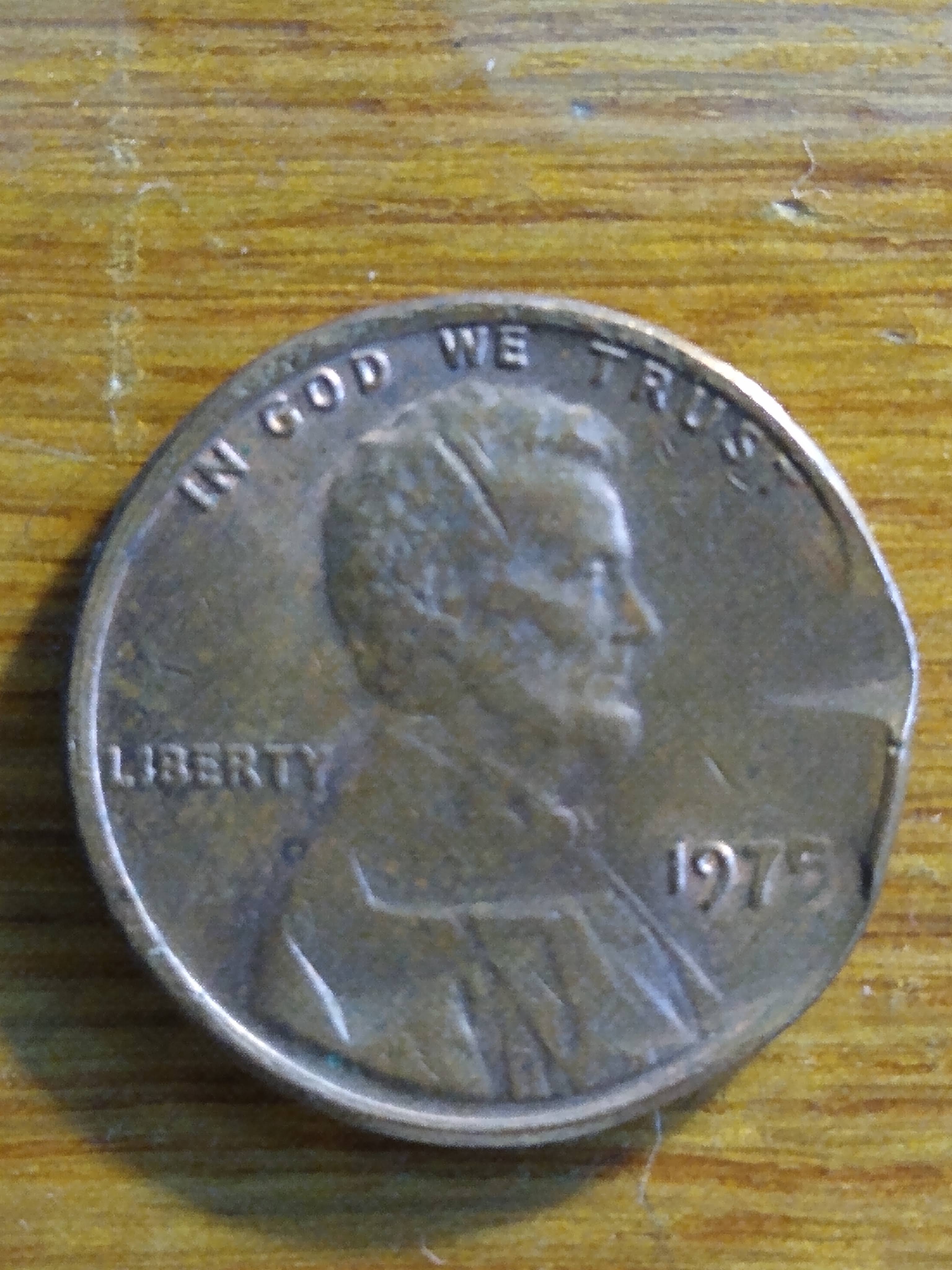
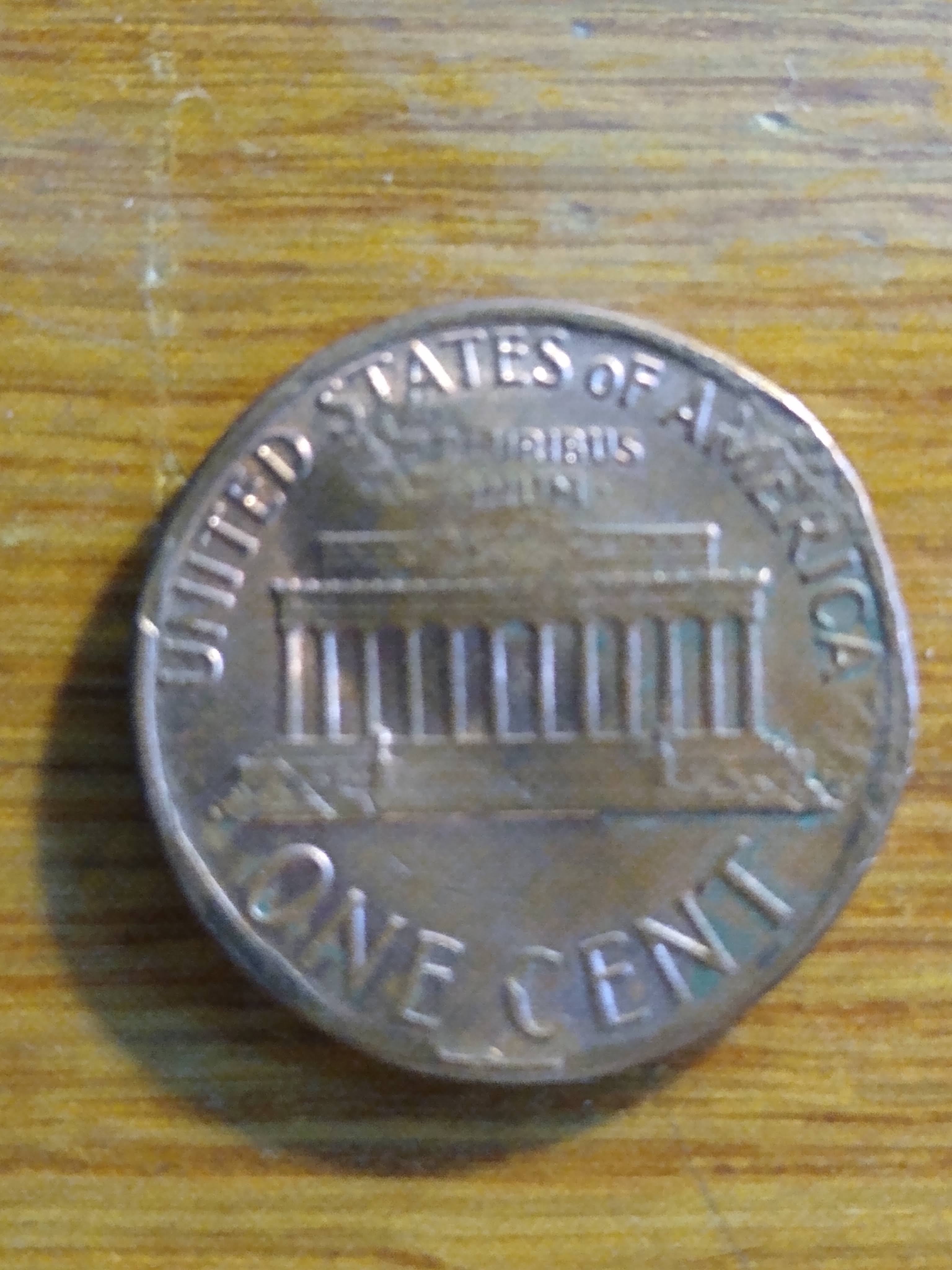
    Hey Josh, at first I thought this 1975 cent had a planchet error: https://uploads.disquscdn.com/images/81a3151a95c390417511001f76bd8fc8fbe80aaab146bba83f1a4575d85630e1.jpg https://uploads.disquscdn.com/images/e429662521c03dde013b1c7ca7e60844fcd6503062e7b5dd0fa261fce93e2c73.jpg

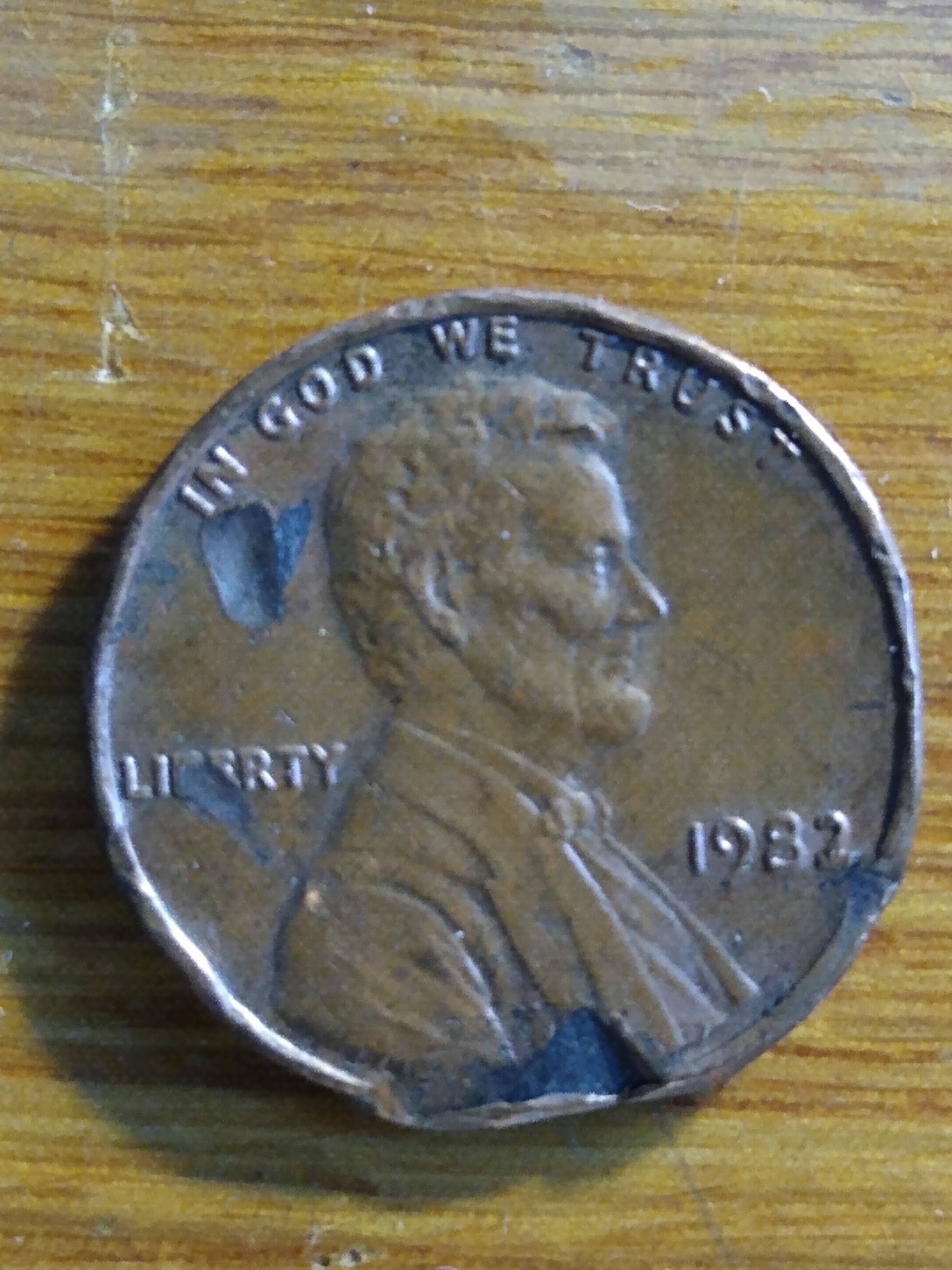
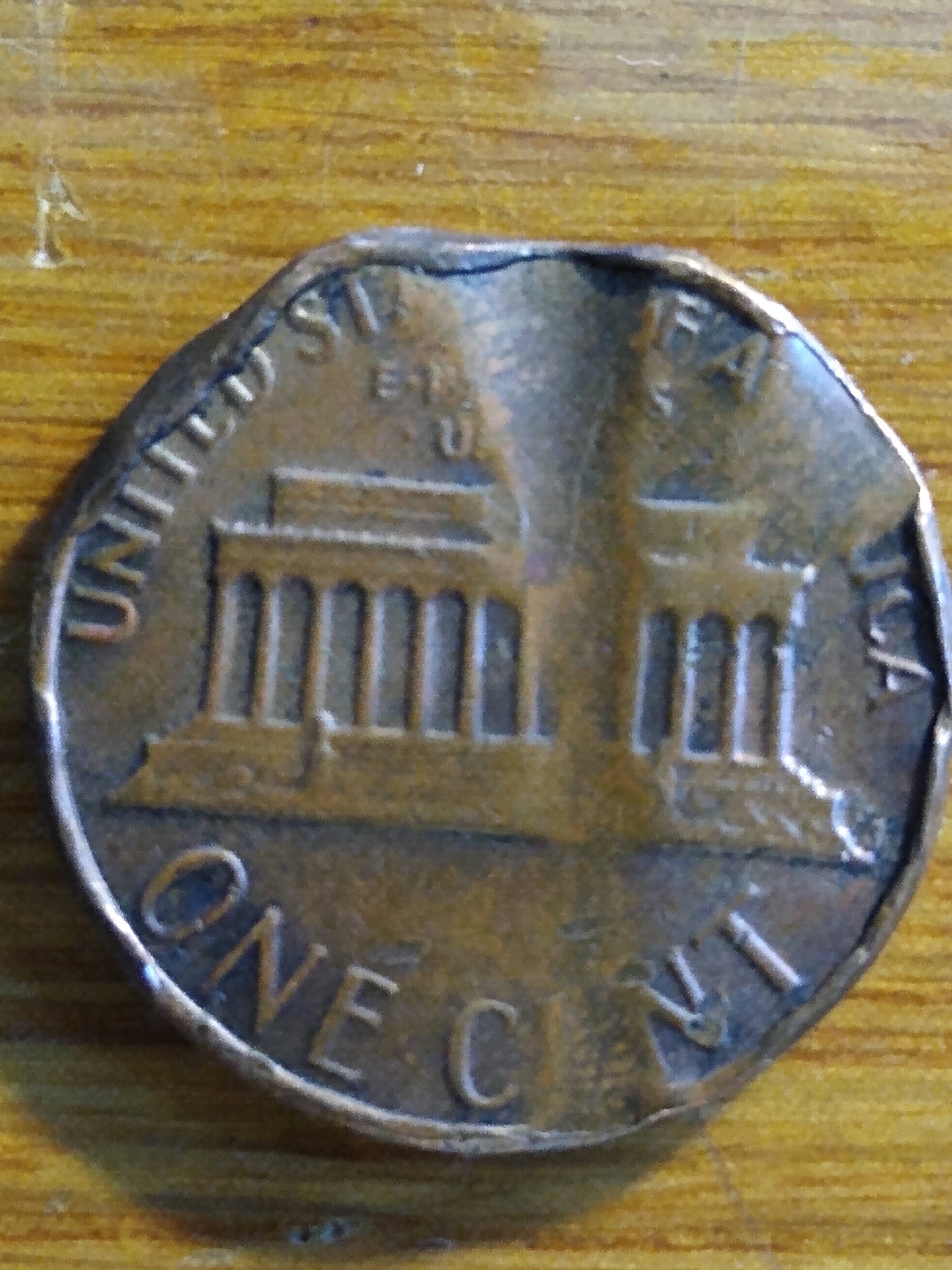
    But when I noticed the “pinch” on the obverse, I thought it’s probably PMD, but wondered about how “smooth” the pinch was. But then its reverse has what looked like a chip on the bottom rim, so I didn’t know for sure. It reminded me of this 1982 (I believe it’s copper), which looked like it was having a very bad day. But what was similar was how smooth the mark is on the reverse. What do you think?
    https://uploads.disquscdn.com/images/311a3a37ceb318d305832e46ae91c064cb50fe363f1512296745a8cd027bb673.jpg https://uploads.disquscdn.com/images/2f5b9167fdaac176166794dc370569a6c4a91107cca65482dd6bf4d5c7bbcd6d.jpg

    1. JoshuaTheFunTimesGuide Avatar
      JoshuaTheFunTimesGuide

      Hi, Brian —

      Thanks for the images… This is unfortunately just a very badly damaged (post mint) piece, though it’s one of those coins whose story I wish it could tell! I’m sure it would be a doozy…

      Thanks for reaching out,
      Josh

    1. JoshuaTheFunTimesGuide Avatar
      JoshuaTheFunTimesGuide

      Hi, Dino —

      Yes, and unfortunately what we have here is a case of heavy post-Mint damage, with the coin’s struck design obliterated and the outer copper coating all but entirely sanded away.

      Best wishes,
      Josh

      1. Dino Palone Avatar
        Dino Palone

        Thankyou Josh !

        1. JoshuaTheFunTimesGuide Avatar
          JoshuaTheFunTimesGuide

          You’re welcome, Dino!
          Josh

  13. Jon Hardt Avatar
    Jon Hardt

    Hi Josh, my kids and I found this. I’ve read your article and have most of the pile moved to the left. But need help with one. It seems he has a lose hair on his neck. It’s raised!! https://uploads.disquscdn.com/images/c5b08088bae5cc1200f528f737bbe6fd252f36644282bb0341243c2f99f7cf87.jpg

    1. JoshuaTheFunTimesGuide Avatar
      JoshuaTheFunTimesGuide

      Hi, Jon!
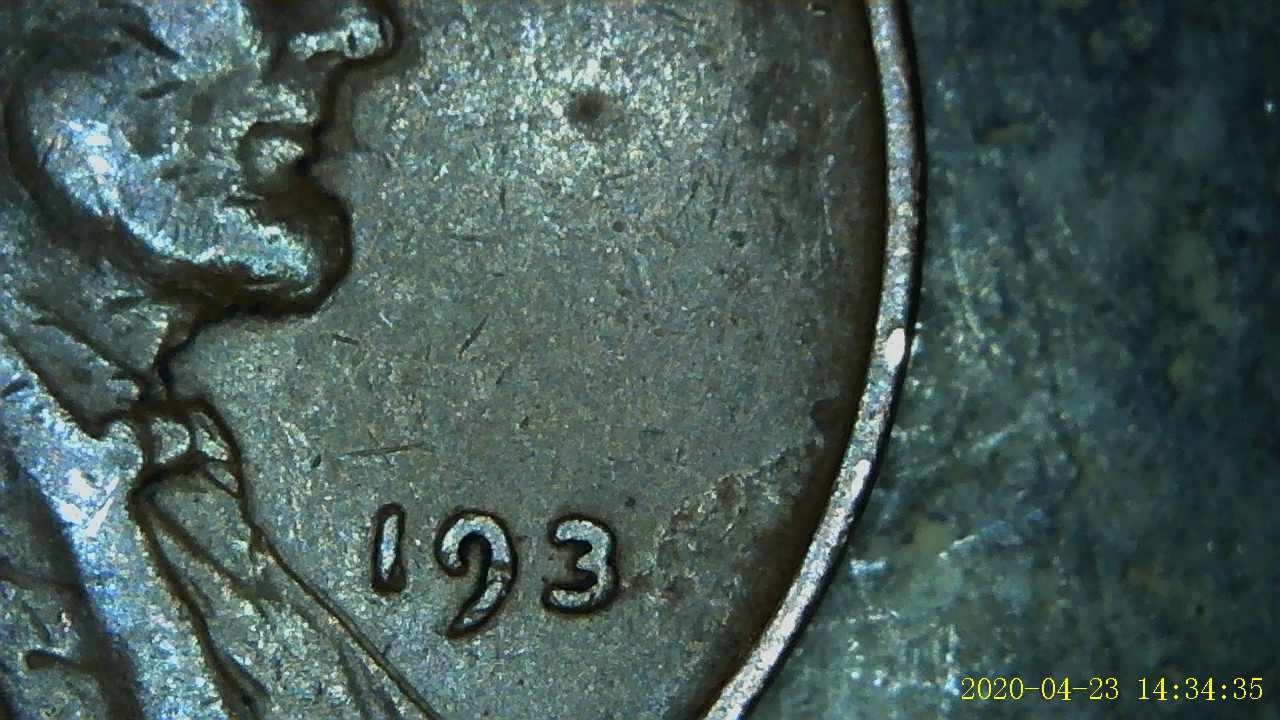
      I’m glad to know the article has been helpful to you! This image is a little blurry so I’m having difficulty in clearly making out the “loose hair.” Is it what appears to be a heavy line on the lower right of his neck, below the bow tie? Is it possible you could please post a clearer photo here and I could take another look?
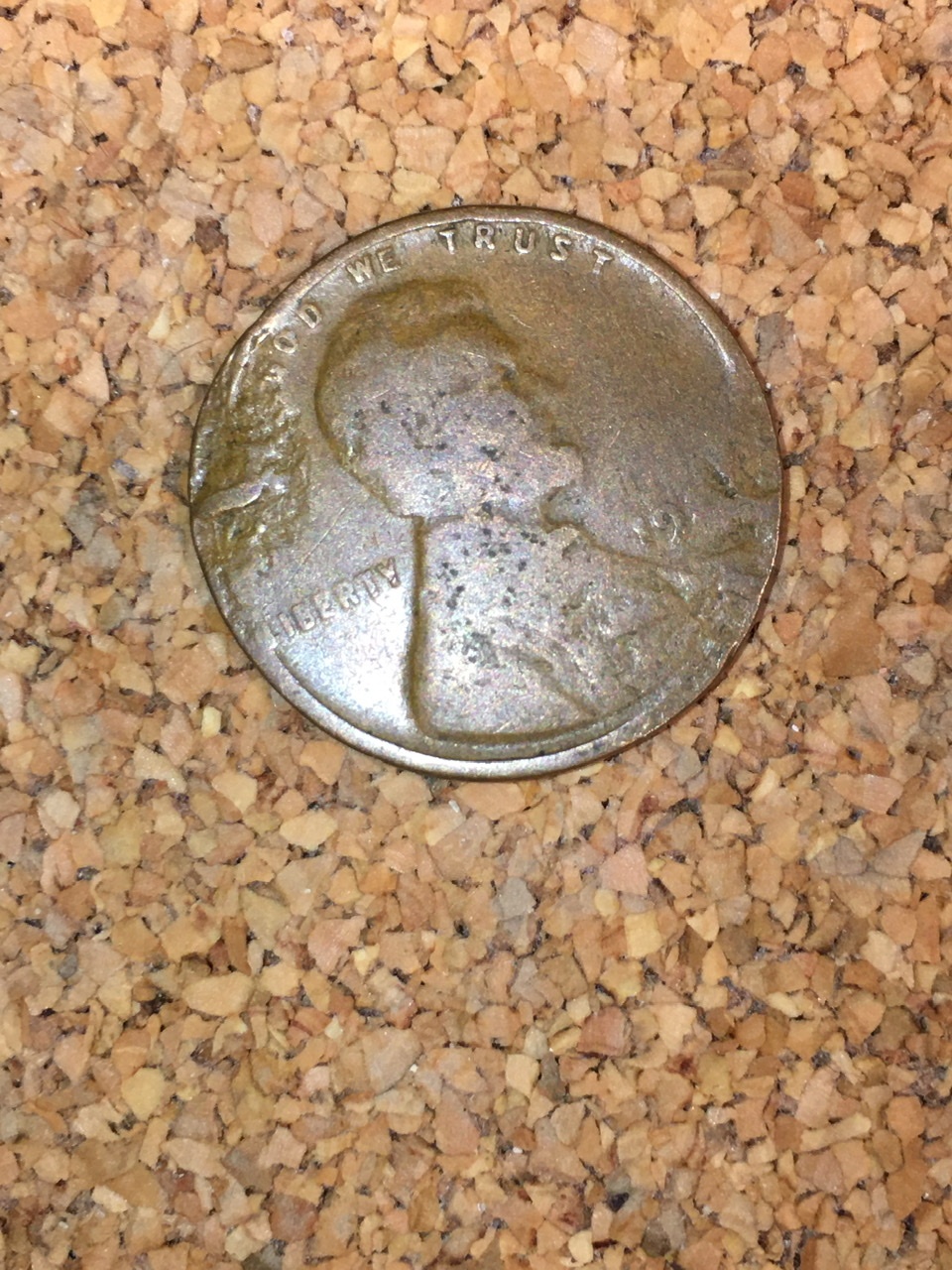
      Hoping to assist further,
      Josh

    1. JoshuaTheFunTimesGuide Avatar
      JoshuaTheFunTimesGuide

      Hello, Ruth —

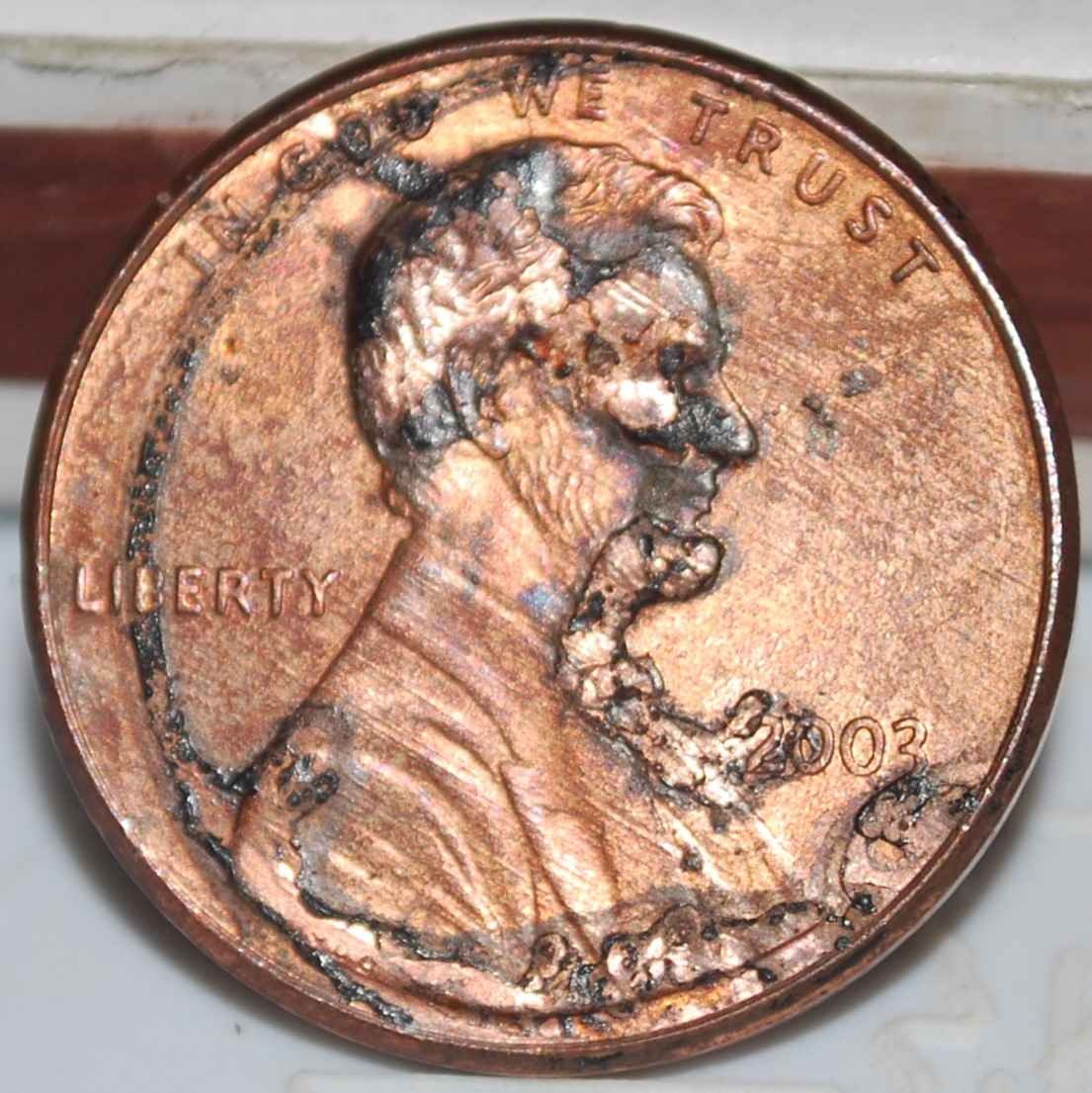
      It looks to me like someone tried gluing a bunch of pennies together (believe me, this happens more often than most anyone would think). I see what appears to be the Lincoln Memorial penny design across the shield, and I can’t even begin to make out what design is emblazoned over Lincoln.

      You might try safely soaking the coin in acetone and see if it removes any residue that may be there. Even if it doesn’t come off, I can assure you that this is some type of post-mint damage/alteration and not a mint-made error of any kind.

      I’m still wondering what the goal was in sticking these coins together… (ha ha!)

      Thank you for reaching out,
      Josh

      1. Ruth Avatar
        Ruth

        Josh

        Thank you for replying. I was just very curious on how that happened. Have a great day.

  14. Cathy Davis Foster Avatar
    Cathy Davis Foster

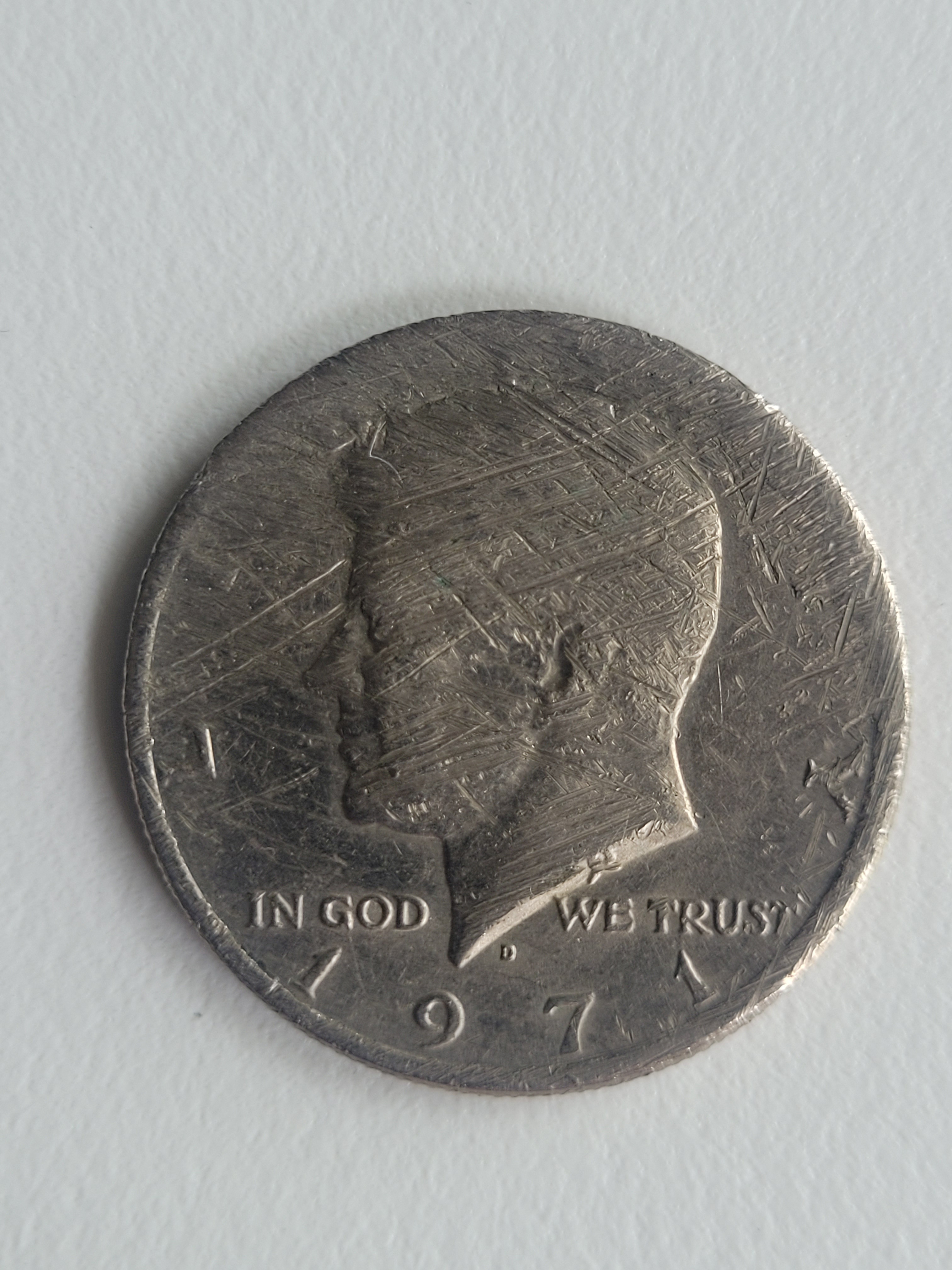
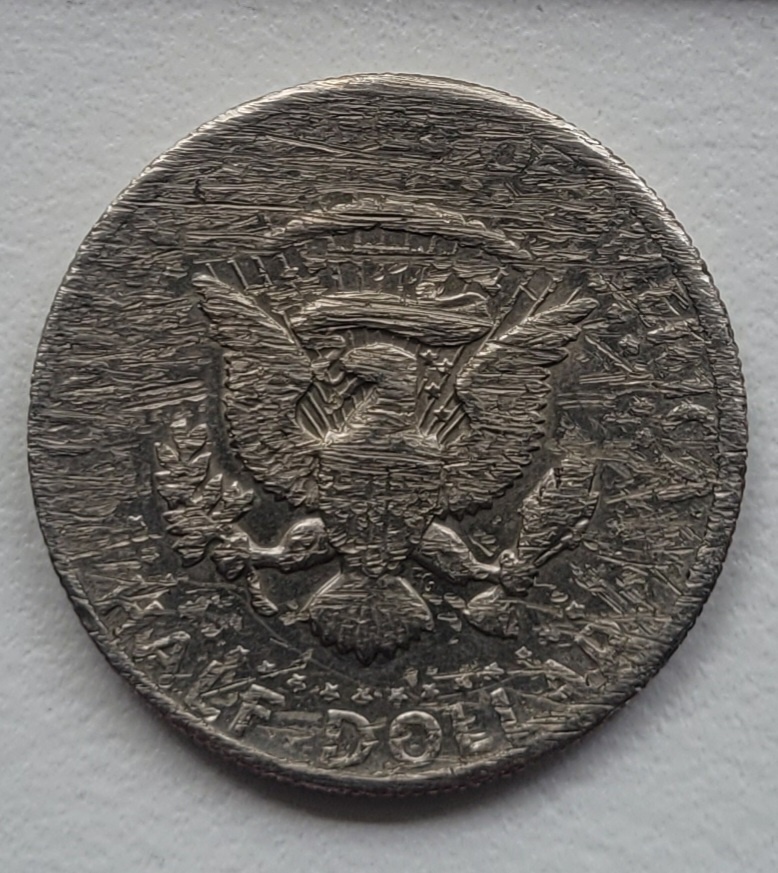
    Hi Josh I was hoping that you could take a look at this coin for me it just seems like it’s not your it’s not your normal wear and tear to say the least. Any input would be helpful thank you.
    https://uploads.disquscdn.com/images/9cf9ef6f6a3dbda186f74dbc909ef30a093b0c87228100999356fc0b8add7a66.jpg https://uploads.disquscdn.com/images/13611bcca75e5bf6b2597af976d9926f3ec32bd9bfc8bba9246e9b1539fe71fc.jpg https://uploads.disquscdn.com/images/275a7da2e1d2de7f29edc233879228773f98a61d4f77ea72ef0fda942746ac11.jpg https://uploads.disquscdn.co
    m/images/0eacf3eb054167b86016dfde3c36c5d56a8ec01d9b0c127c96df0be1cef09355.jpg

    1. JoshuaTheFunTimesGuide Avatar
      JoshuaTheFunTimesGuide

      Good day, Cathy!

      I’m afraid your 1971-D Kennedy half dollar exhibits substantial post-mint damage. The heavy scrapes all came after the coin left the mint and are not a form of error. This piece is safe to spend at its face value if you wish…

      Thank you for reaching out,
      Josh

      1. Cathy Davis Foster Avatar
        Cathy Davis Foster

        Thank you so much for taking the time to look at this. I’m new to the coin world. My mother passed away and had jars and jars of coins. Some extremely old and in mint condition. I’m not really sure where to start to have them evaluated but your input would be welcomed. Again thank you.
        Cathy

        1. JoshuaTheFunTimesGuide Avatar
          JoshuaTheFunTimesGuide

          Hello, Cathy —

          My condolences to you on the passing of your mother…

          If you would like more information about which coins are worth more than face value, this link could help you: https://uscoinsguide.com/us-coins/

          And here’s a list of errors and varieties: https://uscoinsguide.com/us-coin-errors-and-varieties/

          I hope this info is helpful 🙂
          Josh

  15. Diane Doyle Avatar
    Diane Doyle

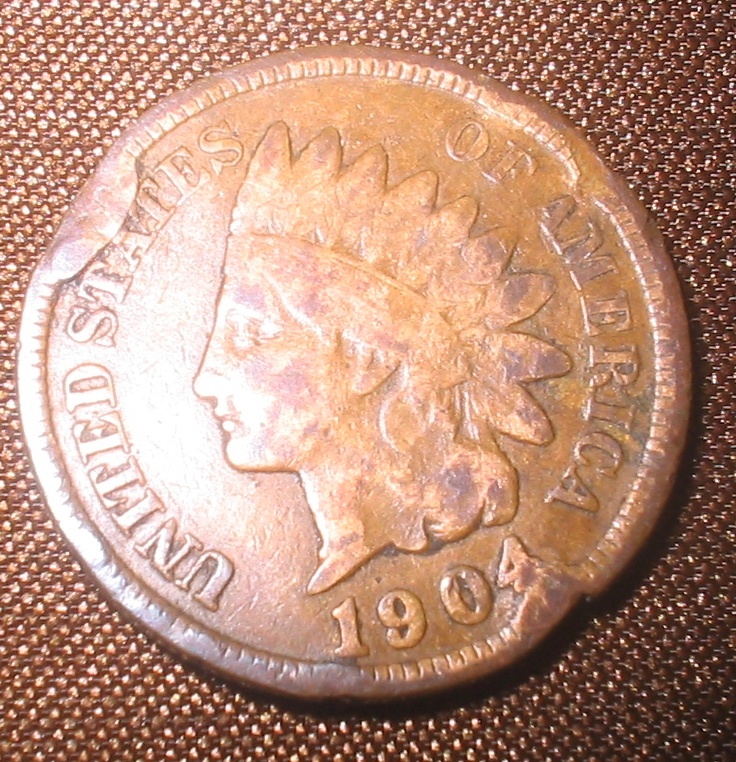
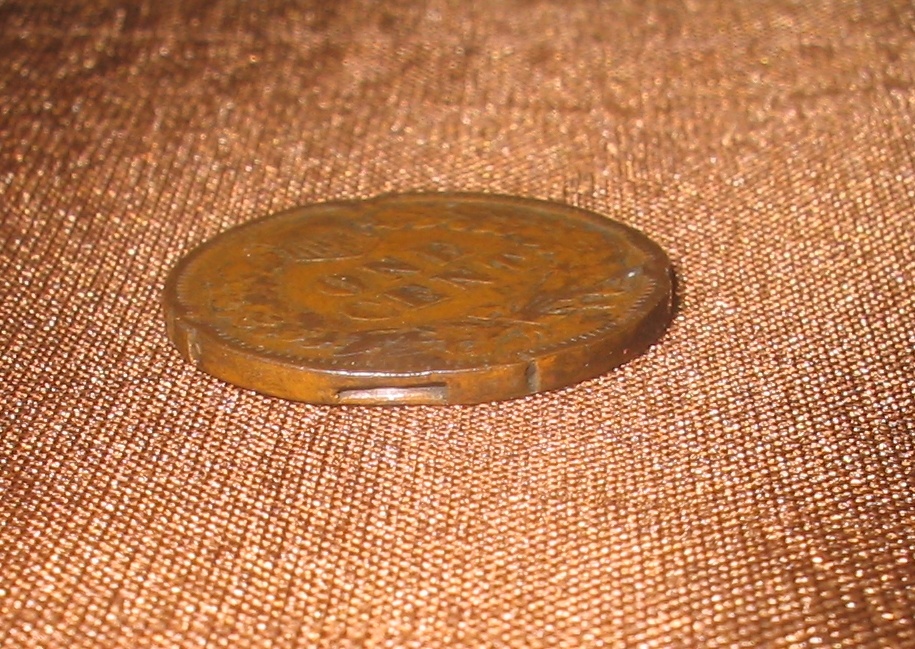
    https://uploads.disquscdn.com/images/aa9f41184f5f45b773197ed75cb42996d4cb87dcc999802eb73c8fea2b0c8830.jpg https://uploads.disquscdn.com/images/a47dc977c635c17ea08dd5966e43189b2e2fa5eb3a19889b2b3a9fbe399eb312.jpg https://uploads.disquscdn.com/images/d84e2c33a878ef83e1bc57df5abfea26b0883136be4ced07afd1117b08b3a690.jpg Good afternoon, Joshua, I am going to upload some photos of a 1904 penny. I can see it meets some of the criteria for mint error and some of the criteria for post mint error. Your expert opinion would be helpful and no doubt informative. I am curious about the nearly perfect rectangular hole in the edge. Thank you.

    1. JoshuaTheFunTimesGuide Avatar
      JoshuaTheFunTimesGuide

      Hi, Diane —

      Your 1904 Indian penny shows signs of post-mint damage, including the rim dings and grooves/cuts into the edge. My thought is this coin may have once been inserted in a jewelry mount, which can cause such damage — especially when done roughly or incorrectly.

      While your piece may be worth 50 cents to $1, its story is probably priceless!

      Thank you for reaching out,
      Josh

      1. Diane Doyle Avatar
        Diane Doyle

        Thank you. It has been frustrating trying to imagine what might have happened as much as118 years ago, especially after reviewing the minting process.

        1. JoshuaTheFunTimesGuide Avatar
          JoshuaTheFunTimesGuide

          You’re welcome, Diane! As you’d imagine, a coin of that age has a lot of secrets it will never reveal, but bezel mounting is one of the most plausible explanations for the damage seen.

          All the best,
          Josh

  16. Natural Sleep sounds Avatar
    Natural Sleep sounds

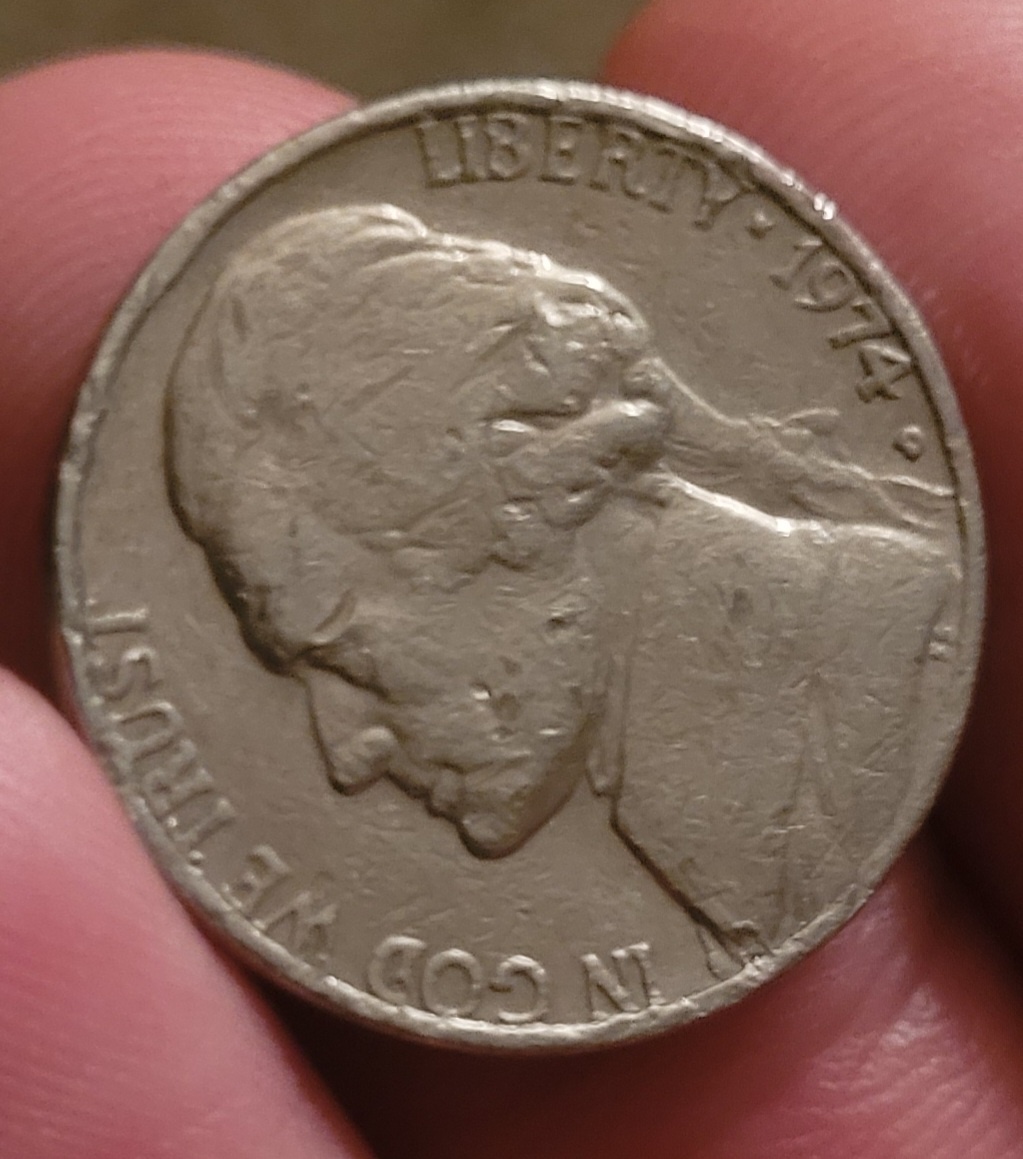
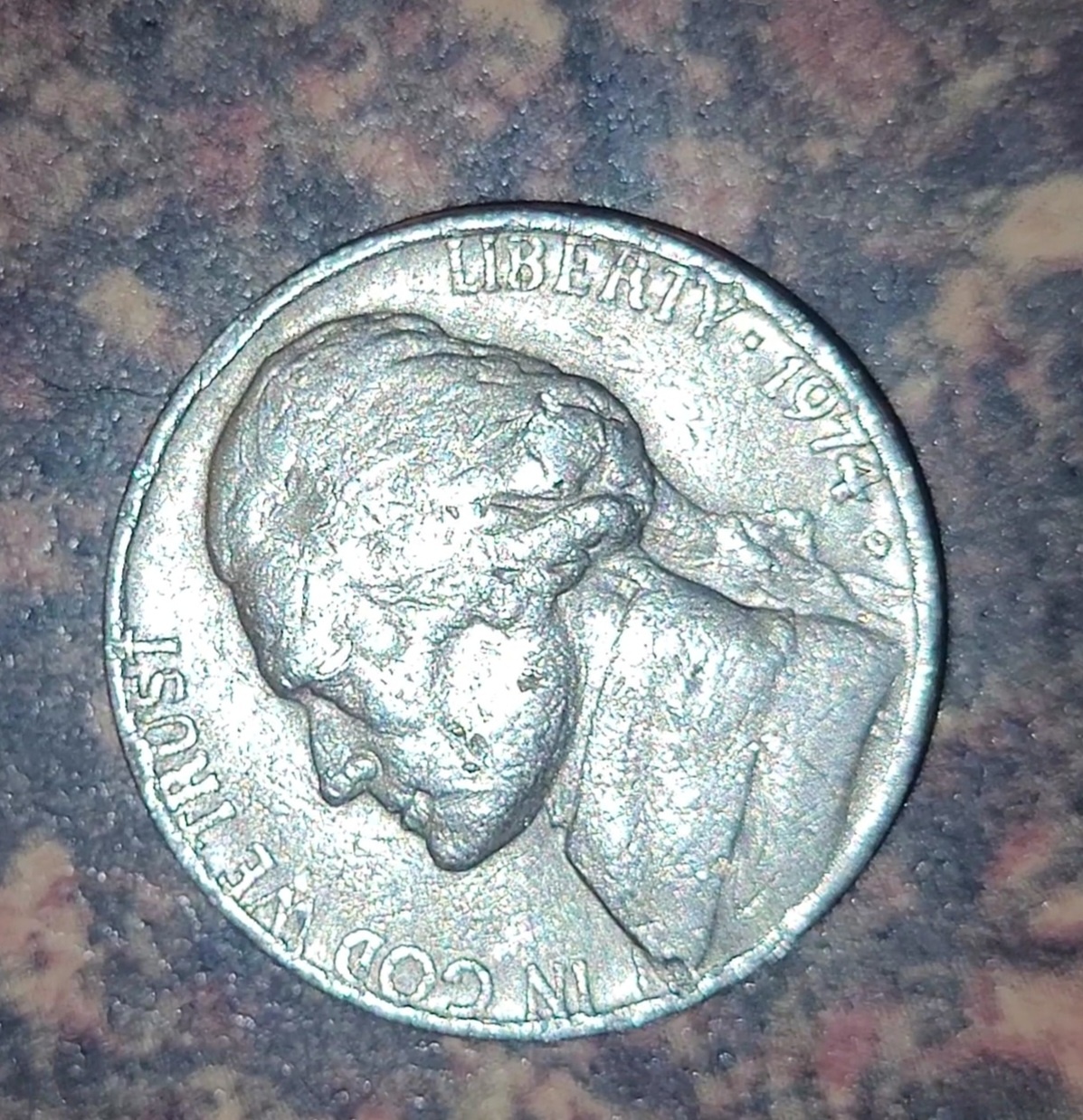
    Hey hope your doing good and I hope you still check comments on this post I was just wondering if you can possibly let me know if I might have somthing I found a knickle dated 1974 i think it’s definitely circulated but the words IN GOD WE TRUST the word GOD looks as if the letter D is a upside down backwards G there’s a few letters that looks not right but if you could let me know what you think would be very appreciated https://uploads.disquscdn.com/images/3796ed26834178f53ac562b4296f4f5b664f4e892c99b628d5f0e133edf39626.jpg

    1. JoshuaTheFunTimesGuide Avatar
      JoshuaTheFunTimesGuide

      Hello,

      The situation with your nickel is that hits and dings from circulation have misshapen some of the letters in the inscription. You can see similar damage along the rim and other parts of the coin. As far as what it’s worth, given that this coin does not contain any errors and is otherwise a heavily circulated 1974-D Jefferson nickel, this piece is worth its face value.

      Thank you for reaching out!

      Best wishes,
      Josh

    1. JoshuaTheFunTimesGuide Avatar
      JoshuaTheFunTimesGuide

      Hi, Amanda —

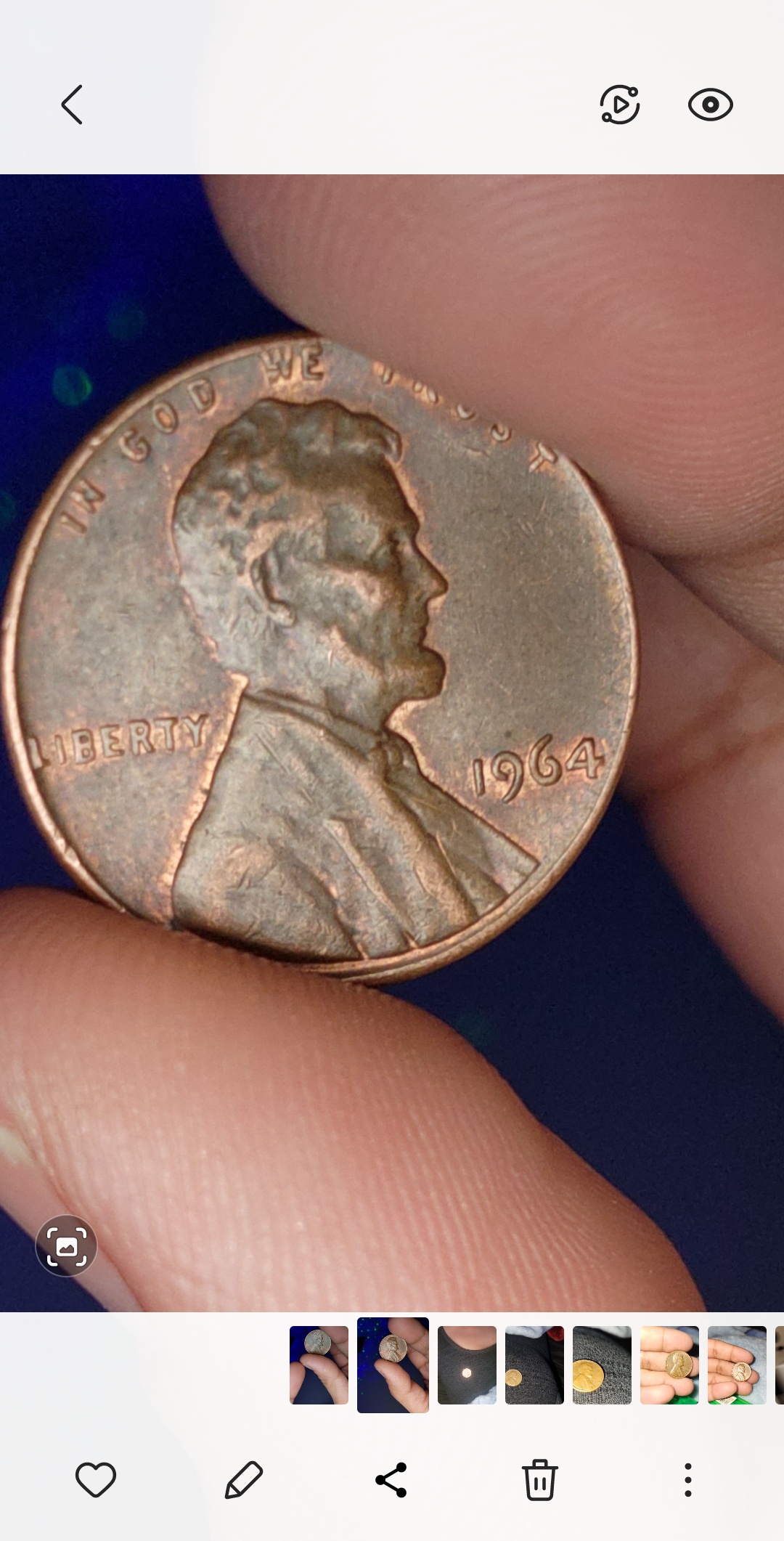
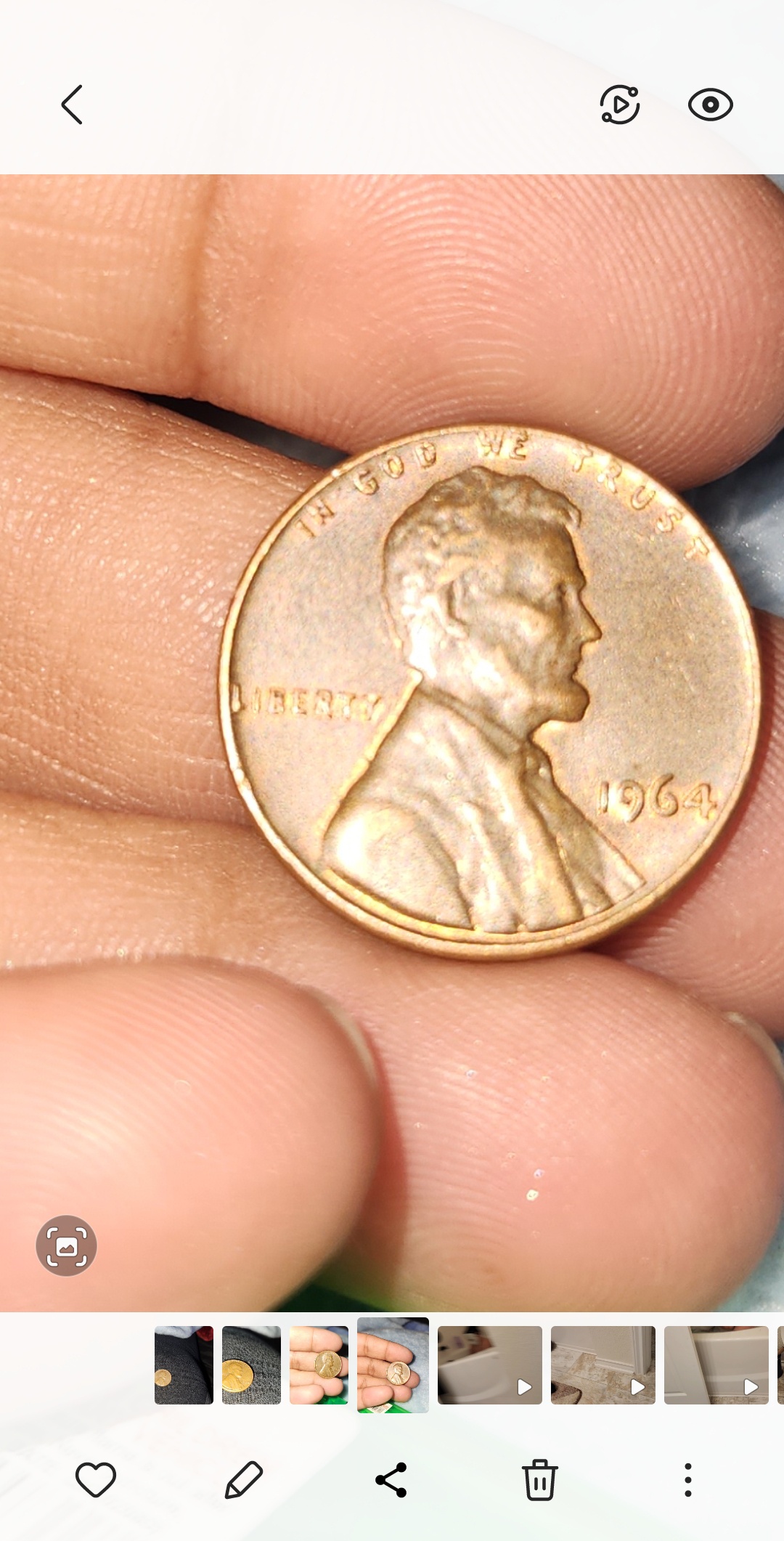
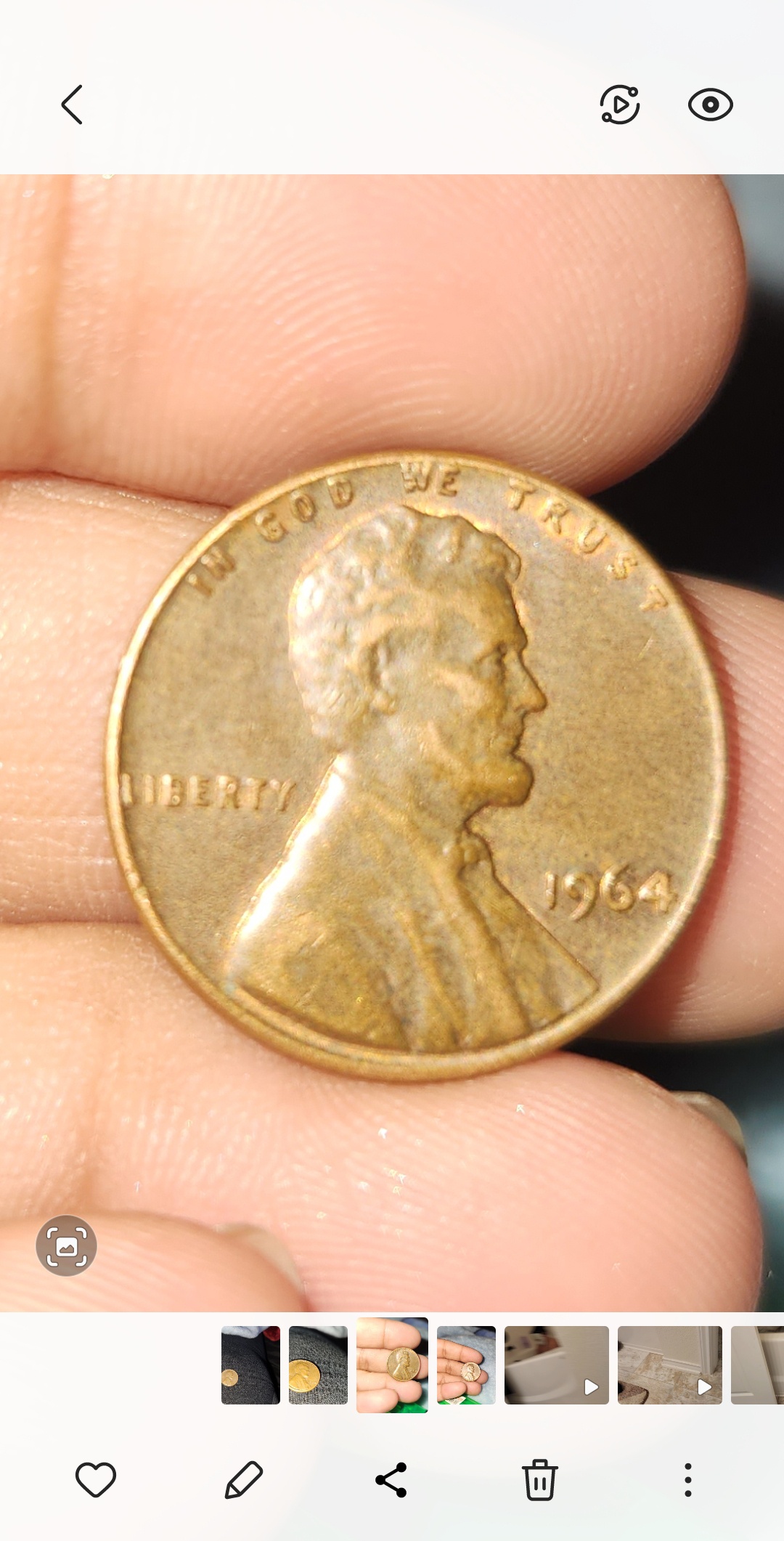
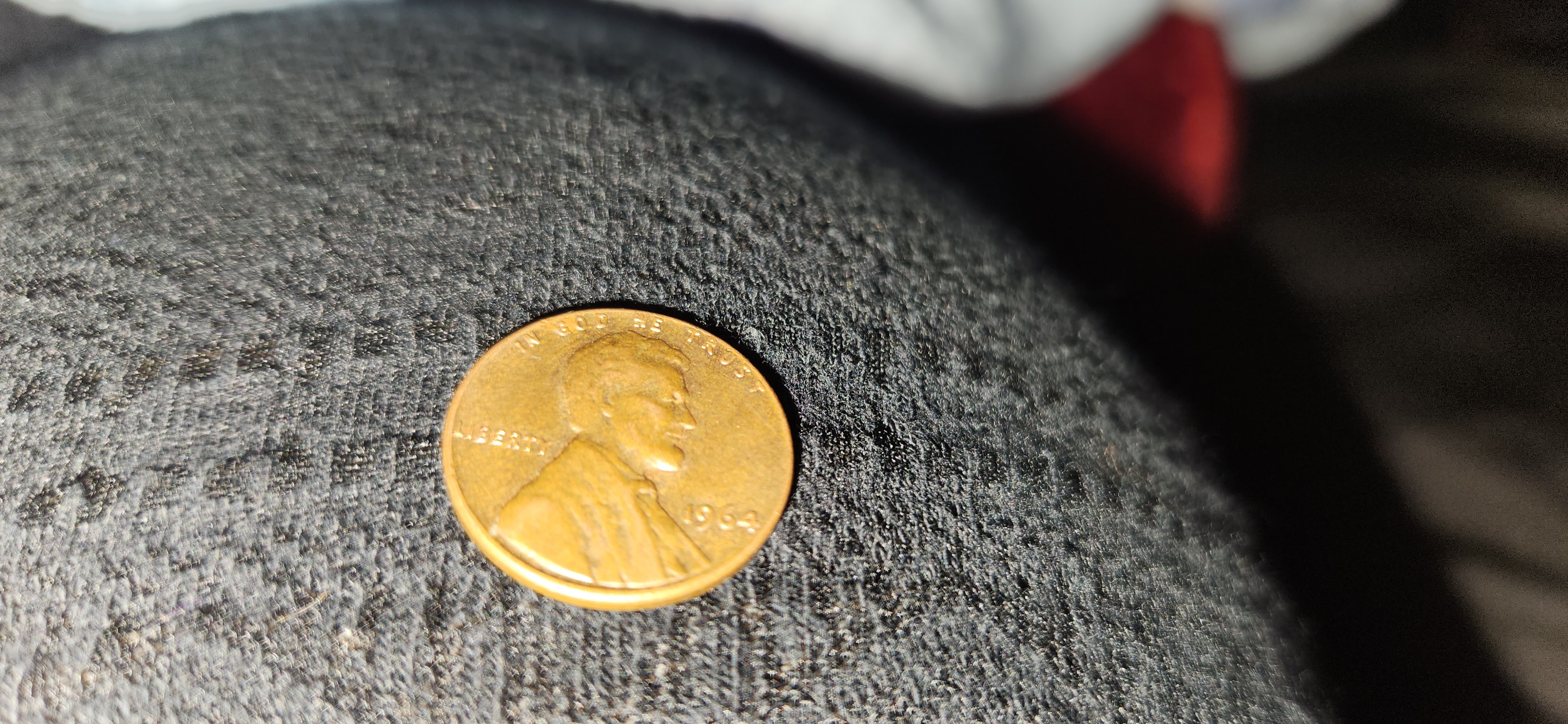
      As this appears to be a normal Philadelphia strike with light wear, this 1964 penny is worth its copper value of two to three cents.

      Best wishes,
      Josh

Leave a Comment

Content Widget