


Start Here

Values

Buying & Selling

Rare U.S. Coins

How To's

Myths & History

What Are Coin Rim Errors? How Much Are Rim Errors On Coins Worth?

by Joshua McMorrow-Hernandez

Many people think of coins as having two sides, but they really have three! The rim (or edge) of the coin is where some types of errors can also occur.

Coin rim errors make for some pretty fascinating discoveries by coin collectors.

The rim, which is the raised lip of metal around the periphery of a coin’s obverse (head’s side) and reverse (tail’s side), is prone to various types of errors.

  • How can you tell coin rim errors apart from common rim damage?
  • How much are coin rim errors worth?
  • What are the most valuable rim errors?

I’m going to answer these and many other questions about rim errors on coins in this article!
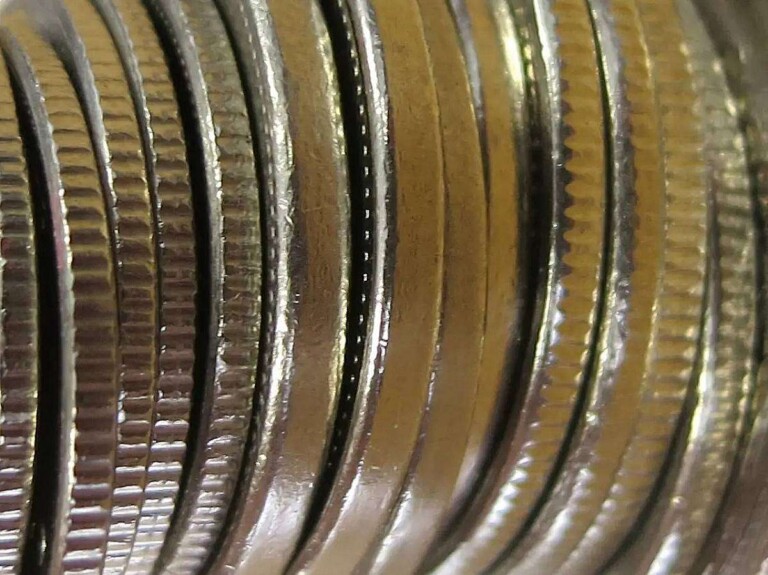
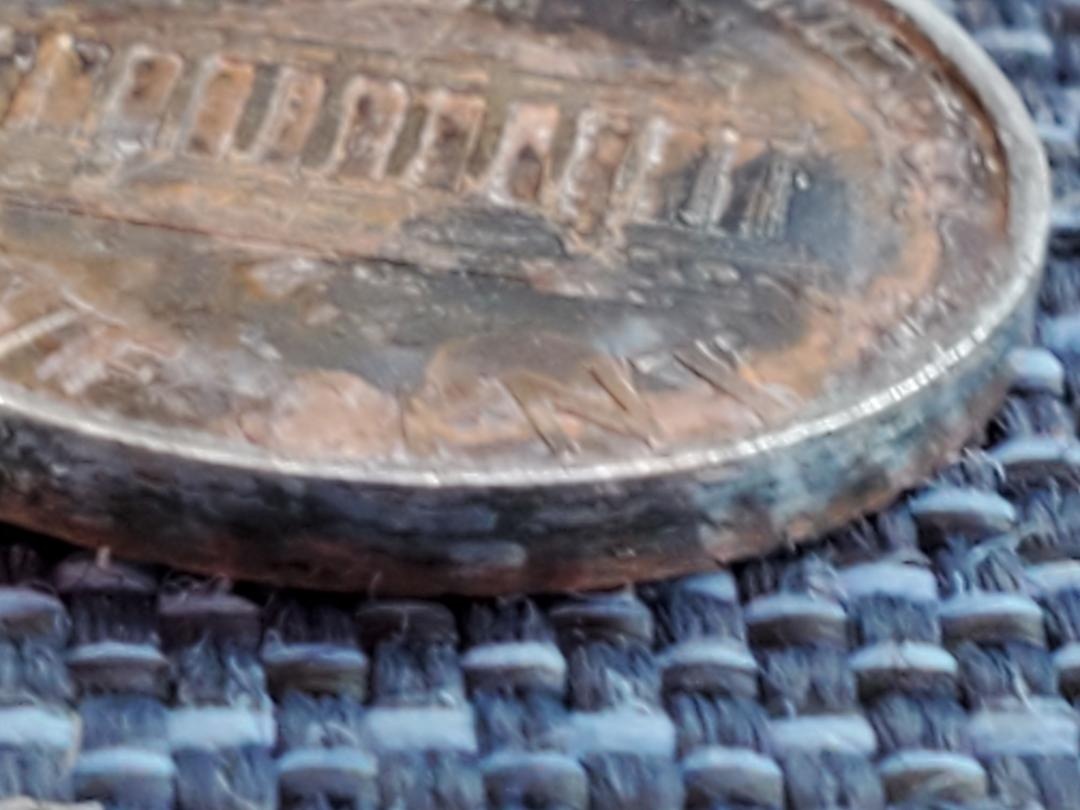
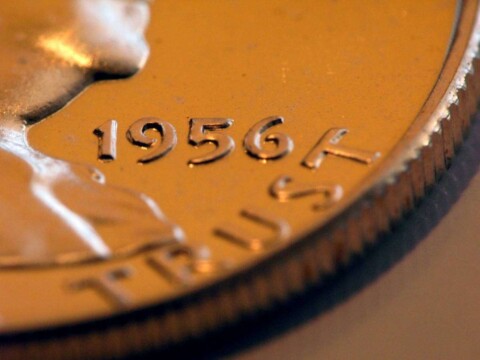
You have to look close up with a magnifying glass to see coin rim errors.

TIP: You’re going to need a good magnifying glass for examining coins close-up. You also need to be in good lighting (a 75- to 100-watt incandescent light is best).

Rim Damage vs. Rim Error

Before going into the various types of coin rim errors you may find and what they’re worth, it’s important to clear up the differences between rim damage and a bonafide rim error.

Unfortunately, most of the rim issues that folks believe are errors are really just forms of damage.

So, here’s a rundown of some of the rim oddities that may appear to be error coins but are just different types of damage:

  • Dents, dings, and bruises — Virtually anything that goes into the rim is damage. This includes bumps, sharp cuts, and bruises.
  • Flat rim or rim going into the lettering and/or design on the coin — Excessive wear can cause the rim to be worn flat and into the lettering and design elements around the periphery of the obverse or reverse. However, this is not an error, and coins with flattened or worn rims carry no extra value.
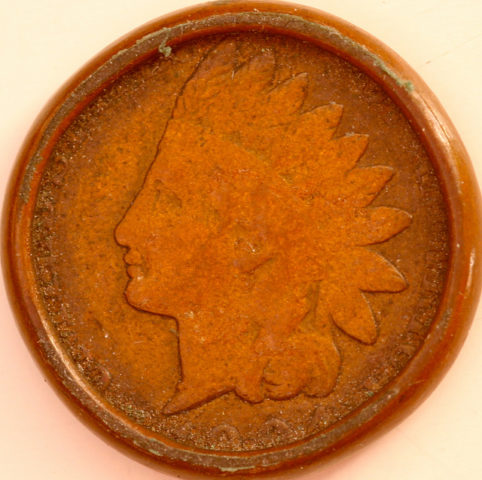
  • Dryer coins or spooned edges — Ever see a coin where the rim is built up really high and appears to fold over the edges of the lettering, the design, or other details on the coin? This is a type of damage that can be caused by centrifugal forces experienced by a coin spinning around the inside of a clothes dryer. The folded edge can also be created by somebody who intentionally pushed the coin’s edge (the coin’s narrowest surface) and rim upward around the coin in a process commonly known as spooning. Either way, such pieces aren’t errors and have no additional value. An example of a dryer coin (or possibly a spooned piece) is seen in the image of this Indian Head penny:
5 Types Of Coin Rim Errors (And How Much They’re Worth)

There are several types of cool errors involving a coin’s rim.

Here’s a look at some of the most popular (and most valuable) coin rim errors:

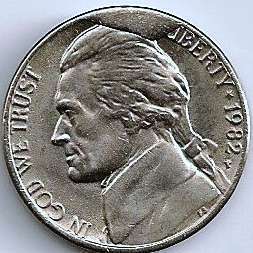
#1 – Broadstrike Errors
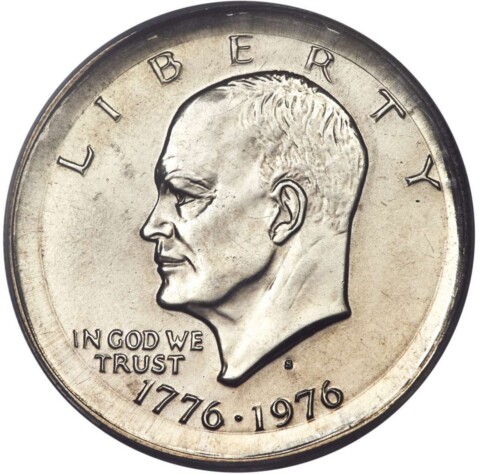
Broadstrike coin errors

Coins are normally struck inside something called a retaining collar — which securely corrals the coin when being struck by the dies. The retaining collar helps form the coin’s edge and implants the thin vertical edge lines (known as reeds) on various coins such as dimes, quarters, and half dollars. These retaining collars also help shape the rim of the coin.

When the retaining collar fails to deploy as the coin is being struck, several things happen:

  • The coin is stamped larger and flatter than ordinary
  • The edge won’t be struck with the reeding or edge lettering as appropriate
  • There will be no formed rim on the coin

Broadstrikes are unusual-looking error coins. They’re also among the most valuable types of errors directly affecting the coin’s rim. And they always have a plain edge.

Broadstrike error coin values vary depending on the piece.

Values for the most commonly encountered Broadstrikes:

CoinValue (USD)
Indian penny$50+
Lincoln wheat penny$5+
Lincoln Memorial penny$5+
Buffalo nickels$250+
Jefferson nickels$10+
Mercury dimes$50+
Silver Roosevelt dimes$40+
Clad Roosevelt dimes$7+
Silver Washington quarters$150+
Clad Washington quarters$15+
Franklin half dollars$450+
Silver Kennedy half dollars$150+
Clad Kennedy half dollars$50+
Morgan & Peace silver dollars$500+
Eisenhower dollars$100+
Susan B. Anthony dollars$50+
Sacagawea dollars$250+

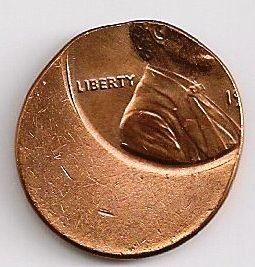
#2 – Off-Center Errors

Off-Center Coin error

Off-center errors occur when a coin is struck outside of its collar and isn’t properly centered during striking. These errors may show the design 5% or 10% off-center… or perhaps as much as 60% or more off-center.

Many off-center errors cut off some or all of the date. But the most valuable off-center errors show the coin’s full date.

Values for off-center errors vary quite a bit.

Values for coins that are 15% to 50% off-center:

CoinValue (USD)
Indian penny$75+
Lincoln Wheat penny$7+
Lincoln Memorial penny$7+
Buffalo nickels$350+
Jefferson nickels$10+
Mercury dimes$250+
Silver Roosevelt dimes$125+
Clad Roosevelt dimes$7+
Silver Washington quarters$300+
Clad Washington quarters$50+
Franklin half dollars$1,350+
Silver Kennedy half dollars$350+
Clad Kennedy half dollars$200+
Morgan & Peace silver dollars$1,750+
Eisenhower dollars$300+
Susan B. Anthony dollars$200+
Sacagawea dollars$1,000+

#3 – Die Cud Errors

die cud error coin

Have you ever seen a flat, slightly raised bump protruding from the rim onto the obverse or reverse? That’s a die cud!

A die cud is a type of die break that is attached to the coin’s rim.

Notice the huge die break at the top of the nickel (pictured above) along the rim? That’s a die cud.

Cuds are distinctive from other types of die breaks because they involve the rim and are typically large and flat. Most other die breaks are thin lines that generally occur on other parts of the coin.

Die cuds are among the most desirable types of die breaks and coin rim errors.

The value of a die cud varies — depending on the location, size, and overall appearance of the error. Because of this, it’s hard to give an exact value for a die cud, but most are worth about $100 or more.

#4 – Blank Coin Errors
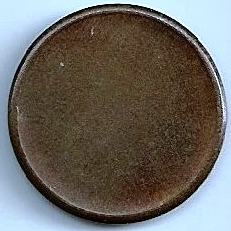
Blank Planchet coin error

Many collectors find coins that are entirely blank and show no design at all. Although some of these blank planchets show light evidence of a rim, others don’t.

The pieces that are blank and don’t show any rim are more valuable than the finished planchets that have upset rims.

Pictured above is a blank planchet. Notice the upset rim around that coin?

Values for blank coins without the rim:

CoinValue (USD)
Bronze Lincoln penny$3+
Copper-plated zinc penny$2+
Nickel$12+
Silver dime$40+
Clad dime$2.50+
Silver quarter$150+
Clad quarter$5+
Silver half dollar$150+
Clad half dollar$125+
Silver dollar$1,500+
Eisenhower dollar$125+
Susan B. Anthony dollar$100+
Sacagawea dollar$200+

Values for blank coins with an upset rim:

Coin NameValue (USD)
Bronze Lincoln penny$2.00+
Copper-plated zinc penny$1.75+
Nickel$7.00+
Silver dime$30.00+
Clad dime$2.00+
Silver quarter$100.00+
Clad quarter$4.00+
Silver half dollar$125.00+
Clad half dollar$80.00+
Silver dollar$1250.00+
Eisenhower dollar$75.00+
Susan B. Anthony dollar$80.00+
Sacagawea dollar$50.00+

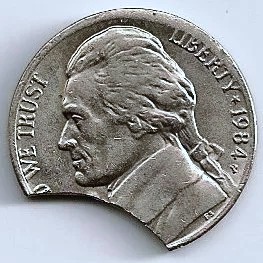
#5 – Clipped Planchet Errors

Sometimes errors occur in the process of stamping out the round blanks from the original sheet of metal. Among these errors are mistakes involving the round shape of the metal blank.

And every now and then, the cutting machine will mis-cut the metal.

One of the most common such coin rim errors are clipped planchets, showing a straight or curved (crescent-shaped) chunk of metal from missing from the edge of the coin.

In every case, part of the rim is missing from a clipped planchet error coin.

Values for various types of clipped planchet coins:

Coin TypeValue (USD)
Bronze Lincoln penny$2+
Copper-plated zinc penny$3+
Nickel$3+
Silver dime$8+
Clad dime$2.50++
Silver quarter$15+
Clad quarter$4+
Silver half dollar$25+
Clad half dollar$15+
Silver dollar$50+
Eisenhower dollar$30+
Susan B. Anthony dollar$20+
Sacagawea dollar$75+
PUBLISHED July 7, 2026
UPDATED July 30, 2026

Joshua McMorrow-Hernandez

Numismatic Specialist

Hi, I’m Josh! I’m the Editor here at the US Coins Guide. My love for coins began when I was 11 years old. I primarily collect and study U.S. coins produced during the 20th century.

I’m a member of the American Numismatic Association (ANA) and the Numismatic Literary Guild (NLG). I have won multiple awards from the NLG for my work as a coin journalist. I’m also the editor at the Florida United Numismatists Club (FUN Topics magazine), and author of Images of America: The United States Mint in Philadelphia (a book that explores the colorful history of the Philadelphia Mint). I’ve contributed hundreds of articles for various coin publications including COINage, The Numismatist, Numismatic News, Coin Dealer Newsletter, Coin Values, and CoinWeek.

I’ve authored over 1,000 articles here at the US Coins Guide (many with over 50K shares).

I welcome your coin questions!

33 responses to “What Are Coin Rim Errors? How Much Are Rim Errors On Coins Worth?”

  1. shannon_howey Avatar
    shannon_howey

    Thoughts on a quarter with no 3rd side edge?!?! Yes really

    1. JoshuaTheFunTimesGuide Avatar
      JoshuaTheFunTimesGuide

      Hi, Shannon —

      Could you please send a couple clear photos of this coin and post them here so I can assist you further?

      Thanks!
      Josh

  2. Patricia Norman Avatar
    Patricia Norman

    I have a 1996 D penny struck on a dime planchet with the penny having a silver rim. Is it worth anything???

    1. JoshuaTheFunTimesGuide Avatar
      JoshuaTheFunTimesGuide

      Hi, Patricia —

      What you have is a 1996-D penny whose sides have been rolled inward (either by way of centrifugal force such as spinning in a clothes dryer or by applied manual pressure) and inner zinc core is exposed on the rims and some other high points (circulating pennies made since late 1982 are made from copper-coated zinc). This piece is worth its face value and is safe to spend if you wish.

      Best wishes,
      Josh

  3. Jay Avatar
    Jay

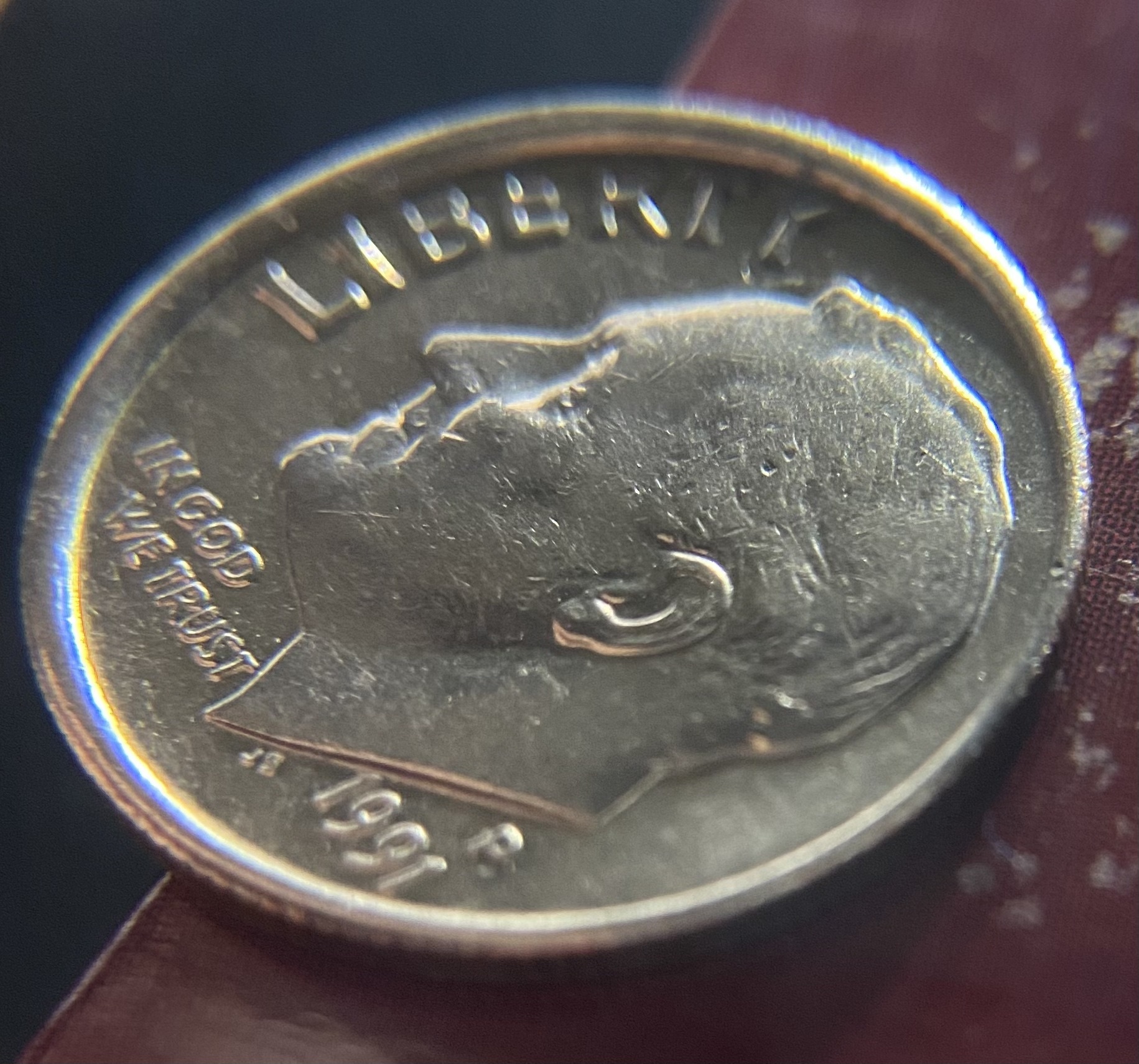
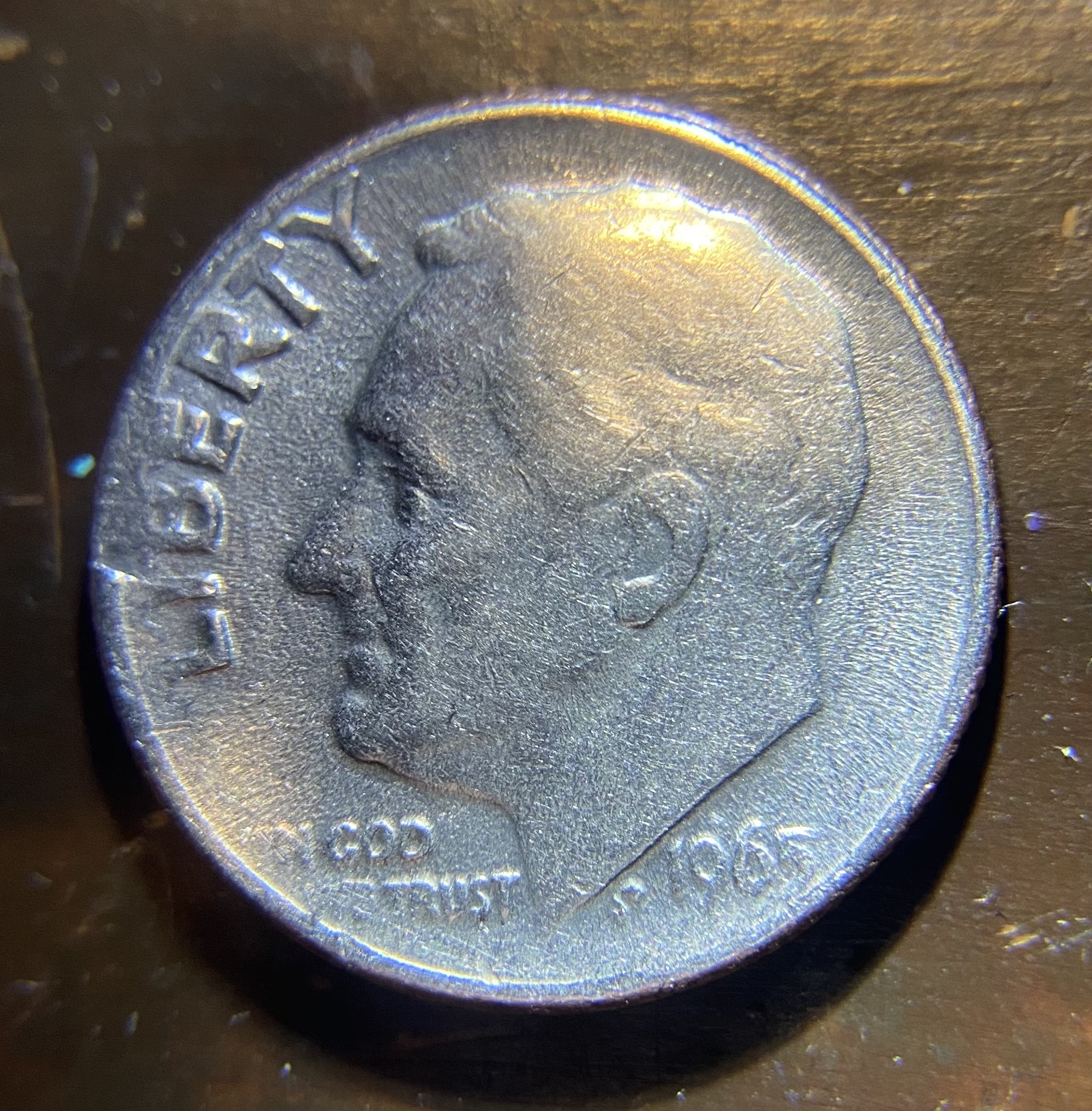
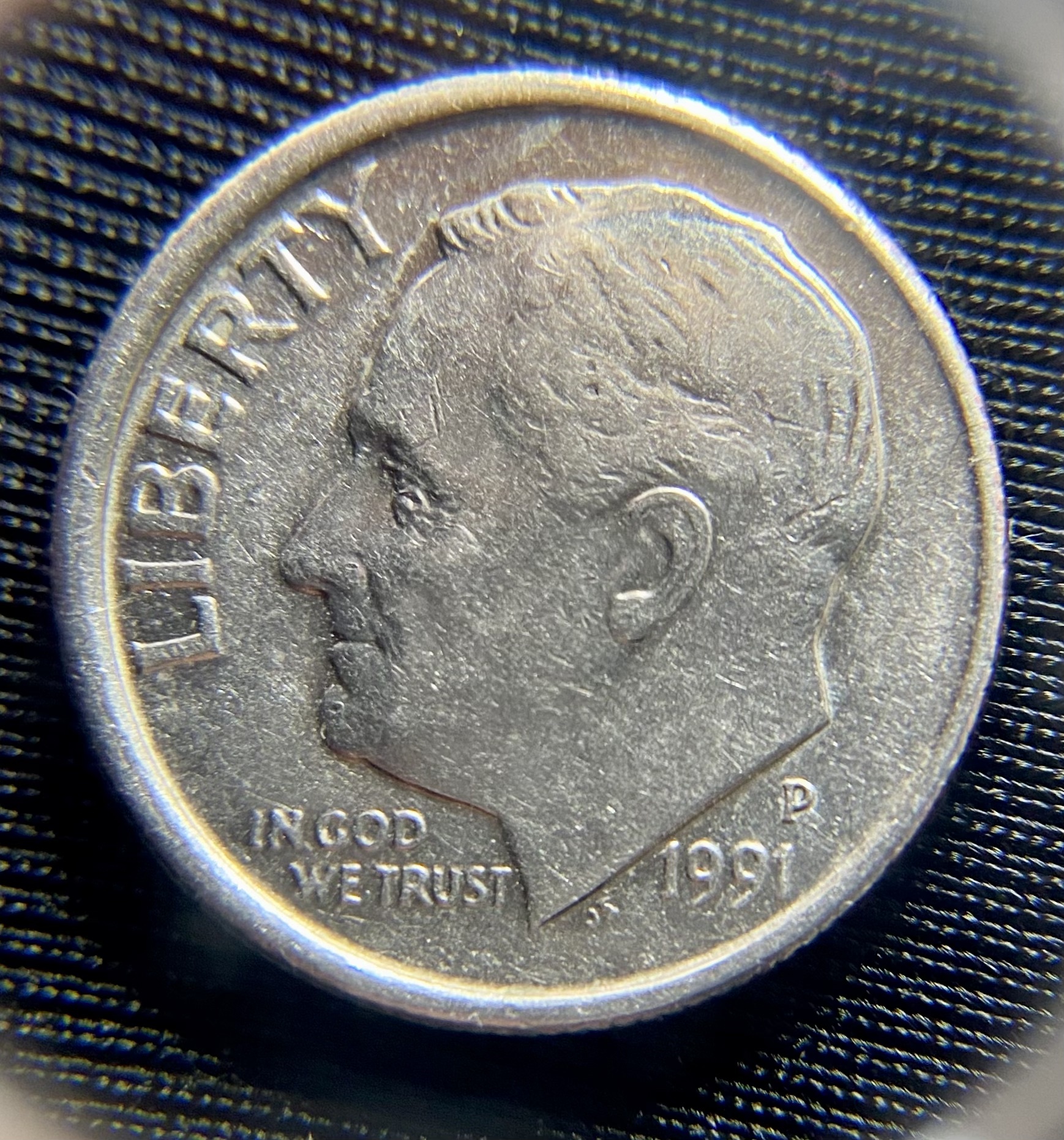
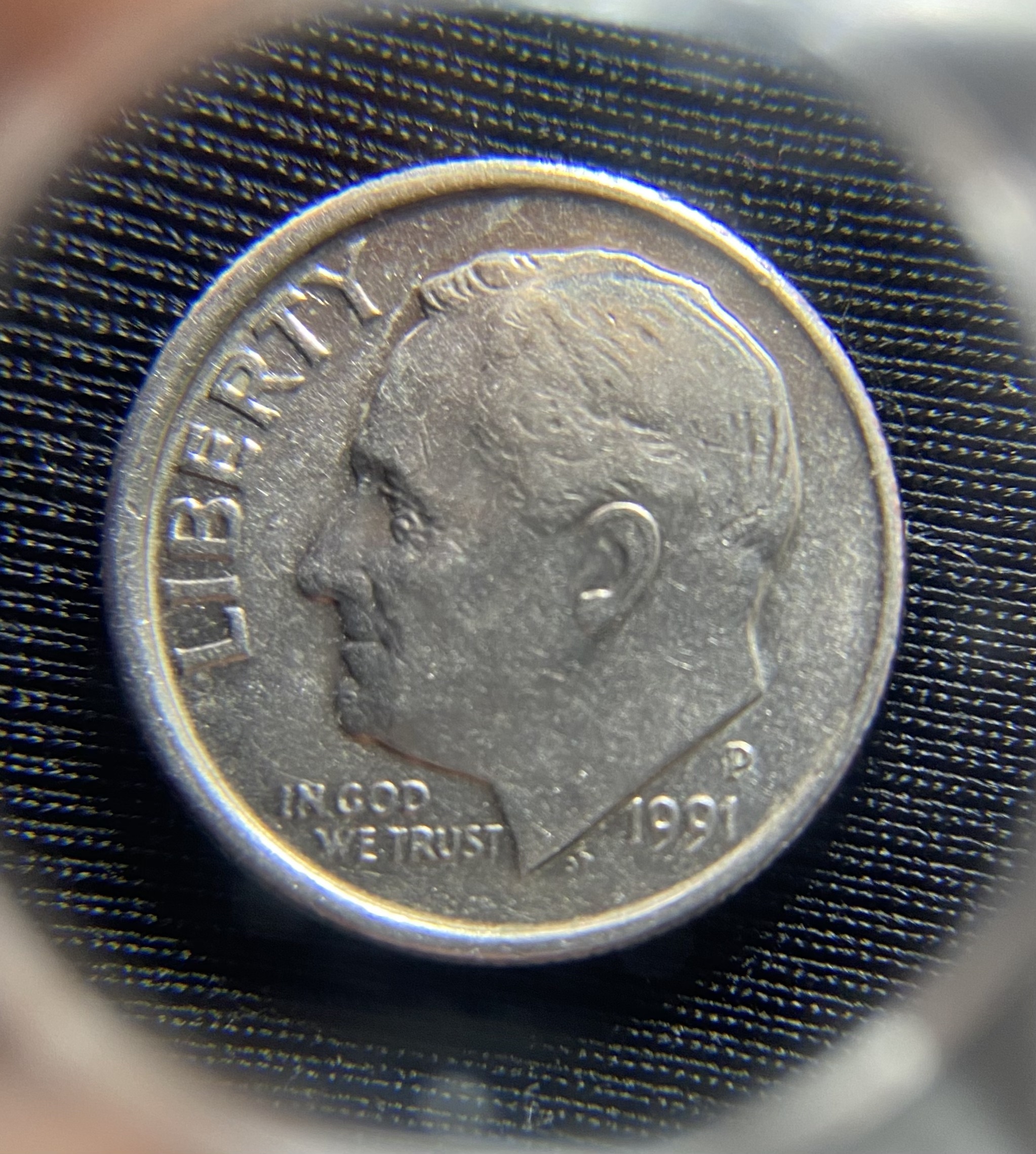
    Alright well I looked at that Disqus site and didnt see that Color and toning post I commented on but ill come back to that later… lol For right now I found this 1965 No Mint Roosevelt with some strange damage to the dimes rim its like a shaved off part of the top part of the rim. I thought I read something about that here but it could have been a different site. There are some other things going on with it to. Its pretty beat up so Its prob. PMD or is this some kinda error that I have yet to learn about? I think I also have a off center strike or broad Strike on my 1991-P Roosevelt? I’ll pop em both up here. Let me know what ya think? Thanks Brotha, see ya soon>>>

    https://uploads.disquscdn.com/images/7dddc409247cdf72e17d91e602e45df6b60165b5efeadf1e052749af4e69fc3c.jpg https://uploads.disquscdn.com/images/da5b9e5926cbc1bb7f1a241ea1eef3162f3db234cd0e37b2426e69a79b419a58.jpg https://uploads.disquscdn.com/images/9978f627eba6beb847b51f35353d491eabc010f8c0b445695f8d226ea590d5b4.jpg https://uploads.disquscdn.com/images/88d7403ef926903d5ff62ebd7957f253197a8816bbc66de88922c0d20c53f2bc.jpg https://uploads.disquscdn.com/images/254614eb0958928e6263c3bb05d004dbc47543c3d9ddcc064e13443652644a99.jpg

    1. Jay Avatar
      Jay

      oops, I forgot the back of the one with the weird rim damage… here it is lol

      https://uploads.disquscdn.com/images/d287ba54b618a1b28f49cf40aeb63fa3587ffef5d7441f772786b431e924acd6.jpg

      1. JoshuaTheFunTimesGuide Avatar
        JoshuaTheFunTimesGuide

        Hi, Jay —

        This piece shows heavy wear and some type of scratch or scrape across the bottom under the olive branch. This piece is safe to spend.

        Best wishes,
        Josh

    2. JoshuaTheFunTimesGuide Avatar
      JoshuaTheFunTimesGuide

      Hi Jay,

      The 1991-P is slightly off center, but without any part of its design missing it’s not drastic enough of an error to really register any premium in value. The 1965 dime appears to show some post-mint damage to the rim and is safe to spend at face value if you wish.

      Best,
      Josh

      1. Jay Avatar
        Jay

        Thank you much Boss. you are the best!

      2. Jay Avatar
        Jay

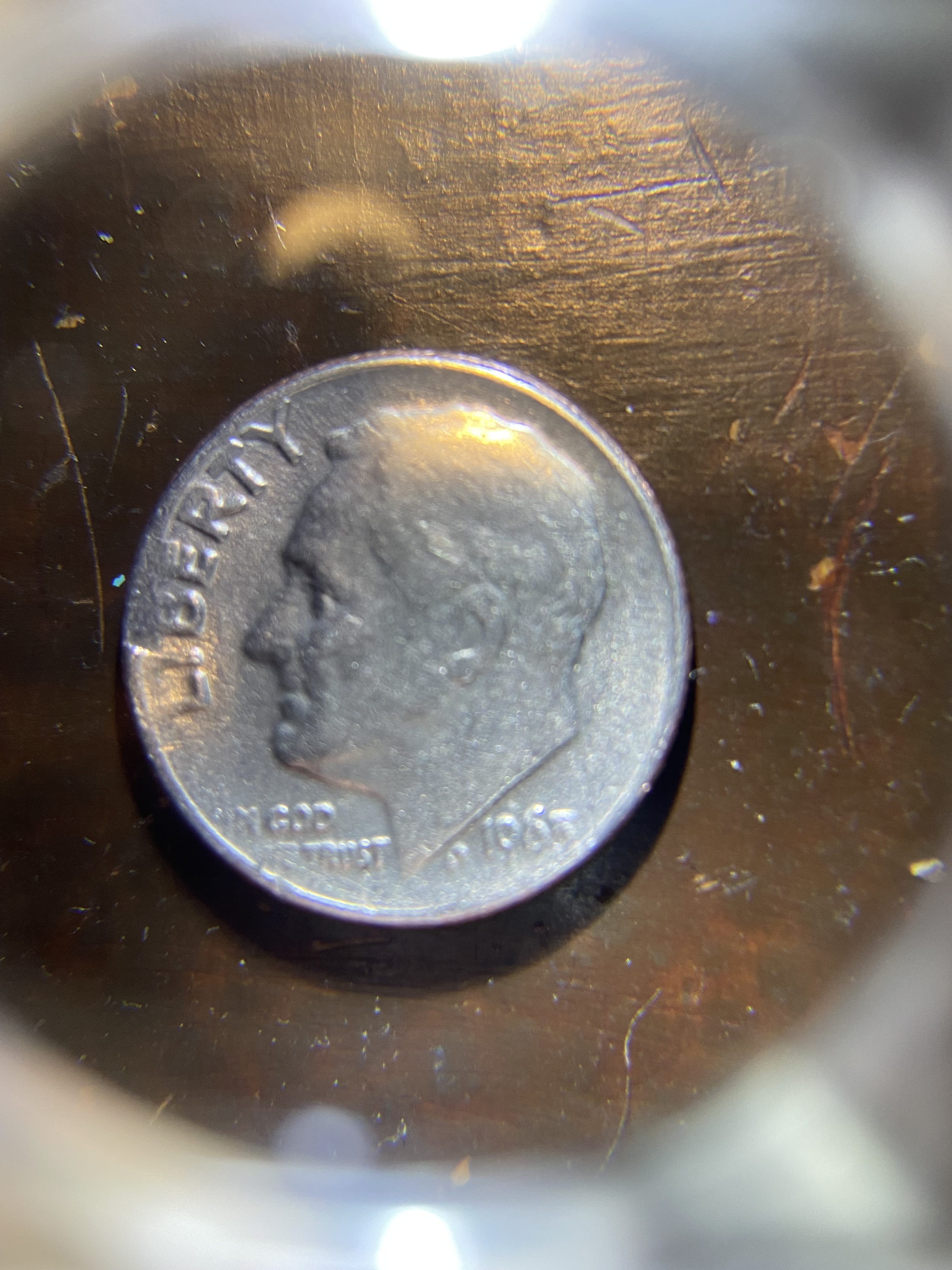
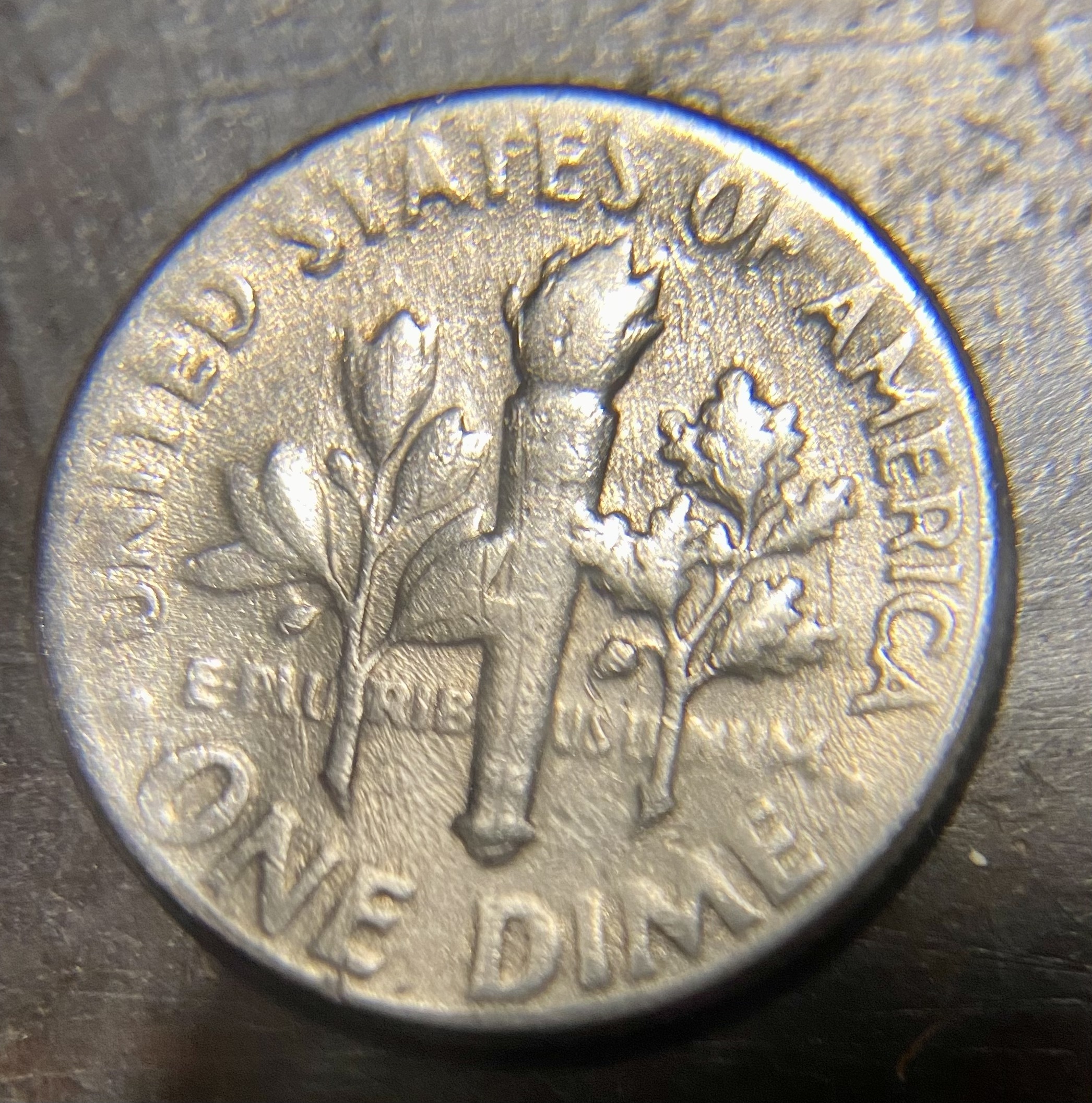
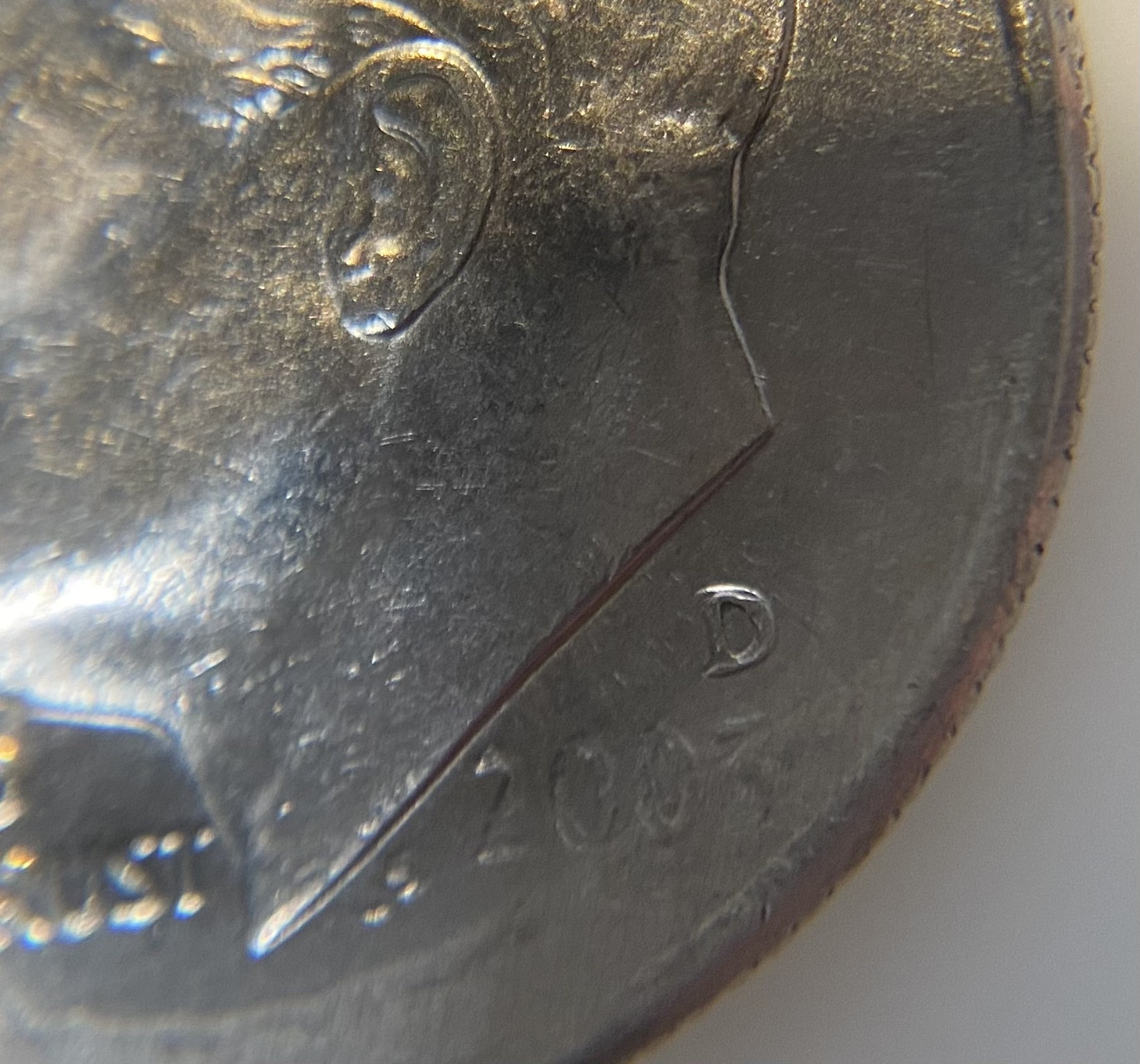
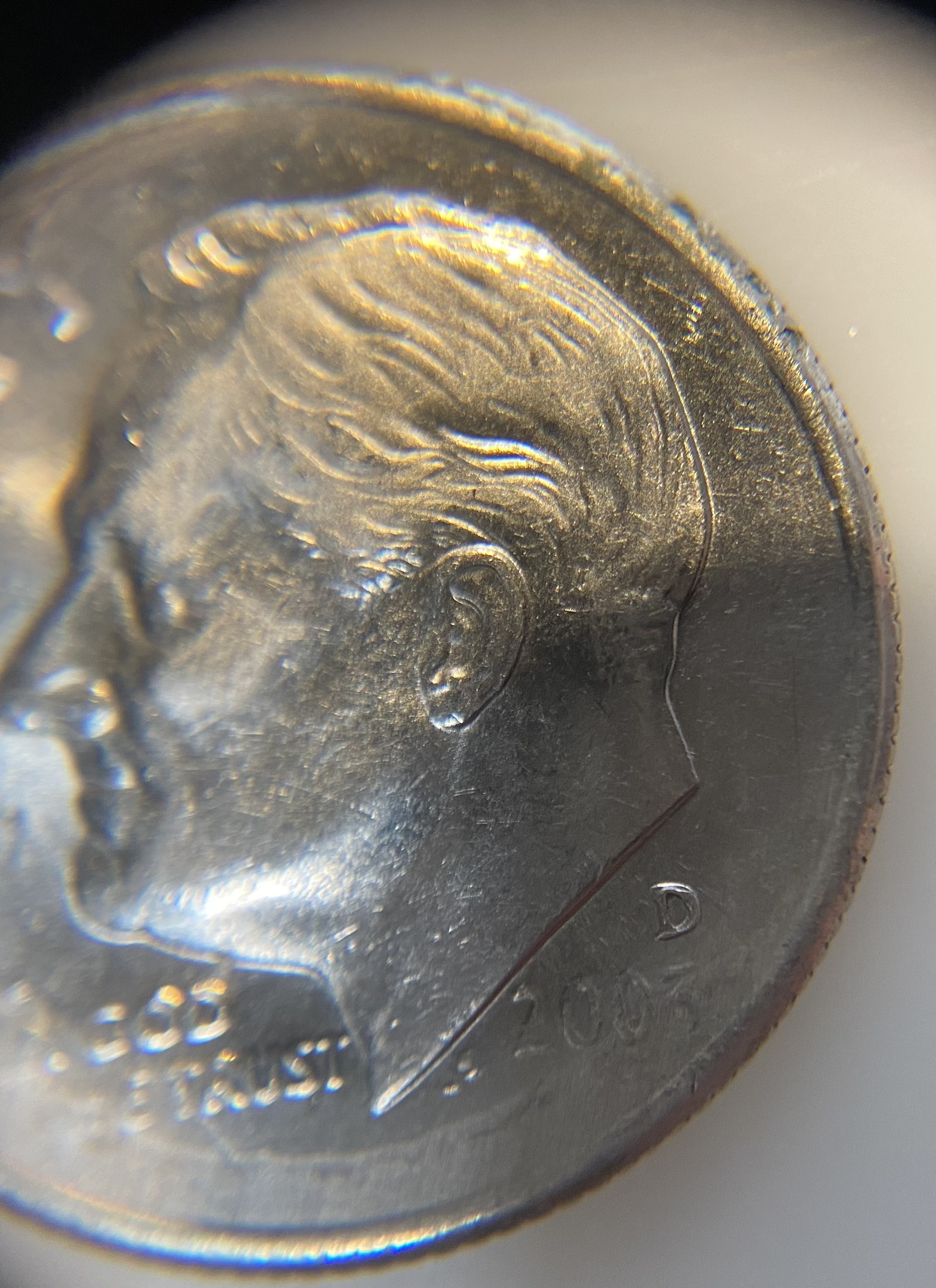
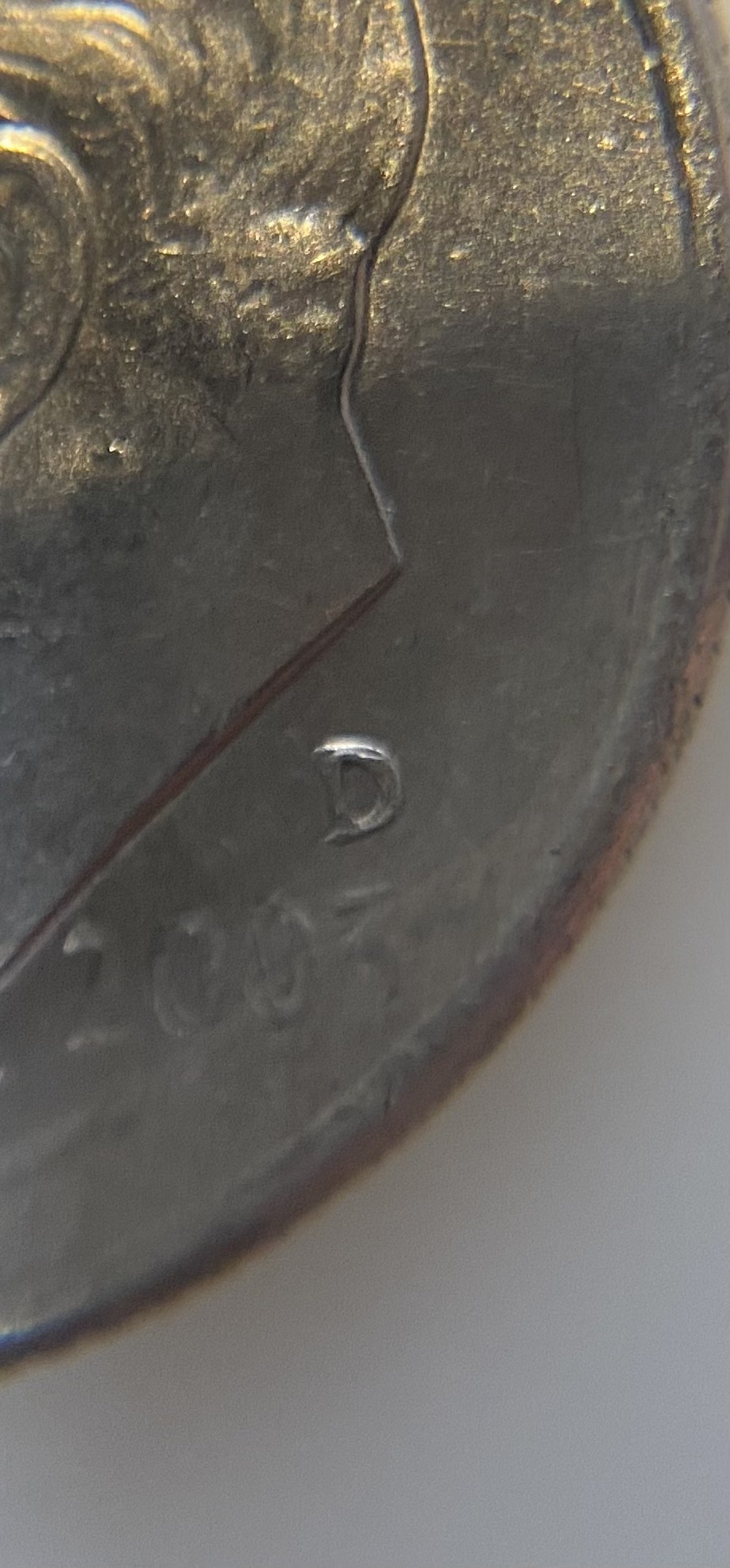
        Just got one more dime for ya Josh and then I’ll leave ya alone (for now) J/k. I dont wanna take up to much or you time and let other people utalize your valuable information… I’m almost certin I have a 2003 double punch mint mark 2003-D Roosevelt. It def. reminds me of the small D over the big D Lincoln Cents but I belive thats just Pennys. Unless its some kinda Post Mint Damage but its looks to good to be damage especially in this pattern. Form what I can tell the underlying D is pertruding west or southwest. I cant find anyone talking about double punch mints on the 2003 -D Dime so yeah I’m kinda stuck on this one…I’ll try to get a pic of it but I picked it up under 15x magnification so its hard to get a clear shot.

        https://uploads.disquscdn.com/images/d6b8adcef88efd6a447b703873fd05d268cc0edd4e6f06a8b60140c637c381ee.jpg https://uploads.disquscdn.com/images/6e38397d9a8c7d10137b15e576b84f5e5291fb07186d0a99ec4d3ab0fe72a44a.jpg https://uploads.disquscdn.com/images/f7352215f14ee90dfa5e35f960f082f70d6bb953ade5d4f7cb227f35e0be9819.jpg https://uploads.disquscdn.com/images/e3e6c5286d2a3038829294c5d4b126d27f103268f48522c5f820181781bfb4eb.jpg

        1. JoshuaTheFunTimesGuide Avatar
          JoshuaTheFunTimesGuide

          Hi, Jay —

          The little ridges you see on the “D” mintmark were caused by post-mint damage. As for the mintmark punches, the U.S. Mint started hubbing the mintmark directly onto the die in 1991 for the dime, which prevented the type of overmintmarks and such that arose on dies that were manually modified by a mintmark punch. This dime is safe to spend at face value if you wish.

          Best,
          Josh

  4. Robert Pence Avatar
    Robert Pence

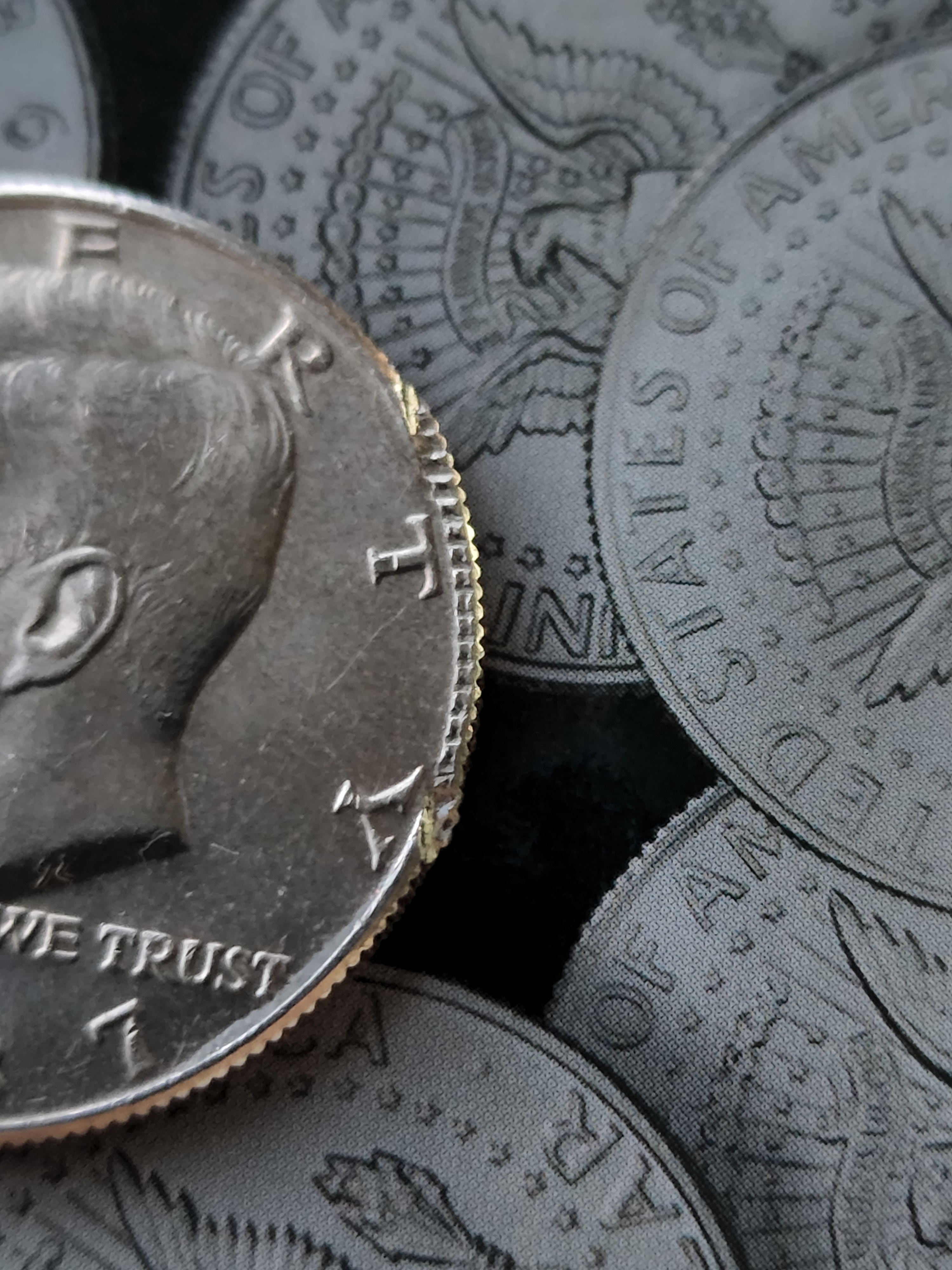
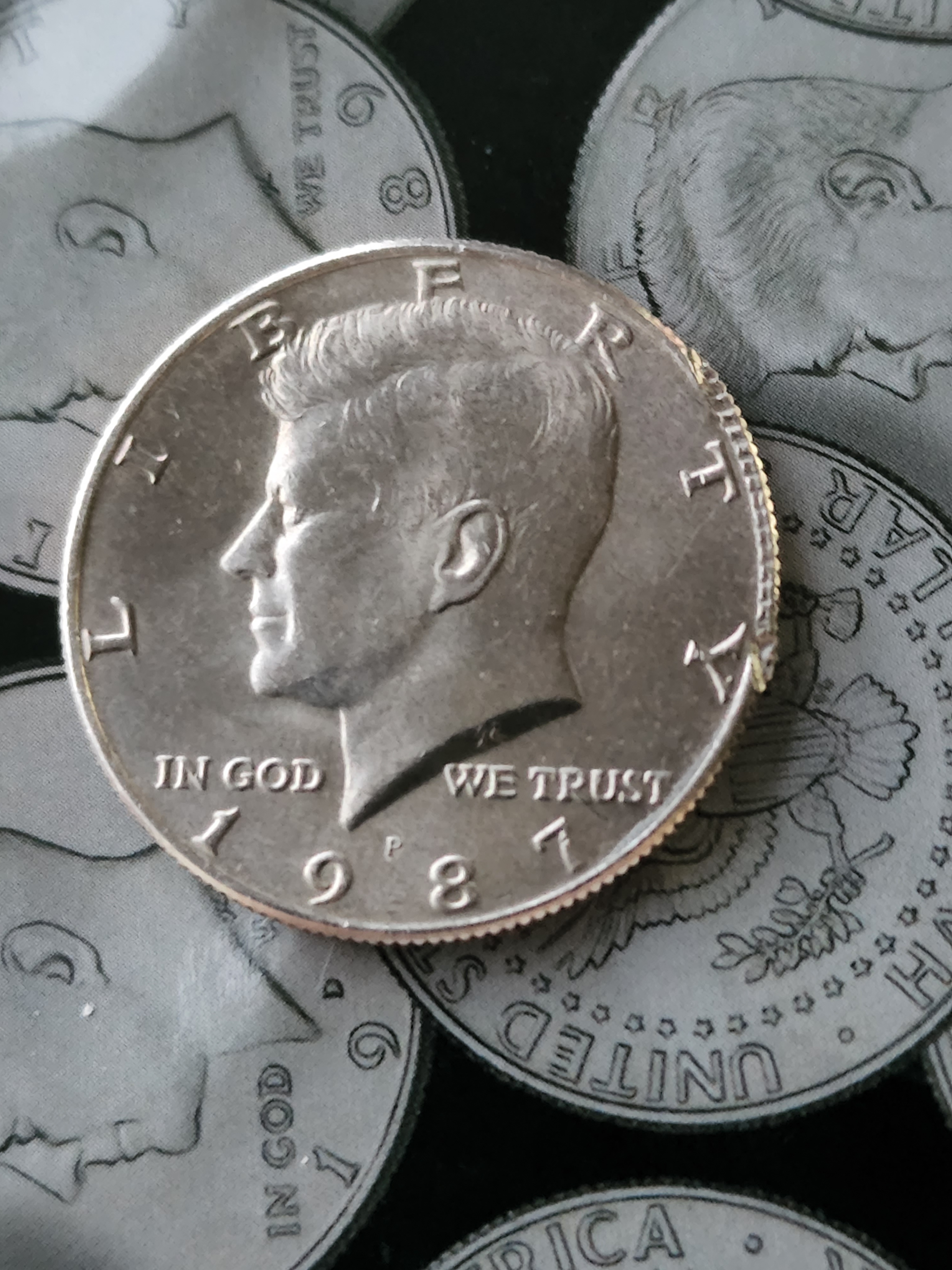
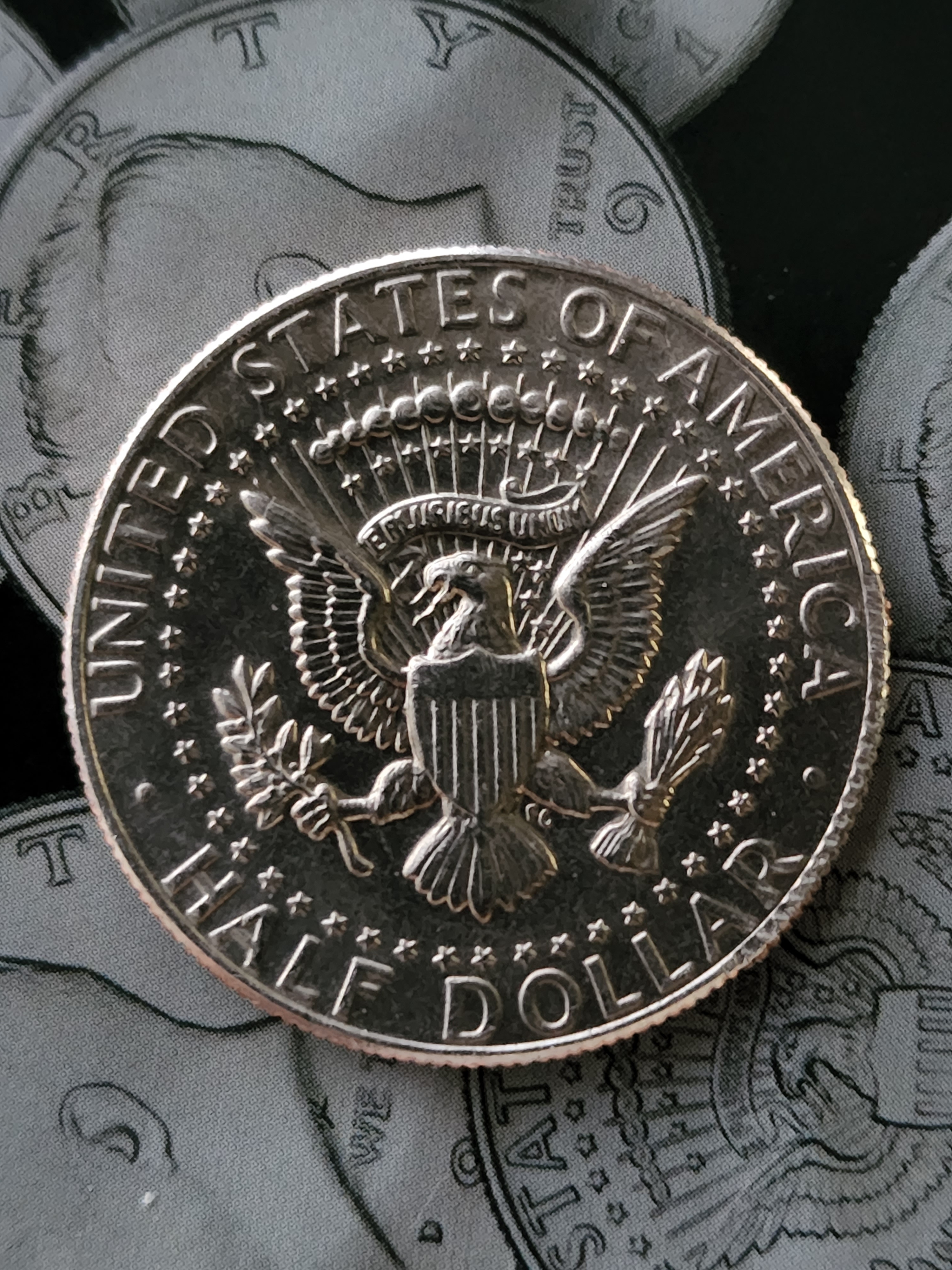
    Hello there, I found this 1987 D Half Dollar while looking through rolls. I think this is a minting error, but I am not sure. So, first does this look like a true error and second should I get it graded? Thank you https://uploads.disquscdn.com/images/c4b7f55ec30464ad57ade971ce048b8974cde909ed6c36cfe8c0c1acd46445ea.jpg https://uploads.disquscdn.com/images/a60f28c5d668ec1889f162b82c84e8f0a2f2b9916bc88ffa2ce59aee4c236dcb.jpg https://uploads.disquscdn.com/images/f2f2fd8fc1389c67e2f565cc2e7cf4499bcaded1750ca8e6457e8f5c167af40f.jpg

    1. JoshuaTheFunTimesGuide Avatar
      JoshuaTheFunTimesGuide

      Hi, Robert —

      This looks to me like the type of damage that might be imparted by a coin rolling machine. If you want a second opinion you might try inquiring to an error or variety dealer or try the experts at like CONECA (www.varietyvista.com).

      Best wishes,
      Josh

      1. Robert Pence Avatar
        Robert Pence

        Thank you

  5. Jay Avatar
    Jay

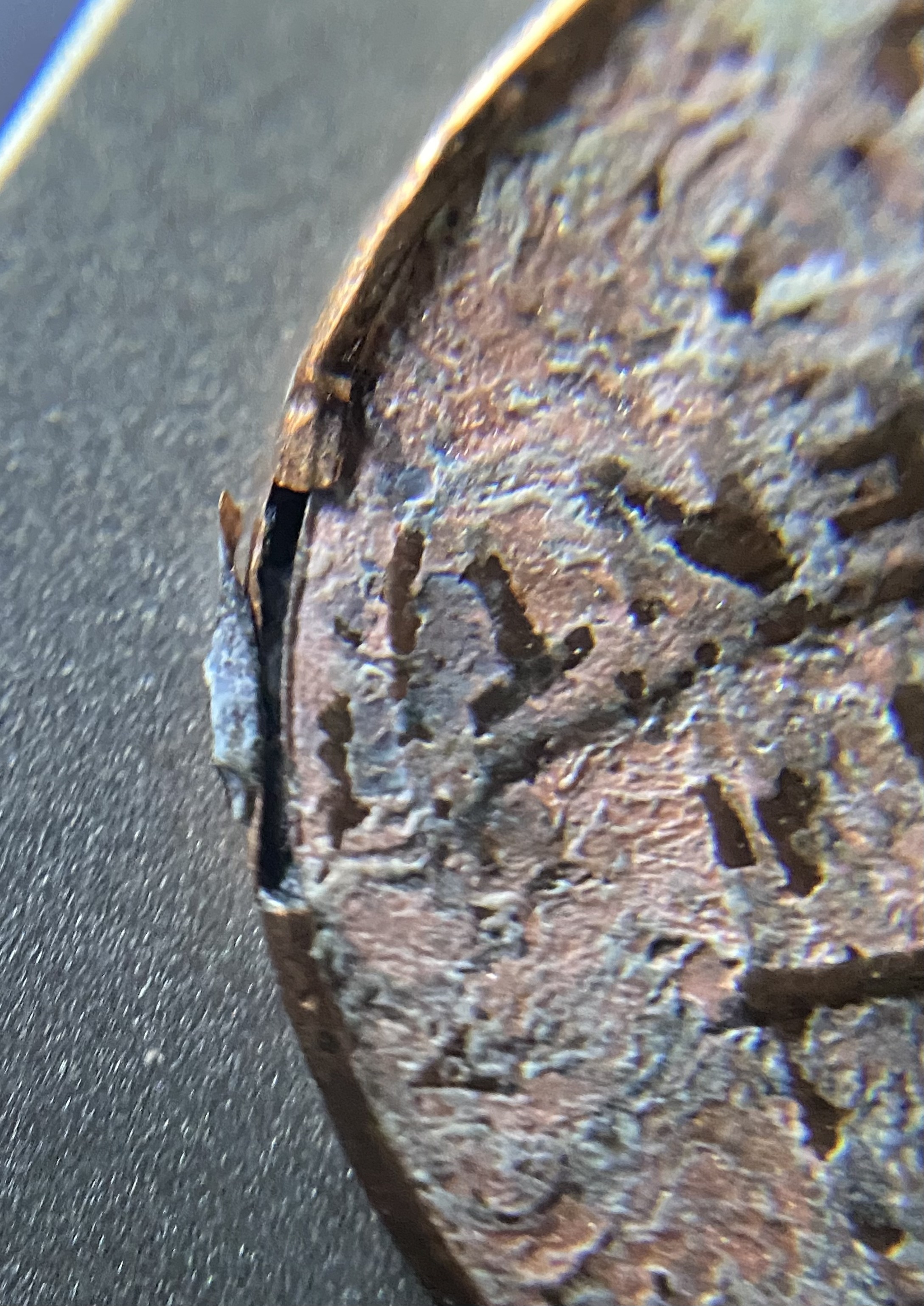
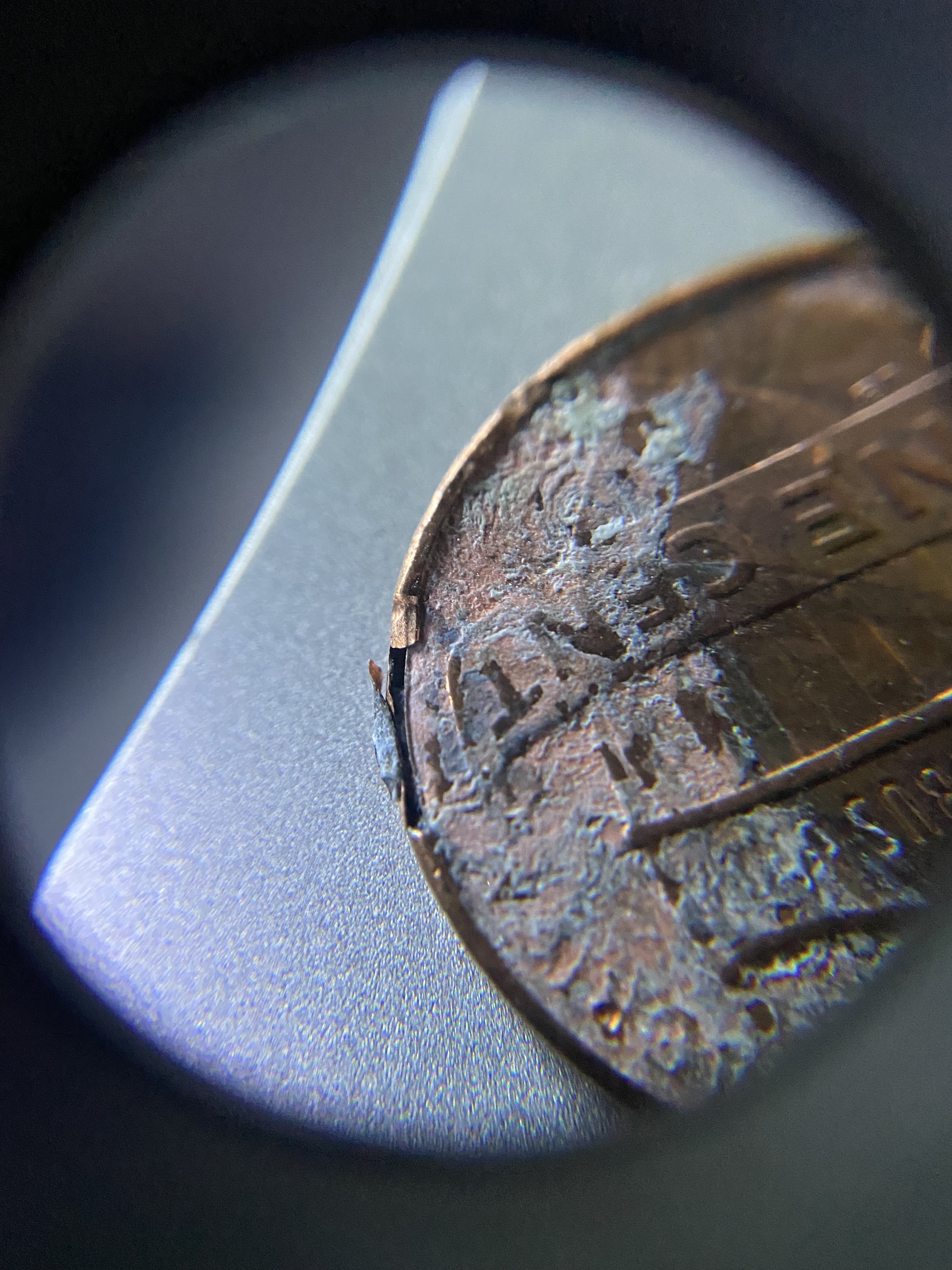
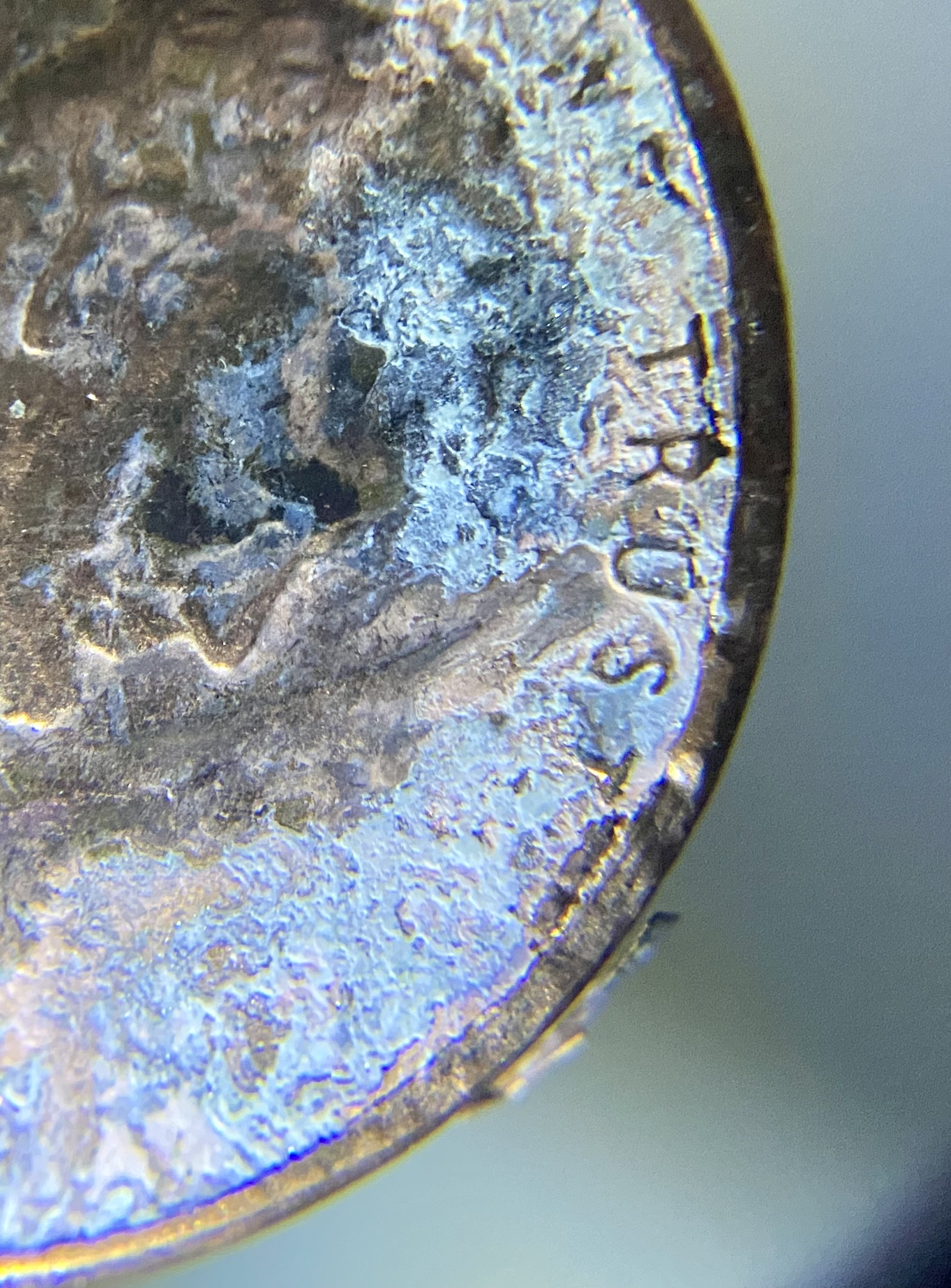
    whats up Josh, its been a min thought I would come back and bug ya. I know this def did not come from the mint but what the heck is going on here? The copper shell is like pealed back and its almost as if its hallow inside??? https://uploads.disquscdn.com/images/6495bf7e6c3ec122cbb6615c5cbc57e44291576a98012cd41f275abc93111694.jpg https://uploads.disquscdn.com/images/bbab408b1d4b51e54f6497fbb761dcc91c65774ac13ff93725e3ad065248ec01.jpg https://uploads.disquscdn.com/images/1510bb3d5a45dd1a19ef2b5d1bc156ff31225d0d6170eaab5be777955e6d10b9.jpg

    1. JoshuaTheFunTimesGuide Avatar
      JoshuaTheFunTimesGuide

      Hey, Jay!

      This coin is definitely corroded… The zinc pennies have a reputation for literally rotting from the inside out due to the zinc content, which is susceptible to problems like this. Any number of environmental elements can trigger such a chemical response, and if the coin already had a major rim or edge nick exposing the internal zinc then it can only expedite the corrosion. It’s weird looking but this is sadly the fate for a lot of the zinc pennies…

      The good news? It’s still worth one cent!

      Cheers,
      Josh

      1. Jay Avatar
        Jay

        Hey, it my be hollow on the inside but thats great news that its still worth that good old cent lol…. The bubbles that I always see I think they are called “Zinc Bubbles” is that pretty much like the same thing? is that why they do that???

        1. JoshuaTheFunTimesGuide Avatar
          JoshuaTheFunTimesGuide

          Hey, Jay —

          Yes, pretty much plating bubbles or plate blisters — they’re common for the most part but offer extra value when extremely large or they cover the entire surface. There’s no fixed book value for something like that — basically what someone is willing to pay for the individual piece… Some with severe blistering have taken over $50.

          Best,
          Josh

          1. Jay Avatar
            Jay

            Ah nice, that is good to know….Thanks Josh

  6. Robert Avatar
    Robert

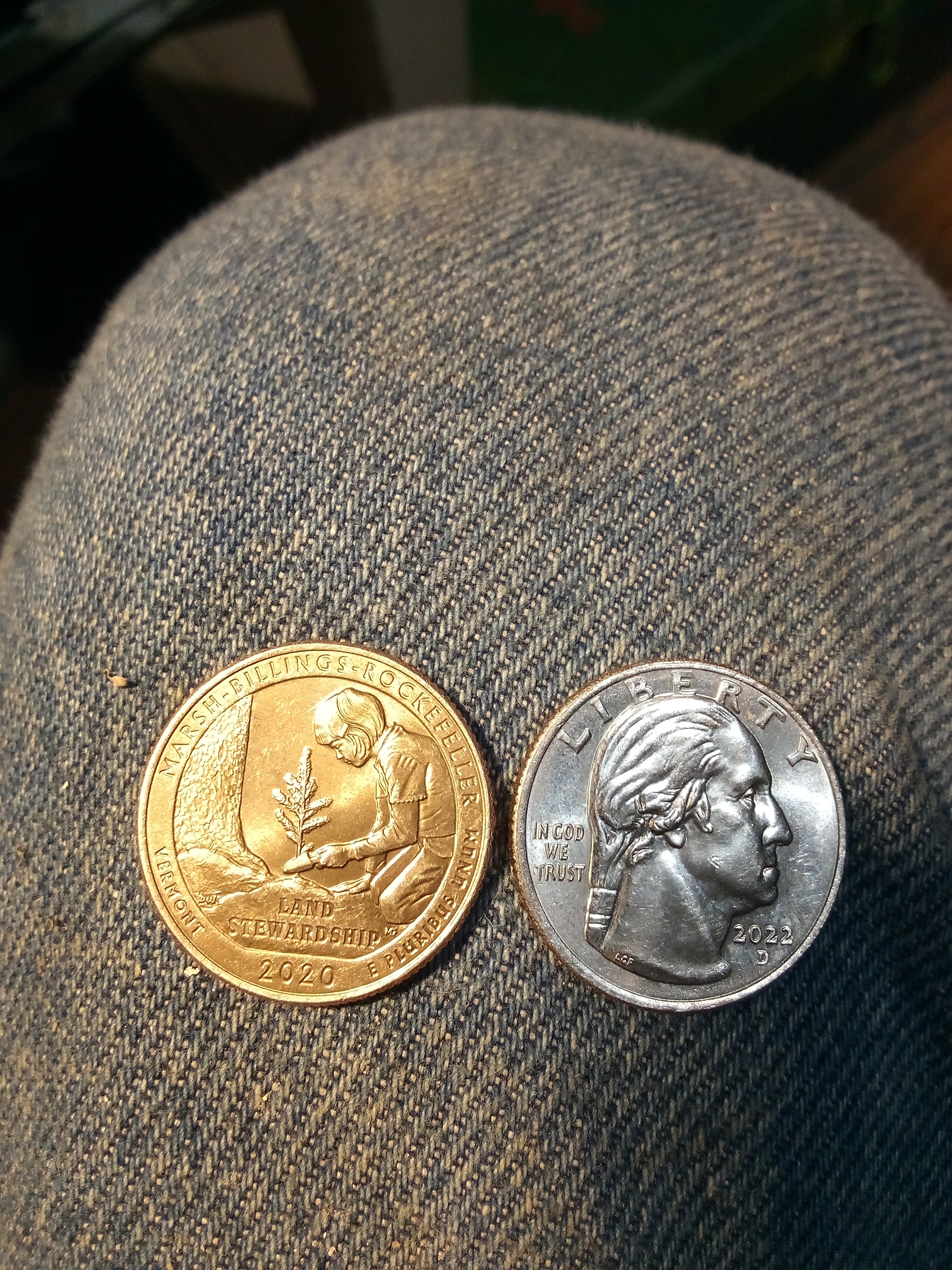
    Hey Josh wondering if u can help is this coin missing clad layer in both sides 2000 d marsh billings Rockefeller quarter is something valuable thanks https://uploads.disquscdn.com/images/9e4802c4c1b38fdededf647227b44fccb0a9d05fd00200f6b1d5d9ebb4f7229a.jpg https://uploads.disquscdn.com/images/7bd92f8c721fbce016371d5cd51dd8d3b9d395b4985f39c23cdc0896d0a7bf4e.jpg

    1. JoshuaTheFunTimesGuide Avatar
      JoshuaTheFunTimesGuide

      Hey, Robert —

      It’s hard to confirm through a photo alone if this is truly a missing-clad-layer error. However, from the images I can tell you this certainly looks like it could be.

      I suggest you get this into the hands of a professional error specialist and see what they say based on a sight-seen evaluation. You might try running this by the experts at CONECA (https://conecaonline.org/) or if you’re lucky enough to live in proximity of a dealer who specializes in errors, them. You might also consider submitting it for evaluation to one of the major third-party graders (PCGS, NGC, ICG, or ANACS), though that will incur submission fees.

      Good luck with this,
      Josh

      1. Robert Avatar
        Robert

        Thank you so much josh

  7. James Hutchinson Avatar
    James Hutchinson

    I have many coins unfortunately I was robber and lost my prize collection. I have only 3 that blow my mind an 1966 quarter with an abnormal space in between the 6s there is a maple leaf between them . It is unmistakable. I have an 1915 wheatie with a 4 after the 5 on date . And a 58 with all kinds of writing underneath the striking . Would love any info on them . And perhaps information on where to sell the rest .as I’m the only one who loves this . Thank you

    1. JoshuaTheFunTimesGuide Avatar
      JoshuaTheFunTimesGuide

      Hi, James —

      I’m sorry to hear about the unfortunate loss of your coin collection… I could assist with two or three of the coins you mentioned if you post clear images of them here in this comments forum.

      As for selling your coins, you might try listing them on eBay, consigning them to an auction house, or selling them to a local coin dealer. Here’s more info on the latter: https://uscoinsguide.com/coin_dealer/

      Best wishes,
      Josh

  8. cal3301 Avatar
    cal3301

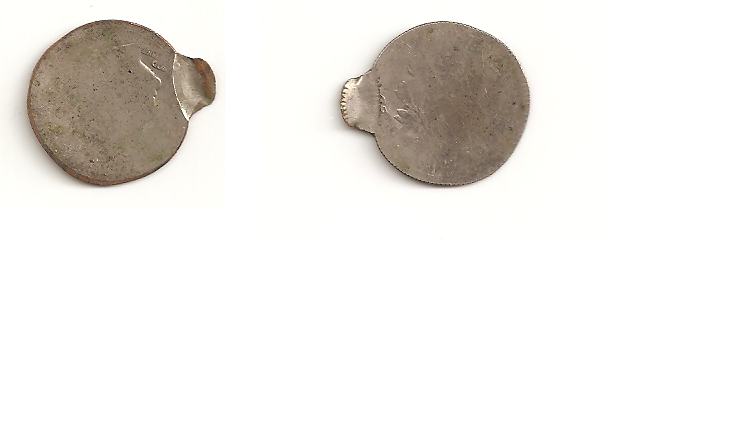
    Has anyone ever received a roll of quarters from a bank and found a flat piece of metal in it? Years ago I did in a roll of the new quarters. I sat it aside in a little box and forgot about it. I came across it again while going through some stuff the other day. I took an eye loop to it this time. It is about the size of a nickle, but what design I can see and the ridges leads to it being a dime. It fits nicely between two quarter, but I don’t remember what quarter it was found in. https://uploads.disquscdn.com/images/a4a305c64efdcba3026bc0518a28243dca7ed0c33046c95c04b7c7b7493e4a5b.png

    1. JoshuaTheFunTimesGuide Avatar
      JoshuaTheFunTimesGuide

      Hi!

      This looks like a planchet that had been struck twice — the metal disc is indeed a Roosevelt dime, and you can see faint outlines of the main Roosevelt dime design if you look very closely. However, there is what appears to be another strike that was well off center, leaving that tab on the side. I’d consider sending images of this to the error experts at CONECA (www.CONECAonline.org) for a more complete attribution.

      This definitely appears to be a keeper!

      Nice find,
      Josh

      1. cal3301 Avatar
        cal3301

        I am still kicking myself for not looking at it when I first found it. I could have looked at the quarters too, to see if there was any damage to them. I really almost threw it out, because it looked like a piece of scrap metal. It’s the old would’ve, should’ve, could’ve.
        Thank you for getting back to me!!!

  9. Casey Z'Glenn Avatar
    Casey Z'Glenn

    I have a 1990 D US Quarter with a strange look to it. The "heads side" has a rim that is either damaged or an error, but its got a ) flattened dashed appearance around the entire rim, though the other side (tails side) is perfectly fine. How do you tell if its an error coin vs circulated damage. Ive never had a coin like this. Any information would be appreciated! Thanks!! https://uploads.disquscdn.com/images/ebe72e47bbec136d7b587e53a9e99e44ea00aa6bbd2532587e5e31383585ae7d.jpg

    1. JoshuaTheFunTimesGuide Avatar
      JoshuaTheFunTimesGuide

      Hi, Casey!

      It looks like your quarter was damaged by abrasive contact — most likely time spent on a sidewalk or parking lot surface. Some folks in the hobby call these “asphalt coins” due to the damage usually just one side will receive from their contact with the aggregate and other rough surfaces of pavement. This piece is worth face value only.

      But to answer your question — how do you tell errors from damage? A simple answer would be to understand how the minting process works and then deduce what can — or CAN’T — go wrong when a coin is being struck. But this can take years of experience to really nail down when looking at a coin and making a snap determination.

      I wrote an article that covers this topic in detail and can help you understand what damages coins look like versus errors. I linked it here: https://uscoinsguide.com/pmd/

      Best wishes,
      Josh

  10. TraliMaze Avatar
    TraliMaze

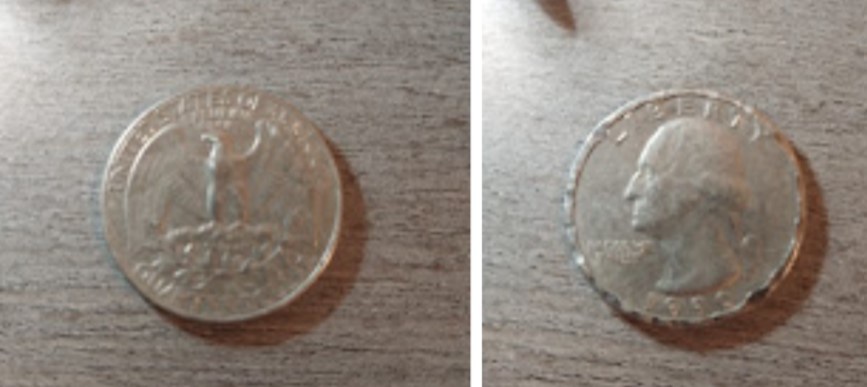
    Hi I have either a 1967 or 1963 quarter that seems to have flat edge on the outside of the coin on both sides. Along with the a missing detail in the head of George Washington was curious if this is just normal wear and tear over time, an altered coin or an error. https://uploads.disquscdn.com/images/27c8ed2a79cc4da777916486fd3ad37f02203cc1714bc9db805536743cb6c442.jpg https://uploads.disquscdn.com/images/989dad79d89d0f6981618d4975cd8d5b2bc9b2f0be373f209f9f20c1efdd1247.jpg

    1. JoshuaTheFunTimesGuide Avatar
      JoshuaTheFunTimesGuide

      Hi,

      In the photos this appears to be a 1967 quarter with excessive edge and rim wear.

      Best,
      Josh

Leave a Comment

Content Widget