

Start Here

Values

Buying & Selling

Rare U.S. Coins

How To's

Myths & History

4 Types Of Clipped Planchet Error Coins & How Much They’re Worth [A Must-Read If You Have Coins With Straight- Or Crescent-Shaped Edges]

by Joshua McMorrow-Hernandez

Ezoic/Google Ad Code Here

If you’re wondering, “What is a clipped planchet and how much are clipped planchet error coins worth?…”

You’ve come to the right place!

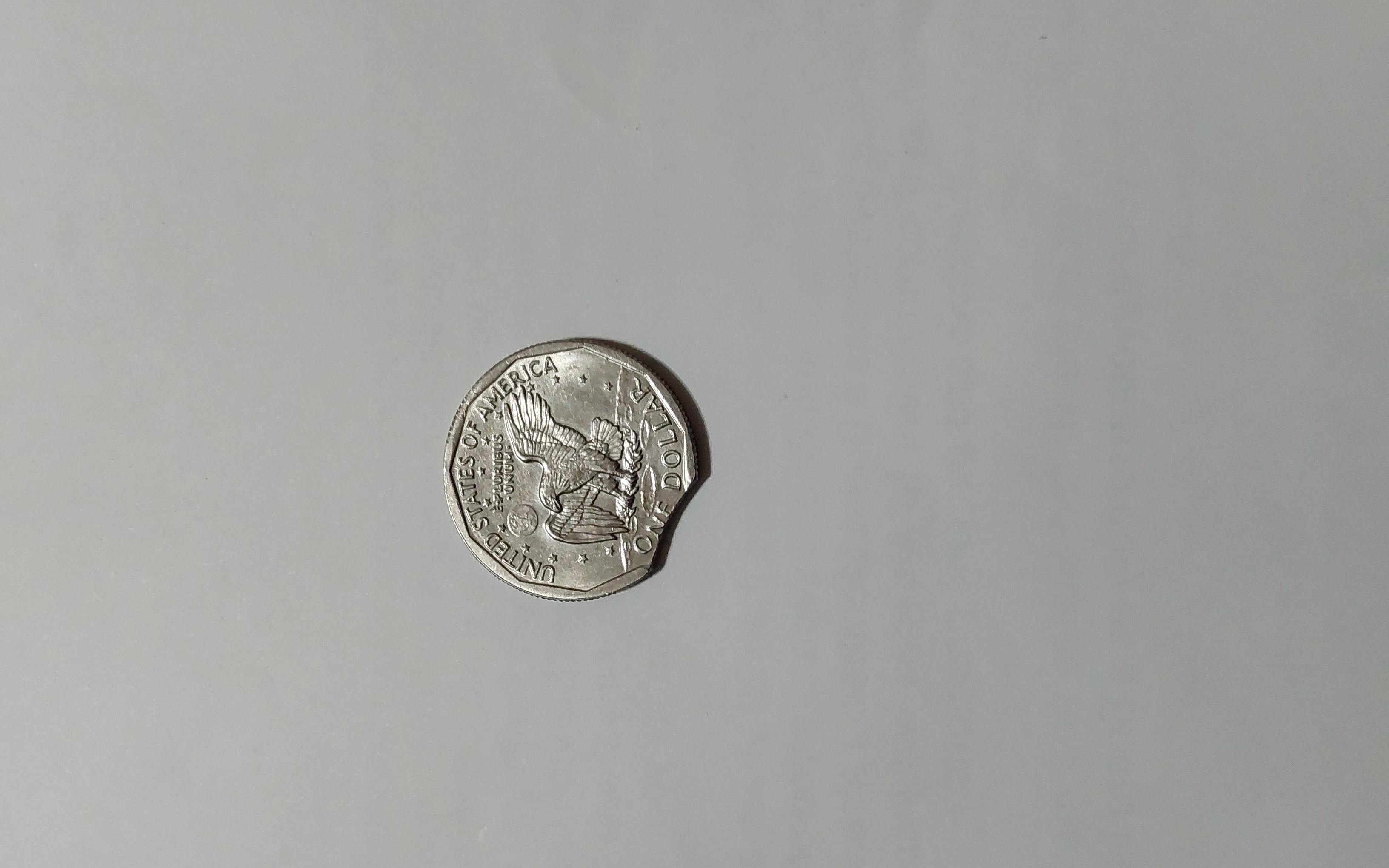
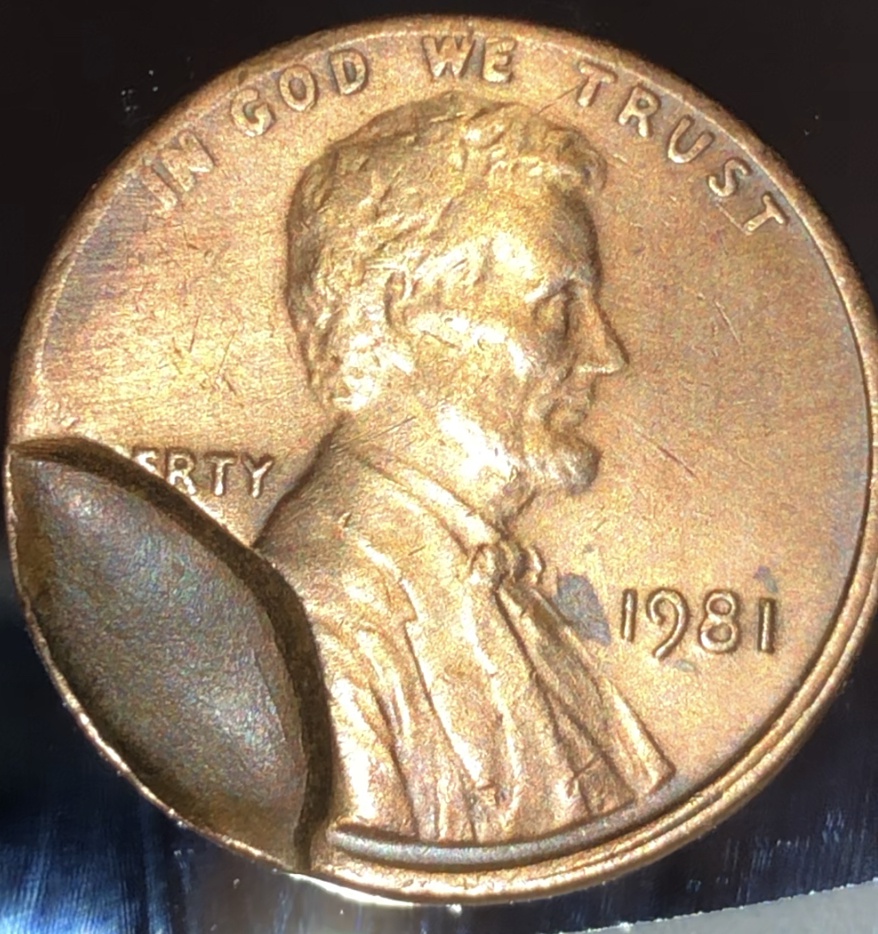
Clipped planchets are types of error coins that exhibit flat or crescent-shaped bites taken out of the side of a coin.
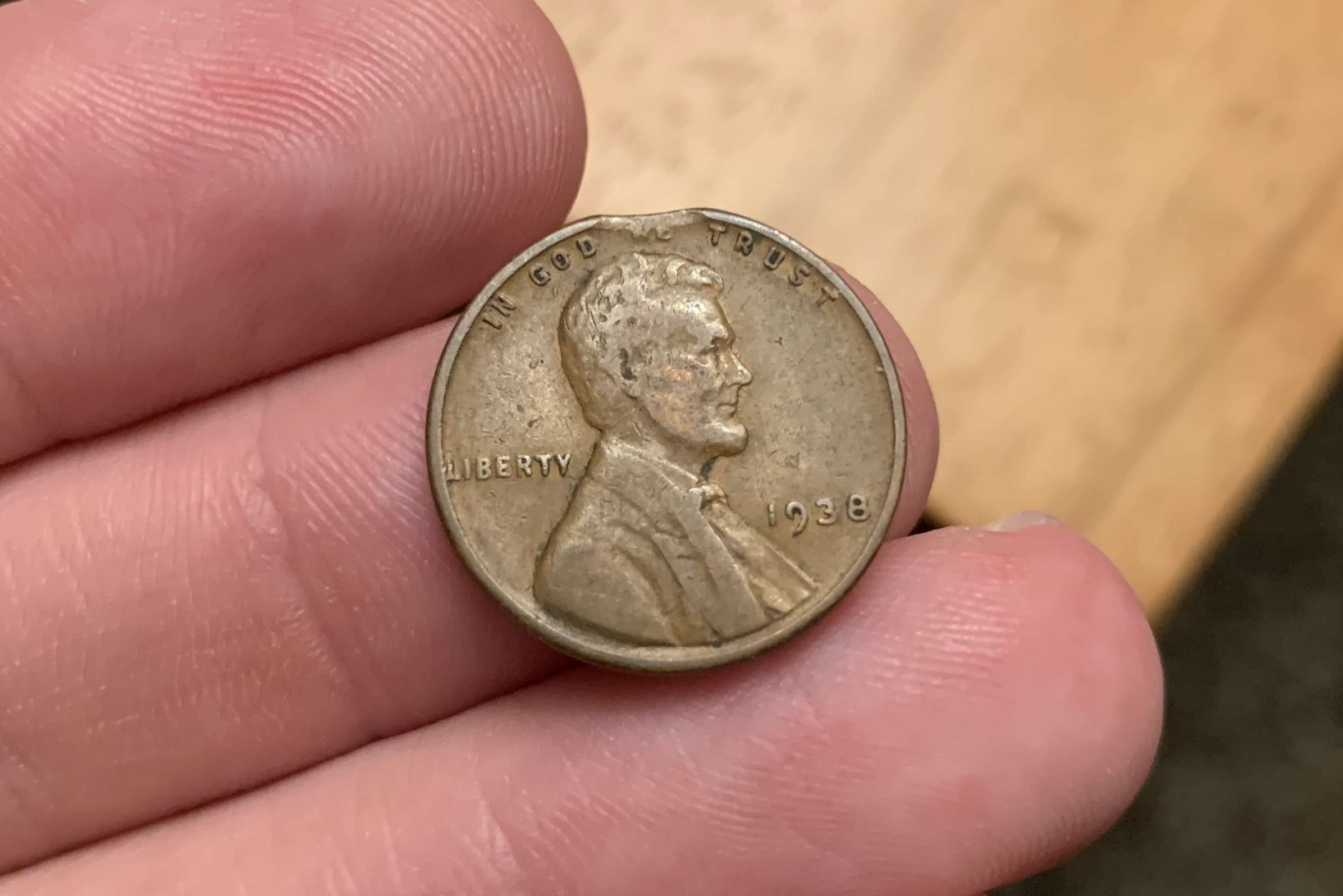
A clipped planchet penny. One cent planchet error coin

While they aren’t necessarily rare coins of outstanding value, they’re still quite fascinating.

Read on to learn more about these crescent-shaped error coins, including:

  • The 4 types of clipped planchet error coins
  • How this weird error occurs at the U.S. Mint
  • What these error coins are worth
  • How to tell a clipped planchet from a damaged coin

Types Of Clipped Planchet Error Coins

Clipped planchets represent a separate type of error coin. But those who collect clipped planchets recognize these 4 distinct types:

  1. Straight-edge clips — There’s a straight edge on the coin where it was mis-cut.
  2. Curved clips — Due to a crescent-shaped area of missing metal, the coin has a concave curve-shaped edge.
  3. Irregular clips — The trailing edge of the metal strip appears ragged, giving the coin an irregular edge.
  4. Bowtie clips — There are 2 curved clips on opposite sides of the same clipped coin, creating the appearance of a bowtie… a most unusual type of error.

How Are Clipped Planchet Coins Made?

Millions of perfectly round coins are struck every day by the United States Mint. But sometimes the long strips of blank metal are mis-fed into the blanking press that cuts the strip into round pieces of metal (or blank planchets). If the metal sheets are misaligned with the cutting device, then the blanks cut from the sheet won’t be perfectly circular — resulting in a mint error coin:

  • If the punch is overlapping the leading edge of the metal, it makes a straight clip or irregular clip. Depending on whether the punch hits the side of the metal sheet or the trailing edge determines what type of clip is created in this erroneous punch.
  • When a punch hits an area of the strip of metal that overlaps a hole from a previous punch, it creates a curved clip or bowtie clip.

More specifically, these are the 4 possible outcomes — an explanation of each of the 4 types of clipped planchet error coins:

  1. Straight-edge clips — These feature a straight edge on one side of the coin.
  2. Curved clips — The error here is a crescent-shaped miscut on either one or two sides of the coin.
  3. Irregular clips — An irregular clip shows the straight-ish but ragged edge unfinished leading or trailing end of the sheet of metal from which the blank is cut.
  4. Bowtie clips — These boast 2 curved clips on opposite ends of the coin.

For a better understanding of how coins are made, check out this video that shows the blanking process at the U.S. Mint:

How Much Are Clipped Planchets Worth?

Values for clipped edge errors are all over the board. Most modern clips range in value from $5 to $10, but many are worth much more.

The value of clipped planchet error coins depends on these 3 things:

  1. How significant the clipped error is
  2. What coin the error is found on
  3. The overall condition of the error

While all error coins are scarce collectibles, some are more common than others.

Clipped planchets aren’t necessarily rare as a category, but they are very much sought after by collectors. And, as with other error coins, values for curved clips, irregular clips, straight clips, and bowtie clips vary — depending on the merits of each individual piece.

RELATED: Differences Between Rare Coins And Scarce Coins

The values listed below are approximate averages, regardless of whether an individual coin shows a curved, straight, or irregular edge:

  • Indian Head penny — $12 to $20
  • Lincoln Wheat penny — $3 to $10
  • Lincoln Memorial penny — $3 to $8
  • Buffalo nickel — $15 to $25
  • Jefferson nickel — $3 to $10
  • Mercury dime — $15 to $25
  • Silver Roosevelt dime — $7 to $12
  • Clad Roosevelt dime — $3 to $7
  • Silver Washington quarter — $15 to $25
  • Clad Washington quarter — $3 to $10
  • Bicentennial quarter — $30 to $50
  • 50 States quarter — $15 to $20
  • Franklin half dollar — $35 to $50
  • Kennedy half dollar — $20 to $30
  • Bicentennial half dollar — $40 to $50
  • Morgan or Peace dollar — $50 to $100
  • Eisenhower dollar — $30 to $40
  • Bicentennial dollar — $50 to $75
  • Susan B. Anthony dollar — $20 to $30
  • Sacagawea dollar — $75 to $100

* Values are for clipped planchet error coins in average circulated condition. 

How To Tell A Genuine Clipped Planchet Error From A Fake

While clipped planchets are fantastic errors, some damaged coins may take on the appearance of a clipped planchet.

So, how do you tell a legitimate clipped planchet from a damaged coin?

There are at least 4 things you should look for on a coin you believe to be a clipped planchet:

  1. “The Blakesley Effect” — Weakness in the design near the rim and in the rim itself on the opposite side of the coin where the clip occurs is known as the Blakesley Effect. While not all clipped planchets exhibit the Blakesley Effect, it’s prominent on many such errors.
  2. Rim fadeout — The rim near the clip itself should gently fade into the clip. It shouldn’t just sharply stop where clip is, but rather taper into it.
  3. Design flow — Just as the rim tapers into the clip, the design elements near the clip will also appear to stretch into the missing area of the clipped planchet.
  4. Belly line — The belly line is seen on the exposed part of the clipped edge, and it’s where the breakaway occurred during the punching process. This part of the clipping process leaves one half of the clipped edge (upper or lower) smooth and the other half rougher in appearance.

In this video, you can see some cool clipped planchet error coins up close:

Like this post? Save it to read again later… or share with others on Pinterest!
What is a Clipped Planchet error coin? See the unique features you should be looking for and how much they're worth.

PUBLISHED February 1, 2020
UPDATED July 30, 2026

Joshua McMorrow-Hernandez

Numismatic Specialist

Hi, I’m Josh! I’m the Editor here at the US Coins Guide. My love for coins began when I was 11 years old. I primarily collect and study U.S. coins produced during the 20th century.

I’m a member of the American Numismatic Association (ANA) and the Numismatic Literary Guild (NLG). I have won multiple awards from the NLG for my work as a coin journalist. I’m also the editor at the Florida United Numismatists Club (FUN Topics magazine), and author of Images of America: The United States Mint in Philadelphia (a book that explores the colorful history of the Philadelphia Mint). I’ve contributed hundreds of articles for various coin publications including COINage, The Numismatist, Numismatic News, Coin Dealer Newsletter, Coin Values, and CoinWeek.

I’ve authored over 1,000 articles here at the US Coins Guide (many with over 50K shares).

I welcome your coin questions!

29 responses to “4 Types Of Clipped Planchet Error Coins & How Much They’re Worth [A Must-Read If You Have Coins With Straight- Or Crescent-Shaped Edges]”

    1. JoshuaTheFunTimesGuide Avatar
      JoshuaTheFunTimesGuide

      Hey, Justin —

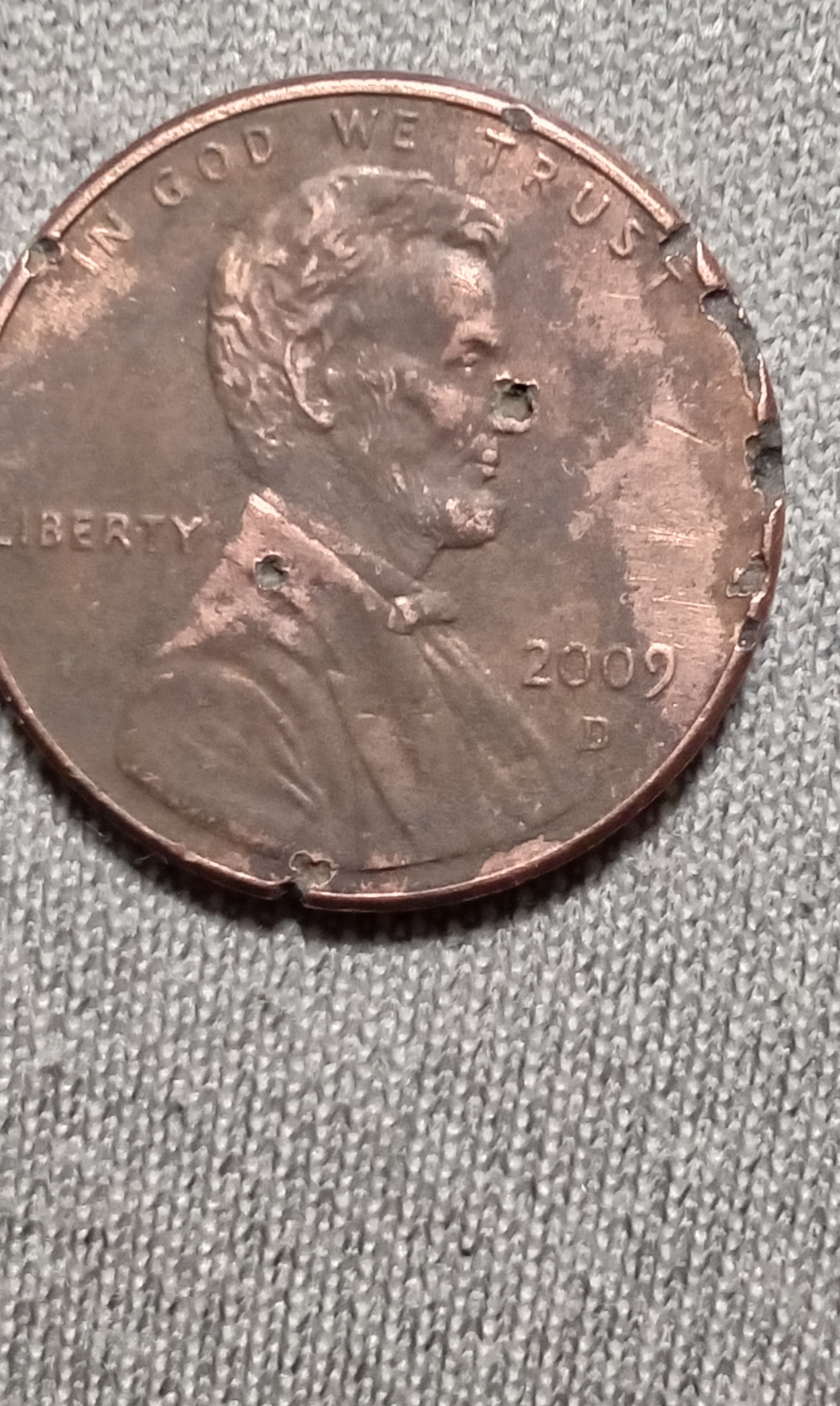
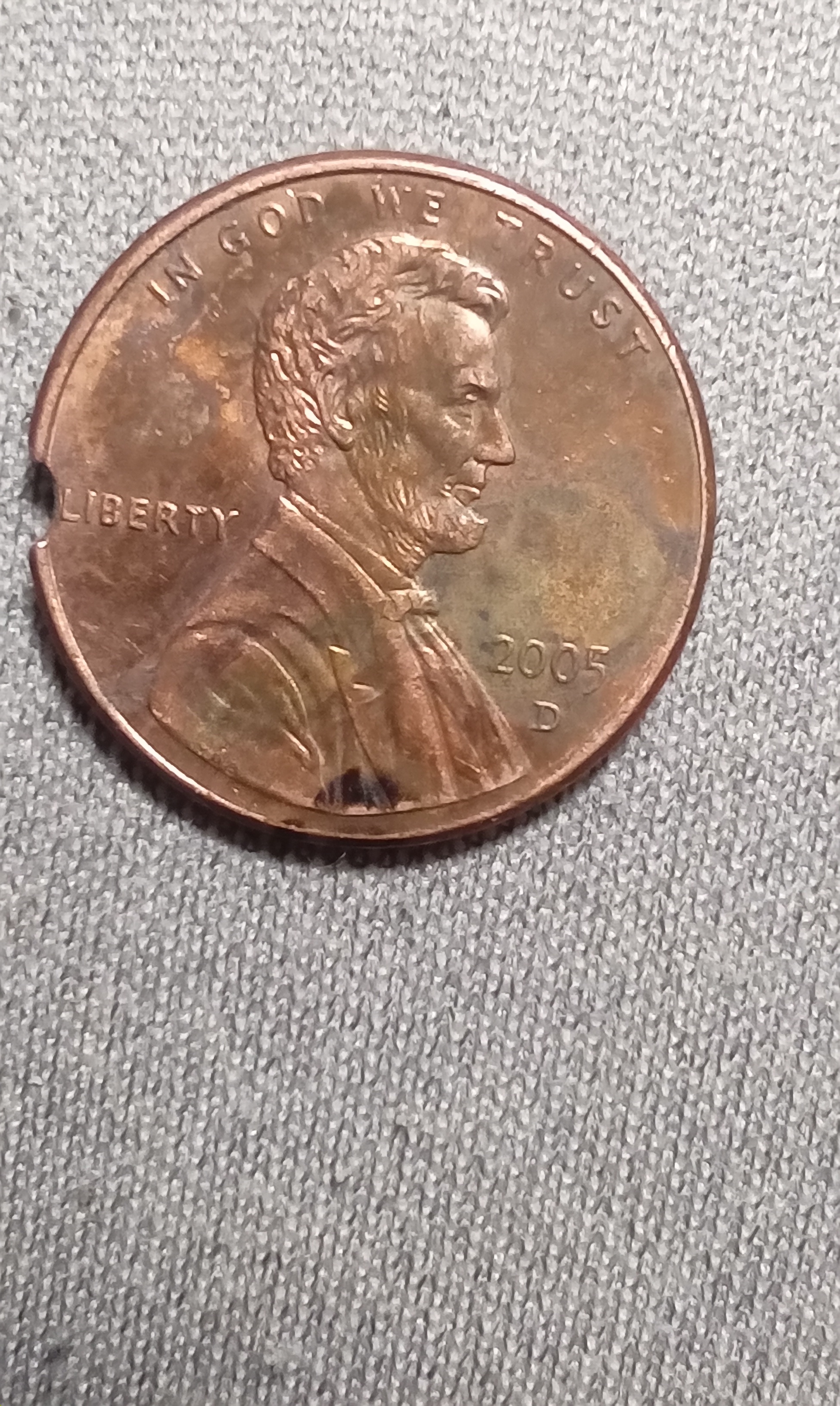
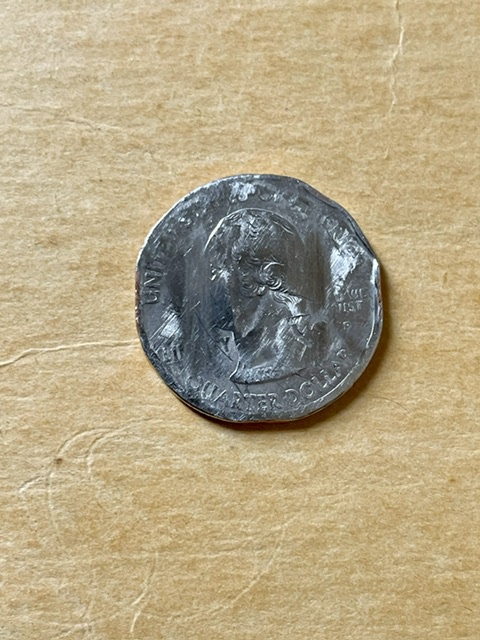
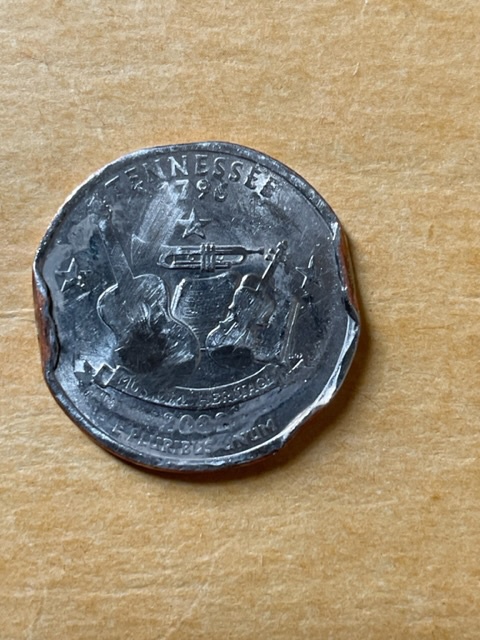
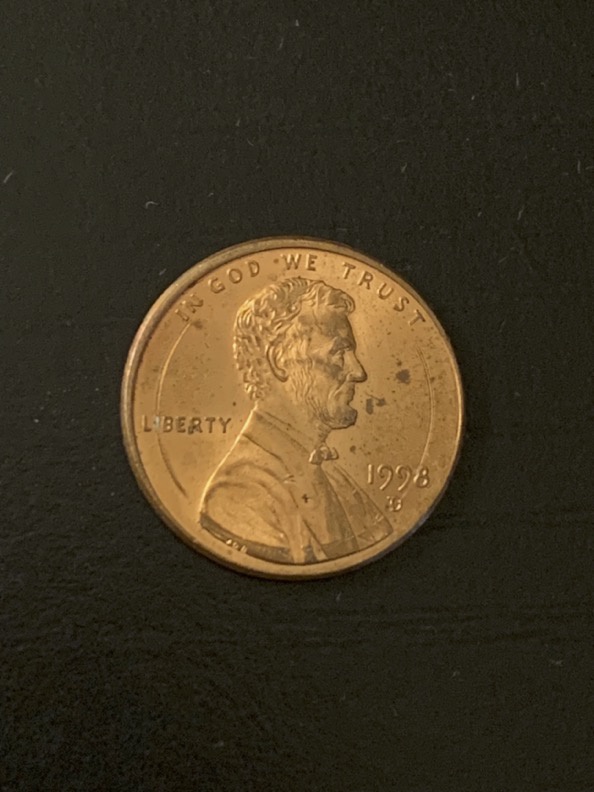
      A clip is usually a clean straight or curved line that cuts across much of one side of the coin, with the rim fading into the clip itself. I’m afraid all four of these pennies show heavy corrosion, which is unfortunately quite common with the zinc cents.

      Keep searching!
      Josh

  1. Vicki Newcomb Bierley Avatar
    Vicki Newcomb Bierley

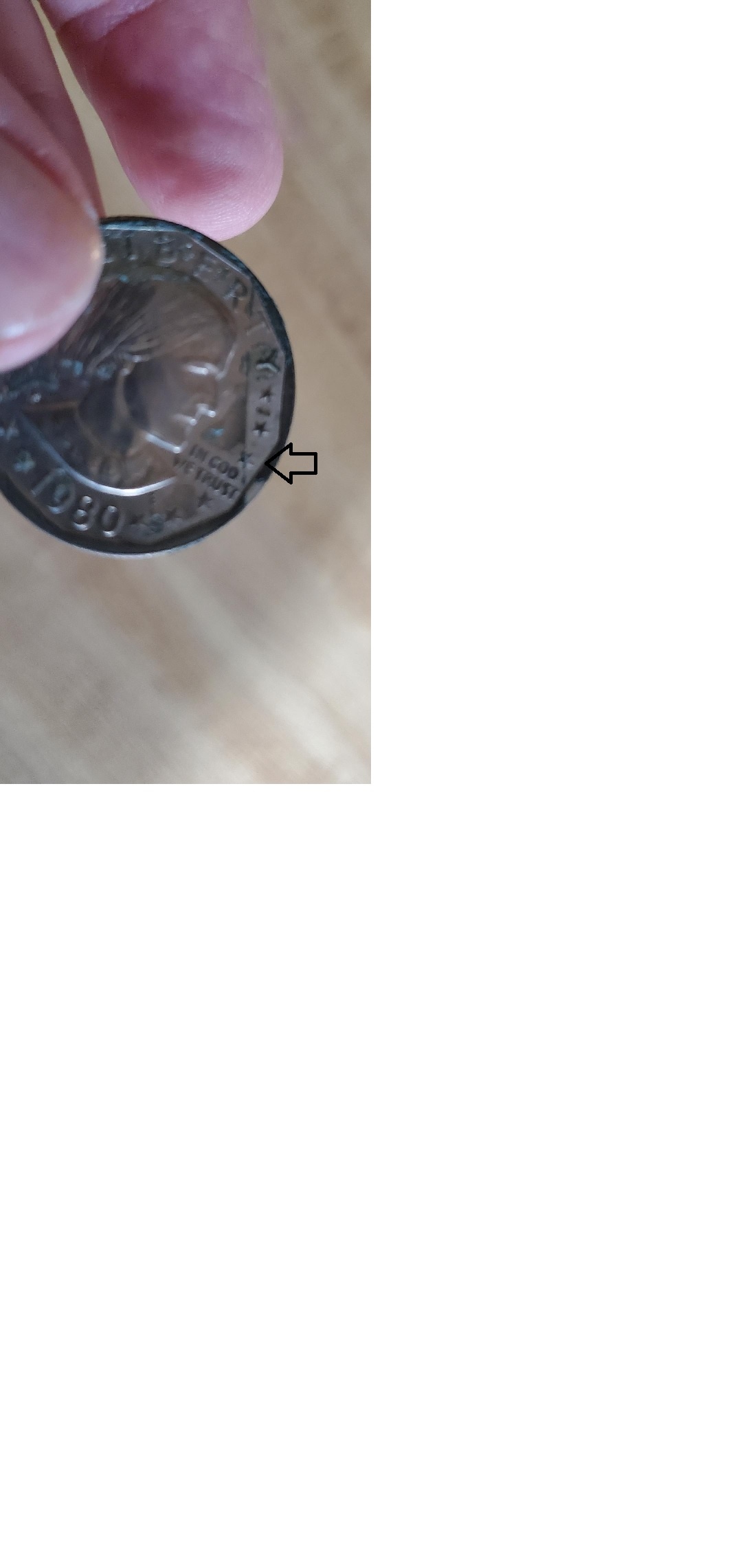
    Hi Josh, I hope you can see the straight line on the edge of this coin. I have no idea what it is. Also, the 3 stars are not spaced correctly in that area.

    https://uploads.disquscdn.com/images/c51399f0489473fdf14f9015af49af1a2a6e8aa5bca46e0ef78bdf646147ef67.jpg

    I hope you can make this larger to see what I am talking about.

    Vicki

    1. JoshuaTheFunTimesGuide Avatar
      JoshuaTheFunTimesGuide

      Hi, Vicki —

      The image is a little blurry upon zooming in but there is some post-mint toning and discoloration that has caused the coin to darken; that darkened line is also either from damage or alteration to the coin. It’s hard to say exactly what caused this but unfortunately there is no evidence of this here being an error. None of the issues stem back to anything that would’ve happened with the die or the strike itself.

      Best,
      Josh

      1. Vicki Newcomb Bierley Avatar
        Vicki Newcomb Bierley

        Thank you Josh.

  2. Steven Nanke Avatar
    Steven Nanke

    Hey guys!

    I’m new to the sight but after reading over a lot of Dialog about Lincoln penny’s, I have a feeling that I have a very rare penny. ( well several but one unparticular I’d rather not show to the public just yet… Well, say this, it has two rare conditions according to what I was reading and observing. Can I have someone reach out to me that is a professional in this field? I have had local people look at it and they immediately did not want to have their fingers on it anymore, then recommend I keep it locked up safe as well as have it examined. Please feel free to contact me VIA email. In Fact, I’m rather certain I have multiple penny’s that are rare. Happy Holidays and I’m hoping that everyone is on Q with the information I’ve learned already. Looking forward to the outcome on these few precious coins.

    Kind regards,
    Steven T Nanke
    steven.nanke83@gmail.com

    1. JoshuaTheFunTimesGuide Avatar
      JoshuaTheFunTimesGuide

      Hi, Steven —

      We’d be glad to help as best we can. However, all of our correspondence occurs here in the public comments forum, with photos needed to help aid us in providing you with feedback on your coin.

      If you’d rather work privately via email, you might reach out to other coin dealers who specialize in the field of Lincoln cents. If you think your coin has errors or varieties, you could connect with CONECA (https://conecaonline.org/) or Variety Vista (http://varietyvista.com/) and see about submitting photos or info about your pieces there.

      Good luck,
      Josh

    1. JoshuaTheFunTimesGuide Avatar
      JoshuaTheFunTimesGuide

      Hi, Brad —

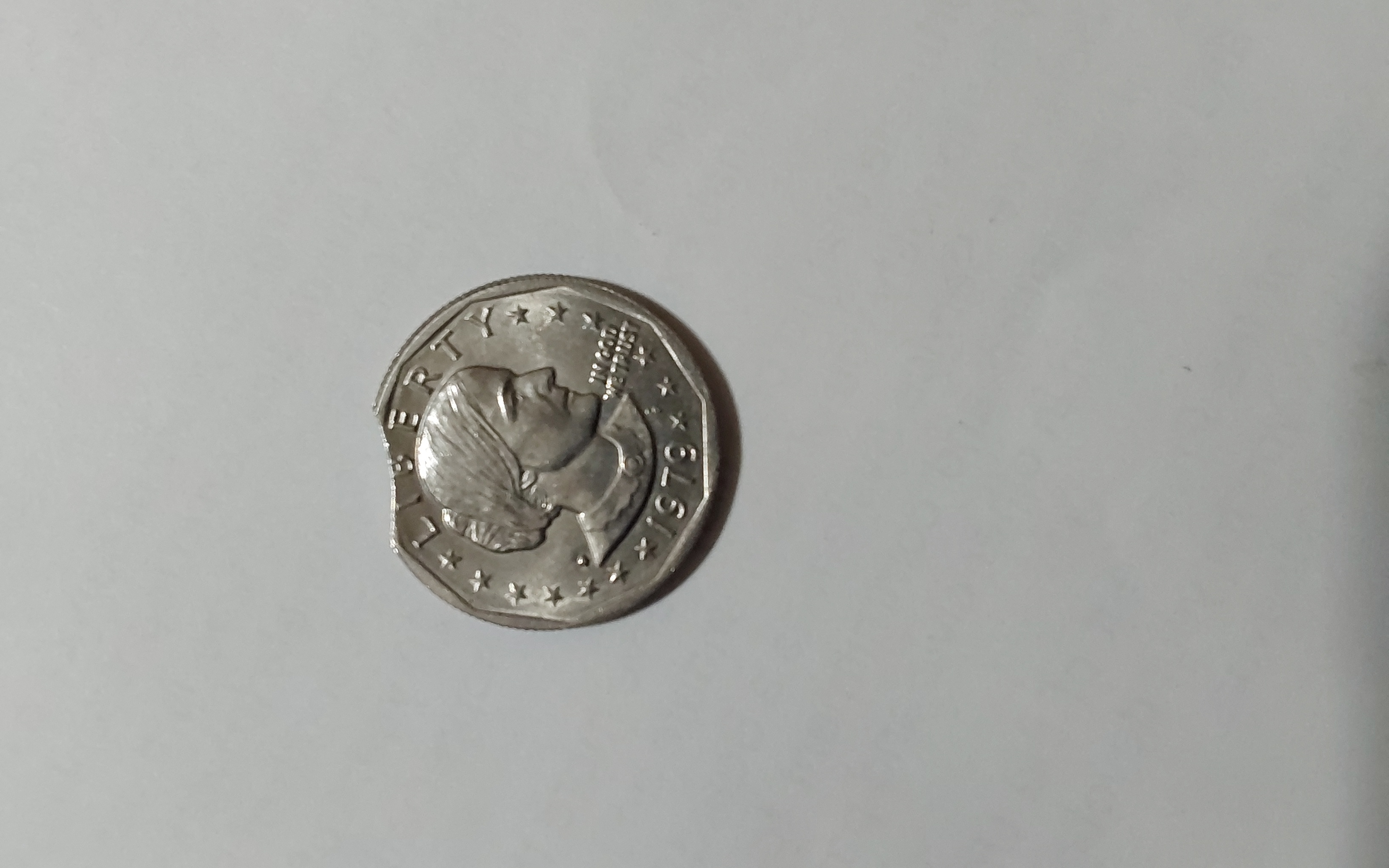
      Susan B. Anthony dollar clips tend to take some decent premiums. Many of similar magnitude trade for $50 to $75. Assuming this checked out as an authentic clip and not just post-mint damage I’d imagine yours would fetch a similar value.

      Best,
      Josh

    1. JoshuaTheFunTimesGuide Avatar
      JoshuaTheFunTimesGuide

      Hi, Nikesh —

      You’re correct — your coin took “a beating,” as you say, and is showing extensive post-mint damage. No errors here…

      Best,
      Josh

      1. Nikesh Avatar
        Nikesh

        Thank you. Better luck next time.

    1. JoshuaTheFunTimesGuide Avatar
      JoshuaTheFunTimesGuide

      Hi, Abby —

      The circular grooves on the obverse of your Lincoln penny were most likely caused by a vending machine or coin counter. At any rate, this is unfortunately not an error.

      Best,
      Josh

  3. Nikkilis Ramsdell Avatar
    Nikkilis Ramsdell

    What would you call this?
    It weighs 3.112 and the reverse is no phased whatsoever https://uploads.disquscdn.com/images/48df36f57c19d6545932d9342c454d55d54e77008c99dd30a3f1883f810b9d23.jpg

    1. JoshuaTheFunTimesGuide Avatar
      JoshuaTheFunTimesGuide

      That’s bizarre… It looks like different types of errors to me at different angles, and I’m not sure what to call it here. It might even need an in-hand evaluation. I suggest reaching out to the error and variety experts at CONECA for further evaluation by photo of otherwise. Here is their info: https://conecaonline.org/

      Best of luck,
      Josh

  4. NotaRobot Avatar
    NotaRobot

    How much do you think a graded MS65 bicentennial Half dollar with a 45% clip would be worth?

    1. JoshuaTheFunTimesGuide Avatar
      JoshuaTheFunTimesGuide

      Hi,

      In answering a question like this it’s often best to refer to recent auction and sales results for guidance. A similar piece was sold by Heritage Auctions in 2020 for $504. https://coins.ha.com/itm/errors/1976-50c-clad-kennedy-half-dollar-45-curved-clip-ms65-ngc-62-g-/a/132010-21739.s?ic4=GalleryView-ShortDescription-071515

      Hope this helps!
      Josh

  5. Ed Avatar
    Ed

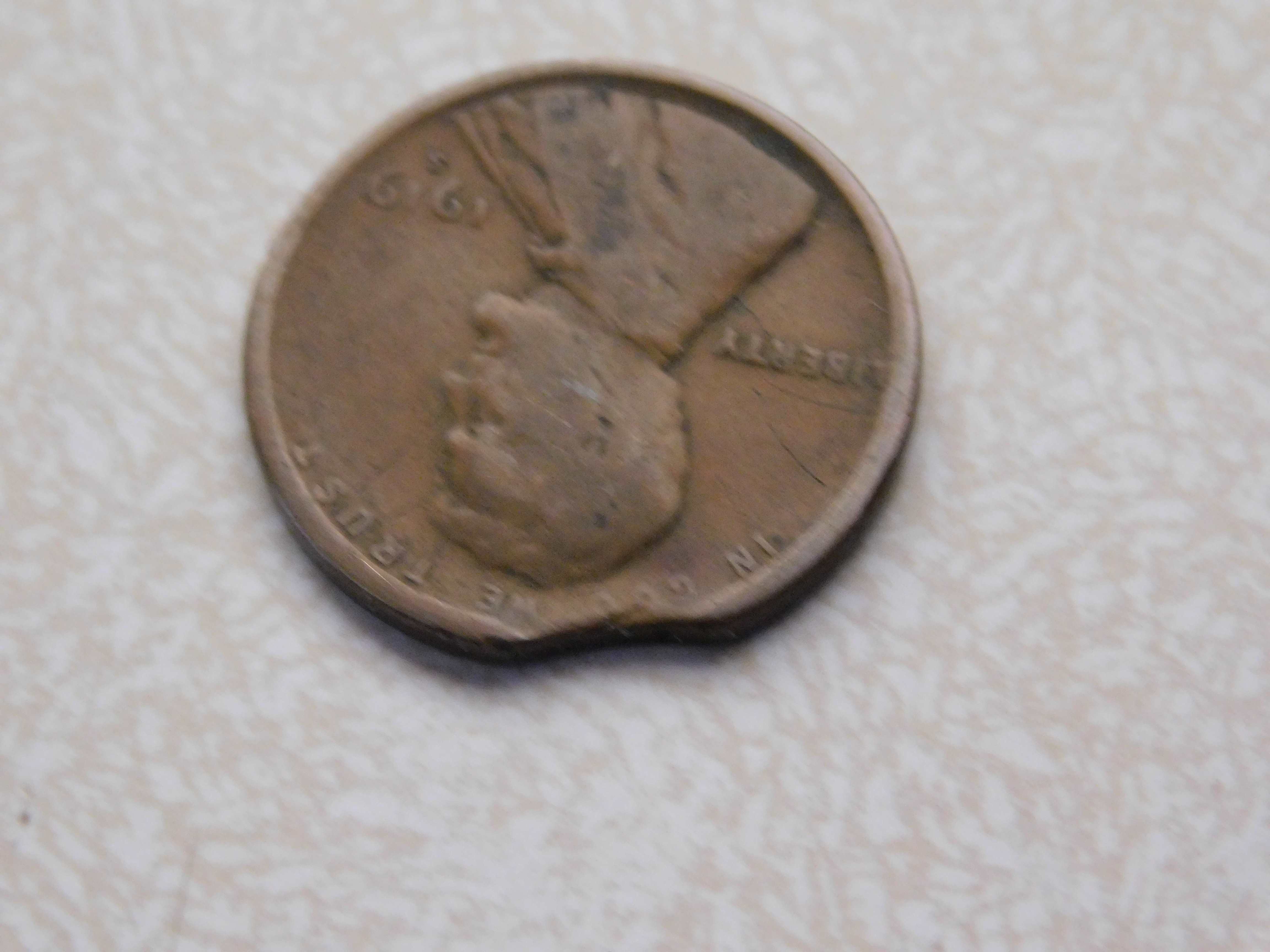
    I have acquired a 1919 s clipped penny in circulated condition. Does anyone know the approximate value of this coin?
    Thanks for any help.
    Ed

    1. JoshuaTheFunTimesGuide Avatar
      JoshuaTheFunTimesGuide

      Hi, Ed —

      I’d need to please see a clear photo of the coin to help. You may post a photo of your clipped 1919-S penny here.

      Thank you for reaching out,
      Josh

      1. Ed Avatar
        Ed

        Thanks for the response, Joshua.
        How do I add a picture?
        I don't see anything or a method that allows me attaching a picture.
        Thanks again for your help,
        Ed

        1. JoshuaTheFunTimesGuide Avatar
          JoshuaTheFunTimesGuide

          Hi Ed,

          Just below the comment box after the end of the article you should see two little rectangular icons or boxes under the left side of the comment field. The second rectangle to the left — the one just right of the little box that says “GIF” — is the one to click to upload images. A jpg or png image file that is 2 megabytes or less should upload to the comments without any issue.

          I hope this helps!
          Josh

          1. Ed Avatar
            Ed

            https://uploads.disquscdn.com/images/7a2a66d8c39abef8983314ee85acc0e6738f6baa74eeac1cf0428ad75107b831.jpg Hopefully this picture will help. And thanks again for your help, I do appreciate it.
            Ed

          2. JoshuaTheFunTimesGuide Avatar
            JoshuaTheFunTimesGuide

            Hi, Ed!

            The photo uploaded well! Thank you… Auction and sales prices for similar clipped 1919 (any mintmark) pennies range from about $7 to $10.

            Hope this helps!
            Josh

          3. Ed Avatar
            Ed

            Thank you very much Joshua, I do appreciate your help!
            I was hoping it would be worth more, naturally, LOL!
            Thanks again,
            Ed

Leave a Comment

Ezoic/Google Ad

300x250

Content Widget

Ezoic/Google Ad

300x600 Sticky