


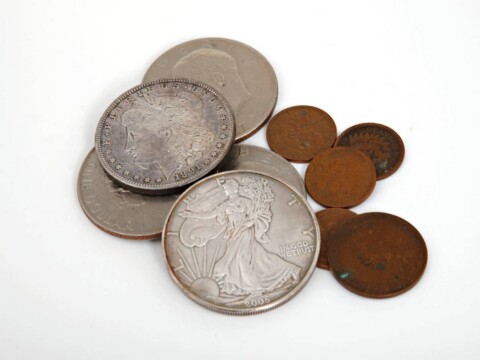
There are many famous rare U.S. coins that attract the attention of coin collectors around the world.
But what about famous coins that aren’t rare?
I’m talking about coins that, despite not being worth tons of money, still have managed to grab the spotlight and are among the coins that most coin collectors want to have in their coin collections — simply because they’re important, famous, or popular.
Following is a list of 10 such famous coins that surely deserve a spot in your coin collection!
10 Cheap & Famous Coins
OK, so I’ll bet you know some of the expensive and famous coins that every coin collector wants, like…
…but there are plenty of famous coins that won’t rival the value of your car or house!
Here are 10 coins that are both very numismatically popular and won’t set you back a pretty penny to own.
1909 VDB Lincoln Cent
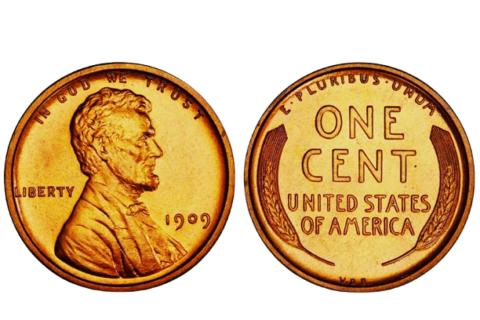
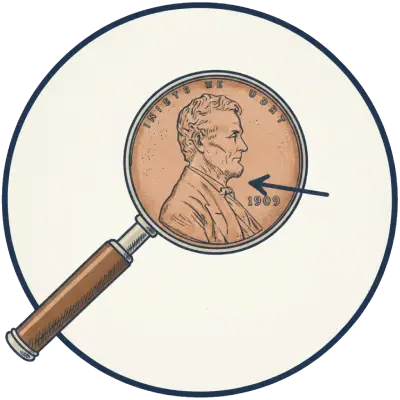
This is the less-expensive cousin to the 1909-S VDB Lincoln cent and, yet, it has a following all its own.
In demand because it’s both a first-year type coin (the first year of the Lincoln cent design) and because it is representative of the Victor David Brenner initials that grace the reverse of the coin under the wheat stalk, the 1909 VDB penny is a popular coin that is also important to coin collectors.
A well-worn 1909 VDB Lincoln cent can be had for under $20. Uncirculated specimens are easily obtainable for less than $50.
1943 Lincoln Steel Cent
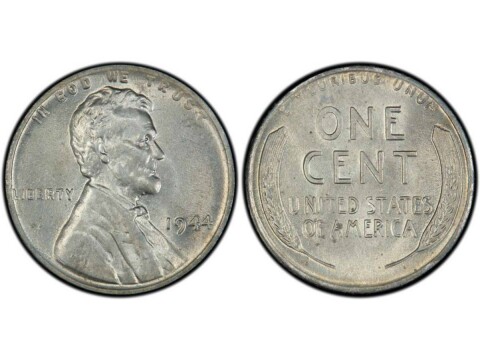
OK folks, the 1943 steel cent (which sticks to a magnet) is a common coin — unlike the 1943 bronze penny you’ve probably heard about.
However, despite the fact that 1 billion (yes, with a “B”… See how common steel pennies really are?) 1943 Lincoln cents rolled out of the United States Mint, its novelty as a silver-colored penny (actually, zinc on a steel core) has attracted the following of millions of coin collectors!
Though a typical steel penny is worth less than $1, they are nevertheless a prized piece in any coin collection due to its innate oddness and its historic standing as an improvisation made when copper was being rationed for the war effort.
1864 2-Cent Piece
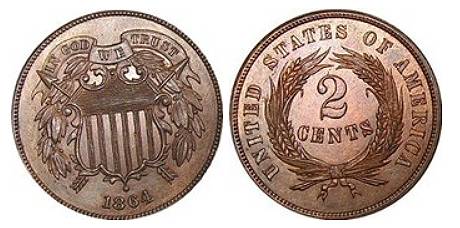
The 1864 2-cent piece holds a very important distinction in United States history: it’s the first coin to bear the motto IN GOD WE TRUST.
First minted during the height of the Civil War, the 2-cent coin was proposed as an integral small-change coin. However, the 2-cent coin quickly proved to be unsuccessful and didn’t gain much of a dedicated following among the public.
Production of the 2-cent coin ended in 1873. However, the first of this denomination remains popular with coin collectors, Civil War buffs, and American historians.
An 1864 2 cent piece in worn grades can be had for less than $30.
1883 No Cents Liberty Nickel
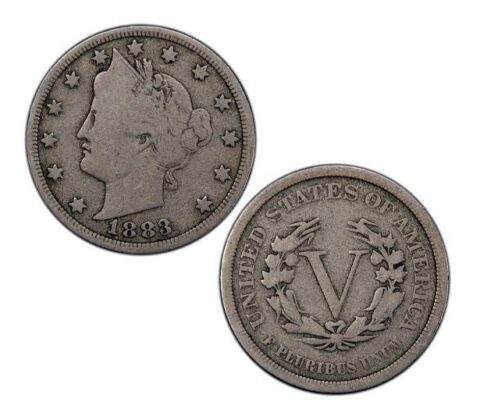
When the U.S. Mint released the 1883 No Cents Liberty nickel, it was quickly subjected to alteration by… ahem… enterprising individuals.
You see, the 1883 No Cents V nickel looks similar to the $5 gold coin made at the time. So, it didn’t take the unscrupulous long to realize gold plating 1883 No Cents nickels would be an easy way to make fast cash.
One common scheme would be for one of these counterfeiters to purchase a 5-cent item at a store and hope the cashier thought they were being given a $5 gold coin. The racketeer’s dream? $4.95 in change!
1883 No Cents Liberty nickels can be purchased for less than $10.
50 States Quarters
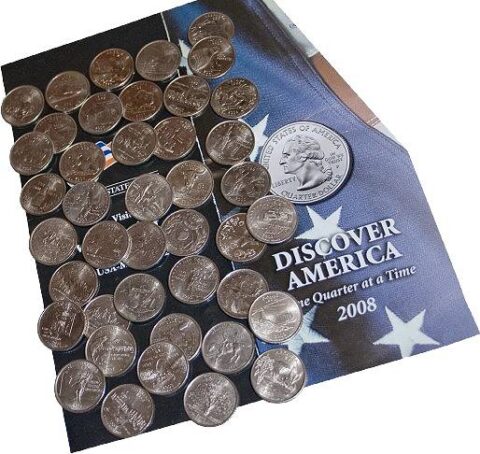
Any of the 50 States Quarters qualifies as a “popular” coin because it’s the cumulative effect of each of the 50 States Quarters that catapulted coin collecting to heights not seen since the 1960s.
Beginning with Delaware in 1999 and ending with Hawaii in 2008, each of the 50 States Quarters brought a sense of pride to residents of each state honored and, for a time, was quite the national sensation.
As each state quarter was released in 10-week intervals, the state of honor would hold big ceremonies which drew hundreds and thousands of people and some pretty nice limelight.
Except for some state quarters with errors, none of the 50 States Quarters is scarce. And if worn, they’re all worth only face value. However, the 50 States Quarters is a numismatic phenomenon that embodied a fervor and energy that may not be seen again for years!
1976 Bicentennial Coins
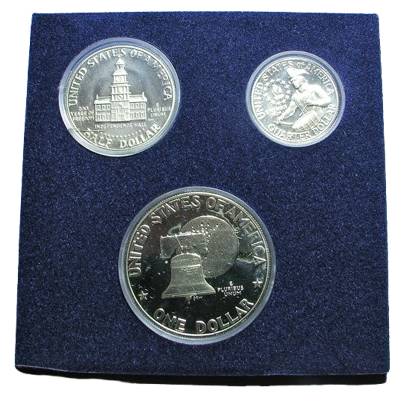
The quarter, half-dollar, and dollar coin were each decked out with special designs commemorating our nation’s Bicentennial in 1975 and 1976.
U.S. Bicentennial coins have dual-dating (1776-1976 on the obverse of each coin) and special reverse designs:
- The Bicentennial Quarter: A Colonial drummer
- The Bicentennial Half Dollar: Independence Hall
- The Bicentennial Dollar: The Liberty Bell superimposed on an image of the Moon
Much like 50 States Quarters, Bicentennial coins are common and worth only face value if worn (unless they’re proof or 40% silver examples). Yet, Bicentennial coins remain a popular and important coin for collectors to this day.
1964 Kennedy Half Dollar
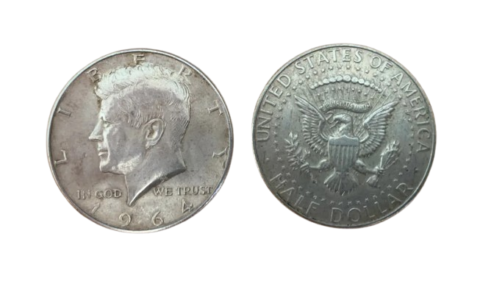
The last of the regular-strike 90% silver half dollars and first of the Kennedy half dollars has been a hit with coin collectors and non-collectors alike since its debut.
Perhaps the 1964 half dollar would not have met with such clamor if not for the fact the Kennedy design was approved and first minted literally within weeks of John F. Kennedy’s assassination.
1964 Kennedy half dollars were hoarded, and to this day they remain important — both because of their design and because they were the last circulating half dollars with a 90% silver composition.
Worn examples are worth bullion value (which, as of this writing is around $65). Uncirculated specimens are worth $25 to $28.
1921 Morgan Dollar
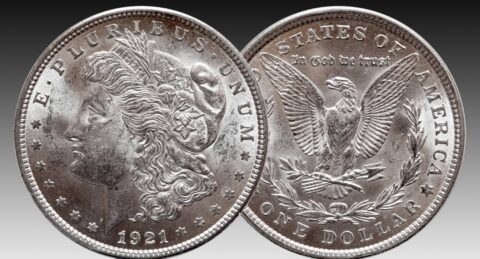
1921 Morgan dollars has become a popular silver dollar.
Why? Perhaps because they’re the last of the long-running (1878 to 1921) Morgan dollars and among the cheapest silver dollars available.
1921 Morgan dollars were minted by the 10s of millions. Even though many of those have been melted down during silver value spikes (like 1979 through 1981 and 2010 to the present day), plenty of 1921 Morgan dollars remain.
Because they’re an inexpensive relic of the Old West and a cheap way to enter the silver market, 1921 Morgan dollars likely have as much of a following among novices and non-collectors as they do among numismatists. These classic coins are heavily advertised on TV and in magazines.
1921 Morgan dollars are currently worth $60 to $70.
1979 Susan B Anthony Dollars
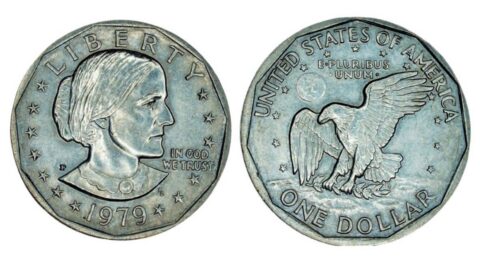
Often derisively dubbed the “Susan B. Edsel” and the “Carter Quarter,” the Susan B. Anthony dollar was an attempt at getting the United States to use dollar coins.
Admittedly, the nation has never really been keen on using dollar coins. Many of us seem to prefer using dollar bills.
However, because dollar coins are cheaper to produce in the long run (estimates say it costs around 6 cents to make $1 dollar coin that lasts 30 years — versus a dollar bill, which costs 3 cents to make but lasts just 18 months), the dollar coin is the economically smarter way to spend a dollar.
As the Susan B. Anthony dollar is the first regularly circulating coin to feature an actual, recognizable woman and also the first small-size dollar coin, the Susie B. has retained a spot in numismatic history for important reasons.
And, slowly, it’s gaining in popularity among coin collecting circles.
The Susan B Anthony dollar was struck from 1979 to 1981 — and again in 1999. The coin is worth face value if worn, and it’s worth a slight premium in Mint State grades.
2000 Sacagawea Golden Dollars
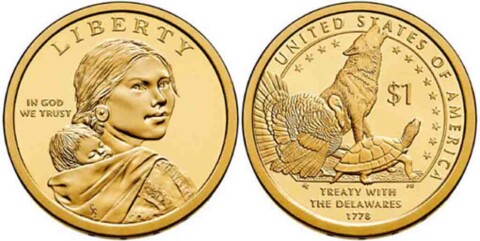
Not to be confused with actual gold coins (these aren’t!), the Sacagawea dollar was the second attempt in 20 years to circulate a dollar coin.
Despite much pomp and circumstance when released in 2000, the Sacagawea dollar coin failed to circulate as hoped — most likely because the dollar bill was still allowed to circulate concurrently.
While the Sacagawea dollar can’t be declared a success (yet!), it still holds a spot in the heart of many numismatists who had hoped to see this coin thrive. It also holds the interest of many non-coin collectors who aren’t accustomed to seeing dollar coins, thus they find this golden-colored piece a novelty.
READ NEXT: Why U.S. Dollar Coins Are Not Circulating
Leave a Comment