


This post may contain affiliate links. If you buy thru these links, we may earn a commission at no additional cost to you.
I love to collect pennies.
I’ve been collecting pennies (U.S. one-cent coins) since I first jumped into the hobby in 1992 — and I still enjoy them today.
I continue to search for (and find!) old pennies, penny errors, and other interesting & valuable pennies in spare change today — and all for merely their face value.
Imagine finding rare pennies in your spare change for just one cent per coin!
What’s cool about pennies, too, is that because it’s easy to find old coins in circulation, you can build all kinds of neat penny collections from the coinage that turns up in your pocket change!
Even if I have to spend a pretty penny to collect pennies that I buy from coin dealers, there’s still the thrill of the hunt.
Collecting the one-cent coin has always been at the heart of my numismatic journey.
Why?
Well, just one of many reasons is because there are so many exciting ways to collect pennies!
You can collect pennies:
You may even build collections of:
- Elongated pennies
- Novelty pennies
- Pennies with weird errors
- Pennies with odd die varieties
- Pennies with other unusual markings
9 Interesting Ways To Build A Penny Collection
#1 – Collect Pennies By Type OR By Design
Over the years, there have been dozens of major and minor design varieties among all pennies — including both the large cents made from 1793 through 1857 and the small cents made from 1856 to the present.
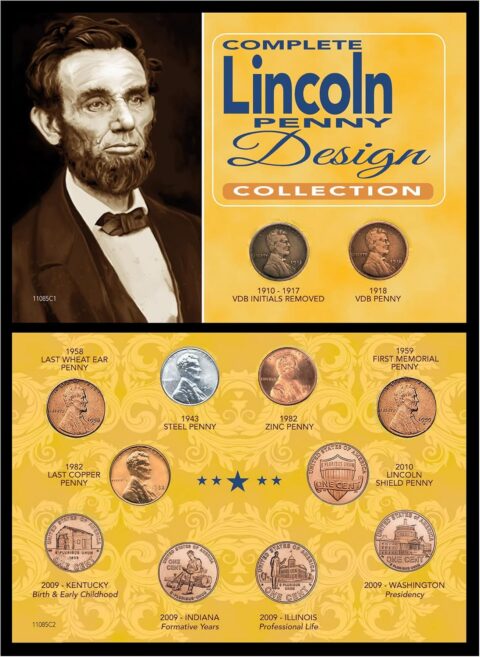
Some coin collectors will focus their one-cent type coin sets based on only the major types, while others count all of the design variations.
When building a type set like this, you would generally collect pennies representing each type — with the set normally containing just a single example per design.
For the purpose of this article, I will list all of the major design varieties in bold and the minor ones in inset bullet points and regular font.
Here are the various penny designs and the years they were minted:
- Flowing Hair Cent 1793
- Chain Reverse 1793
- Wreath Reverse 1793
- Liberty Cap Cent 1793-1796
- Draped Bust Cent 1796-1807
- Classic Head Cent 1808-1814
- Liberty Head Cent 1816-1857
- Matron Head 1816-1835
- Modified Matron Head or Young Head 1835-1839
- Braided Hair 1839-1857
- Flying Eagle Cent 1856-1858
- Indian Head Cent 1859-1909
- Variety 1 Copper-Nickel Laurel Wreath 1859
- Variety 2 Copper-Nickel Oak Wreath with Shield 1860-1864
- Variety 3 Bronze 1864-1909
- Lincoln Wheat Ears Cent 1909-1958
- Lincoln VDB Initials on Reverse 1909
- Lincoln No VDB 1909-1917
- Lincoln Bronze VDB Under Shoulders Beginning 1918
- Lincoln Steel Composition 1943
- Lincoln Shell Case Composition 1944-1946
- Lincoln Bronze Composition Resumed 1947-1958
- Lincoln Memorial Cent 1959-2008
- Copper Alloy 1959-1982
- Zinc Alloy 1982-2008
- Lincoln Bicentennial Cent Series 2009
- Birth & Early Childhood 2009
- Formative Years 2009
- Professional Life 2009
- Presidency 2009
- Lincoln Shield Cent 2010-Present
#2 – Collect Pennies By Date
If you want to collect more than just the relatively few specimens of one-cent coins that would go into a type collection, then perhaps you’d be smitten by the idea of building a date set.
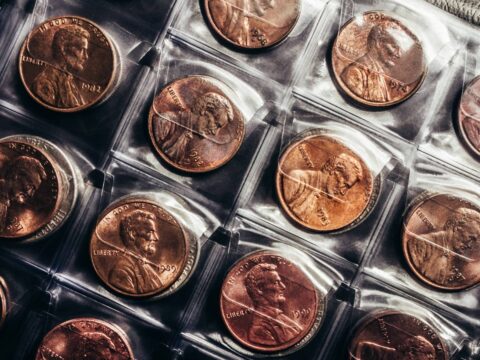
In a date set, you collect pennies that represent examples of every year its series was in production.
So, for example, if you wanted to collect a date set of Lincoln Memorial cents, you would find one penny from each year that the Memorial design was struck (from 1959 through 2008).
Penny date sets can be fun to build and are generally easy to assemble.
With few exceptions, there’s at least one “cheap” representative specimen that can be collected from one or more of the U.S. Mint facilities during a given year.
#3 – Collect Only A Special Year Of Pennies
Is there a year that’s particularly special to you? Maybe your birth year? A wedding date? Perhaps the year you bought your first home?
If that’s the case, there’s another type of penny collection with your name on it: the year set.
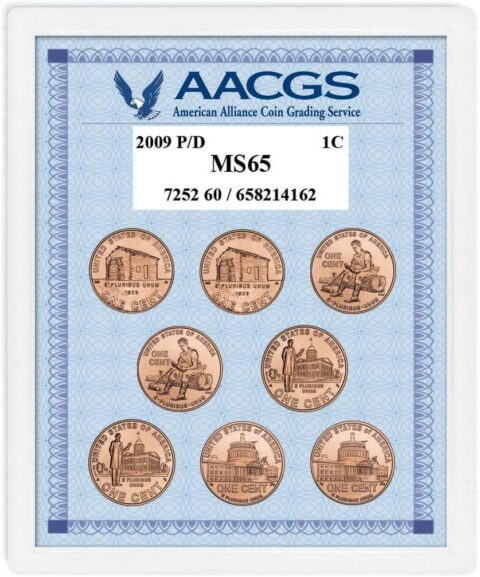
In the case of most pennies made during the time when most of people alive today were born, there were at least 2 U.S. mints striking one-cent coinage.
Before 1956 and between 1968 and 1974, there were 3 U.S. mints actively and consistently striking Lincoln cents, including:
- Philadelphia Mint (no mintmark)
- Denver Mint (D mintmark)
- San Francisco Mint (S mintmark)
For the sake of accuracy, I could also say that the San Francisco and West Point mints were making pennies during the mid-1970s through mid-1980s. But neither of those mints placed mintmarks on pennies at that time — so they look just like regular, no-mintmark Philadelphia one-cent coins.
A penny year set would consist of the 1, 2, or 3 pennies from a given year — each in the best condition you can afford.
Unless your special year is from the 1910s, 1920s, or early 1930s (generally a period from which at least 1 Lincoln cent from a given year and particular mint is scarce and valuable today), you should have little difficulty affording a penny year set.
#4 – Collect Large Cents (1790s Through 1850s)
When people talk about collecting pennies they often don’t think about collecting large pennies, or large cents as they are more formally called.
Back when coin collecting was really taking off in the United States during the latter 1800s, when someone said they were a penny collector, it meant they were putting together sets of these large copper coins.
The large cent was the first one-cent coin in the United States.
Measuring as wide as 29 millimeters in diameter (or nearly the size of a modern-day half dollar!), the large cent was America’s copper penny during the first 64 years the U.S. Mint was producing Federal coinage.
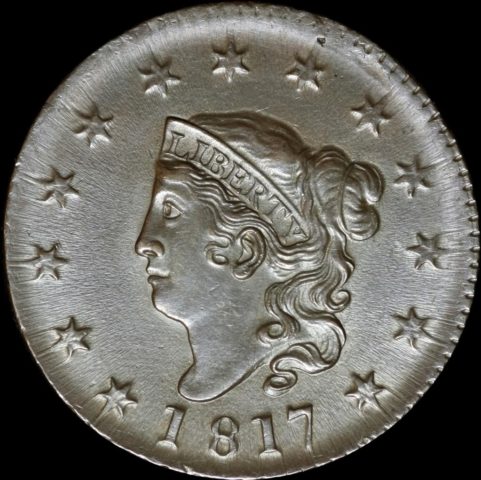
A large cent collection may entail collecting one example of every date, a single specimen of every design type (listed above under #1), or simply as many as you can reasonably afford:
- 1793 large cents are worth $3,000 or more in grades of Good-4 and up.
- Large cents struck between 1794 and 1798 are priced between $125 and $350 or more in Good-4.
- 1799 large cents are rare and worth about $3,000 and up.
- Large cents produced from 1800 through 1814 are usually valued at between $75 and $150 in grades of Good-4.
- Most large cents made since 1816 are worth between $20 and $50 in average circulated grades.
Here are some tips before you start collecting large cents:
- There is no 1815 penny! If you find a U.S. one-cent coin with the 1815 date, it’s counterfeit.
- Early pennies from the 1790s are even valuable in low grades such as Poor-1, Fair-2, and About Good-3. (These coins are even collectible if they’re cleaned!)
- While cleaned early large cents are valuable, they’re preferred by most coin collectors in original condition — chocolate brown color on a large cent is indicative of originality and is highly desirable.
- Be choosy when buying large cents from a coin dealer. But also remember that most copper coins from the 1790s and 1800s have been exposed to many decades of wear and tear. Very few are truly original, so aim to buy the best large cents you can afford, not necessarily a “perfect” coin.
#5 – Collect Indian Head Pennies
If collecting large cents is too expensive, you might consider working on a complete set of Indian Head pennies.
Struck from 1859 through 1909, the Indian Head cent is one of the most popular 19th-century United States coins to collect.
It’s an expensive and challenging coin collecting goal — yet, not one that’s out of reach for coin collectors who have a bit of expendable income (and a lot of patience).
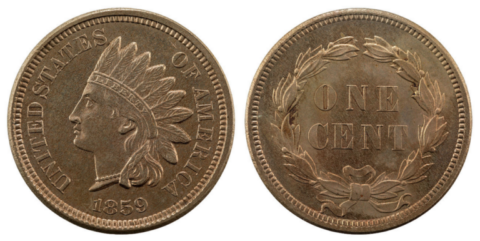
About half of the Indian Head cents (primarily those made since 1880) can be bought for less than $5 each in circulated grades.
The other half of those Indian Head cents (those made before 1880) cost $10 to $20… and way up.
There are a few rare Indian Head pennies valued at $50 or more:
- 1864 with L — $50+
- 1866 — $50+
- 1867 — $50+
- 1869 — $75+
- 1870 — $50+
- 1871 — $100+
- 1872 — $85+
- 1877 — $600+
- 1908-S — $75+
- 1909-S — $300+
*Values are for coins in average circulated grades and don’t include specialized die varieties.
#6 – Collect Lincoln Wheat Pennies
There are few coins more popular than Lincoln cents and, more specifically, Lincoln Wheat pennies!
Some call these pennies “Wheaties,” “Wheat Ears,” and “Wheats,” too.
Whatever you call them, you know one when you see it.
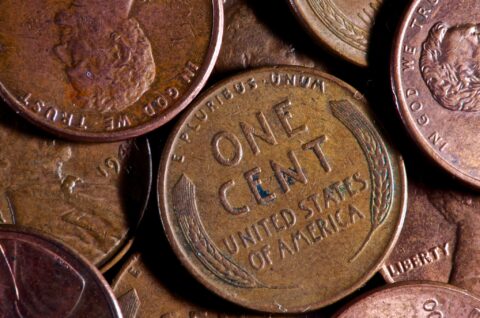
These pennies have the familiar side portrait of Abraham Lincoln on the obverse (heads side) and two stalks of wheat bending along the rim of the reverse (tails side).
While Wheat cents were made from 1909 through 1958 and are hard to find in circulation, most of them aren’t necessarily rare. In fact, most Lincoln Wheaties are numismatically common.
Here are the values of Lincoln Wheat pennies today:
- There are several key date (or rare Lincoln Wheat cents). Some are worth $100 or more.
- Semi-key date Lincoln pennies made between 1909 and 1934 are scarce and worth $2 to $100.
- Lincoln cents made since 1934 are worth 3 to 10 cents each in circulated grades.
Though most Lincoln Wheat pennies are easy to find and cheap to buy, many dates are virtually impossible to find in circulation. Therefore, collecting an entire Lincoln wheat cent collection is a challenge for any hobbyist.
If you want to collect pennies representing the entire span of the Lincoln Wheat series, you’ll have to buy many of them from a coin dealer.
Since it’s pretty much necessary to buy Lincoln Wheat pennies from a coin dealer, that means you’ll also have to purchase the rarest dates. That’s probably the toughest part of finishing a Lincoln penny collection: buying the rare dates.
For example, here are the prices for 3 rare Lincoln pennies:
- 1909-S VDB cent — $750+
- 1914-D cent — $175+
- 1922 No-D plain cent — $500+
It would cost more than $1,500 to buy all of the necessary Lincoln Wheat cents to finish a basic wheat penny collection.
And… depending on whether or not the 1922 plain cent, 1955 doubled die penny, or other scarce varieties are included, the price for completing the set could easily exceed $2,200 to $2,500 or more.
#7 – Collect Lincoln Memorial Pennies
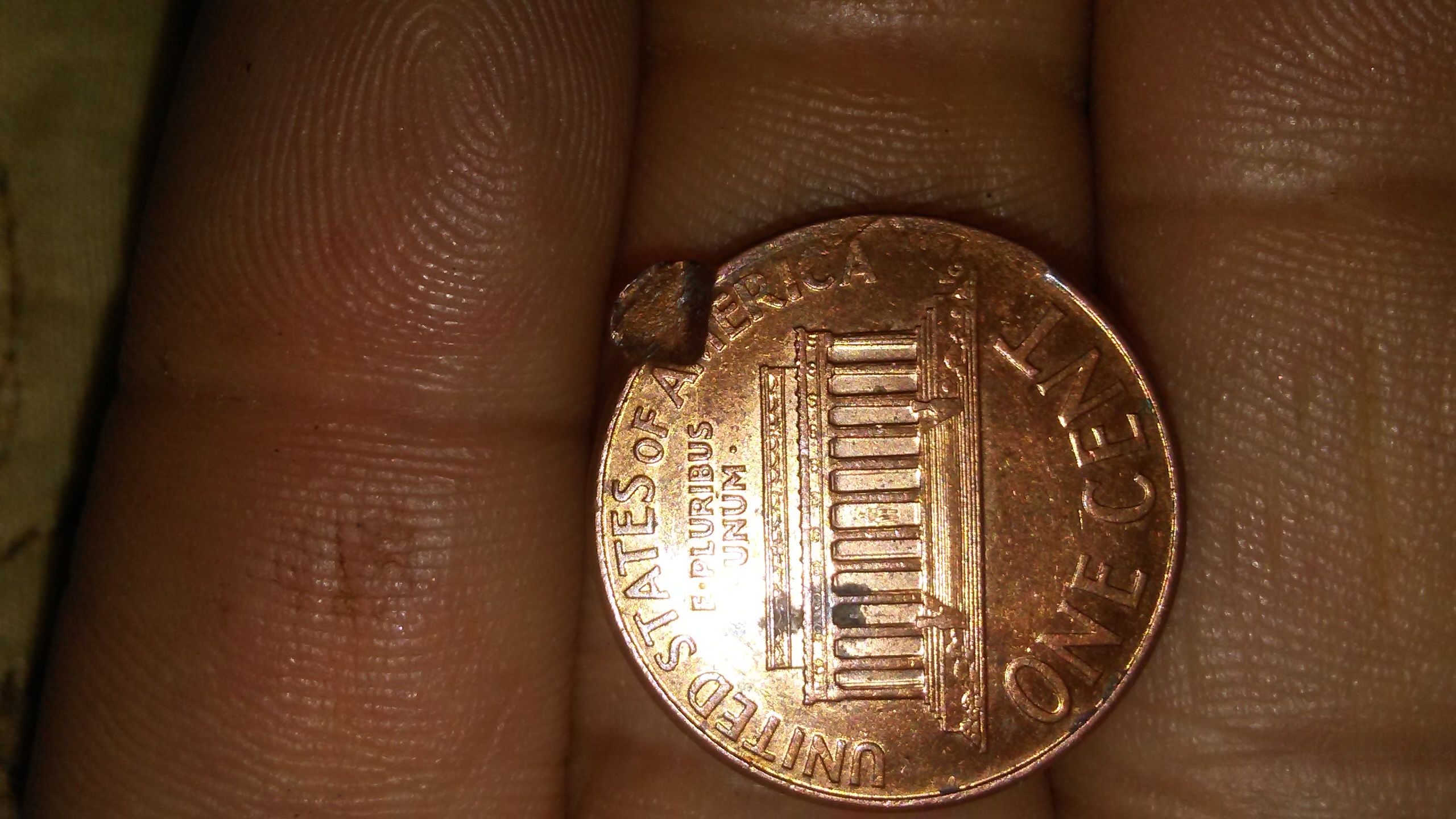
The Lincoln Memorial cent reverse replaced the wheat ears reverse in 1959 and was struck until 2008.
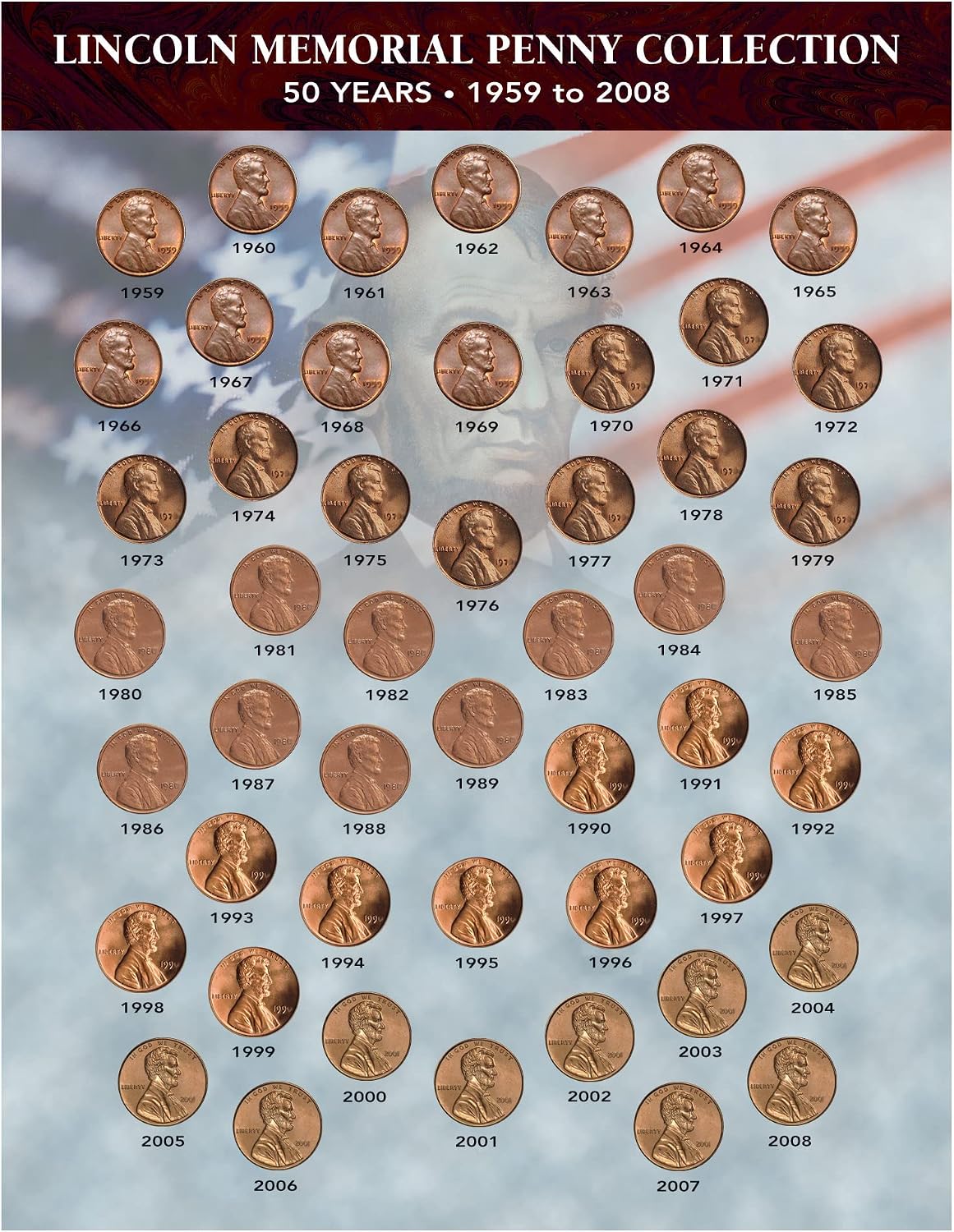
Lincoln Memorial pennies are still extremely common in pocket change today — even though they were permanently replaced by the Lincoln Shield cent in 2010.
Billions upon billions of Lincoln Memorial pennies were made over the course of 50 years, and there are very few dates that are considered scarce. In fact, it’s actually possible to assemble an entire basic set of Lincoln Memorial pennies right from circulation for face value!
While all regular-issue Lincoln Memorial cents are common, some are tougher to find than others in spare change.
Here’s a list of the more challenging Lincoln Memorial pennies needed to complete a collection:
- 1968-S cent — 7 to 10 cents
- 1969-S cent — 7 to 10 cents
- 1970-S large date cent 7 to 10 cents
- 1970-S small date cent — $25+
- 1971-S cent — 7 to 10 cents
- 1972-S cent — 7 to 10 cents
- 1973-S cent — 7 to 10 cents
- 1974-S cent — 7 to 10 cents
- 1982 small date copper cent — 7 to 10 cents
- 1982 small date zinc cent — 7 to 10 cents
There are also a few rare die varieties:
- 1969-S doubled die cent — $20,000+
- 1971 doubled die cent — $25+
- 1972 doubled die cent — $300+
- 1983 doubled die cent — $250+
- 1984 doubled die cent — $175+
- 1995 doubled die cent — $25+
- 1999 wide AM cent — $350+
Regular-issue copper Lincoln Memorial cents (which were made from 1959 through 1981 and part of 1982) are worth 3 to 4 cents each.
Except for the dates and varieties listed above, circulated Lincoln Memorial pennies made from 1982 through 2008 are worth face value if worn.
Many collectors enjoy assembling Lincoln Memorial penny sets in coin folders — which are cheap to buy at bookstores, from coin dealers, and online.
#8 – Collect Pre-1983 Copper Pennies
Copper pennies are quite valuable.
However, the last full year circulation-strike Lincoln cents were made from a traditional 95% copper composition:
- Ronald Reagan had just become president of the United States
- NASA’s Space Shuttle Columbia was launched for its maiden voyage
- Three’s Company, The Jeffersons, and M*A*S*H were top hits on TV
The year was 1981 — the last full year regular-issue Lincoln pennies contained a primarily copper alloy.
Just as rising silver prices squeezed precious metal out of the dime, quarter, and half dollar almost 20 years earlier, copper values rose to the point that the value of the metal was worth more than the face value of the one-cent coin!
In 1982, the U.S. Mint transitioned to a zinc-based composition.
About two-thirds of 1982 Lincoln Memorial cents contain a mainly copper composition, while one-third are considered Zincolns.
While some 1982 Lincoln cents are made from copper, it’s somewhat difficult to tell a copper 1982 cent apart from a zinc penny.
There are a few easy ways to tell copper pennies from zinc pennies:
- Copper pennies weigh 3.11 grams, whereas zinc cents weigh 2.5 grams. (See how to weigh coins.)
- Copper 1982 pennies generally have a warmer orange color than their zinc counterparts.
- Drop a 1982 copper penny on a hard surface and it “rings” — but a zinc 1982 penny “clicks.”
Many people who collect pennies from 1982 set them aside in a separate pile and test them at one time, like the guy in this video:
Unless you’re willing to test every 1982 cent that comes your way, it’s pretty easy to visually tell the pre-1982 copper Lincoln pennies apart from the modern-day Lincoln pennies that have a 97.5% zinc, 2.5% copper composition by merely looking at the coin’s date.
Many people are hoarding old copper pennies with the hopes that it may someday become legal to melt them for their copper value (it’s illegal to do so now).
All pre-1982 copper cents are worth 3 to 4 cents and up.
#9 – Collect All Lincoln Cents From 1909-To-Present
Perhaps the most popular of all ways to collect pennies is to assemble an entire collection of Lincoln cents made since 1909.
Such a collection would include the following types of pennies:
- Lincoln Wheat Ears Cent 1909-1958
- Lincoln VDB Initials on Reverse 1909
- Lincoln No VDB 1909-1917
- Lincoln Bronze VDB Under Shoulders Beginning 1918
- Lincoln Steel Composition 1943
- Lincoln Shell Case Composition 1944-1946
- Lincoln Bronze Composition Resumed 1947-1958
- Lincoln Memorial Cent 1959-2008
- Copper Alloy 1959-1982
- Zinc Alloy 1982-2008
- Lincoln Bicentennial Cent Series 2009
- Birth & Early Childhood 2009
- Formative Years 2009
- Professional Life 2009
- Presidency 2009
- Lincoln Shield Cent 2010-Present
NOTE: In addition to collecting business-strike Lincoln pennies, many who put together an entire Lincoln cent set will go the extra numismatic mile and include San Francisco Mint proof Lincoln pennies. S-Mint proof Lincoln Memorial cents are generally worth $1 and up.
While it’s possible to build much of the 1909-present Lincoln cent collection from pocket change, most of the earlier coins will have to be bought from a coin dealer.
This entire set, including only regular-issue strikes and S-Mint proof cents made since 1968, would cost $2,500 or more to build.
More Tips For Collecting Pennies
- 5 Money-Saving Tips For Collecting Lincoln Pennies
- Penny Roll Hunting 101
- Find A Silver Penny?
- 43 Most Valuable Pennies Worth Hanging Onto
- What You Should Know About The 1944 Steel Penny


Leave a Comment