



The 50 State Quarters were made from 1999 through 2008.
There are so many rare state quarters worth big money that you can find if you look hard enough (and you’re just a tad lucky).
Wondering about the most valuable state quarter errors?
Many of the rare errors and varieties among the state quarters are worth hundreds of dollars… or even more!
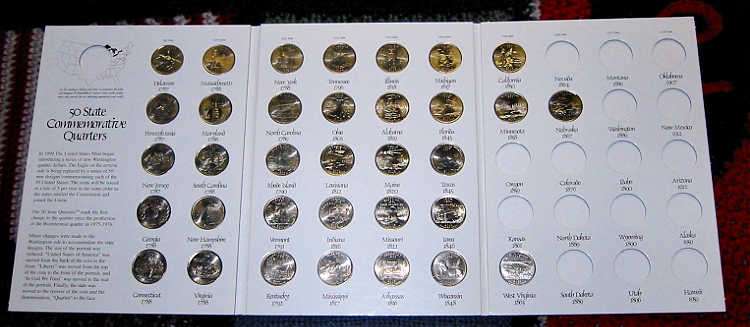
In this article you will find a list of the rare 50 State Quarters errors you should be looking for in your spare change.
You may be surprised at just how valuable some of these quarters really are!
The Most Valuable 50 State Quarter Errors
Where do I begin?
There are sooooooo many valuable quarter errors and varieties out there!
So let’s begin at the beginning… with the letter “A”.
Looking at the state quarters from Alabama through Wyoming — I’m going to reveal 17 rare state quarter errors that are worth looking for in your pocket change!
While it’s likely that you will find some other common errors on the state quarters over time, these are the most valuable errors that are currently known to exist on the 50 State Quarters — in alphabetical order.
2008 Arizona Quarter Error
What makes the 2008 Arizona state quarter worth looking for?
There’s an extra cactus leaf on some Arizona quarters. These error quarters are usually worth $3 to $5.
How to identify the Extra Cactus Leaf quarter error:
Grab your magnifier and flip the quarter over to the reverse side. You’re looking right at the big saguaro cactus standing on the right, next to the Grand Canyon details. To spot this specific variety, drop your eyes down to the bottom base of that main cactus trunk — right above the lower right rim where the designer’s tiny initials “JFM” are stamped. If you’re holding the “Extra Cactus Leaf” variety, a big chunk of steel physically broke off the Mint’s coin die during production. That hollow gap filled up with extra metal, leaving a raised, blobby, egg-shaped bump of extra copper-nickel sitting right at the base of the trunk. This extra lump (which collectors call a leaf, or a branch) will either partially or completely blot out those “JFM” initials.
Learn more about this error and other valuable Arizona quarter errors.
2006 Colorado Quarter Error
Cud errors abound on 2006 Colorado state quarters!
These weird varieties are distinguished by their appearance as a flattish mound of raised metal attached to the coin’s rim. Some of these errors are worth in the neighborhood of $10 to $20.
How to identify a Colorado Cud quarter error:
Flip your 2006 Colorado quarter over to the back side and look at the right-hand edge around the 3 o’clock position — right where the foothills and mountains meet the outer rim line. If you’re holding a legit “Colorado Cud” error, you’ll see a massive unmistakable smooth blob of extra copper-nickel metal completely blanking out a section of the outer border! It happened because a chunk of the steel coining die literally fractured and broke away at the rim during production, letting the metal mash upward into that empty pocket.
Other Colorado state quarter errors are worth even more!
1999 Connecticut Quarter Error
Ah, yes…. Some of these 1999 Connecticut state quarter errors are worth really big money — like $10,000!
How?! How could some Connecticut quarter errors be worth as much as a car?
This video explains what makes these valuable Connecticut quarter errors so rare:
How to identify the Connecticut quarter errors:
First, look for the broadstruck or off-center strike errors — where the coin skipped its steel retaining collar, causing the metal to splatter out wider and thinner than normal. The result is a completely blank, smooth crescent-shaped gap on one edge. Second, watch for the missing clad layer error — where the outer silver-colored nickel jacket peeled off before stamping. This resulted in one full side of the quarter being a matte-red copper color. Finally, keep an eye out for a rare strikethrough grease mistake — where heavy machine gunk clogged the coin die, completely obliterating parts of the date or the words “THE CHARTER OAK.”
See all of the other Connecticut quarter errors.
1999 Delaware Quarter Error
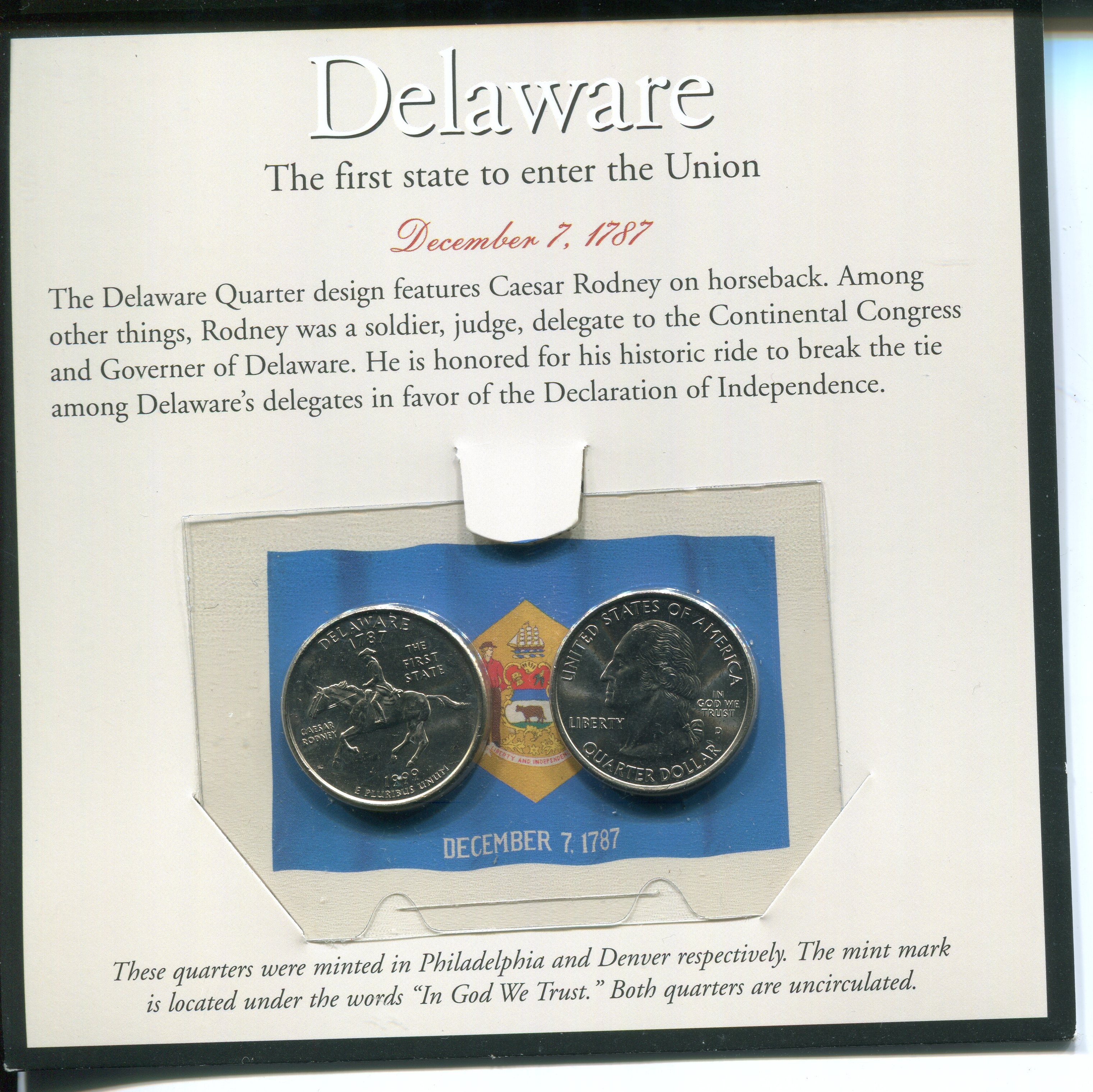
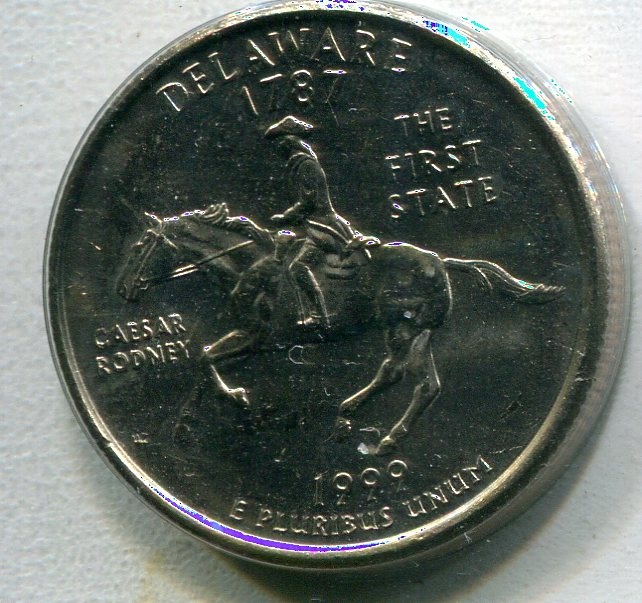
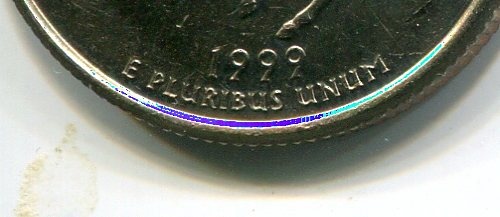
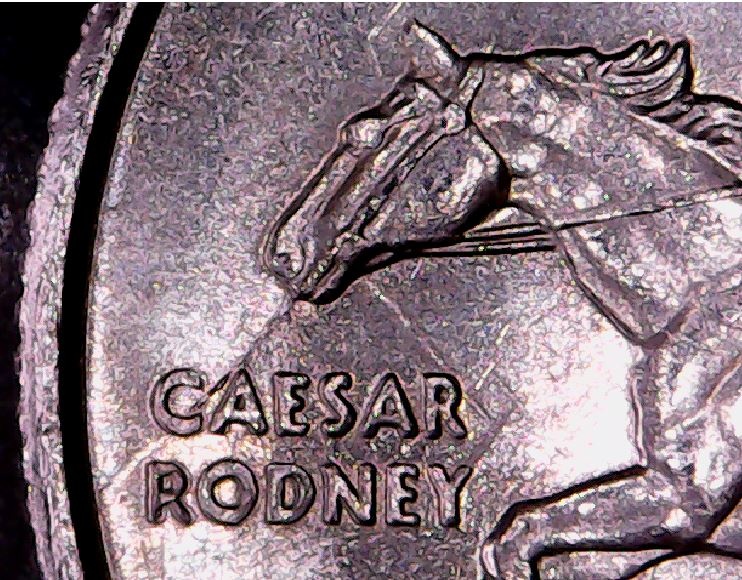
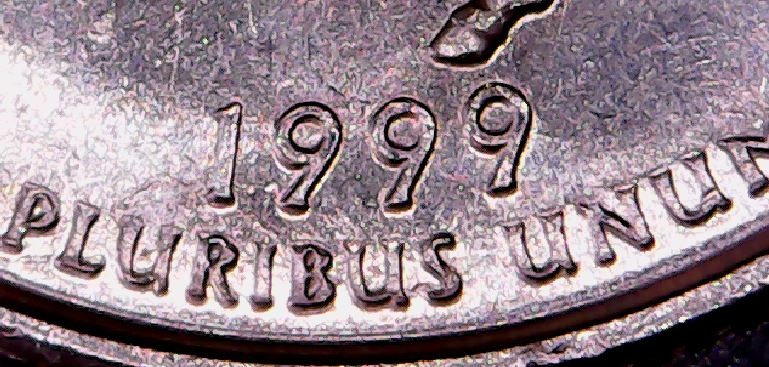
There are several valuable Delaware quarters you can find in pocket change, including the 1999 Delaware Spitting Horse quarter error.
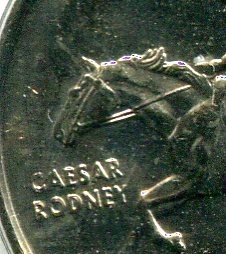
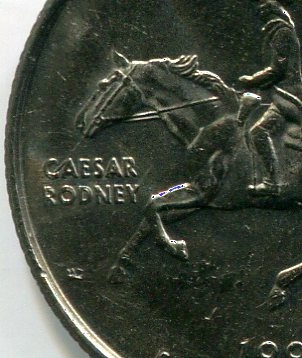
This error appears on the “tails” side of the coin — with a line from the horse’s mouth down to the rim of the coin. This Delaware quarter error is worth as much as $20!
How to identify the Spitting Horse quarter error:
If you’re looking through a pile of 1999 Delaware quarters, flip the coin over to the reverse side and focus your magnifier at the front of the horse’s muzzle — right where Caesar Rodney is holding the reins. Because the steel minting die suffered a massive stress fracture after pounding out millions of coins, this resulted in a crisp, jagged, raised line of extra copper-nickel metal completely out of the horse’s mouth and running straight down toward the left. (It lands right between the horse’s front legs and chest.) The way to separate this real Mint mistake from a standard scratch is texture. Run your bare thumb right over that line — if it feels distinctly raised, sharp, and bumpy like a miniature wire on top of the design, you’ve found a genuine die crack. But if the line feels jaggedly sunken in or looks like a ditch under a direct light, then it’s just everyday post-Mint damage that happened out in the wild.
Learn about other Delaware state quarter errors.
2009 District of Columbia Quarter Error
Okay, so the District of Columbia isn’t a state, and the quarter honoring the nation’s capital wasn’t technically part of the 50 State Quarters series. But it was issued as a follow-up of the state quarters. And, let’s face it, there are some really cool and valuable 2009 District of Columbia quarter errors!
One of them is a doubled die on Duke Ellington’s arm and his piano. This 2009 doubled die quarter error is worth as much as $1,000!
How to identify this District of Columbia Doubled Die quarter error:
The 2009-D District of Columbia Duke Ellington quarter features a major modern variety known as the Doubled Die Reverse (DDR). Caused by a 14-degree die rotation during the single-squeeze hubbing process, a genuine error quarter displays dramatic, fully raised, and rounded doubling on the letters “E-L-L” of Ellington’s name, extra phantom piano keys, and doubling on his thumb. To distinguish an authentic, high-premium Mint error from flat, shelf-like machine doubling or standard pocket scratches, be sure to use a 10x coin loupe to ensure that the details are sharply raised and 3-dimensional.
Here’s more info about all of the District of Columbia quarter errors.
1999 Georgia Quarter Error
Some 1999 Georgia state quarter errors are worth as much as $10,000.
For example, the extremely rare and valuable Georgia state quarter described in this video was made as an experimental piece, and it has a golden-colored appearance:
How to identify this Georgia quarter error:
Back in 1999, the Philadelphia Mint was testing a brand-new manganese-brass metal alloy for the upcoming 2000 Sacagawea dollar, and a few quarter-sized experimental blanks accidentally got struck with the Georgia quarter design. To verify if you’ve landed this legendary transitional error, your best bet is to use a digital scale. A regular quarter weighs in right at 5.67 grams, but an authentic experimental piece must weigh significantly heavier — weighing between 5.9 and 6.3 grams. On top of that heavy weight, a genuine experimental quarter will be visibly thicker, show a distinct golden or slightly greenish hue (rather than a bright, shiny mirror spray), and — this is the dead giveaway — its edge will lack the standard copper-nickel clad stripe running around the rim. If it looks gold but weighs normal, it’s just a common coin. But if it passes the scale check and has a solid, stripe-free rim, you’re holding a certified piece of history.
See all of the Georgia state quarter errors.
2000 New Hampshire Quarter Error
There are many rare and valuable 2000 New Hampshire state quarter errors worth looking for.
One of the most popular is a New Hampshire quarter missing its mintmark. These no-mintmark New Hampshire quarters are worth as much as $40.
How to identify the New Hampshire No Mintmark quarter error:
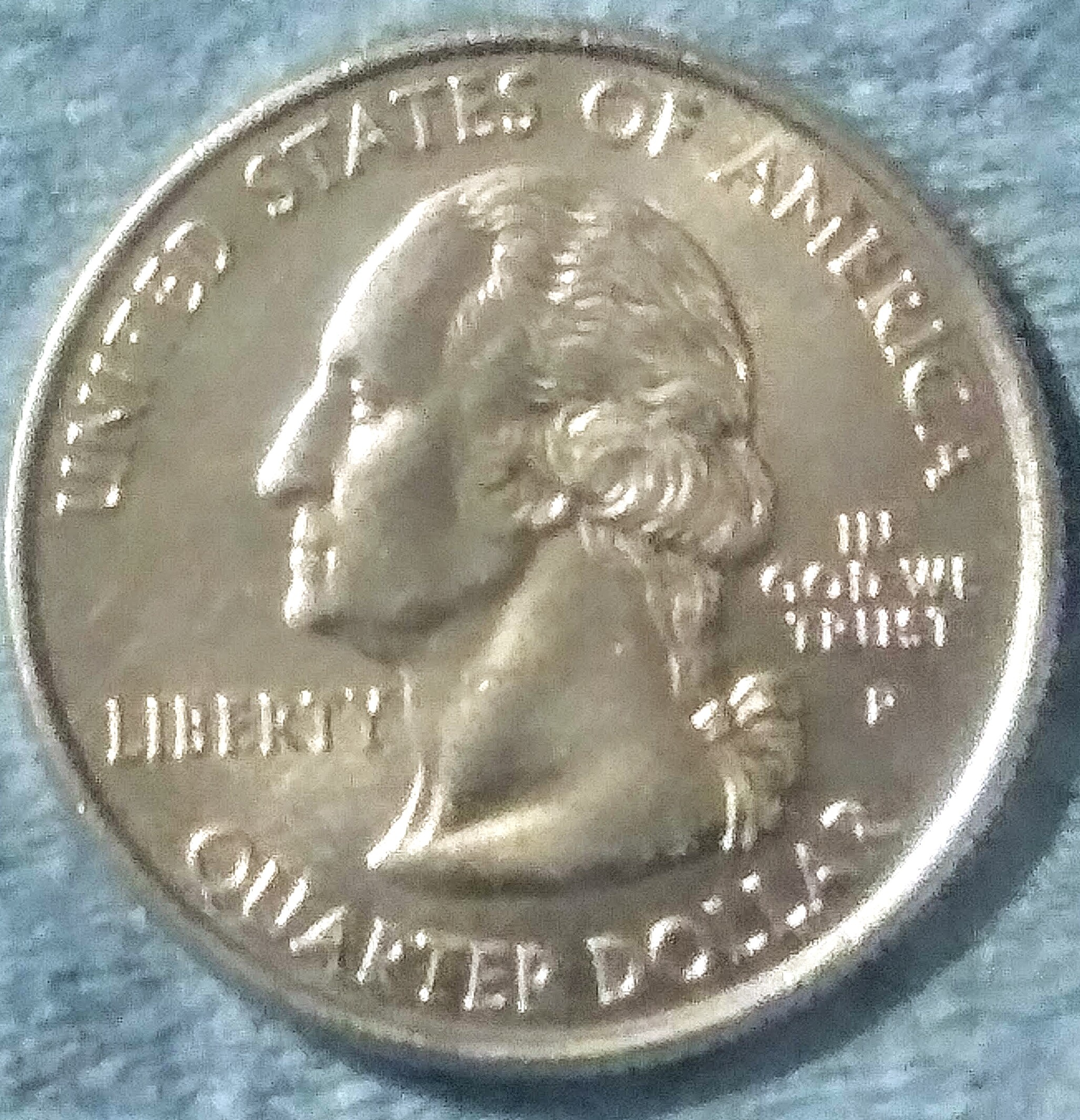
If you find a 2000 New Hampshire quarter that doesn’t have a mintmark under the right side of Washington’s ponytail, don’t assume that it’s an ultra-rare experimental strike. Since 1980, the U.S. Mint has legally mandated that all business-strike quarters carry a letter identifying where they were made — so an empty space here is actually a classic, well-documented grease strike-through error. Heavy machinery sludge and thick grease occasionally packed tight into the tiny letter “P” or “D” recesses on the steel coin die, which would physically prevent the metal planchet from flowing into the gap when the press slammed down. Look at the letters right next to it: on a genuine grease error, you will usually see a gradual fading or a very soft, mushy look on surrounding elements like “IN GOD WE TRUST” or the letters in “AMERICA” on the edge rim. On the other hand, a counterfeiter trying to shave off a mintmark with a file will leave telltale scratch lines, a deep dip, and an altered flat spot in the copper-nickel surface.
Here’s everything you want to know about New Hampshire quarter errors.
2005 Kansas Quarter Error
There are 3 significant kinds of 2005 Kansas state quarter errors that are unique to this quarter.
They are worth as much as $100 apiece (or even more) and include the “IN GOD WE RUST,” Humpback Bison, and Spitting Bison quarter errors.
How to identify these 3 Kansas quarter errors:
Grab your coin magnifier and let’s check out these 3 wild mistakes on the 2005 Kansas quarters… First up is the famous “IN GOD WE RUST” variety on the front of the coin, which was caused by heavy grease filling up the steel die. Look at the word “TRUST” — if the area where the first “T” should be is completely smooth, flat, and original copper-nickel skin without any rough acid-pitting textures, you’ve found a genuine grease-strike. Second, flip your Kansas quarter over to the reverse and look for two big bison die breaks. These leave raised clumps of extra metal that you can easily feel with your fingernail. For the Humpback Bison error, look at the top of the animal’s back to spot a massive, obvious tuft of thick extra metal popping straight up off the normal rounded shoulder line. Third, look straight down to the bison’s mouth for the Spitting Bison error. A genuine version of this die crack leaves a thin, sharp line of raised metal that starts directly at the mouth and slices straight downward through the field, passing cleanly right between the bison’s two front legs.
Learn about other Kansas state quarter errors.
2000 Maryland Quarter Error
There are tons of different 2000 Maryland state quarters worth looking for!
Among the many Maryland state quarter errors are doubled dies, off-center strikes, and broadstrikes worth as much as $50 to $100… or more!
How to identify these 3 Maryland quarter errors:
Here’s how to spot those 3 different errors using a standard magnifying glass. First, when hunting for the doubled die… ignore flat, shelf-like machine doubling and look for clear, overlapping layers with crisp notches on the fine details of the Maryland Statehouse dome, the surrounding oak leaf clusters, or the lettering. Second, an off-center strike is an unmistakable blunder where the blank planchet was physically misaligned with the dies when they met on the press — leaving a crescent-shaped chunk of the design completely missing and a corresponding slice of totally blank, smooth metal running along each side of the coin. Third, a broadstrike error also features a wider, flatter look than normal — because it completely skipped the retaining collar when it was struck, allowing the metal to essentially pancake splatter outward. The key to separating a broadstrike from a generic off-center is that a broadstrike must still show 100% of the complete design on both sides of the coin — wrapped by a narrow, distinct margin of flat metal where the raised outer rim was supposed to form.
Here’s everything you want to know about Maryland quarter errors.
2005 Minnesota Quarter Error
Some of the most famous (and most valuable!) of the 50 State Quarter errors are found on 2005 Minnesota quarters.
It’s on these coins that several dozen different types of doubled dies have been spotted. Yes, that’s right — I said dozens.
These are found mainly on the 2005-P Minnesota quarter, and the ones with the strongest doubling are worth around $100 apiece.
How to identify the Minnesota Doubled Die quarter error:
Flip the quarter over to the reverse side where you see the peaceful scene of a guy fishing out on a lake. You want to ignore the state map outline entirely and focus your eyes directly on the thick pine trees over on the right-hand side of the design. To spot the famous, major doubled die variety (officially known as the “Doubled Tree” error), find the 3rd and 4th full-size evergreen trees — counting to the right from the edge of the state map. If you’re holding the Real McCoy, you’ll see a distinct, ghost-like extra tree or a cluster of 3 raised branches physically floating right there in the open field space between those trees. This happened because of a tilted hub during the coin press’s single-squeeze process. But you have to check it carefully under a strong light and with a 10x magnifier. Counterfeiters can’t recreate that crisp, rounded mint-struck relief. So if the extra branch looks like a flat, jagged scratch from a pocket knife or a regular vending machine scrape, it’s just a normal coin with everyday damage.
There are many other Minnesota state quarter errors worth big money too!
1999 New Jersey Quarter Error
More experimental errors are to be found among the 1999 New Jersey state quarters — which have sold for as much as $3,760.
How to identify the New Jersey Experimental quarter error:
The 1999 New Jersey quarter struck on an experimental planchet happened because the U.S. Mint was testing out alternative metal compositions right before launching the golden Sacagawea dollar. Spotting one of these rare anomalies only requires a digital coin scale and a good eye for color! Instead of having that classic dull silver complexion, a genuine experimental quarter will pop out at you with a distinct yellow-gold tone or even a strange oily greenish hue. Lay it flat next to a regular quarter from your pocket change and you’ll immediately notice it’s visibly thicker, with a rougher edge that completely lacks that bright orange copper stripe running down the middle of the reeding. But the best diagnostic is dropping it on a digital scale: while a normal clad quarter from 1999 weighs exactly 5.67 grams, these experimental error coins are significantly overweight because of the heavy manganese-brass stock. They weigh between 5.9 grams to 6.3 grams. If your quarter passes the scale test, has rough rims, and has a hue like a golden dollar, don’t scrub it with a rag to make it shiny — just slide it safely into a protective flip pocket because you’ve managed to find an absolute holy grail of modern Mint blunders!
Here are all of the other New Jersey quarter errors to look for.
2005 Oregon Quarter Error
One of the more prevalent 2005 Oregon state quarter errors is the broadstrike — which is typically worth around $20 to $30.
How to identify the Oregon Broadstrike quarter error:
To spot a genuine 2002 Oregon broadstrike error, flip the quarter over to its edge — instead of showing the standard ridges, the edge must be completely smooth and plain because the coin skipped the steel retaining collar when the coining press slammed down. Since it missed that restrictive collar, the copper-nickel metal will have splattered outward like a pancake. As a result, the coin will be visibly wider and thinner than any normal quarter in your pocket change. You’ll notice a distinct narrow margin of blank, flat metal completely surrounding the outer periphery where the raised rim would normally be. Also, the design details along Crater Lake and the text on either side might look a little weaker or stretched out toward the edges. A true broadstrike stretches the metal out without losing its original weight — so toss it on a digital scale to verify that it matches standard Mint specifications perfectly before celebrating.
See all of the Oregon state quarter errors you should be looking for.
1999 Pennsylvania Quarter Error
The most valuable 1999 Pennsylvania quarter error is one of the rarest and most valuable of all error coins that were struck on experimental planchets — or coin blanks.
There are only a few of these 1999 Pennsylvania error coins that are known to exist… which helps to explain their high value of $6,000+.
How to identify the Pennsylvania Experimental quarter error:
If you think you’ve found the legendary 1999 Pennsylvania Experimental Planchet quarter, you need to ignore the face design completely and look strictly at the metal itself. This crazy Mint mistake happened when the U.S. Mint used quarter dies to test out different metal combinations for the upcoming golden Sacagawea dollar coin. Because of that, a genuine experimental error coin will look completely wrong compared to a normal quarter from your spare change. It will have an obvious dull, golden-yellow color or a weird greenish hue to it. On a digital pocket scale it should weigh significantly heavier than a standard copper-nickel clad quarter. It will also look noticeably thicker when you stack it next to a regular quarter. If you look at the edge of the coin, it’ll feel crudely punched and rough, and (depending on which experimental strip they used) it might be completely missing that standard red copper stripe running down the center rim!
There are several other 1999 Pennsylvania quarter errors as well!
2000 South Carolina Quarter Error
There are around a half dozen different kinds of 2000 South Carolina state quarter errors with values as high as $200.
Some of these are more obscure, others highly obvious — and they range from weird occurrences of missing letters to drastic off-center strikes.
How to identify these South Carolina quarter errors:
To spot these error quarters, focus on 3 very distinct anomalies that happened on the coin press: (1) Look for the famous missing clad layer quarter error — which happens when the shiny outer nickel coating completely peels off before the coin is struck. You can instantly identify this because one entire side of the coin will look like a completely raw, bright orange copper penny while the other side looks like the normal silver colors. It will also weigh in significantly light on a digital scale. (2) Look for a die crack (or die chip) quarter error by inspecting the words “THE PALMETTO STATE” and the date “2000” on the reverse side using a 10x magnifier. You’re looking for an unmistakable irregular raised line of extra copper-nickel metal creeping through the design elements — this usually breaks out across the state outline or right at the base of the palmetto tree stalks. (3) Look for a dramatic off-center strike. This happens when the blank disc wasn’t lined up inside the collar die — leaving a big chunk of the design cut off with a smooth crescent-shaped slice of totally blank, unstamped metal running along the outer rim. If you have to squint under a microscope to spot a tiny nick, it’s just standard commercial wear and tear. But if you find a glaring authentic press mistake, you’ve got a winner for your coin album.
Here’s everything you want to know about South Carolina state quarter errors.
2000 Virginia Quarter Error
The 2000 Virginia state quarter is a favorite among coin collectors who like errors and varieties!
There are several bizarre and valuable Virginia state quarter errors worth anywhere from $3 to $500. These errors and varieties include doubled dies, off-center strikes, strikethrough errors, and many others.
How to identify these 3 Virginia quarter errors:
Grab your pocket magnifier and look for these 3 errors: First, when looking for the doubled die error, you want to focus on the lettering like “VIRGINIA” or the sails on those 3 historic ships. You’re hoping to see a distinct crisp, rounded extra layers of metal showing clear separation notches — not flat, shelf-like machine doubling. Second, when looking for an off-center strike error, the diagnostic is impossible to miss because the coin blank wasn’t lined up with the dies correctly, cutting off some of the design and leaving a smooth blank, crescent-shaped swath of raw metal along the edge. Third, when looking for the strikethrough error, you want to see a weird, mushy, indented hollow or a completely wiped out design detail on an otherwise perfectly normal quarter surface. This type of error happens when a stray thread, piece of wire, or heavy glob of grease gets trapped inside the coining press.
See all of the Virginia quarter errors known to exist.
2004 Wisconsin Quarter Error
The 2004 Wisconsin state quarter errors were the talk of the town when they were first discovered. The Extra Leaf Wisconsin quarter errors even received massive coverage on the evening TV news!
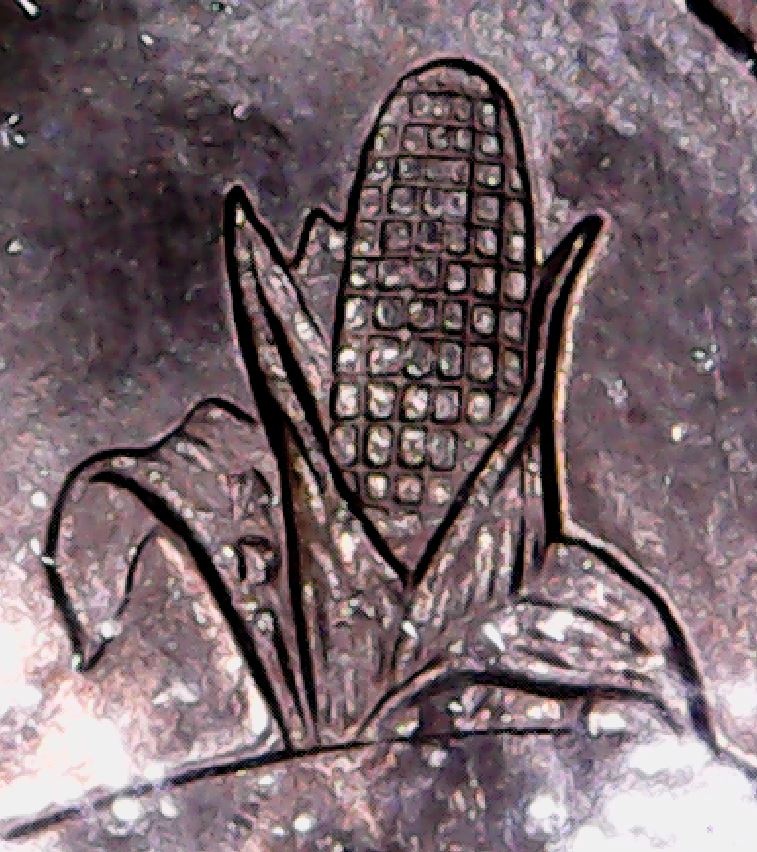
There are 2 kinds of Extra Leaf Wisconsin quarter errors: one with a high leaf and one with a low leaf (located on the corn stalk, just above the cheese wheel). These error quarters are worth $50 to $100… or more.
How to identify the Wisconsin Extra Leaf quarter errors:
Flip your 2004 Wisconsin quarter over to the back side and focus on the big ear of corn standing on the left. On a normal quarter, the corn stalk has 2 main leaves pointing outward. But a couple of heavily modified coin dies escaped the Denver Mint with a third, extra “leaf” stamped right into the lower left-hand side of the design. To spot the “High Leaf” variety, look at the space between the main left corn leaf and the round cheese wheel below it. You will see a clear raised, curved line of extra metal pointing up high and visibly touching the side of the corn ear. For the “Low Leaf” variety, look slightly further down toward the rim. That extra crescent line of metal sits much lower — curving downward and running directly into the top edge of the cheese wheel. True varieties are as loud as a neon sign under a 10x magnifier — so if you don’t see a completely distinct, raised extra fold of metal right there in that left field, it’s just a regular quarter.
Learn about the many different Wisconsin state quarter errors.
2007 Wyoming Quarter Error
Have you ever heard of the Pooping Horse quarter error? Well, if not, you have now!
It’s one of the many oddities to be found among 2007 Wyoming state quarter errors. Some of these rare Wyoming quarter errors are valuable and worth up to $25 or more!
How to identify the Wyoming Pooping Horse quarter error:
To spot the “Pooping Horse” error, flip your 2007-P Wyoming quarter over to the reverse side and look at the iconic bucking bronco. Using a 10x coin loupe, focus straight on the horse’s backside — specifically the small pocket of space right beneath its raised tail and tucked just above its left rear knee joint. You’re looking for an unmistakable raised, blobby chunk of extra copper-nickel metal that stands up in high relief against the flat background of the coin. This oddity happened because a piece of the heavy steel coin die chipped away under the brutal, rapid pounding at the Mint, leaving a small crater that the hot metal bubbled up into on every strike!
Here’s everything you want to know about Wyoming quarter errors.
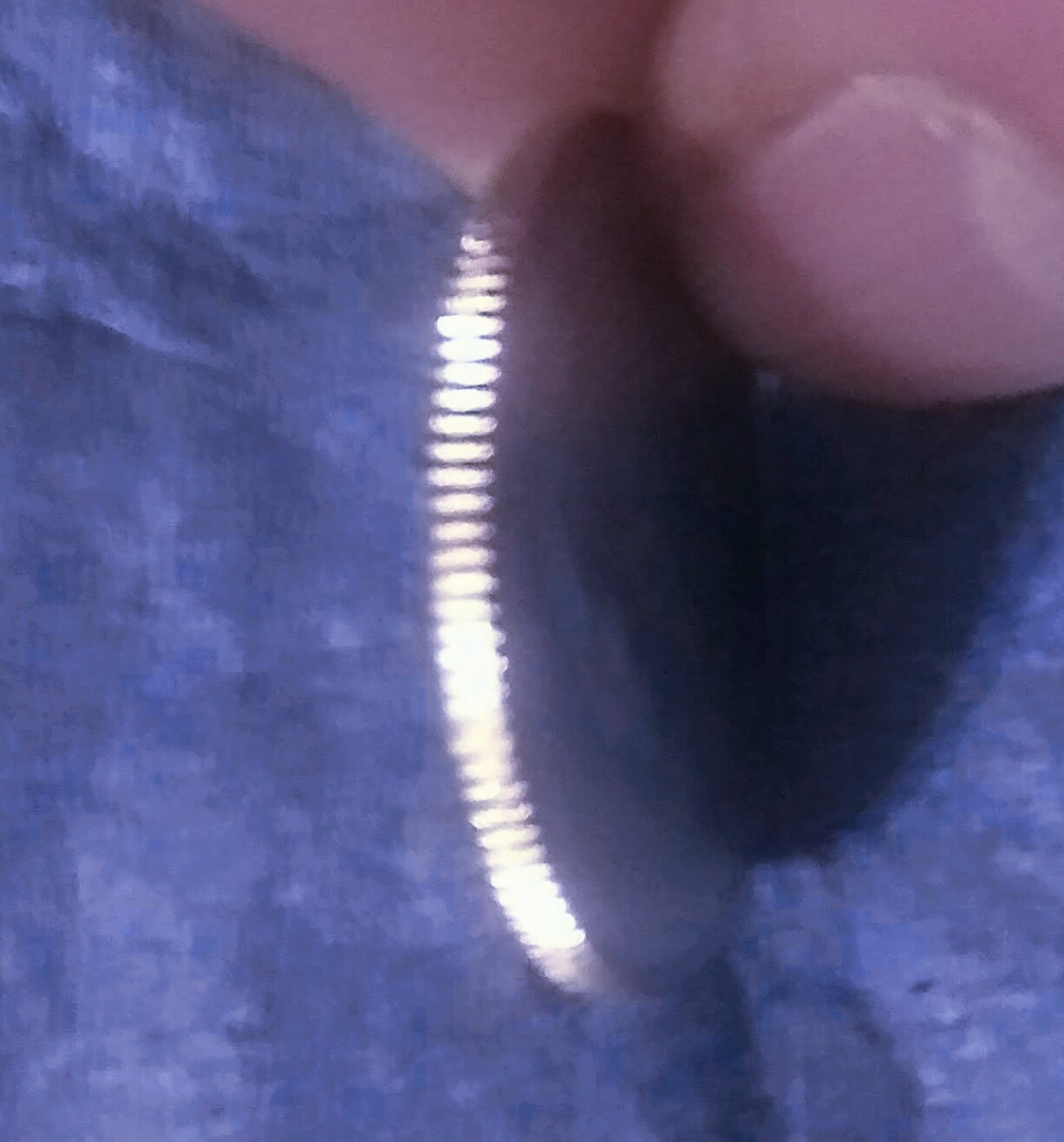
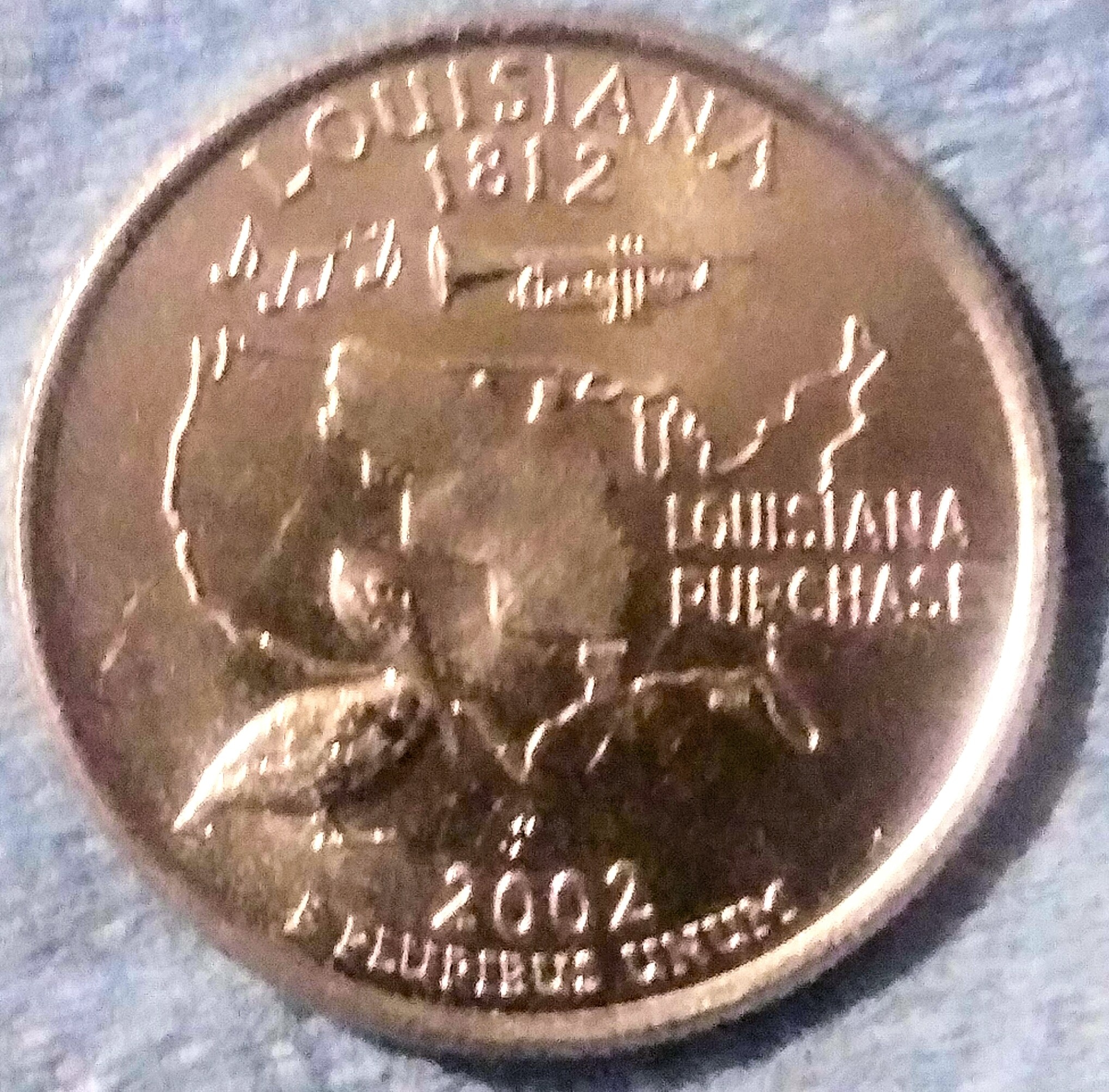
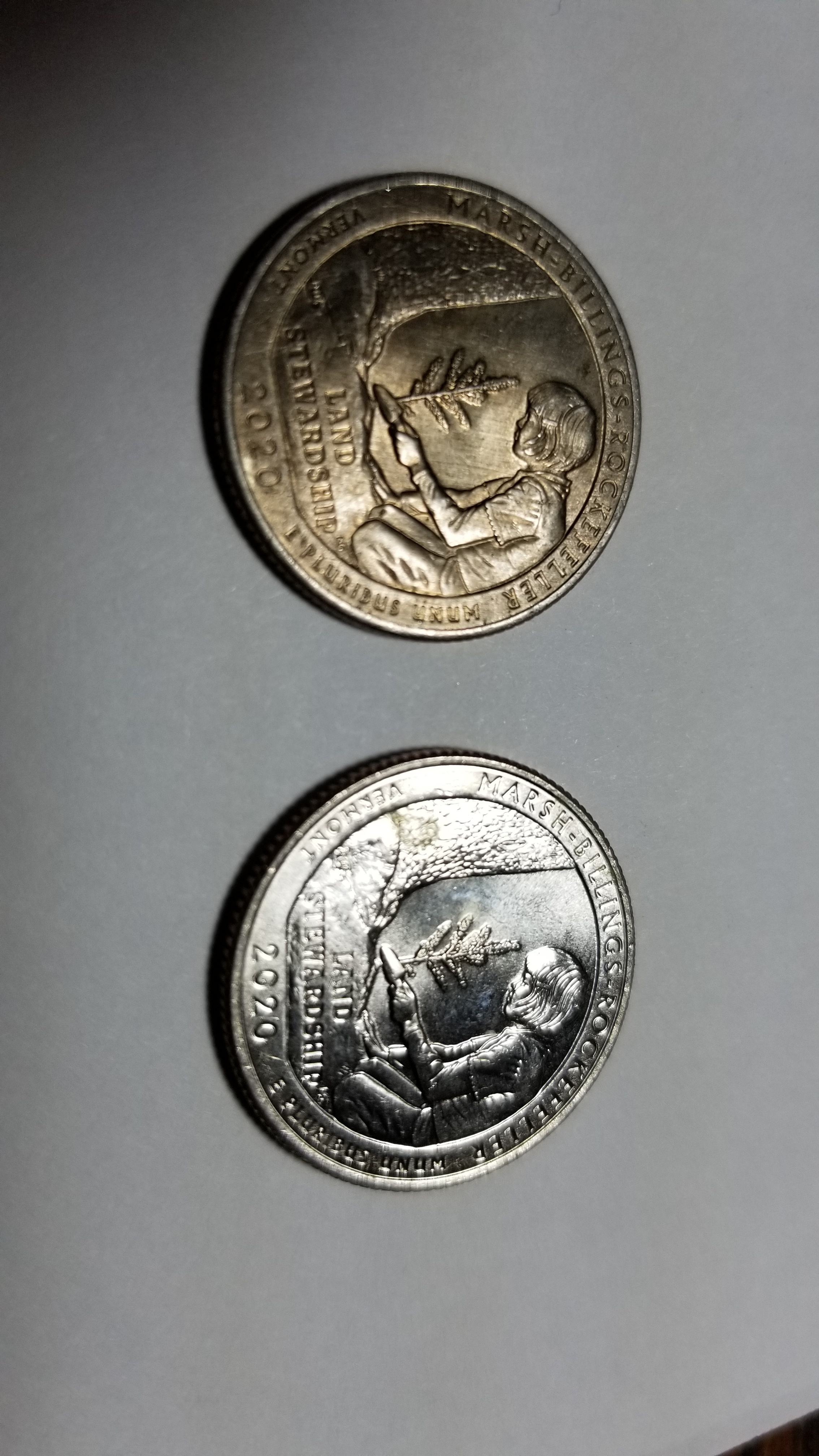
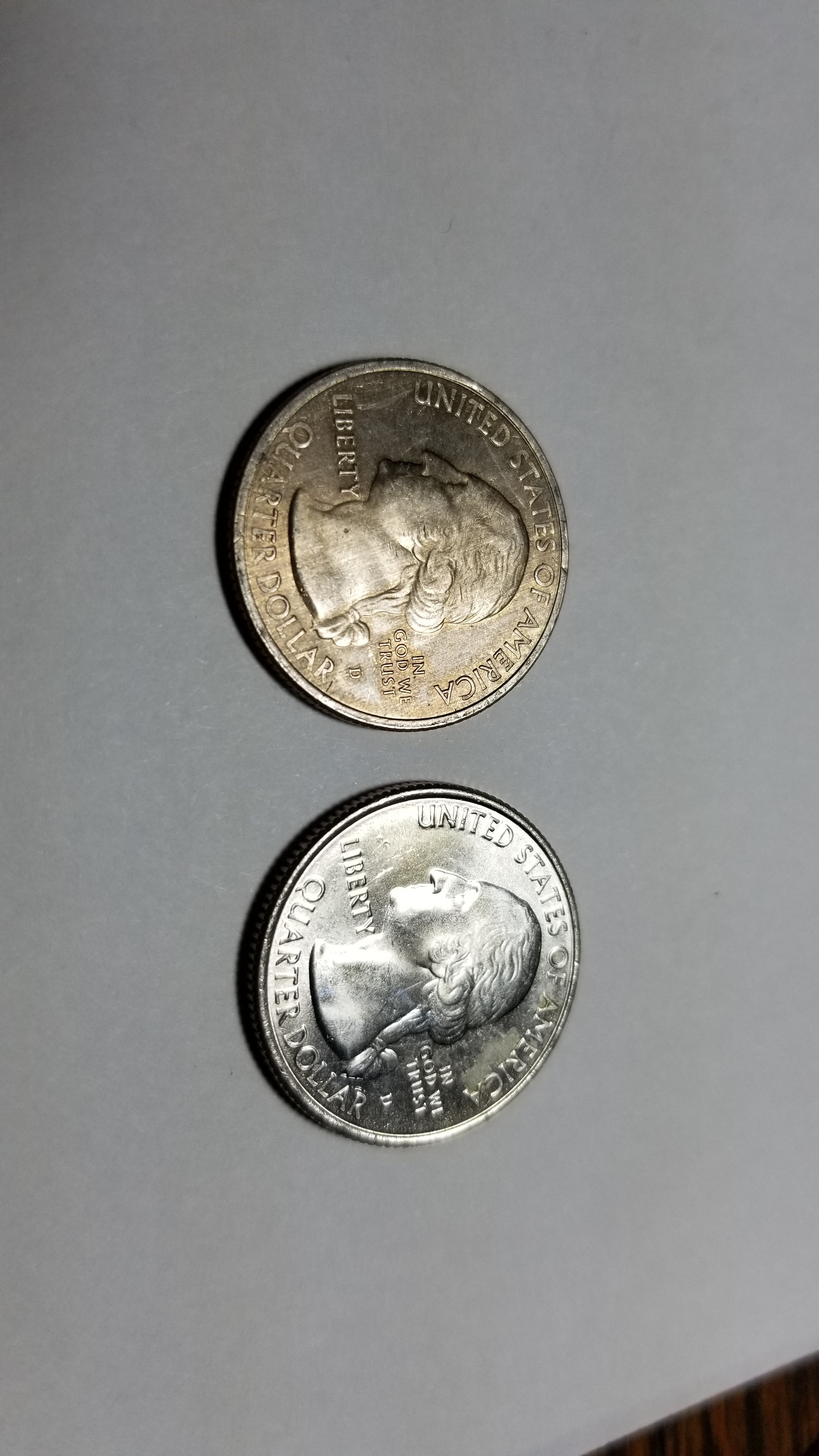
Do you have one of the 50 State Quarters that looks unique in some way? Post a picture of your coin in the comments below and I’ll try to help!




Leave a Comment