

I’ve been collecting U.S. coins since 1992.
And let me tell you… our nation has made an awesome number of incredible coins since the United States Mint struck its first official coinage in 1793!
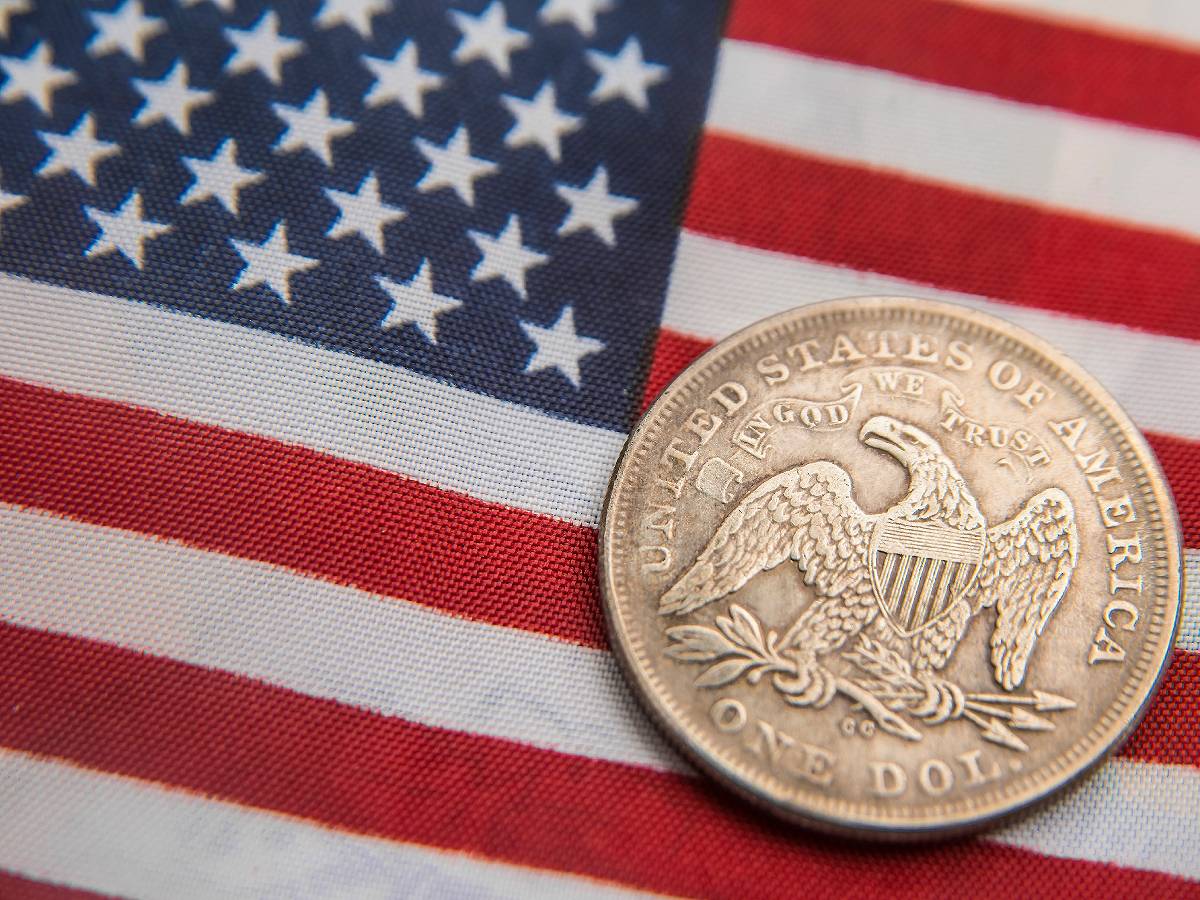
I wish I had a million dollars to spend on buying coins for my collection. Then again, a million dollars wouldn’t even be enough to buy a few of the most famous rare coins ever made in the United States.
These would include rare U.S. coins such as:
- The 1913 Liberty nickel
- The 1794 Flowing Hair silver dollar
- The 1804 Draped Bust silver dollar
- The 1933 Saint-Gaudens $20 gold double eagle
Ah, but I can dream, right? More like dream on, that is…
Until I win the lottery, I’ll gladly make numismatic do with less-expensive coins. But that doesn’t mean the coins that I can afford are any less important in terms of their numismatic significance.
I’ve compiled a list of 10 amazing and historically important coins that I think should belong in every U.S. coin collection. And guess what? You won’t need to spend more than $25 to purchase each one!
Does that sound like affordable numismatic fun? (I hope you said “yes”)
Here’s my list of 10 important U.S. coins that you should definitely consider adding to your coin collection.
#1 – Large Cent
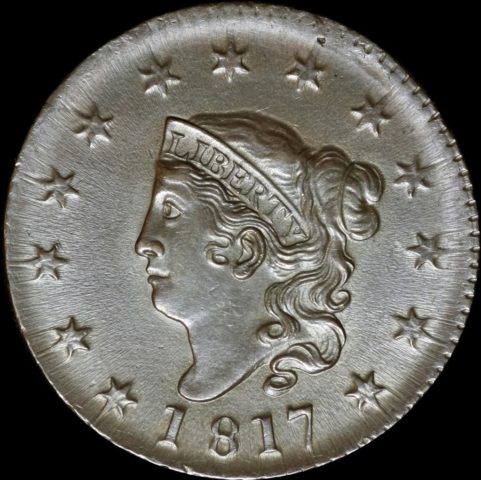
The large cent is about the size of a modern-day half dollar and is what our “penny” was before being reduced in size in 1857 to the current 19-millimeter width.
Most large cents from the 1820s, 1830s, 1840s, and 1850s are available at coin dealers.
In low, well-worn grades these coins can be bought for as little as $20 to $25 each.
Large cents are important coins because they represent among the first coins struck at the U.S. Mint in 1793. They were also a critical part of commerce during the late 18th and early 19th centuries.
#2 – Indian Head Cent
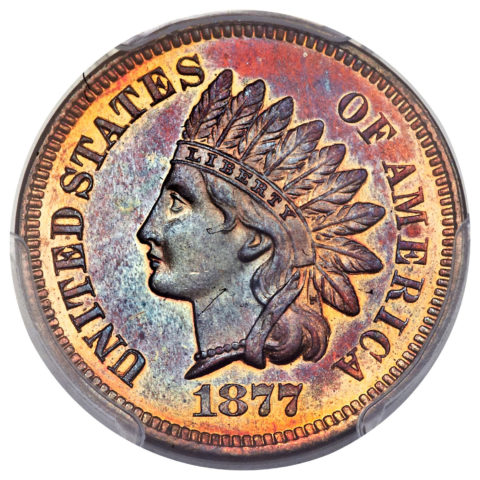
The Indian Head cent was designed by James B. Longacre and struck from 1859 through 1909. It’s also one of the most popular and widely collected 19th-century U.S. coins!
Offering several challenging key dates and semi-key dates, including the 1877 penny and 1909-S Indian Head cent, the series is popular with many coin collectors.
Most Indian Head pennies from the 1880s, 1890s, and 1900s can be bought for less than $5.
If you want to spring for a nicer circulated specimen in a grade of Very Fine-20 or even Extremely Fine-40, it’s possible to do that without spending more than $25.
#3 – 1909 VDB Lincoln Cent
The Lincoln cent is not only one of the most widely collected coins, but it’s also one of the most recognizable coins around.
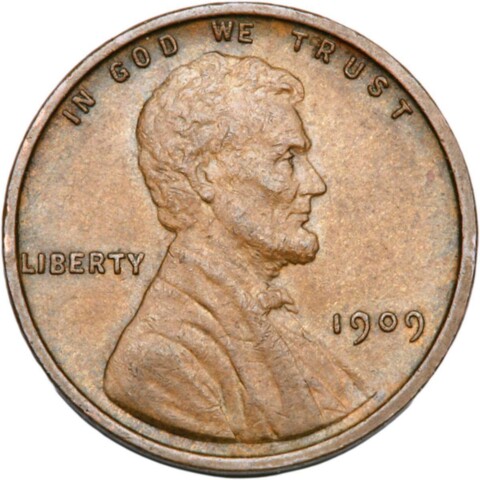
Another interesting factoid? It is by far the single longest-running basic design in U.S. history — as the first Lincoln penny was struck in 1909 and it’s still being made today.
Many people have heard the story about the 1909 VDB Wheat pennies — the coins on which designer Victor David Brenner’s initials (V.D.B.) were placed on the reverse, under the wheat ears.
Soon after the coin’s release, some people in the public felt his initials were too prominent and called for their removal.
After just a few weeks, the VDB initials were removed and wouldn’t be restored on the coin until 1918.
The 1909 VDB penny, made at the Philadelphia Mint, isn’t as rare as its 1909 penny S-mint (San Francisco) sibling. Nonetheless, it’s an historic coin as it’s one of the very first Lincoln pennies ever made.
You can buy one for less than $20 at your local coin dealer.
#4 – 1943 Steel Lincoln Cent
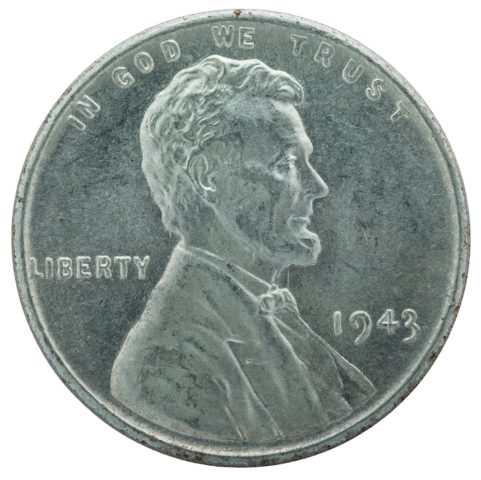
It seems that everyone knows about the 1943 steel Lincoln cent.
This coin was made when the U.S. government needed to save copper for the World War II effort.
Most 1943 steel pennies are pretty common, but they surely look unusual — because they’re silver in color. And their unique appearance, patriotic origins, and historic significance make them more than worthy for inclusion in any basic collection of United States coins.
You can buy circulated 1943 steel pennies for less than $1 each or buy an uncirculated one for about $5 to $10.
#5 – 2 Cent Coin
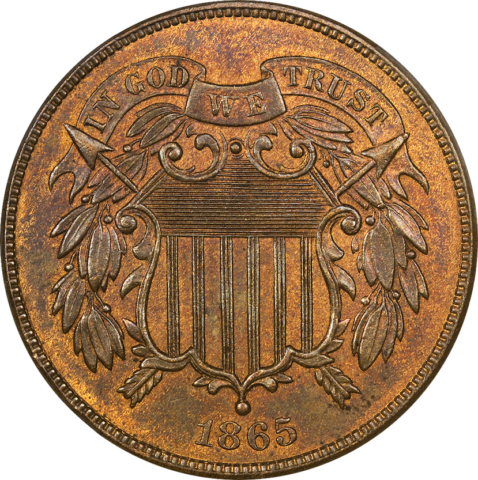
For being such an unusual, short-lived coin, the 2 cent piece certainly has an important place in the history of U.S. coins.
When the 2 cent coin was released in 1864, it became the first coin to carry the motto IN GOD WE TRUST.
Today, all United States coins bear that famous inscription. But it can be traced back to this small copper coin — which was produced until 1873 and has the interesting distinction of being categorized as an odd-denomination coin.
Well-worn examples of the 2 cent coin can be bought for less than $25 each.
#6 – Buffalo Nickel
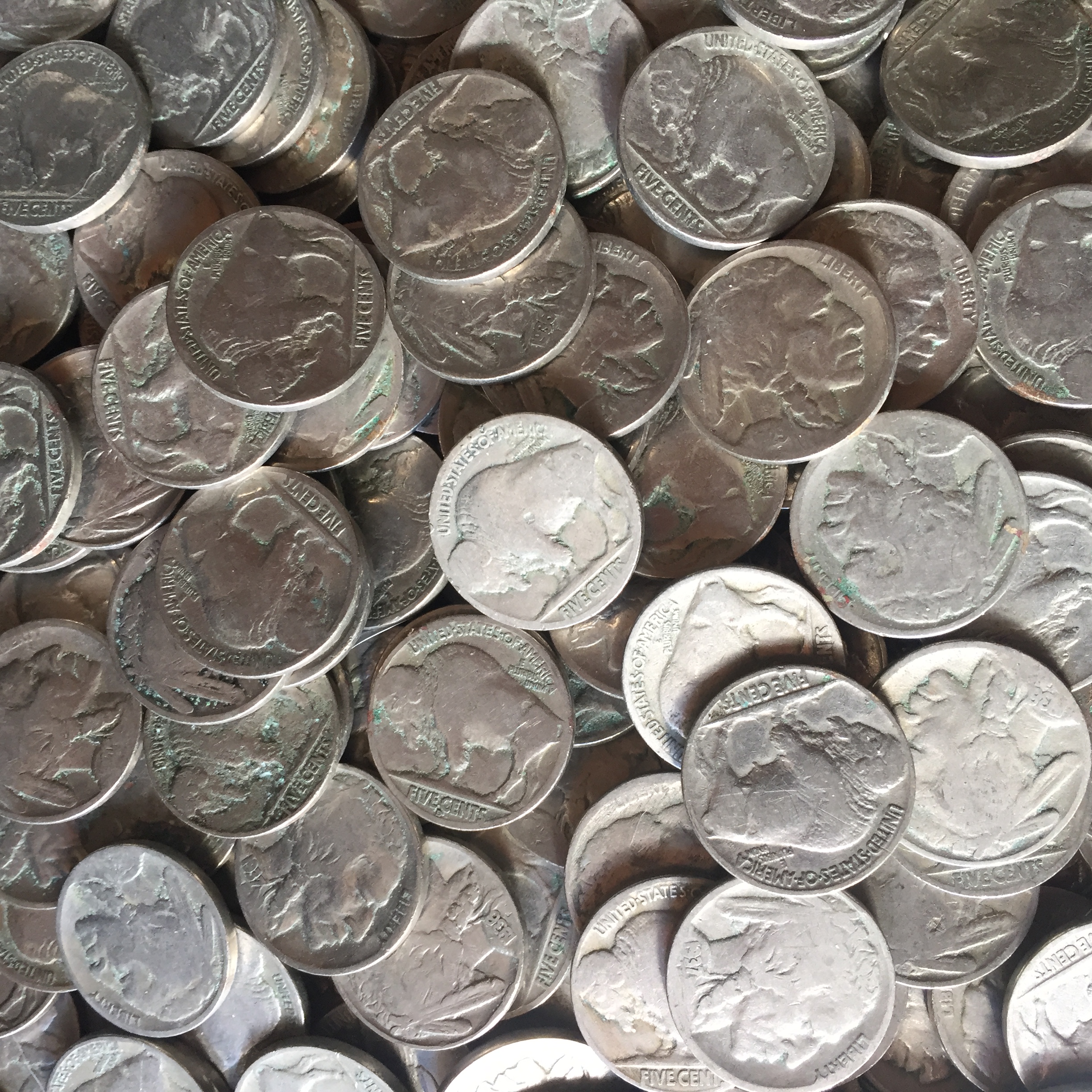
The Buffalo nickel holds a romantic place in the hearts of many coin collectors.
Made from 1913 through 1938, it’s a coin that is widely hailed as among the “most American” of coins for its resonate obverse portrait of a Native American and reverse image of an American bison.
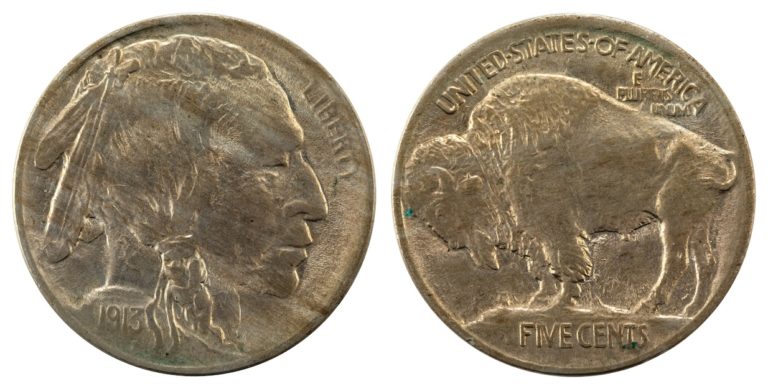
Many people regard the coin as a rich, representative slice of the 19th-century Old West.
Some people even hand-carved their own designs on these coins. These altered novelty coins are often referred to as Hobo nickels.
Buffalo nickels can be bought for as little as $1 to $2 each and are essential coins for any red-blooded American coin collection.
#7 – Liberty Seated Dime
Why is the Liberty Seated dime on this list? Because buying one is among the cheapest ways to acquire one of the 19th-century coins bearing the historic Liberty Seated design.
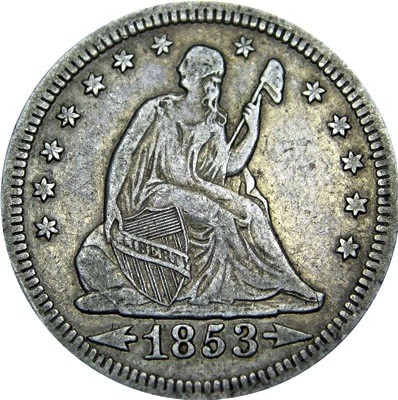
A total of 7 coins carry variations of Christian Gobrecht’s quintessential design:
- Liberty Seated half dimes (made from 1837 through 1873)
- Liberty Seated dimes (1837 through 1891)
- Liberty Seated 20 cent coins (1875 through 1878 and designed by William Barber)
- Liberty Seated quarters (1838 through 1891)
- Liberty Seated half dollars (1839 through 1891)
- Gobrecht dollars (1836 through 1839)
- Liberty Seated dollars (1840 through 1873)
As you can see, not only were there several varieties of Liberty Seated coins, but the design remained in production for 55 years — making it among the nation’s longest-lasting coin motifs.
Common-date, well-worn examples of Liberty Seated dimes are among the least-expensive of the design type and can be widely found at coin dealers across the United States.
#8 – 1932 Washington Quarter
The Washington quarter replaced the Standing Liberty quarter and was intended to serve as a commemorative coin honoring the 200th birthday of our nation’s first president — George Washington, who was born in 1732.
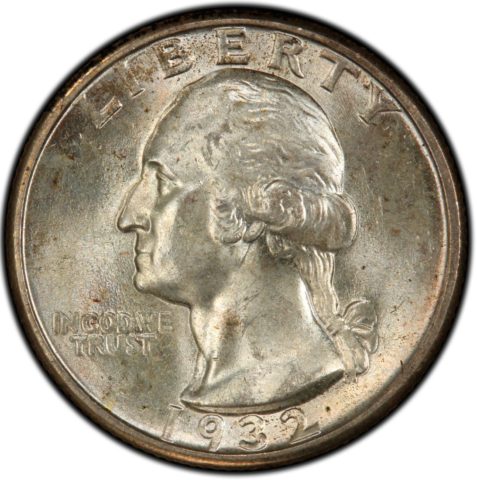
The new coin was so popular that it remained a permanent fixture in our national coinage.
Today, the Washington quarter remains the workhorse of daily commerce, serving as a critical coin for use in vending machines, toll booths, parking garages, and a major player in cash transactions and pocket change.
Washington quarters also now serve as the canvas for the beautiful 50 States Quarters and America the Beautiful Quarters designs.
One of the first quarters, the 1932 Philadelphia quarter is virtually impossible to find in circulation these days. However, you can still buy a nicely circulated example of the historic, 90% silver 1932 Washington quarter for less than $25 at your local coin dealer.
#9 – Walking Liberty Half Dollar
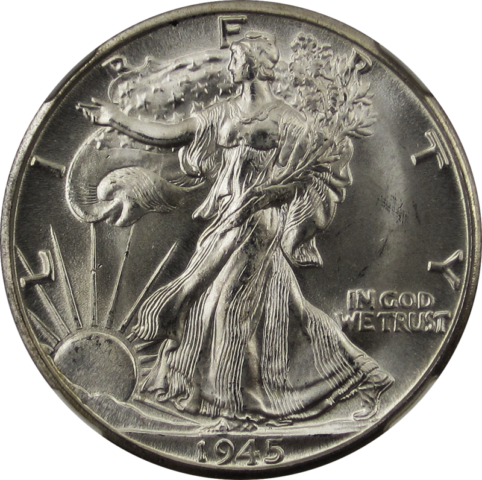
The Walking Liberty half dollar, made from 1916 through 1947, is known as one of the most beautiful coins the United States Mint has ever produced.
Designed by renowned artist and sculptor Adolph A. Weinman (who also designed the Mercury dime), the Walking Liberty half dollar is a product of the national U.S. coin artistic renaissance — which started in the early 1900s when then-president Theodore Roosevelt proclaimed that he wanted all U.S. coinage redesigned.
It was during this time that many now-classic U.S. coins were born, including the exquisite Augustus Saint-Gaudens $20 gold double eagle.
You can usually buy circulated examples of the Walking Liberty half dollar for less than $25 at almost any coin shop.
#10 – Kennedy Half Dollar
The Kennedy half dollar made history when it was released in 1964, just months after President John F. Kennedy was assassinated during a motorcade procession in Dallas, Texas, on November 22, 1963.
The coin was proposed within hours of the president’s passing. Congress quickly approved the coin before it was rushed into production using designs that had already been largely created for other works by head’s side artist Gilroy Roberts and tail’s side designer Frank Gasparro.
The public lined up, sometimes blocks long, around banks to buy the coin when it was first released, and millions thought the coin so special that they began hoarding Kennedy halves. By the 1970s, the Kennedy half dollar had become scarce in circulation as it was being withheld from everyday use by people who thought all examples were worth more than face value.
The first Kennedy half dollars in 1964 were made from 90% silver.
Those struck from 1965 through 1970 were made from a 40% silver clad composition.
Beginning in 1971, all circulating Kennedy half dollars were made from copper-nickel clad.
In 1975 and 1976, the Kennedy half dollar carried special 1776-1976 dual dating on the head’s side to honor the nation’s Bicentennial, while the tail’s side depicted Independence Hall in Philadelphia to mark America’s 200th birthday. There are 1976-dated Kennedy halves made from 40% silver for collectors, while there have been silver proofs struck for hobbyists each year since 1992.
There are some scarce varieties out there, including doubled dies and examples missing Frank Gasparro’s initials (“FG”) on the tail’s side, and these are worth big money. But most examples of this coin from virtually any date the series has been in production can be had for less than $25 each.
Other Valuable U.S. Coins


Leave a Comment