



Many people wonder how much their rare Mercury dimes may be worth. That is, if they’re even rare at all.
Of course, the moment somebody finds or inherits an old coin, they usually wonder right away if it’s rare.
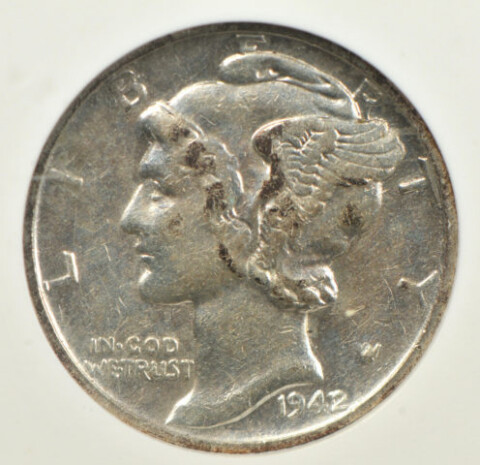
Mercury dimes, also called Winged Liberty Head dimes, were minted from 1916 to 1945 and are indeed old coins. But are they all rare?
The answer is no, not all Mercury dimes are rare.
In fact, during each of most of the years that Mercury dimes were made, millions upon millions were turned out by the Philadelphia, Denver, and San Francisco branches of the United States Mint.
There are, however, a few dates in the Mercury dime series that are considered scare – even rare.
Do you have any of the following?
1916-D Mercury Dime
The key date for the series, the 1916-D Mercury dime is indeed a rare coin. A mere 264,000 were minted, and even fewer exist today. For decades, this coin has been recognized as a popular rarity. Because it’s also part of a heavily collected series of coins, it has long been a relatively expensive coin to purchase. Values for the 1916-D Mercury dime start at around $1,000 for a heavily worn specimen (Good-4). However, for an uncirculated 1916-D, expect to pay between $10,000 and $15,000 or more.
What To Look For
Because a raw 1916-D Mercury dime is basically a 4-figure ticket even if it looks like it was dragged down a gravel road, counterfeiters go crazy trying to solder or glue a fake “D” onto common 1916 Philadelphia dimes. When you’re looking through a 10x coin loupe, a genuine 1916-D mintmark is remarkably boxy and squared-off. In fact, the Mint used the exact same punch tool that they used for the 1914-D penny! The inside negative opening of a real “D” forms a distinct triangle shape, and on 2 out of the 4 reverse dies used, you’ll see a tiny notched split on the top-left serif from die-repunching. If the “D” looks soft, blobby, or perfectly round… walk away!
1921 Mercury Dime
Among rare Mercury dimes, the 1921 may not be the most expensive, but it’s not a date to sneeze at either. With only 1.2 million ever minted, the 1921 Mercury dime is among the scarcest issues and can be a relatively tough date to find. Values begin at around $50 in Good-4 and climb to more than $1,000 for uncirculated examples.
How It Came To Be
In 1921, the U.S. was hit with a sharp post-WWI economic depression, causing demand for new pocket change to crash completely. At the same time, the Mint spent almost the entire year running its machinery at maximum capacity to strike over 86 million 1921 Morgan silver dollars to fulfill the mandates of the Pittman Act. That’s why the Philadelphia Mint barely touched dime production that year — striking a scant 1,230,000 coins. Because nobody at the time realized how rare these dimes would become, these “workhorse” coins went straight into circulation and became heavily worn down. This makes an original, undamaged 1921 Philly dime an absolute semi-key date!
1921-D Mercury Dime
Like its Philadelphia-minted cousin, the 1921-D Mercury dime is an early 1920s coin issue that has a low mintage and, thus, is in high demand among collectors who need this coin in order to fill their coin albums and sets. You can look to spend at least $60 to buy a decent, Good-4 specimen. You could spend more than $1,200 for an example in uncirculated grades.
Did You Know?
The Denver Mint barely touched dime production in 1921 — striking a scant 1,080,000 coins. This makes the 1921-D the second-lowest regular mintage of the entire Mercury dime series! Because all of these dimes were struck in a rush early in the year using poorly tempered steel, almost all surviving 1921-D coins suffer from chronic die cracks — making it difficult to find an original specimen with a clean, fully struck design! This makes the 1921-D Mercury dime a key-date monster to hunt down in old albums!
1931-D Mercury Dime
A tough date for many collectors of rare Mercury dimes, 1.8 million 1931-D dimes were minted. At $10 for a Good-4 example, the album slot for a 1931-D Mercury dime is certainly more affordable to fill than the other Mercury dimes in this list. The price of the 1931-D Mercury dime easily tops $150 for an uncirculated example.
What To Look For
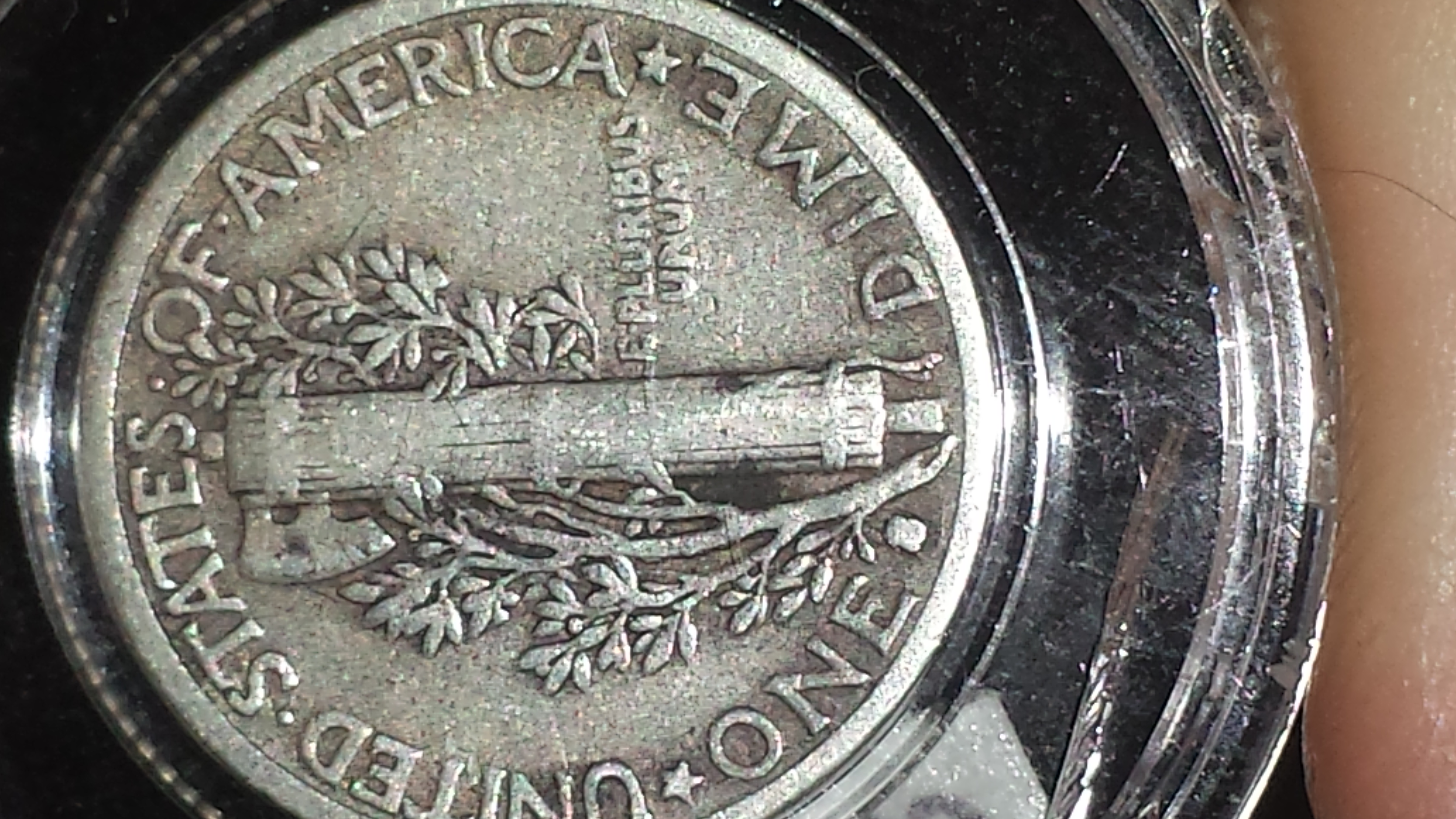
While a heavily worn 1931-D Mercury dime is relatively cheap, finding one in high uncirculated grades is a totally different beast. If you’re hunting coin shows for a premium upgrade, look at the reverse side fasces (the bundle of wooden rods wrapped around a battle-axe). Advanced collectors look for Full Bands — this means the central horizontal straps binding the bundle together are completely separated by a sharp, deep chasm with zero blending. If those center bands split clean with blazing mint luster on a Gem MS-65 specimen, that basic $150 uncirculated price tag instantly shoots up to $650 or more!
1942/1 Mercury Dime
This is an overdate variety that has gained a lot of attention over the years — especially from those who specialize in rare Mercury dimes. Though this is not really an essential addition, if you’re out to simply collect all regular-issue date-and-mintmark combinations in the series, get ready to lay down $400 or more to buy an example.
How It Came To Be
The 1942/1 overdate Mercury dime was a mistake born near the end of 1941, when the U.S. Mint was preparing dies for both 1941 and 1942 Mercury dimes, and two obverse working dies were accidentally pressed with a 1941-dated hub and then pressed a second time by a 1942-d dated hub, creating the overdate; one of these two overdates dies was sent to Denver for dime production there and stamped with a “D” mintmark punch. This created the unintentional “1941/2” overdates that completely slipped past Mint inspectors but were quickly discovered by sharp-eyed collectors in 1943.
1942/1-D Mercury Dime
A similar overdate variety arose at the Denver mint that same year, resulting in mintmarked examples of the 1942/1 Mercury dime. The Denver issue is also worth around $400 and up.
Did You Know?
Authenticators look for this unique scar (along with a heavily doubled “IN GOD WE TRUST” motto and in the “Y” of “LIBERTY” to help tell apart the real overdate from fakes!
The Bottom Line
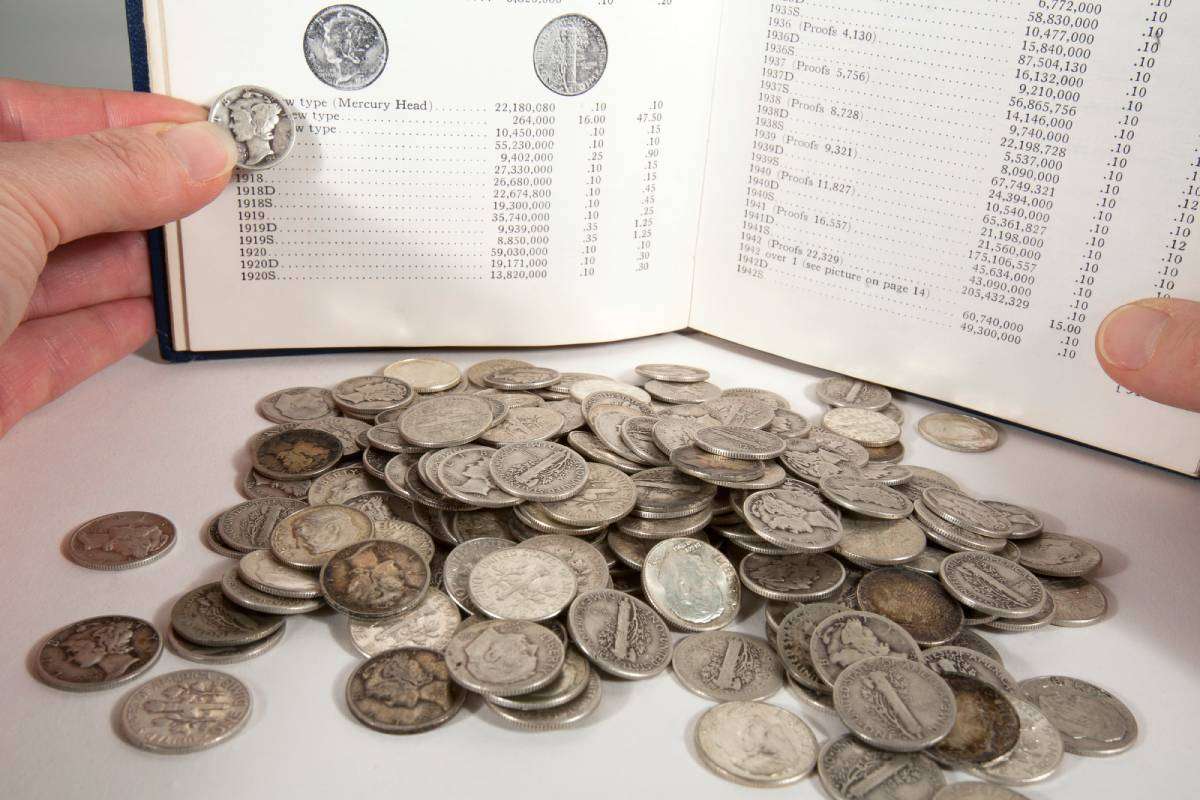
As you can see, there aren’t many rare Mercury dimes to collect.
But those which were made are worth a pretty penny (or dime!) and definitely have a strong coin collector following.
When buying any rare coins…
- Don’t always settle for the first example you see.
- Watch out for too-good-to-be-true bargains.
- Be sure you buy authenticated slabbed coins whenever possible.


Leave a Comment