


Have you heard about junk coins — or junk silver coins? Curious what they are?
You may be wondering if they’re even worth collecting, given the fact that they are referred to as “junk.”
Well, in fact, junk is largely a relative term. In numismatics, “junk” is in the eye of the beholder. Just as one person’s trash is another’s treasure.
What Are Junk Coins?
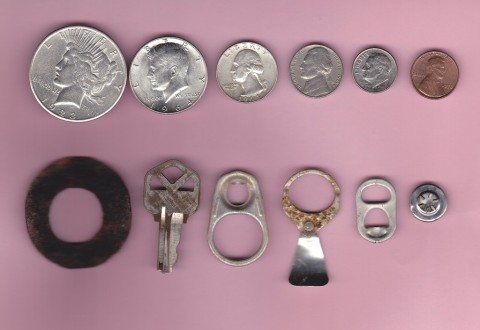
In the most literal sense, junk coins refer to common-date coins, which don’t grade high enough to be considered collectible by most numismatists.
Say, for example, a Roosevelt dime in a grade of Very Good (VG). That’s much lower of a grade than the Extremely Fine to Uncirculated grades that most people will usually look for when collecting coins from the Roosevelt dime series.
While many junk coins are perfectly suitable for most low-budget coin collections, you’ll find the majority of “junk coins” to be well worn — and some have been cleaned or damaged.
NOTE: Well worn or damaged coins that are rare dates or otherwise scarce are not considered as “junk.”
Cull Coins vs. Junk Coins
Junk coins are sometimes referred to as cull coins. But actually, the two terms aren’t really synonymous. I’ll tell you why…
Take that example of the VG Roosevelt dime, in my example above. That coin, while it may have a lot of wear, might in fact be entirely problem-free (has no dents, bends, major scratches, and hasn’t been cleaned).
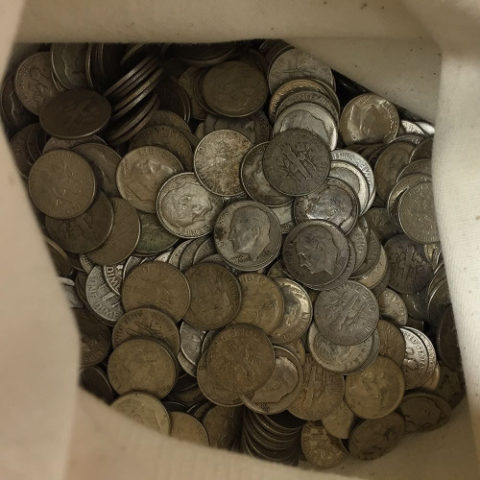
A cull coin, on the other hand, while considered junk by many numismatists, usually would display damage – a previous cleaning, holes, deep nicks, you name it.
Low Ball Coins vs. Junk Coins
There are also low ball coins — those which are so well worn that they sometimes are often only identifiable by their type, since the date may be completely worn away.
Low ball coins usually grade Poor-1 or Fair-2 and are more often than not collected because their sheer amount of wear is novel, in and of itself.
Rarely are low ball coins collected for the sake of the coin. Although, in some cases, those collecting coins on a budget have turned to low ball coins when purchasing an extremely rare piece (such as an early large cent or silver dollar) just to fill holes in their collections.
Some coin collectors have even made it a goal to have the “worst” coin collection – which they build by putting together sets of low-ball coins. Professional Coin Grading Service (PCGS) even recognizes low ball registry sets!
Collecting Junk Silver Coins For Bullion Purposes
While junk coins may find homes with coin collectors, they are no strangers to those who buy coins for the sake of sheer investment.
Buying junk silver coins is a popular way to invest in the precious metal!
See how I got silver coins at face value recently. Yes… face value! It takes a little time to do it the way I did (purchasing coin rolls from a local bank) — but I really have found many silver coins in rolls worth between 25 to 50 times face value this way. No kidding!
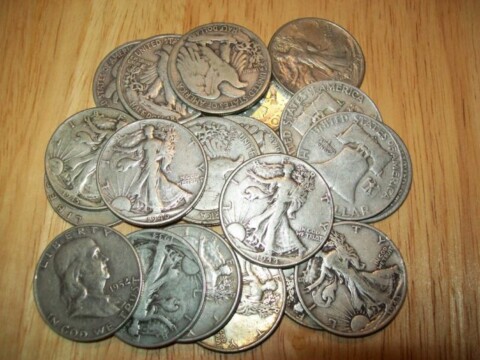
Though junk silver coins may not be looked at as collectibles by those with money to spend on high-grade coins, they are widely held as investment coins for those holding onto silver bullion.
Junk silver coins are typically common-date, pre-1965 coins from the 20th century (like Standing Liberty quarters, Walking Liberty half dollars, Franklin half dollars, Morgan silver dollars, and Peace silver dollars) that grade somewhere between Good and Fine.
Though not necessarily the most desirable examples of their types, they are normally decent, often-problem-free pieces that simply aren’t outstanding enough to take up space in a dealer’s cases or worth the cost of putting into 2×2 holders and placing into browser albums for customers to look through. Best of all, most junk silver coins are 90% silver — giving the investor a high volume of silver in each coin!
A lot of people turn to junk silver coins instead of American Silver Eagles — because of the inherent flexibility that the various denominations and designs of the junk silver coins provide. Plus, if you ever want to sell your junk silver coins, you have a dual market — since both bullion investors and numismatists (who would be interested in the coins for filling coin albums or type sets) pursue such coins.
And, since they are legal tender and highly recognizable even to non-coin collectors, they could easily be spent (in an extreme emergency, of course).
You can use this junk silver calculator to determine the value of your coins.
Because junk silver coins have value as bullion, as legal tender, and as collectibles, pre-1965 silver coins really have much potential value for anybody wanting to keep some silver stocked away!
The only major downside to buying junk silver coins instead of bona fide silver bullion coins like American Silver Eagles is that junk silver coins cannot be held as part of your Individual Retirement Account (IRA)/Roth plan, whereas many bullion coins can.
If you have any questions about investing in silver bullion as part of your IRA/Roth plan, I recommend you speak to your financial advisor for further details so you can find out more information about how to optimize your investing strategy given your individual needs and goals.
READ NEXT: Like Junk Silver Coins? You’ll LOVE Constitutional Silver Coins!

Leave a Comment