






This post may contain affiliate links. If you buy thru these links, we may earn a commission at no additional cost to you.
Coin inventory is something that’s often overlooked by new collectors — but it shouldn’t be.
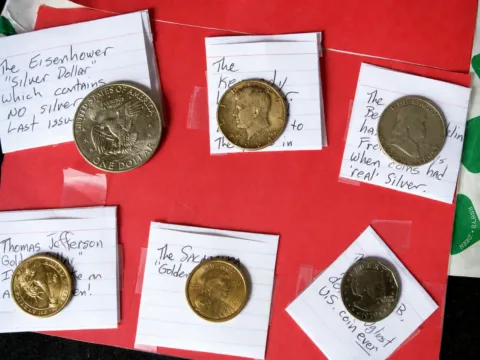
You see… most coin collectors think only about the accumulation aspect of the hobby. That is, they buy, look for, or otherwise select coins to place into their coin collection.
Simple, right?
Well, it is. But coin collectors also need to keep track of the coins they are putting into their collection!
An inventory (or coin log) is something that every coin collector needs to have.
Keeping track of your coins is important for these reasons:
- Knowing which coins you already have
- Knowing which coins you still need (“wish list”)
- Determining the value of your coin collection quickly & easily
- Getting an at-a-glance look at the many coins in your collection
- Documenting your collection for coin insurance purposes
My Own Coin Inventory Logs
When I first started collecting coins, I looked right away into keeping track of what I had. After all, it was sort of fun listing all the coins I had acquired.
And on a more practical level, it was important for me to know what coins I had — so I knew which ones I needed to complete my ever-expanding coin collection.
While I didn’t put much thought into the matter at first, I soon came to realize the value of keeping a coin log.
A coin inventory is vital during in the event of a property emergency. For example, a theft, fire, flood, or other disaster will mean my having to know which coins I own — for insurance and recovery purposes.
The logs that I use to record my coin holdings are “manual” (or hard-copy) log sheets. I discuss how to make your own hard-copy coin logs below.
For a moment, let’s focus on the coin inventories that you can buy at coin dealers and bookstores…
The Best Coin Inventory Methods
There are 3 different ways you can keep an inventory (or record) of your coins:
- Coin Inventory Books
- Coin Inventory Software
- Coin Inventory Notebook/Spreadsheet
The one you choose will ultimately depend on: (1) how often you plan to update the information, (2) how portable you want/need the information to be, and (3) how much privacy you want.
Coin Inventory Books
A coin inventory book enables you to take your current coin log with you — without all the bulk.
This is especially helpful when you’re:
- Shopping for coins
- Making a plan to fill holes in your albums
- Visiting coin dealers
- Budgeting for future coin purchases
- Making a “coin wish list”
- Visiting coin shows, coin auctions, and coin vendors
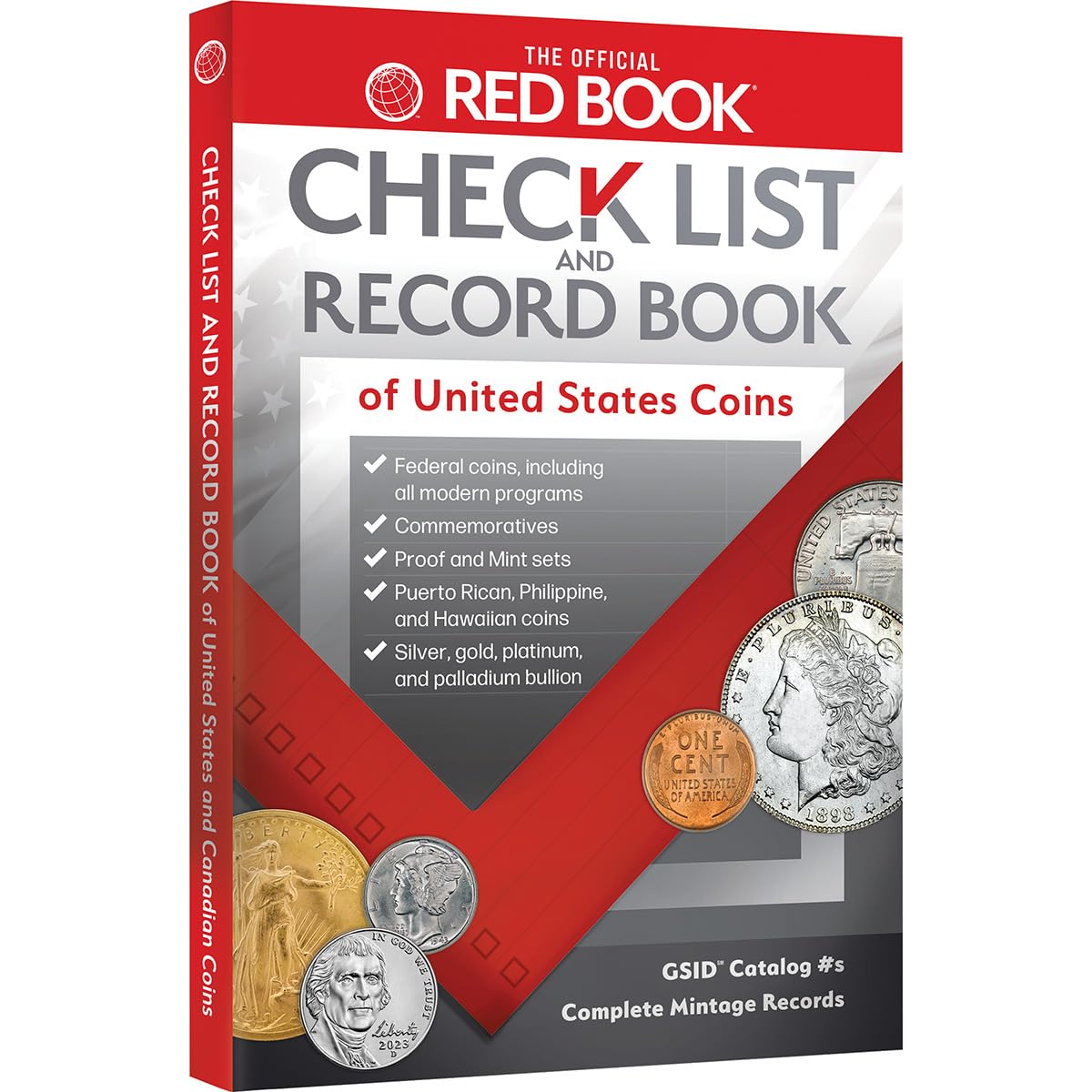
There are several coin inventory books — which are designed to aid collectors in recording the most important details about their coins.
Whitman, which produces the annual Guide Book to United States Coins (aka “The Red Book,” a staple in the coin industry), publishes an affordable coin log book called The Checklist And Record Book of United States Coins.
It contains descriptive details about each United States coin, along with mintage numbers and GSID numbers. (GSID = the industry-standard Greysheet cataloging numbers for easy digital cross-referencing.)
You can see what the book is like in this video:
Bottom line: There are many “coin log books” available, but the ones by Whitman closely follow the layout and design of the “official” Guide Book of United States Coins — a trusted resource on U.S. coins for over 80 years.
Coin Inventory Software
Coin inventory software is another way to keep track of the coins in your collection.
Computer programs for logging coins use databases, spreadsheets, boxes, windows, and tabs to input and save information about the coins in your collection. There’s not a single thing about your coins(s) that cannot be recorded and organized inside a computerized coin inventory program.
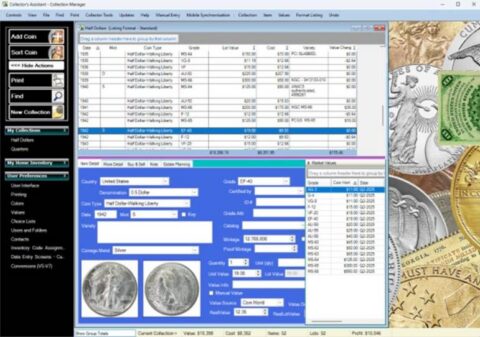
One of the more prominent coin inventory software programs available today is Coin Collector’s Assistant by Carlisle Development Corporation. Available for Windows and Mac, this program is heralded as“the most advanced collection inventory software for numismatists.” The downloadable software contains a complete United States Coin Database — including all circulating, bullion, commemoratives, and sets from 1793-present. It also provides up-to-date market values from the official “Red Book” (values are updated quarterly). You can even attach photos of your coins and update the total value of your collection with a single button click.
Coin Manage by Liberty Street Software is another standalone coin inventory program. Whereas My Coin Worx (which was created by a coin collector) runs in the cloud.
These next two videos show each of those programs in action:
Bottom line: The ideal coin inventory software depends on whether you prefer a cloud-connected database that syncs across all devices or local privacy.
How To Make Your Own Coin Inventory Logs
While you could easily go buy a coin inventory log book or coin inventory software, you can also create your own coin inventory log using regular notebook paper!
This is, personally, my favorite way to go. Creating a coin inventory from notebook paper allows me to adjust, add, or make changes to my inventory whenever necessary.
At the absolute minimum, you should include the following information for each coin you have on your coin inventory sheet:
- Year of the coin
- Mintmark on the coin
- Denomination
- Country of origin
It’s a good idea to include the following details, as well:
- Grade of the coin
- Type of coin (name of the design or series)
- Comments about any errors or varieties
- Comments on the coin’s physical condition (such as “cleaned,” “bent,” “scratched,” etc.)
- When you acquired the coin
- What you paid for the coin
- Current value of the coin (be sure to update this periodically)
Here’s an example of a good manual entry in a coin inventory log:
1907-S Barber Half-Dollar (USA) Good, Small Nick 3:00 Obverse. Paid $4.75 11/3/1994 Worth $25 8/20/2026
Of course, you could also type your manual coin logs into a spreadsheet, as well.
Bottom line: Whatever option you choose for inventorying your collection, make sure to keep at least one copy of your coin inventory in a lock box, vault, or safe-deposit box — so it will always be safe and handy should you need it.
READ NEXT: How To Find The Value Of Your Coins


Leave a Comment