



This post may contain affiliate links. If you buy thru these links, we may earn a commission at no additional cost to you.
Have you ever wondered what a commemorative coin is?
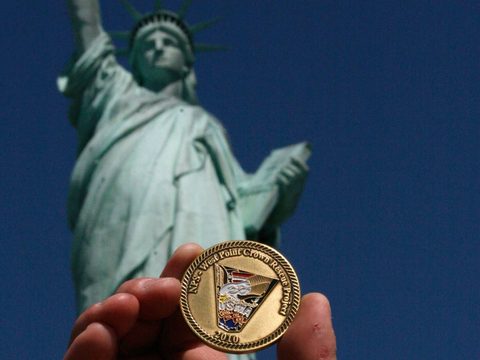
A commemorative coin is a one that was specially designed and produced to honor a person, place, landmark, event, or other special monumental occurrence.
The United States has been officially striking commemorative coins since 1892.
Since that time, the U.S. has produced many dozens of special quarters, half-dollars, dollar coins, and gold coins with the intent of honoring something or someone special to our nation and society.
Here’s more about commemorative coins, including their unique purposes and values…
Circulating vs. Non-Circulating Commemorative Coins
All commemorative coins struck by the U.S. Mint are legal tender, but only some of them are issued for circulation. Some are issued for sale as collectibles only — and are not intended to enter circulation.
Circulating commemorative coin examples:
- Bicentennial Coins (1976) — quarters, half-dollars, and dollar coins featuring a special dual date (1776–1976) and colonial designs
- 50 State Quarters (1999–2008) — quarters featuring unique reverse designs for each of the 50 states
- America the Beautiful Quarters (2010–2021) — quarters honoring national parks and historic sites across the U.S.
- American Women Quarters (2022–2025) — quarters honoring notable American women and their achievements
Non-circulating commemorative coin examples:
- Centennial of the Statue of Liberty and Ellis Island (1986) — half-dollars, $1 silver dollars, and $5 gold coins, issued to celebrate the 100th anniversary (centennial) of the dedication of the Statue of Liberty and to honor Ellis Island as the gateway for immigrants coming to America
- Atlanta Centennial Olympic Games (1995-1996) — half-dollars, $1 silver dollars, and $5 gold coins, issued to support the 1996 Olympic Games which were held in Atlanta, Georgia
- Abraham Lincoln Commemorative silver dollar (2009) — $1 silver dollars, released for the bicentennial of Lincoln’s birth
The 1996 Olympic coins were part of a massive 16-design program (issued in both uncirculated and proof finishes for a total of 32 coins across 1995 and 1996). It remains one of the largest and most ambitious commemorative coin programs ever produced for a single event by the United States!
The Purpose Of Commemorative Coins

While commemorative coins serve the purpose of recognizing and honoring important people, places, things, and events, they also often serve the function of raising funds for and awareness of the subjects depicted on the coins.
Just a few examples:
- Oregon Trail commemorative half dollars were produced from 1926 to 1939. They were struck at face value of 50 cents for the Oregon Trail Memorial Exposition, which then sold the coins to the public for $1 each and used the money to fund their preservation work.
- The 1986 Statue of Liberty commemorative coins helped (through surcharges) to raise millions of dollars used to pay for the landmark’s massive centennial restoration and establish an ongoing maintenance endowment.
- In 2010, a 90% silver dollar coin commemorating disabled United States war veterans was produced. A $10 surcharge from the sale of these coins was used to fund the construction and endowment of the American Veterans Disabled for Life Memorial in Washington, D.C.
In fact, the U.S. Mint says that since 1982, when non-circulating commemorative coins were reintroduced after a 28-year hiatus, more than $500,000,000 has been raised to benefit numerous causes!
Commemorative Coin Values
Values for commemorative coins range widely.
For example, circulated 50 States quarters are generally worth only face value. However, proof $5 gold commemorative coins are worth hundreds of dollars.
Early commemorative coin values range from low prices of $25 to $50 for the 1892-93 Columbian Exposition, Booker T. Washington, and George Washington Carver half dollars to over $1,000 each for the 1928 Hawaiian and 1935 Spanish Trail half dollars.
Check coin price guides or a handy publication like A Guide Book of United States Coins by Whitman Publishing to learn more about individual commemorative coin values.
Little-Known Facts About Commemorative Coins
Did you know the Washington quarter actually started its life as a proposed commemorative coin?
When first issued in 1932, it was intended to be a one-year-only coin to commemorate the bicentennial of our first president’s birth. But the coin quickly became highly popular with the public. The design remained on the coin, officially replacing the Standing Liberty design that had graced the quarter from 1916 to 1930.
The very first U.S. commemorative coin, the Columbian Exposition half dollar, was based on a design by Olin Levi Warner. With over 2 million struck during 1892 and 1893, the Columbian half dollar is one of the most affordable commemorative coins available produced during the era of “early” commemorative coins: 1892-1954.
Tips For Collecting Commemorative Coins
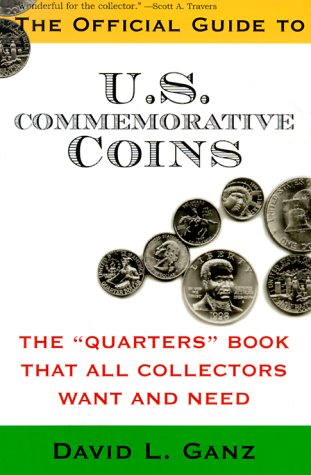
The U.S. Mint has produced many dozens of commemorative coins since 1892.
Large numbers of commemorative coins are available for collectors to choose from!
With the great expense that comes with completing a set of every single design ever struck, many collectors decide to pursue specific commemorative coins that relate to their own personal interests.
If you’re considering starting a commemorative coins collection, here are some ideas:
- 1925 California Diamond Jubilee half dollar
- 1935-39 Arkansas Centennial half dollar
- 1936 Delaware Tercentenary half dollar
- 1915 Panama-Pacific half dollar
- 1920-21 Pilgrim half dollar
- 1935 Spanish Trail half dollar
- 1934-38 Daniel Boone half dollar
- 1946-51 Booker T. Washington half dollar
- 1982 George Washington half dollar
- 1994 World Cup Soccer half dollar
- 1996 Olympics coins (various designs)
- 1997 Jackie Robinson $5 gold coin
- 1925 Stone Mountain half dollar
- 1986 Statue of Liberty commemoratives (various)
- 1989 Congress Bicentennial coins
While the lists above are representative and should give you some good ideas, there are many more coins that could satisfy each of those topics. Likewise, there are lots of other topics you might choose to collect, as well — like military heroes, for one.
Where To Find Commemorative Coins
Current-year commemorative coins can always be purchased directly from the United States Mint.
However, if you want to purchase older commemorative coins, you will have to buy them from a coin dealer.
Many coin dealers advertise and sell coins online as well as in their shops.
READ NEXT: A List Of All U.S. Silver Coins (By Denomination)


Leave a Comment