

Start Here

Values

Buying & Selling

Rare U.S. Coins

How To's

Myths & History

Coins With Bubbles: How To Tell If Yours Is An Error Coin Or A Damaged Coin & How Much Coins With Bubbles In Them Are Worth

by Joshua McMorrow-Hernandez

Have any coins with bubbles in them?

I’ve found many pennies, nickels, dimes, quarters, half dollars, and dollar coins with all kinds of bubbles and blisters on them.

It’s very unusual — but what do these raised bumps mean? Are they errors? What are they worth?

Determining whether bubbled coins are valuable error coins or just damaged coins can be tricky.

Today, we’re going to take a closer look at coins with bumps and bubbles and:

  • Learn how and why these raised bumps ended up on the coins
  • Differentiate between errors versus damage
  • See how much bubbled coins are worth

Is Yours A Damaged Coin Or A Real Error Coin?
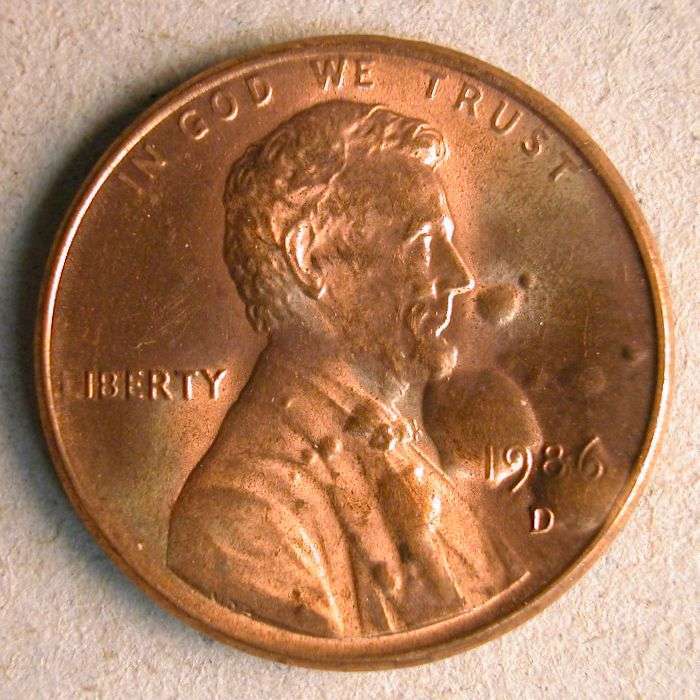
See examples of error coins with bubbles in them.

So, you’ve found a coin with a raised bump on it, and you want to know what it’s worth.

Well, before we can start talking about its value, we need to figure out whether you have a real error coin or simply a damaged coin.

Unfortunately, most bubbled coins that are found in pocket change are just exhibiting a form of damage.

But not all coins with bubbles in them are damaged coins — some are actually legit errors!

Examples Of Damaged Coins With Bubbles

How would bubbles end up on a coin after it left the mint?

The most likely way that a bubble forms on a coin after it’s been struck is through exposure to intense heat.

In fact, virtually all bubbles you see on clad coins simply resulted from heat damage.

Let me repeat that…

Find a dime or quarter with raised bumps… and the coin was minted after 1964? When it comes to bubbles found on clad coins, they’re almost certainly heat-damaged — exposed to fire, most likely.

This coin has ripples that were caused by exposure to intense heat:
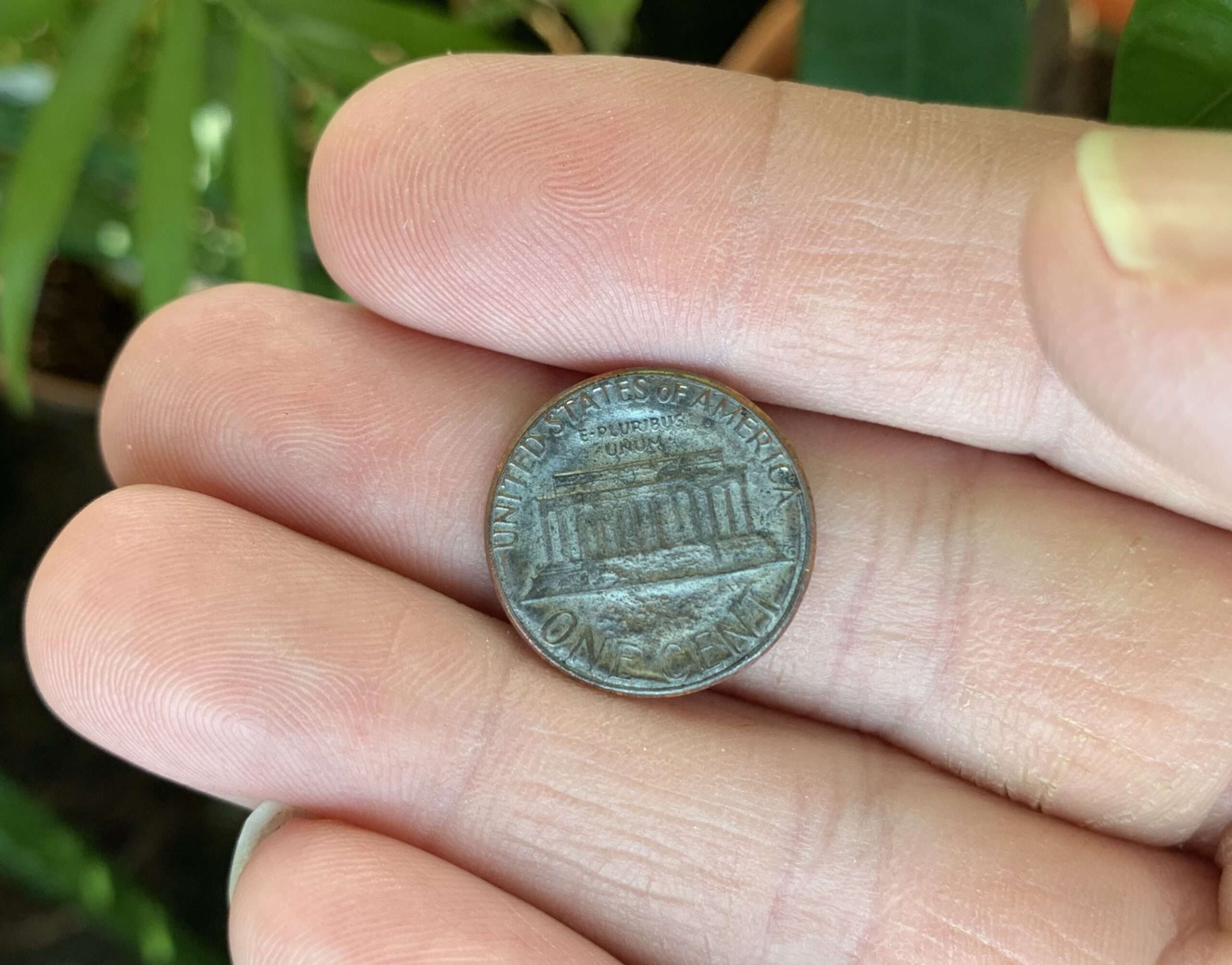
Many coins with bubbles are the result of heat damage... like this one.

I wanted to emphasize that point — because so many people have shown me photos of their dimes and quarters with bubbles and, with great hope, believe they have a rare or valuable error coin.

Sadly, these coins are almost always caused by the coin being left in a fire, thrown into a fire pit, intentionally singed with a blowtorch, or another similar situation.

Of course, millions of coins are exposed to fire each year, in many cases through accidental purposes. So it’s easy to understand why there are so many coins with raised bumps floating around out there in circulation.

What was that?… You think it’s gas bubbles on your coin?

Perhaps. It’s possible that the bubble on your clad coin was caused by some chemical reaction between clad layers, but these generally originate back to post-mint heat damage.

Examples Of Error Coins With Bubbles

Here are some of the most likely types of coin errors involving bubbles and other oddities that resemble bubbling:

  • If your coin was made from a solid alloy, such as a pre-1982 Lincoln cent or Jefferson nickel, then it’s much more likely that the bubbling originates from something in the minting process and is, therefore, a real error coin.
  • Then there are the numerous (and I mean numerous!) plating blisters on copper-plated zinc cents made since 1982.
  • There are also other types of errors that may resemble bubbles but aren’t.

Now, let’s next delve into the world of error coins with bubbly anomalies that are bona fide errors…

Types Of Error Coins With Bubbles In Them

There are several types of error coins that exhibit bubbling metal, including:

  1. Gas bubbles — Sometimes, a small amount of gas will occur inside a solid-alloy planchet. When the coin is struck, the incredible heat generated from the striking will cause the gas to explode inside the coin. This will cause a small raised dome on the coin. There are 2 kinds of gas bubble errors:
    • Occluded gas bubble — This will appear as a raised dome of metal and is what many collectors generally associate with a gas bubble error.
    • Ruptured gas bubble — Occurring when the roof of the gas pocket explodes through the metal, these errors may exhibit a crater-like pit on the coin.
  2. Plating errors — Most commonly seen on copper-plated zinc Lincoln pennies which have been struck since 1982, such plating errors often appear as blisters or bumps:
    • These plating errors occur when the outer layer of copper fails to properly bond to the coin’s zinc core. Air inside these pockets (or voids) can expand, appearing as bubbles.
    • Plating errors may range from 1 or 2 tiny little pinprick bubbles to multiple drastic domed blisters, such as the penny pictured above. This is one of the most commonly encountered types of errors involving bubble-like bumps on coins.
  3. Die breaks — When the die that strikes coins begins cracking, those cracks will result in raised bumps or lines on coins. A great many die cracks look like jagged, raised lines. However, there are 2  types of die cracks that generally resemble bubbles:
    • Die chips are small, isolated bumps of metal that often take the form of a sharp or jagged mound.
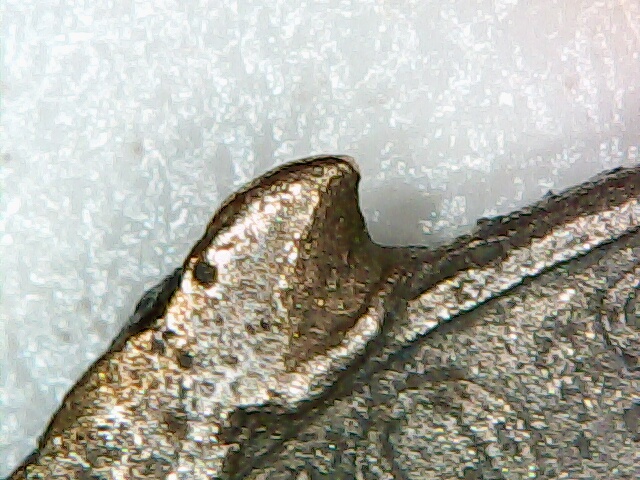
    • Cuds are large, flat pieces of metal originating from or connected to the rim (as seen in this nickel photo).
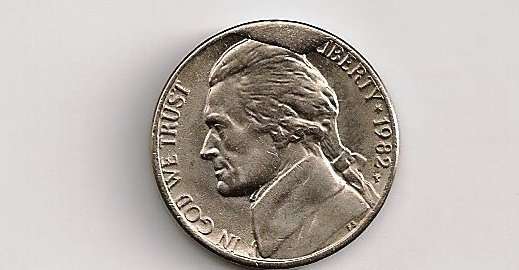
This is an example of a Die Cud coin -- an error coin with bubbles.

How Much Are Bubbled Coins Worth?

When it comes to figuring out the values for these weird error coins with bubbling, it often comes down to the merits and unique particulars of the individual coin. After all, each error is different from the next.

But here are some average prices for typical examples of the error coins I’ve mentioned in this post:

  • Gas bubbles – $25+
  • Plating errors (zinc Lincoln pennies) – $2+
  • Cuds – $100 to $250+

*These are average prices that I personally collected from my surveys of error coins as seen offered for sale in the online marketplaces and at various coin shows.

PUBLISHED February 23, 2022
UPDATED August 6, 2026

Joshua McMorrow-Hernandez

Numismatic Specialist

Hi, I’m Josh! I’m the Editor here at the US Coins Guide. My love for coins began when I was 11 years old. I primarily collect and study U.S. coins produced during the 20th century.

I’m a member of the American Numismatic Association (ANA) and the Numismatic Literary Guild (NLG). I have won multiple awards from the NLG for my work as a coin journalist. I’m also the editor at the Florida United Numismatists Club (FUN Topics magazine), and author of Images of America: The United States Mint in Philadelphia (a book that explores the colorful history of the Philadelphia Mint). I’ve contributed hundreds of articles for various coin publications including COINage, The Numismatist, Numismatic News, Coin Dealer Newsletter, Coin Values, and CoinWeek.

I’ve authored over 1,000 articles here at the US Coins Guide (many with over 50K shares).

I welcome your coin questions!

62 responses to “Coins With Bubbles: How To Tell If Yours Is An Error Coin Or A Damaged Coin & How Much Coins With Bubbles In Them Are Worth”

  1. SESS POOL Avatar
    SESS POOL

    how do i join fla club?

    1. JoshuaTheFunTimesGuide Avatar
      JoshuaTheFunTimesGuide

      Florida has many coin clubs, but one of the best is Florida United Numismatists. They hold two shows a year, sponsor many of the local clubs, and have a quarterly magazine (disclosure I’m a longtime satisfied member and the editor of the magazine, FUN Topics). Here’s a membership form: https://www.funtopics.com/content/PDF/Other/FUN_Membership_Application.pdf
      Best wishes,
      Josh

      1. SESS POOL Avatar
        SESS POOL

        thanks i will be joining

  2. Stephen Avatar
    Stephen

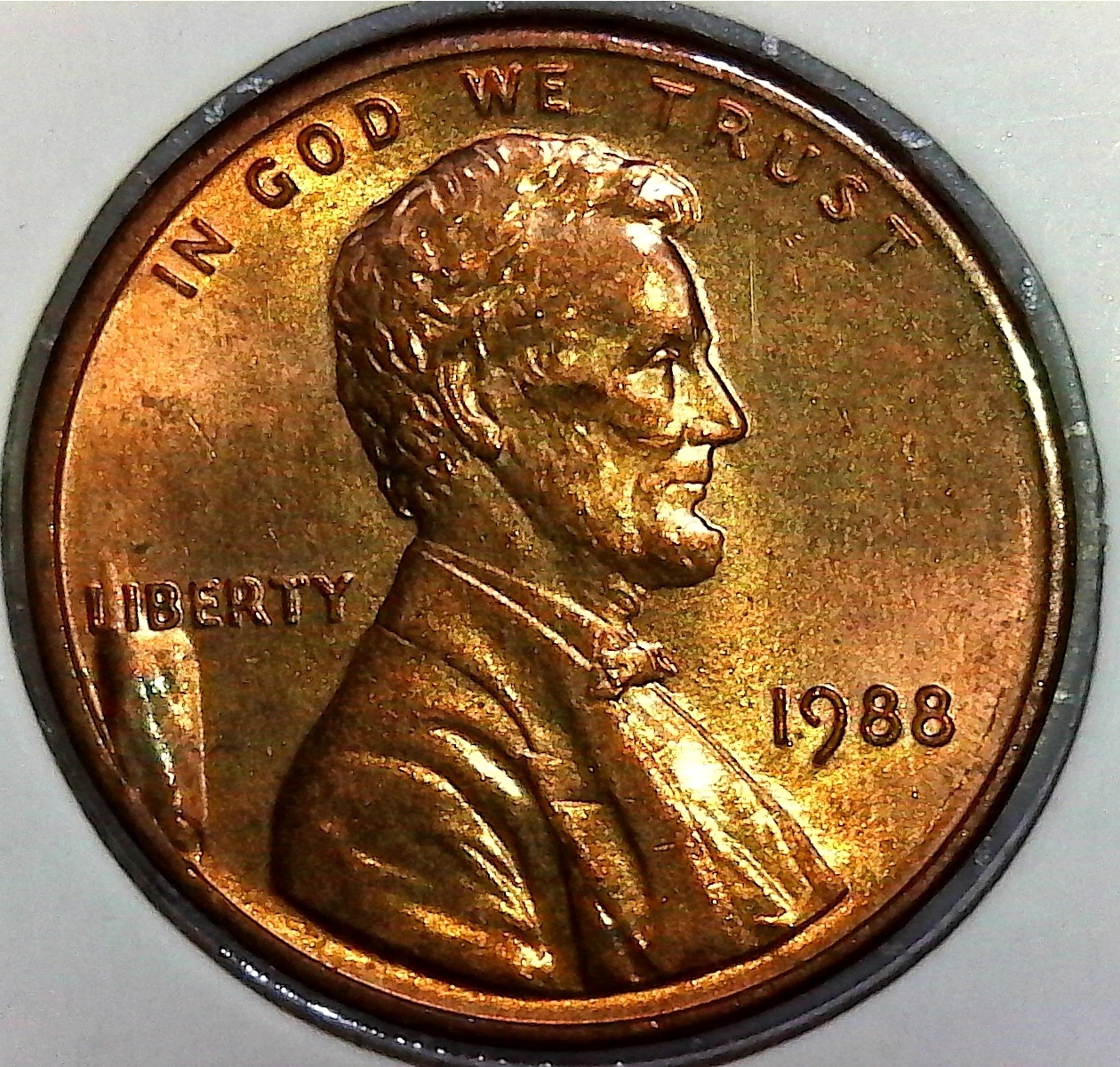
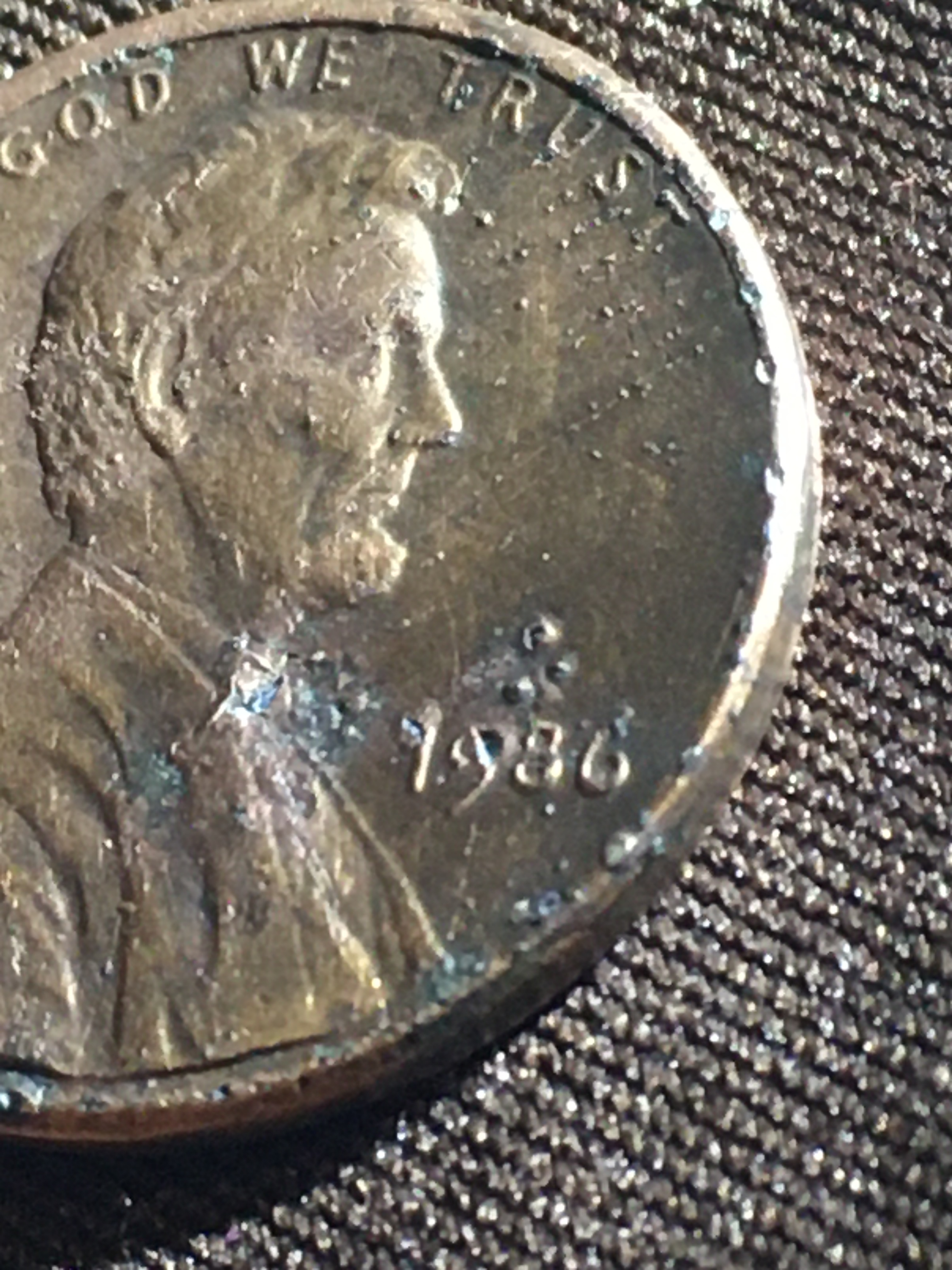
    Hi Josh! I’d like to first say thank you very much for all the coin guides you’ve posted. I started coin roll hunting pennies this year during quarantine, and your articles have easily been my favorite resource for info on coin variants, errors, and everything else. So this 1988 penny is a fairly unique one I’ve come across. Do you think the raised area is just a large Zincoln plating blister?

    https://uploads.disquscdn.com/images/0dcfb483b4b172a5138164a9ec4b2d454e535251a0f6452a5261c150f4272d5d.jpg

    1. JoshuaTheFunTimesGuide Avatar
      JoshuaTheFunTimesGuide

      Hi, Stephen —

      I really appreciate your kind feedback and am delighted to know you’ve found these posts do helpful. Searching through penny rolls is one of my favorite things to do in the hobby but I’ve never made a find quite like yours here!

      Without seeing the coin in-hand but knowing it is a 1980s zinc cent I confidently agree you have a plating blister on your hands here. Most plating blister pieces exhibit smaller blisters but this is one of the largest single blisters I’ve seen. There are no firm “book” prices for errors like this but I’d be willing to bet yours would draw some strong offers from those who collect such coins.

      Congratulations!
      Josh

      1. Stephen Avatar
        Stephen

        Thank you for the feedback! I wasn’t very sure it was a plating blister given that its oblong shape is atypical for a bubble. I’m excited to know that it’s exceptionally large for that type of error!

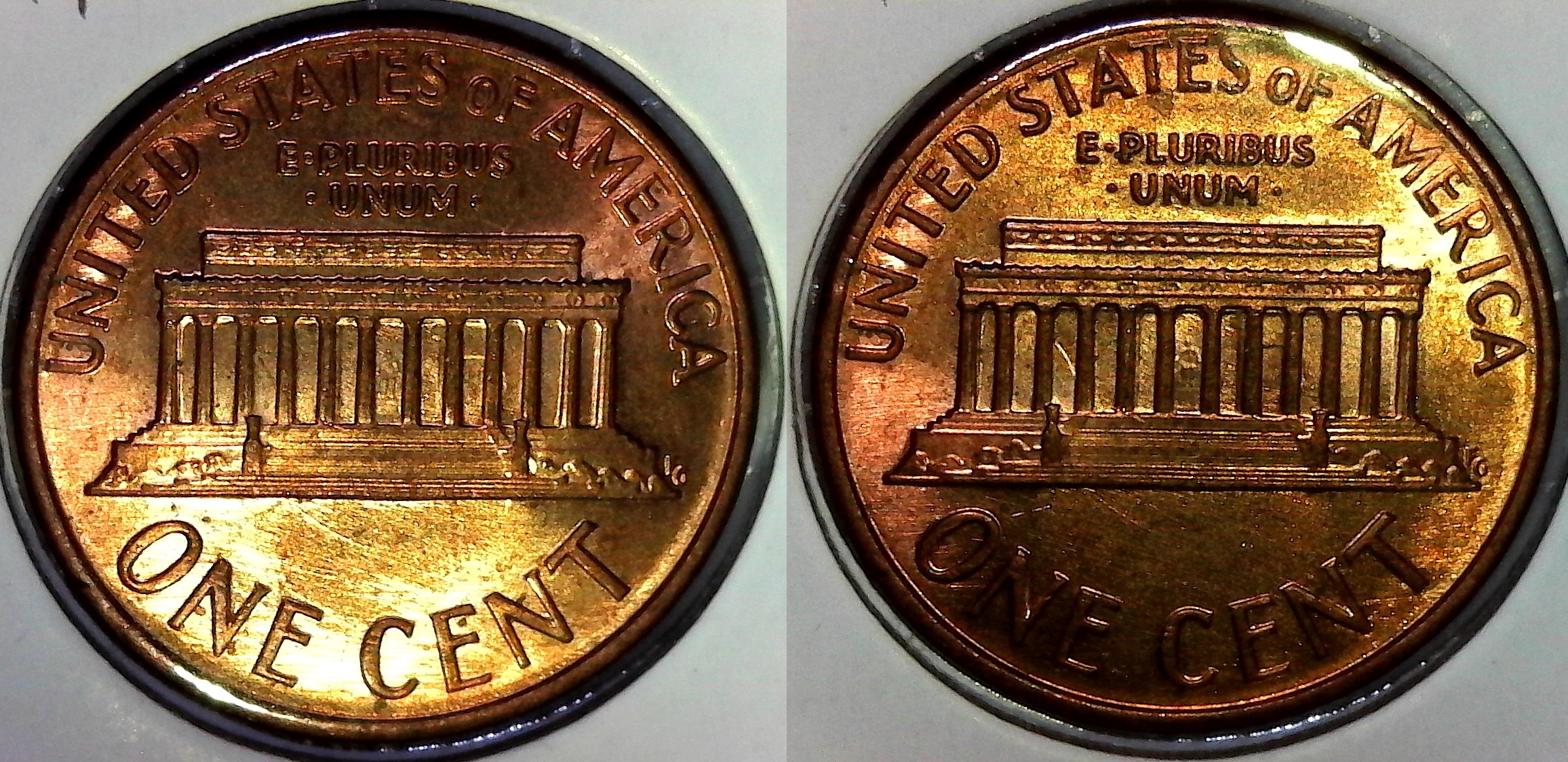
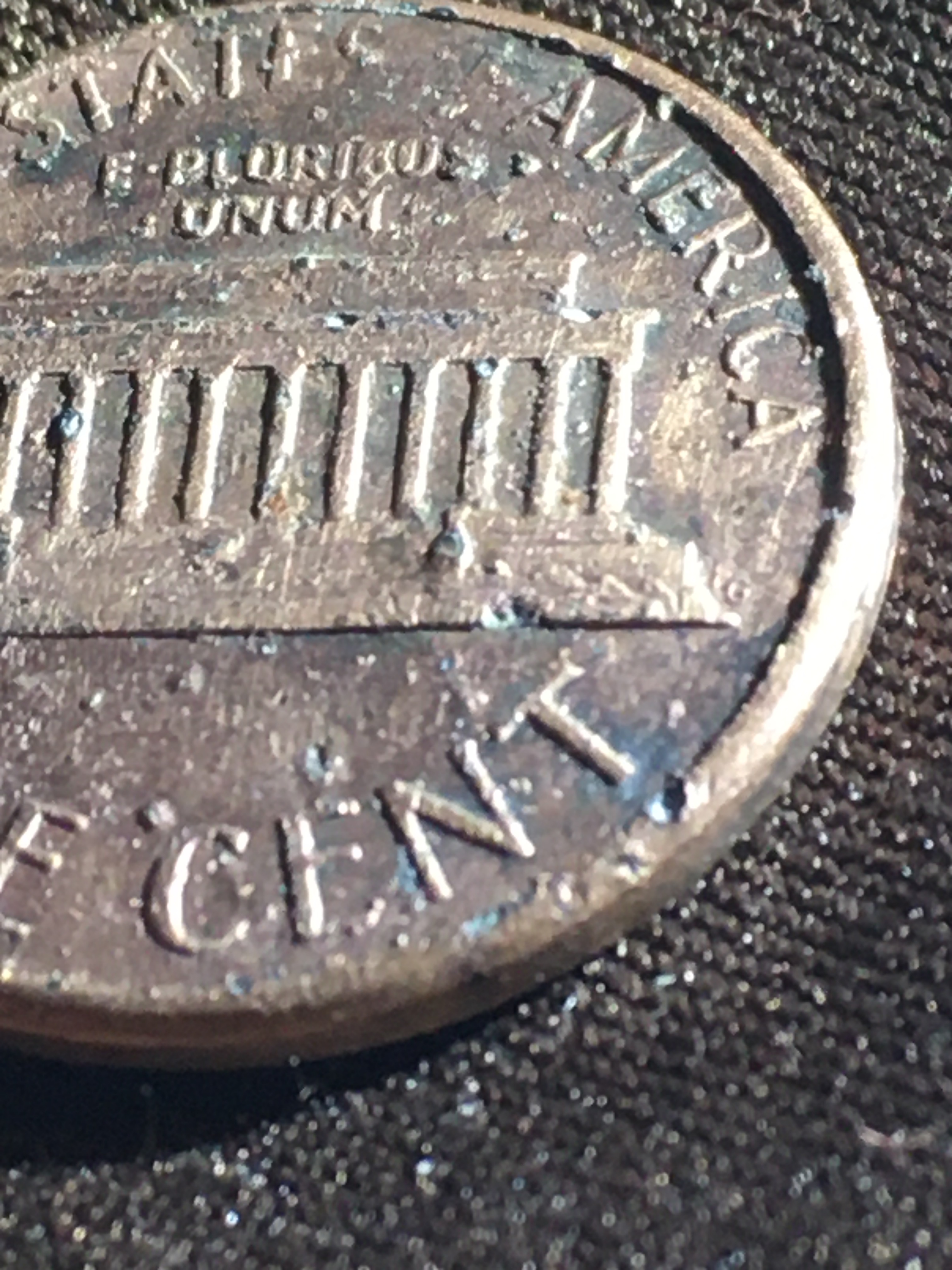
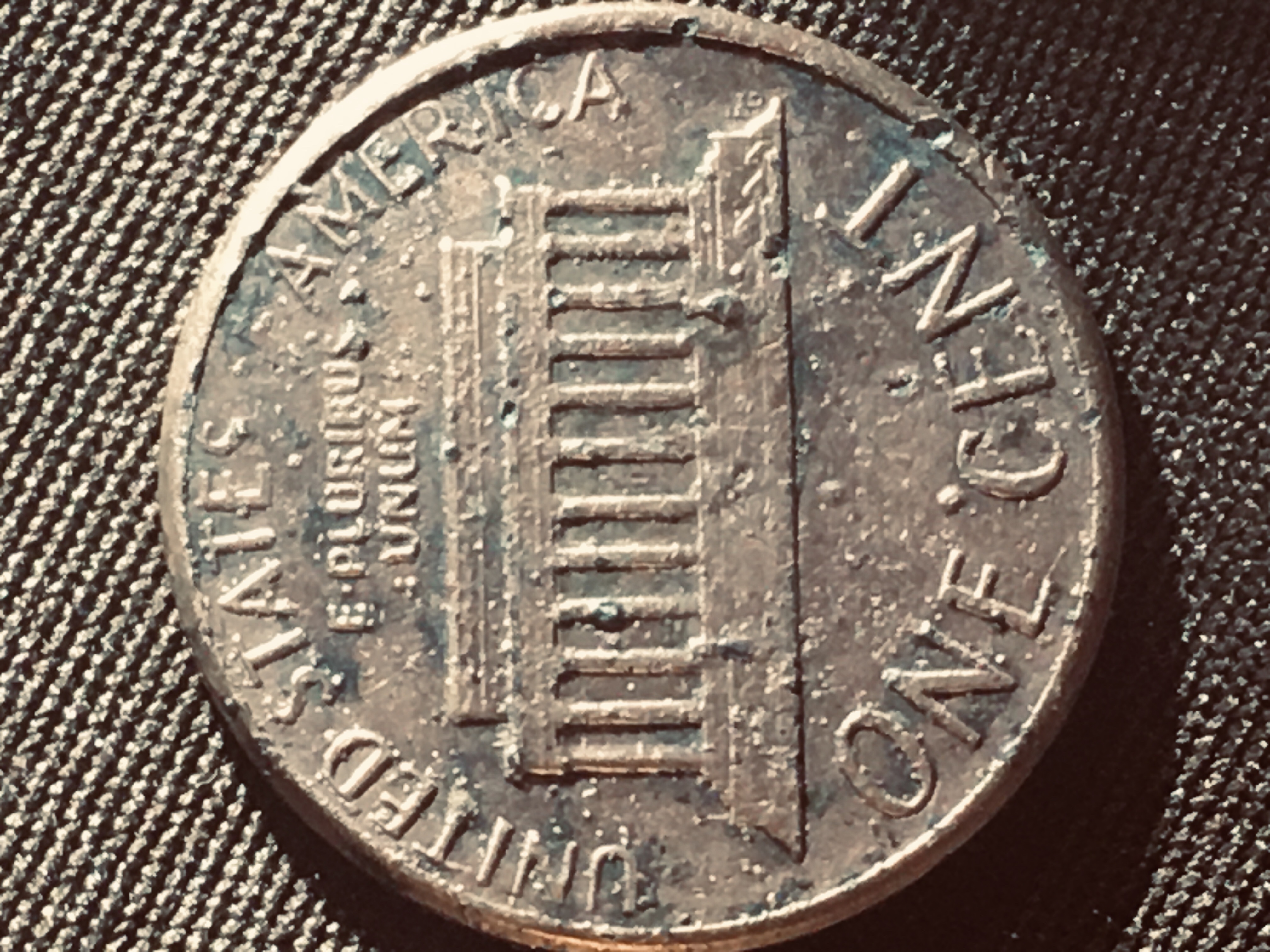
        This coin also has some unusual features on the back that I’ve seen on a few others, but I’m not totally sure what they are. There are a couple of ridges running behind the columns of the Lincoln Memorial – one starts in the space to the right of the statue and continues through to the next two gaps between columns. The second one you can see on the other side of the statue. They’re definitely not scratches since the columns aren’t damaged, and they don’t seem to be typical die cracks since they only “light up” from one side.

        My best guess is they’re some sort of bi-level die crack, but I’m not confident in that and would like to know what you think!

        https://uploads.disquscdn.com/images/6a23f070e28cb5b2fba5d60ff9e3fe7b23ec8dcf51033ca4fe1882049c1bde28.jpg

        1. JoshuaTheFunTimesGuide Avatar
          JoshuaTheFunTimesGuide

          Hi, Stephen —

          From what I can discern in the photos they appear to be further plating anomalies. I see these raised lines and ridges quite frequently on the zinc cents of the 1980s. Quality control on the plating would take several years for the Mint to perfect.

          Best wishes,
          Josh

          1. Stephen Avatar
            Stephen

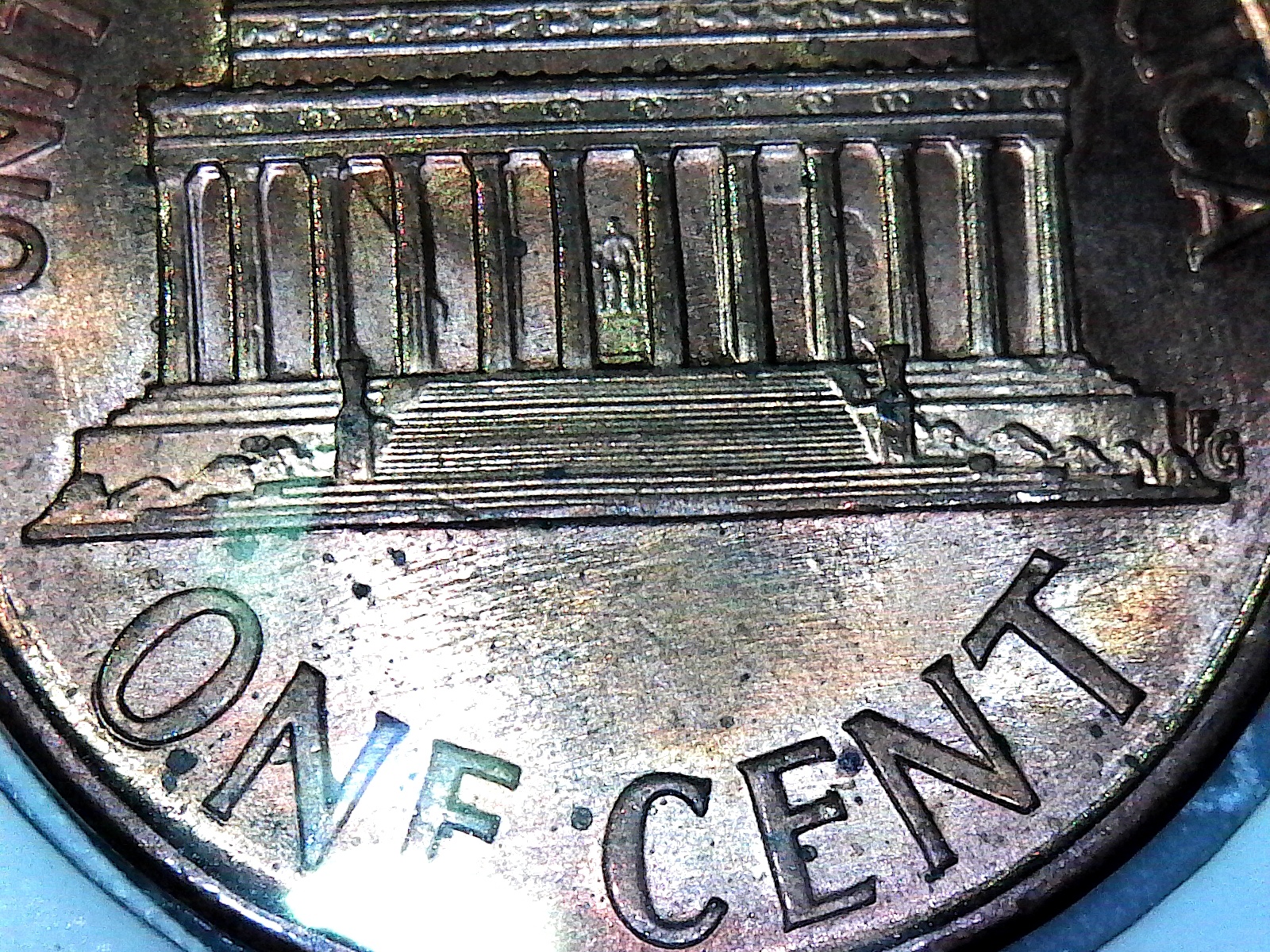
            Interesting! I think some of the similar ones I’ve seen are certainly early zinc cent issues. However, after finding another penny with nearly identical ridges, I’ve realized it seems to be the remnants of a die clash! The right hand side is Lincoln’s inverted chin and lower face and the other side is his back. There are a bunch of polishing scratches below the Memorial where the head struck.

            In this pic of the new one the outline is a bit clearer. Pretty cool find if you ask me, especially since I’ve only ever IDed a couple other die clash errors! While I’m sure the die clash doesn’t add a lot to my bubbled coin, does a minor standalone clash like this have much value?

            https://uploads.disquscdn.com/images/3611c2fdd62e6fc03be2cb3e3ec0936228cbd0270ae2f951696f01e04c7e11f2.jpg

          2. JoshuaTheFunTimesGuide Avatar
            JoshuaTheFunTimesGuide

            Hi, Stephen!

            Yes, I see it! Cool clash! Values range for pieces like this… As you may know there really isn’t a set value for errors, because it all depends on the magnitude of the individual error/variety and also how much one is willing to pay for it. But I’d think a piece like this could easily score $10-20 with the right buyer, and maybe much more.

            Nice find,
            Josh

  3. Bryan Bird Avatar
    Bryan Bird

    I have a 1969 Roosevelt dime with a small bubble that looks like a mask. My local coin expert said it surely was a Chinese counterfeit without even seeing the coin. Are there that many counterfeit? Could this be a legitimate error? No matter, it’s a pretty cool coin! Thanks!
    Bryan Bird

    1. JoshuaTheFunTimesGuide Avatar
      JoshuaTheFunTimesGuide

      Hi, Bryan —

      Another possibility is that the coin was exposed to heat, such as being in a fire. When copper-nickel clad coins, like late 1960s Roosevelt dimes, are subjected to extreme heat the metal layers tend to bubble. Yes, there are many counterfeits out there, but without seeing the coin I’m thinking it’s post-mint damage related to heat. I’ll be happy to take a look at a photo of the coin though.

      Best wishes,
      Josh

  4. Pat Whiteman Avatar
    Pat Whiteman

    I have a 1999 D Lincoln penny with what I believe to have all 3 of your listed legitimate errors…I don’t believe it was caused by fire because of the green patina and no evidence of charcoal black on the coin…can I send a pic to you? You can reach me at whiteman.pat@yahoo.com if you can help, thx

    1. JoshuaTheFunTimesGuide Avatar
      JoshuaTheFunTimesGuide

      Hi, Pat —

      Please feel free to post photos of your coin here in the comments section and I’ll be glad to further assist.

      Thank you!
      Josh

      1. Pat Whiteman Avatar
        Pat Whiteman

        Hi Joshua…the more I look at it, the more it looks like it might be a fire penny…but maybe not. Do you also look at other coins? I assume you do…

        Pat https://uploads.disquscdn.com/images/8c846ee7d9660a57c1e98ed20d59b67f2b706fad34c872bcb3489eb50d78912c.jpg

        1. JoshuaTheFunTimesGuide Avatar
          JoshuaTheFunTimesGuide

          Hi, Pat —

          Yes, this coin is almost assuredly either from a fire or possibly was buried and exposed to the elements for a long time. My specialty is U.S. coins and I’ll be happy to look at two or three other pieces if you need some opinions on other pieces. You can post photos of them here in the comments forum.

          Thank you,
          Josh

          1. JoshuaTheFunTimesGuide Avatar
            JoshuaTheFunTimesGuide

            Hi, Pat —

            Unfortunately there are no errors present on this coin? But rather discoloration from environmental damage and dings and bruises from life in circulation; the bubble on the edge is a result of metal displacement from a nearby gouge on the rim.

            Best wishes,
            Josh

          2. Chris HalstƎad Avatar
            Chris HalstƎad

            Hey Josh!

            New coin collector here and i have an interesting ( most likely damaged ) coin if you wouldn’t mind looking. Sorry if it’s obvious but it’s pretty warped. https://uploads.disquscdn.com/images/d2a8e07024484dcc473bf0b10478734d6099ed6d26adad155381ea8dba386bab.jpg https://uploads.disquscdn.com/images/54875bd801aa8545a7da8338d5bbbb9b802fbb4fec0ad66c9724f14bd608a4a1.jpg

          3. JoshuaTheFunTimesGuide Avatar
            JoshuaTheFunTimesGuide

            Hi, Chris —

            Yes, your guess is indeed correct — this poor penny is pretty damaged. Maybe it spent some time in a parking lot even. You may be happy to hear a LITTLE good news with this piece. It appears to be a 1960s copper Lincoln cent, so it’s worth about two cents for its copper metal value — more than just a penny!

            Best wishes,
            Josh

          4. David Wilhelm Avatar
            David Wilhelm

            I want to send you a picture of a penny I have how can I send it to you

        1. JoshuaTheFunTimesGuide Avatar
          JoshuaTheFunTimesGuide

          Hi, Pat —

          The little bubbles appear to be plating errors — something that is common on the post-1981 copper-plated zinc pennies. The copper coating on these coins is notorious for not bonding well to the zinc inner core, and when that happens, bubbles, lumps, and ripples ensue. There’s only really any value in this when the plating errors are drastic. This piece, I’m afraid, wouldn’t take any more than face value.

          Best wishes,
          Josh

  5. Nathan Hill Avatar
    Nathan Hill

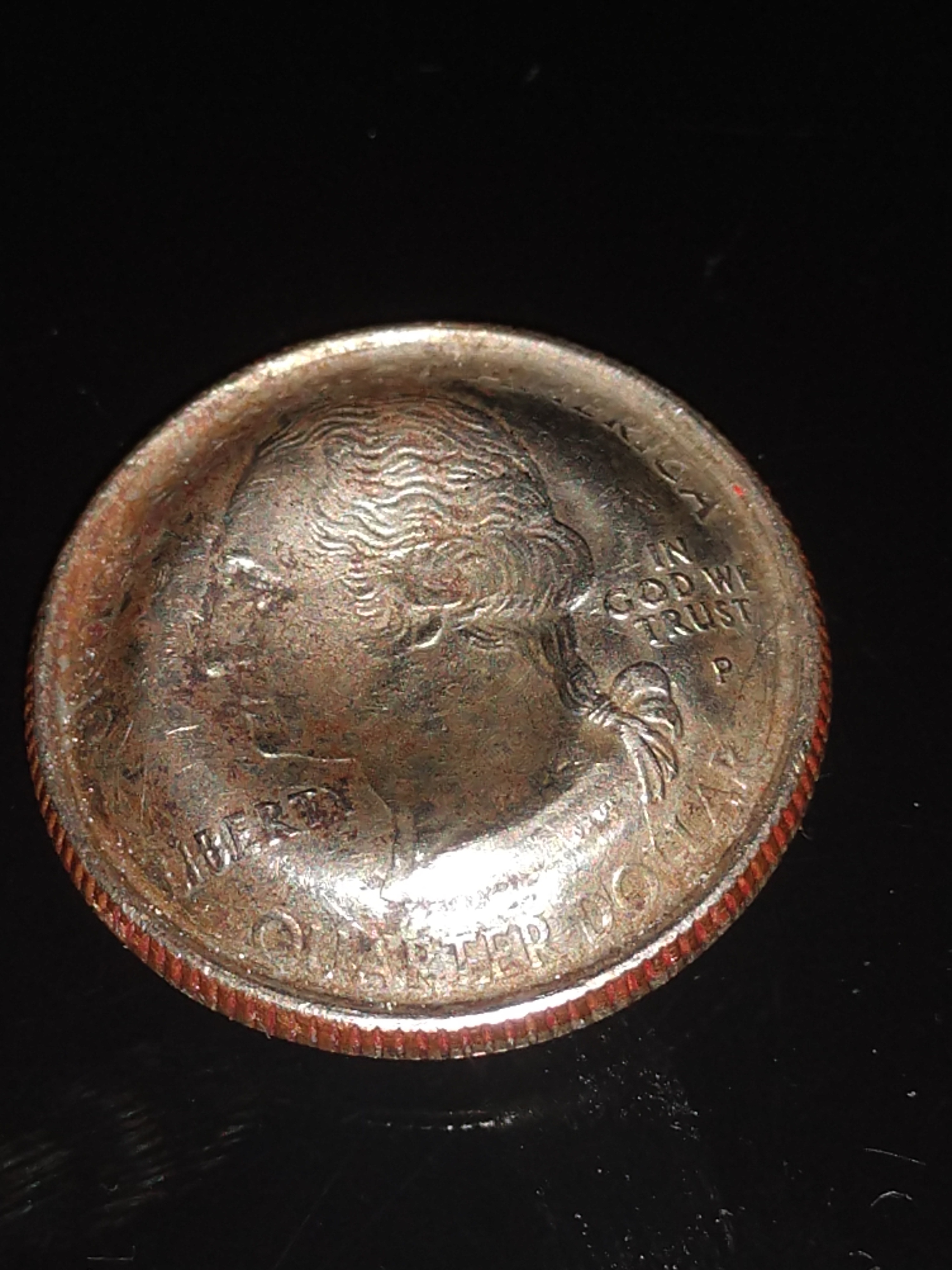
    Hello I have a 2001P Rhode Island State Quarter with a bubble is it of any value https://uploads.disquscdn.com/images/8e1764ab905cb297438abbcc00f5eceebd1c8ef3e19a7d54cf307c51da3e7dee.jpg

    1. JoshuaTheFunTimesGuide Avatar
      JoshuaTheFunTimesGuide

      Hi, Nathan —

      Clad coinage like this will often form bubbles when exposed to intense heat. It’s possible this coin was in a fire, causing the copper core and outer nickel-based layers to split or partly separate.

      Thank you for reaching out,
      Josh

  6. Nathan Wright Avatar
    Nathan Wright

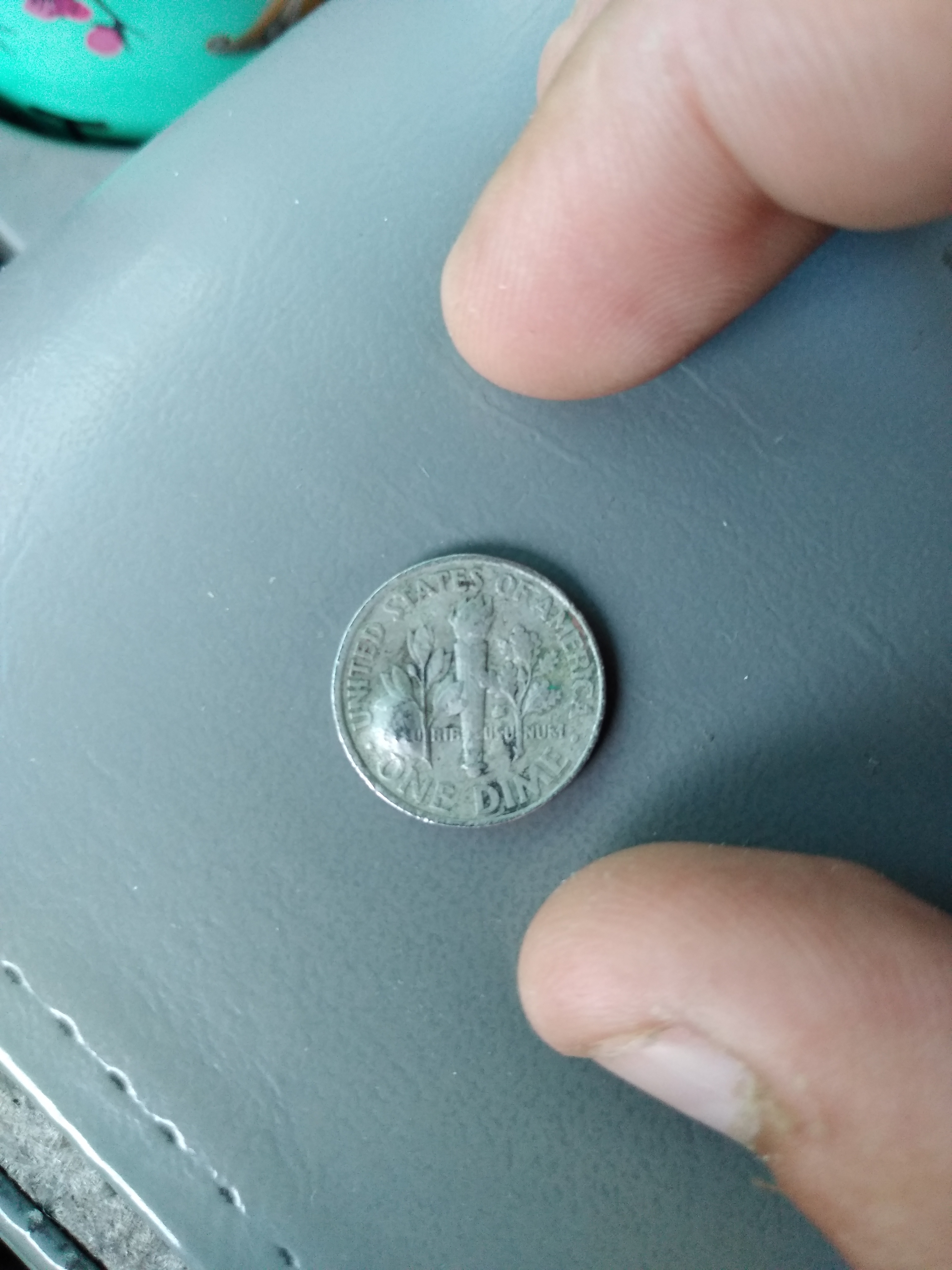
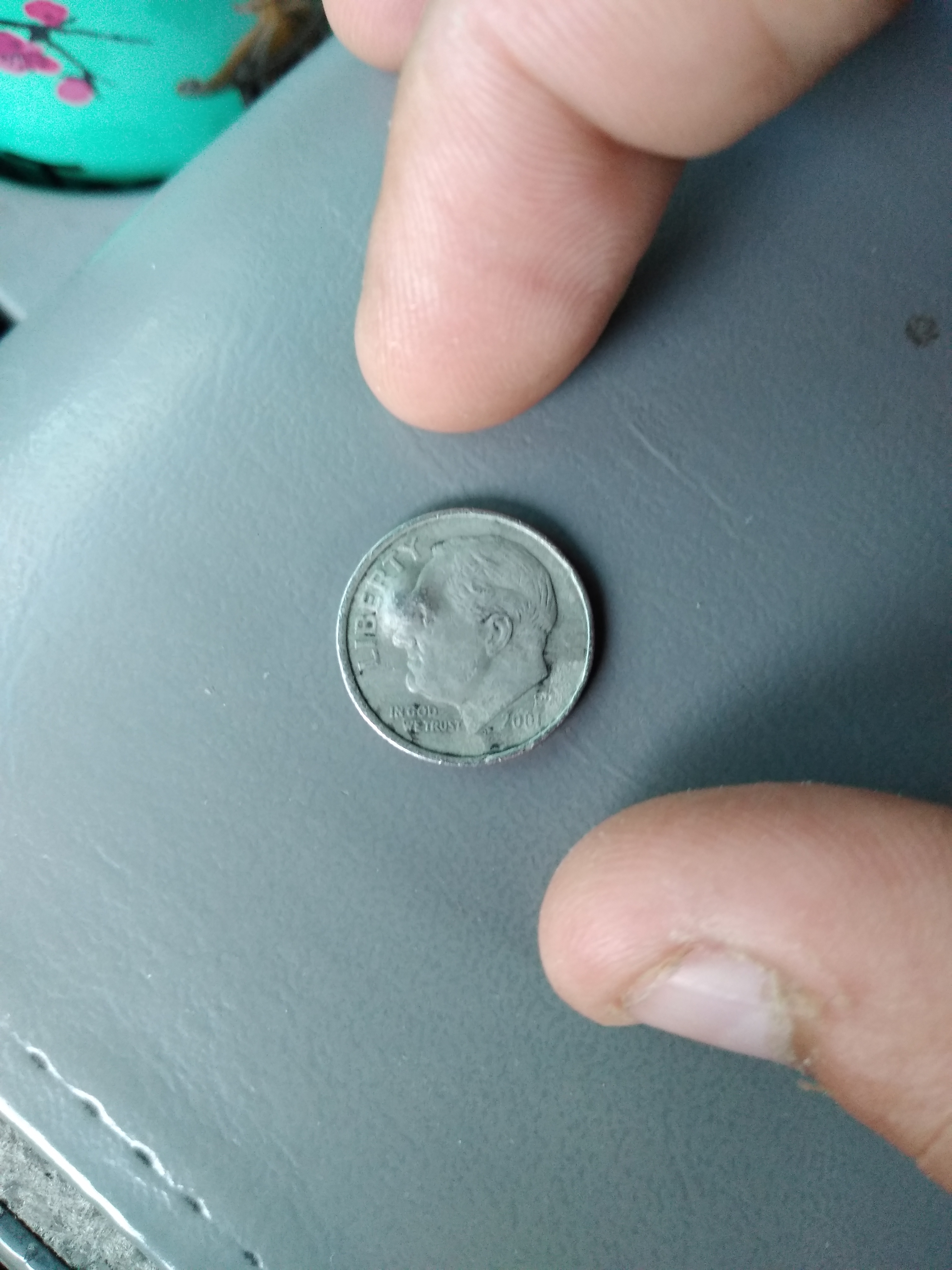
    I’ve found a 2001 dime with what looks like a cud at the Lower right of the head and a raised dome on both sides (eye and lower left leaf). The bubble on both sides seem to be right on top of each other making me think they are part of the same gas pocket.

    1. JoshuaTheFunTimesGuide Avatar
      JoshuaTheFunTimesGuide

      Hi, Nathan —

      Would you please upload a couple clear images of this coin here so I can see what’s going on and offer my best assistance with this?

      Thanks!
      Josh

        1. JoshuaTheFunTimesGuide Avatar
          JoshuaTheFunTimesGuide

          Hi, Nathan —

          Thanks for the photos… The bubbling seen here, as well as some other surface issues, are consistent with exposure to high heat. The coin may have been in a fire.

          Thanks for reaching out,
          Josh

    1. JoshuaTheFunTimesGuide Avatar
      JoshuaTheFunTimesGuide

      Hi, Mandy!

      Yes, spot on! There isn’t really a set value, per se, for something like this, but I can tell you the more dramatic the blistering the better value wise. Pieces that are covered in blisters can go for $10, $20, or more, but it’s really a case-by-case situation and you have to have the right buyer, too. Lincoln cent enthusiasts and error collectors would be the most likely to pay the best prices.

      The only thing that might work against this particular specimen is the corrosion (green spotting) also on parts of the coin.

      Thank you for reaching out,
      Josh

  7. Donald Stanford Avatar
    Donald Stanford

    I have a 1984 half dollar that sounded like silver against other coins so I took a good look at it and saw no copper around the edges so I weighed it and it weighs 11.5 grams,same as a 40% silver,am I missing some other answer,my email is dstanford60@gmail.com if you want to reply

    1. JoshuaTheFunTimesGuide Avatar
      JoshuaTheFunTimesGuide

      Hi, Donald —

      A clad half dollar tolerance is 10.89 grams to 11.79 grams, so 11.5 grams is still within clad half dollar tolerances. Would you please upload clear images of your 1984 half dollar here, including a good image of the edge?

      Thank you,
      Josh

      1. Donald Stanford Avatar
        Donald Stanford

        Yes I will send a picture of the half dollar

        1. JoshuaTheFunTimesGuide Avatar
          JoshuaTheFunTimesGuide

          Hi Donald,

          Thanks! It can be posted right here in the comments forum…

          Best,
          Josh

          1. Donald Stanford Avatar
            Donald Stanford

            I have a 1985p half dollar that is 40% silver,it weighs 11.5 grams and shows no copper around the rim

          2. Donald Stanford Avatar
            Donald Stanford

            I think you can click on this to see the picture

      2. Donald Stanford Avatar
        Donald Stanford

        Well it sounds like silver and show no copper around the rim of the coin ,it even has a different look that other 1984 half dollars but has the same look as a 1968 half dollar and the same sound

      3. Donald Stanford Avatar
        Donald Stanford

        How do I put a picture on here

        1. JoshuaTheFunTimesGuide Avatar
          JoshuaTheFunTimesGuide

          Hi, Donald —

          You can post photos of your coin here by clicking the photo upload button, which is the small rectangular icon near the message field.

          Best,
          Josh

  8. Ambrosia Avatar
    Ambrosia

    https://uploads.disquscdn.com/images/736ea1dbd814d2b51a801a9d7c5e16c9b747be50923778d8a97cff8970f7e8fe.jpg

    My mom works at a gas station and came home with this and a couple others similar. Now she knows I collect coins with errors and wheat pennies. I’m wondering if this is a print error or from a fire/ exsesive heat.

    https://uploads.disquscdn.com/images/08e14fa4b334b2acb1734e32a11ae0e28d78d0ef3575e62b3dc5a565c70cd8a9.jpg

    1. JoshuaTheFunTimesGuide Avatar
      JoshuaTheFunTimesGuide

      Hello, Ambrosia!

      Neat finds! Your intuition about the dime is correct — the bubbling/doming was caused by exposure to intense heat, perhaps a fire. It appears your nickel may have some type of solder on it, which is perhaps a remnant of having been affixed inside a jewelry bezel. Both pieces are worth their face value.

      Hope this info helps,
      Josh

  9. Justin Avatar
    Justin

    https://uploads.disquscdn.com/images/330e6278ab0596ff5b00f53a146f17637434b4058ad33341c951f6d91a421e78.jpg https://uploads.disquscdn.com/images/012df3041510aeecad1d4b08e070616a7cb8b178a76b6bd194c87287abc24bd2.jpg Hello Josh,
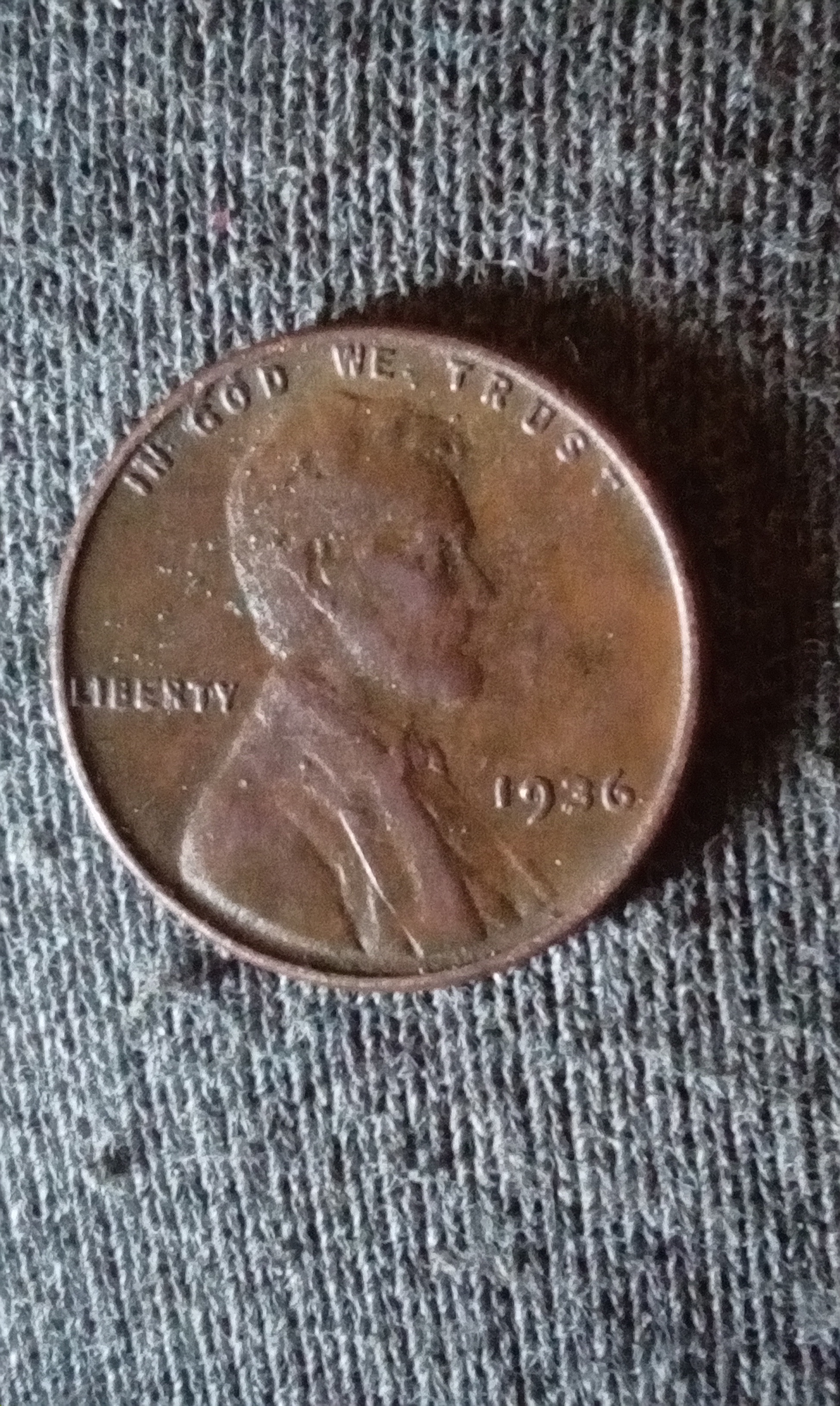
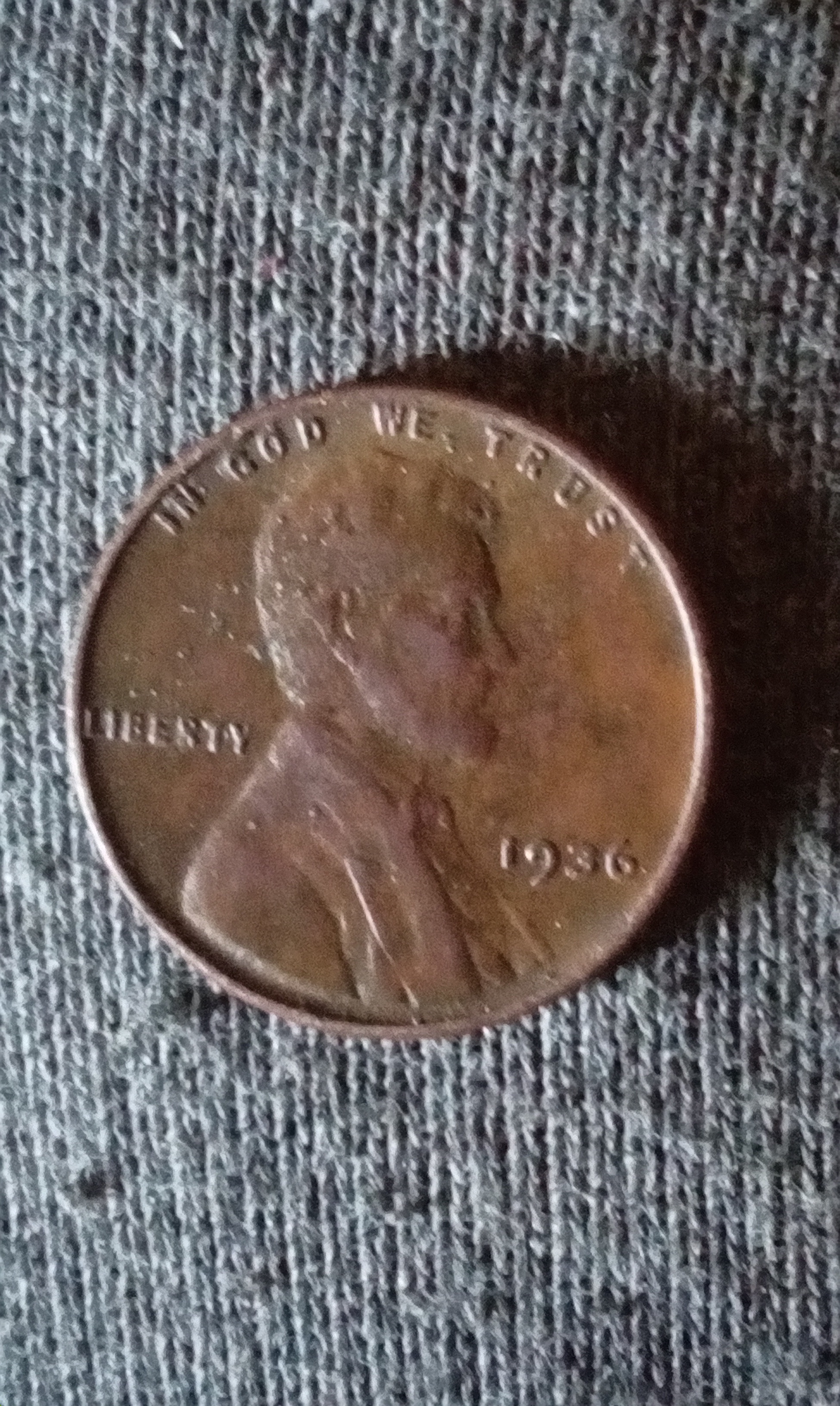
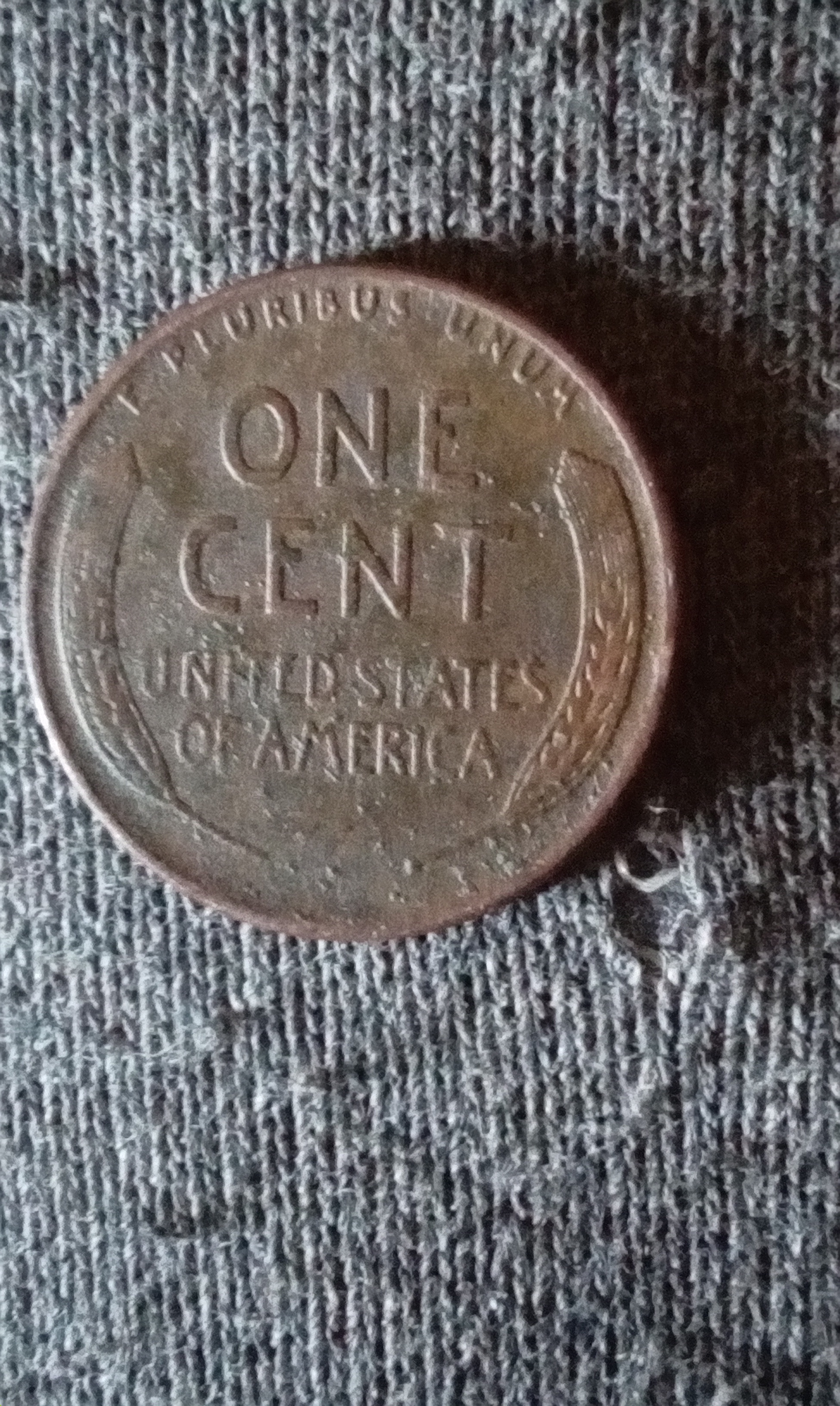
    Here’s a beautiful 1936 NMM with quite a few little jagged mounds (chips) or blisters of sorts. And they are on both sides. Plus, the color of the coin is extreme in the sense I’ve never seen one quite this tint. Could you or would you please help fill in some blanks about this one of kind I have recently come across. What’s the best way about finding the facts on these anomalies Thanks a million https://uploads.disquscdn.com/images/3a5a721514d1b5a8eb31b265a661ea0220a153af612874b8b595d357eb4251d3.jpg

    1. JoshuaTheFunTimesGuide Avatar
      JoshuaTheFunTimesGuide

      Hi, Justin —

      The little bumps plus the appearance of reddish and greenish hues (as evident in the photo anyway) suggest mild porosity or environment-induced surface blistering, which is extremely common on copper coins. A 1936 Philadelphia (no mintmark) Lincoln penny in this condition is worth in the area of 10 to 15 cents.

      Hope this info helps,
      Josh

    1. JoshuaTheFunTimesGuide Avatar
      JoshuaTheFunTimesGuide

      Hi, Justin —

      These Lincoln pennies likely exhibit various forms of plating bubbles or plating blistering, something that is rather common with the early years of the zinc-based Lincoln cents, which these are. The copper plating had a reputation for bonding poorly to the inner zinc core in the coin, resulting in aberrations just like this. However, these could also be a result of subsurface corrosion, which is not a desirable element. The difference between the two is the blisters are generally empty or hollow, while the corrosion is solid. Unfortunately, this is not something I can determine just by looking at the photos.

      If these are blisters, I’d think an interested collector would be willing to pay at least $2 or $3 apiece, perhaps more.

      Hope this info helps,
      Josh

  10. Justin Avatar
    Justin

    Hello Josh, https://uploads.disquscdn.com/images/f72adebc41d4b868d061f574872a2220c3a2b7c53d0578b5fa351e2712cb3267.jpg
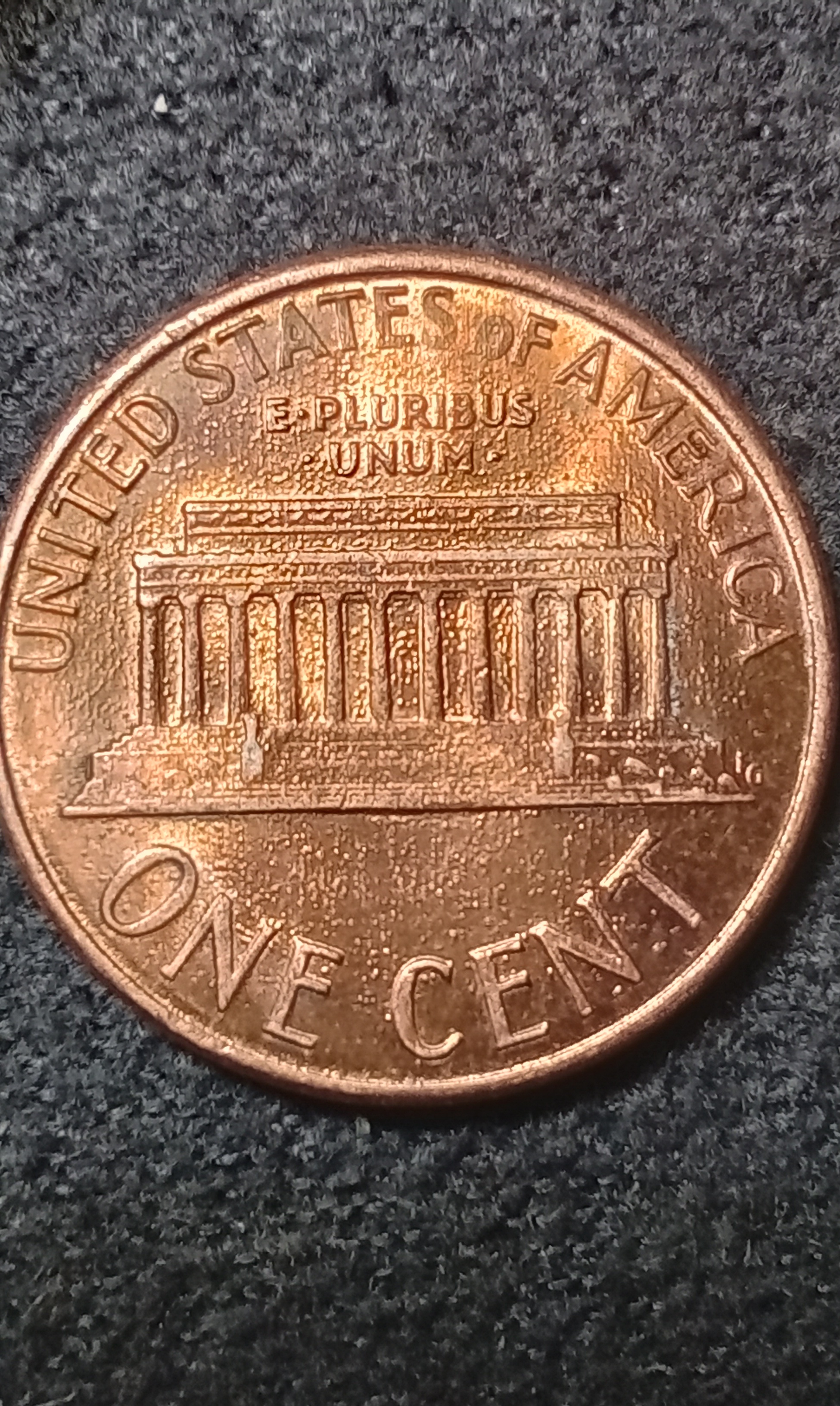
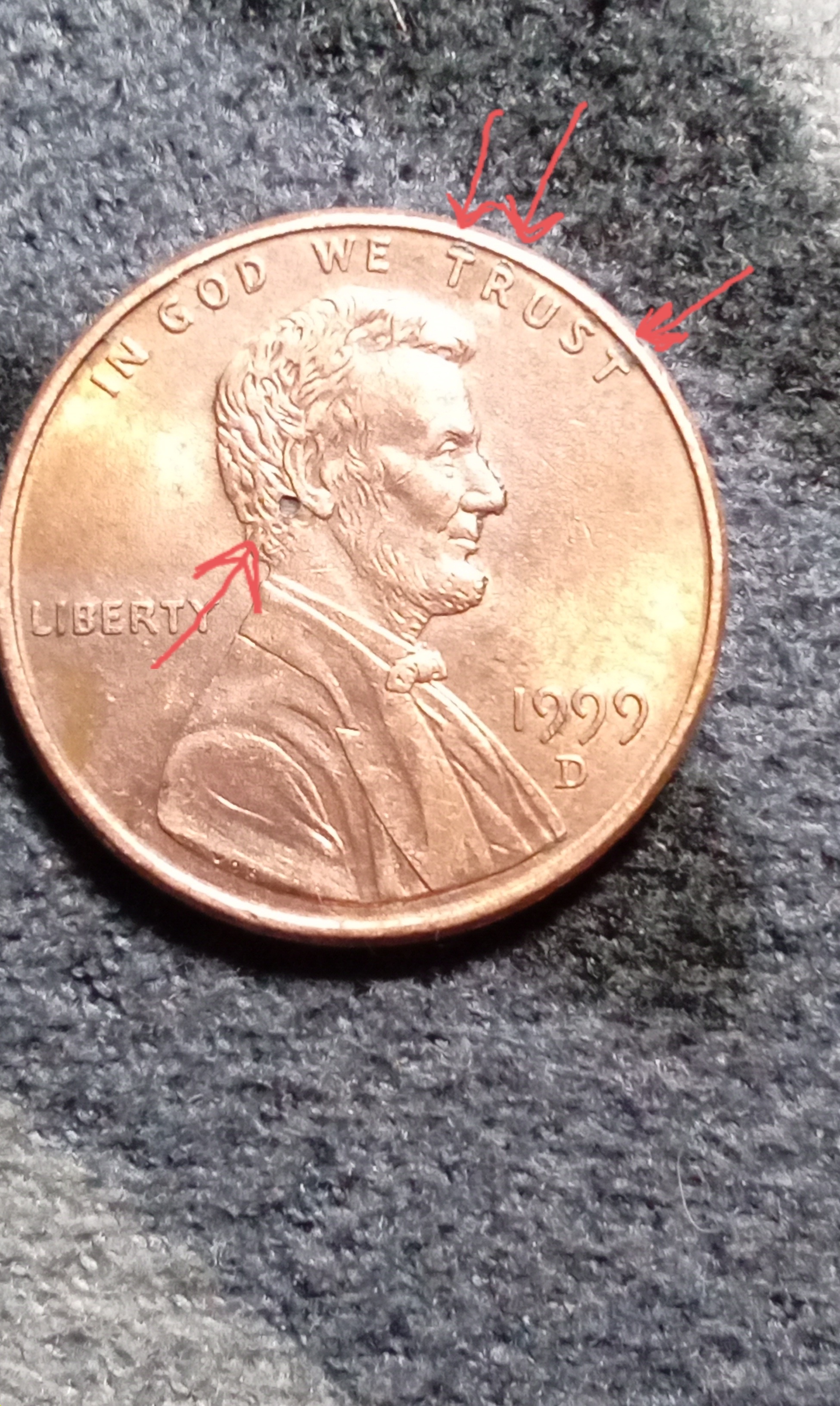
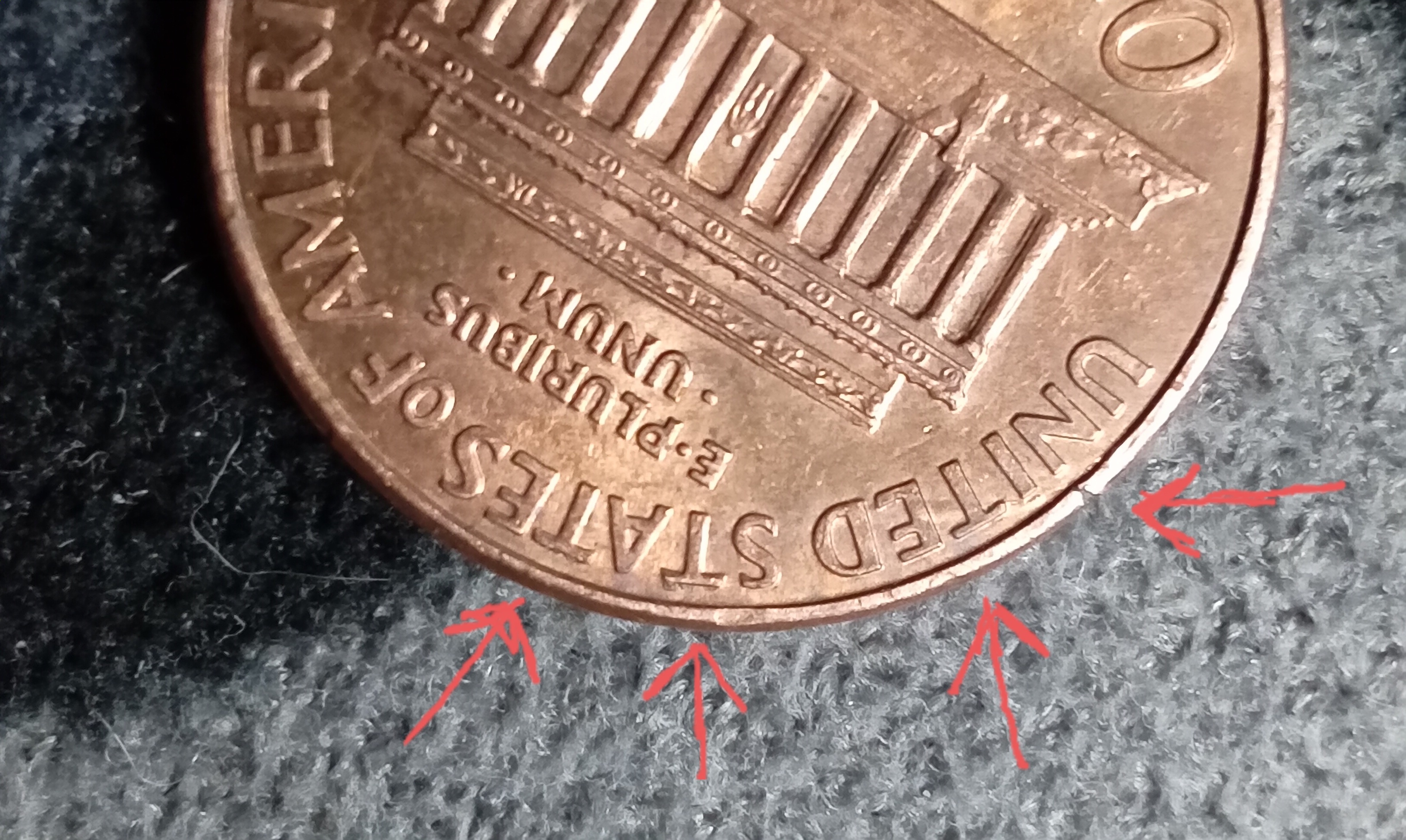
    I came into this 1999D lincoln cent and it has an odd bubble from the N in UNITED and stretches to the middle of the TandE in STATES. PLUS there is what looks like doubling but you are the pro and I admire your advice. Thanks a mill! https://uploads.disquscdn.com/images/7caa46c2eba3de0da1b42f3588a721a937fc1de2d431c4758e74c14ce343f97b.jpg

    1. JoshuaTheFunTimesGuide Avatar
      JoshuaTheFunTimesGuide

      Hi, Justin!

      Based on the images, it appears the obverse may have some slight mechanical doubling or die reverb from when the die hit the planchet. The hole by Lincon’s ear is either a post-mint alteration/damage or an area where a bubble formed and popped in the copper plating — very common. However, the little bumps over the tops of especially the first “T” in “STATES” on the reverse looks like possible die breaks in the photo. The rim aberrations are post-mint damage. I’d say it’s a piece worth holding aside, if for nothing else the apparent die break on the reverse.

      Nice find and thank you for reaching out!
      Josh

  11. Zakary Cunningham Avatar
    Zakary Cunningham

    Found this coin in a vending machine so it has a lot of post-mint damage. It is consistent with the ruptured gas bubble explanation.

    https://drive.google.com/file/d/1OgsLw8yN986ay_Ww06PK36euLlAPTvhp/view?usp=sharing

    https://drive.google.com/file/d/1LLA8b9EuHduE-Sg6JnyRkZblhTV6PWD1/view?usp=sharin

    1. JoshuaTheFunTimesGuide Avatar
      JoshuaTheFunTimesGuide

      Hey, Zakary —

      The bubbling looks consistent with exposure to intense heat, which can cause the cladding layers to peel apart inside the coin. Many heat-damaged clad coins have this appearance with the isolated bubbling.

      Hope this info helps,
      Josh

    1. JoshuaTheFunTimesGuide Avatar
      JoshuaTheFunTimesGuide

      Hi, Sami —

      Unfortunately the pockmarks aren’t errors but rather post-mint damage.

      Thank you for reaching out,
      Josh

      1. Heather Dinnocenti Avatar
        Heather Dinnocenti

        Hi Josh,
        I’m new to all of this but I love the way you explain things and just try to make it easy for everyone.

        Thanks!

        1. JoshuaTheFunTimesGuide Avatar
          JoshuaTheFunTimesGuide

          Hi, Heather!

          Thank you so much for that kind compliment! It’s always my goal to make every article and topic I cover here as simple and easy for everyone to understand, regardless of their experience level. I appreciate your readership and hope the content here is helping you become a better-informed coin collector!

          Cheers,
          Josh

  12. Josh Wirth Avatar
    Josh Wirth

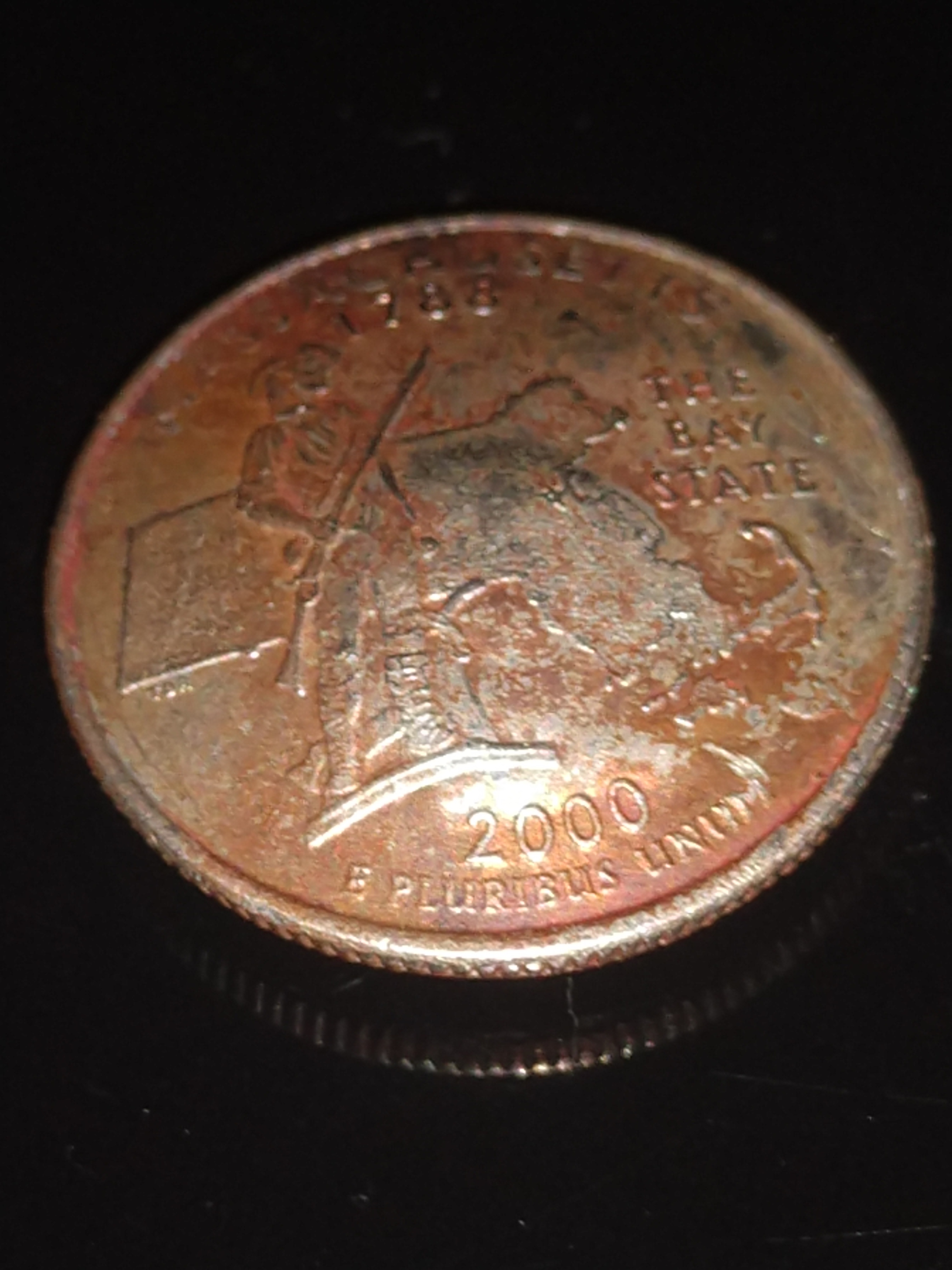
    I found a Massachusetts state quarter that seems to have such an air bubble or pocket in-between the two sides of the coin that it’s as if it was inflated like a basketball is the only way to describe it .

    1. JoshuaTheFunTimesGuide Avatar
      JoshuaTheFunTimesGuide

      Hi, Josh!

      This actually isn’t an error but rather a type of post-mint damage caused by exposure to heat. Clad coins, when exposed to fire or other intense heat, tend to bubble as the clad layers separate.

      Best wishes,
      Josh

  13. sarah eagleburger Avatar
    sarah eagleburger

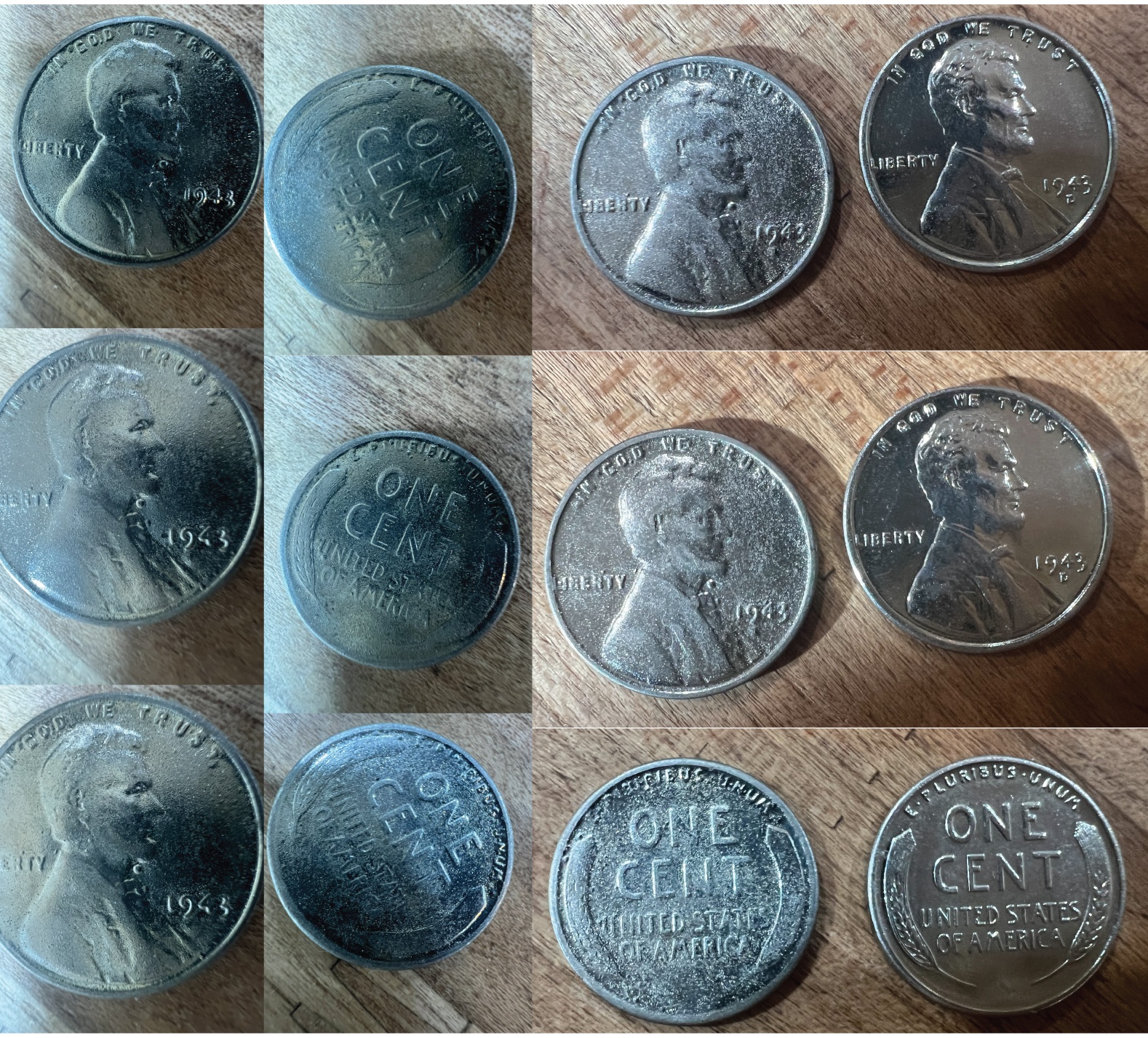
    Hi Josh – I have a 1943 Steel Penny that has some very odd marks, blebs? light minting? Severely degraded die? including missing and or deformed letters (“P,L,U” and T in trust, specifically) hope i’m using these terms correctly. I’ve taken pics compared to another very fine penny in my family’s old WWII collection – something seems really odd especially the extra blob of metal under Lincoln’s chin! I realize that the weird one appears to have some sort of black discoloration, the reality is it does not, the weird penny is as shiny as can be – no sign on corrosion or anything! its just the lighting – especially when compared the the mirror field of the comparison penny. Love to hear your thoughts as I unearth its error value with collectors. https://uploads.disquscdn.com/images/401d1f3daa25c4967541d351a7b283137e082d1196f25270fa7f82e6d0bf03d9.jpg

    1. JoshuaTheFunTimesGuide Avatar
      JoshuaTheFunTimesGuide

      Hi, Sarah!

      Based on what I see in the images, it appears that your 1943 penny may have been replated — essentially it was given a new outer layer of zinc by someone outside of the U.S. Mint. These are sometimes sold as “reprocessed steel cents,” and essentially it is sporting a new coat of metal paint to make the coin appear new and more suitable for display. Often, these replated pennies acquire that mottled appearance and, sometimes, they will come back with bubbles caused by imperfections in the new plating or the new metal lifting from the surface.

      All in all, if this is what you have (and I’m pretty sure it is based on the photos), the coin is worth somewhere around 3 to 5 cents.

      Wishing you the best and thank you for reaching out!

      Cheers,
      Josh

Leave a Comment

Content Widget