

Start Here

Values

Buying & Selling

Rare U.S. Coins

How To's

Myths & History

Your 1999 Connecticut Quarter Could Be Worth $10,000: Here’s How to Tell

by Joshua McMorrow-Hernandez

Ezoic/Google Ad Code Here

Have you found a Connecticut state quarter and want to know what it’s worth? Perhaps you even have a 1999 Connecticut quarter that has an error.

Believe it or not, many 1999 Connecticut state quarters are worth far more than their 25-cent face value. Some 1999 State Quarters are even worth hundreds or thousands of dollars. No joke!
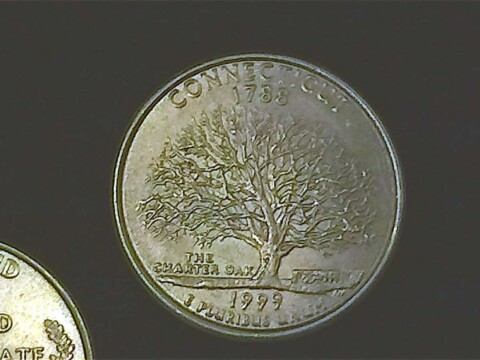
So… which Connecticut quarters are worth the big bucks? And which ones are worth just 25 cents?

In this article you will find:

The Most Valuable 1999 Connecticut Quarter Error

There is one type of Connecticut quarter error worth as much as $10,000!

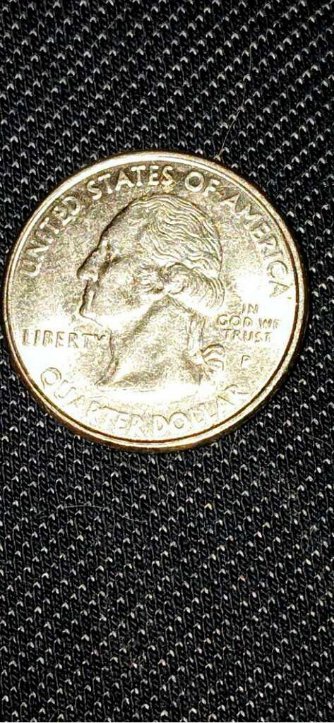
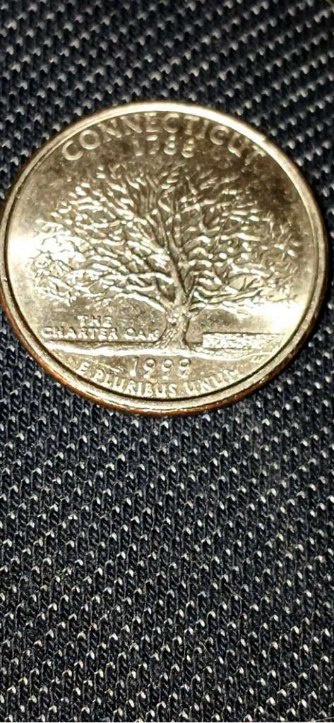
Apparently, a few of the 50 State Quarters from 1999 were struck on the planchets (coin blanks) designed for the Sacagawea dollar. These “experimental quarters” are quite rare — only a few were made representing each state (Delaware, Pennsylvania, New Jersey, Georgia, Connecticut) from the first year of the 50 State Quarters series.

These are super rare and super valuable experimental planchet errors!

So… how can you tell if you’ve got a rare Connecticut quarter error struck on a Sacagawea dollar planchet OR an ordinary quarter with gold toning?

How To Identify This Rare Connecticut Quarter Error

These are the 4 primary ways to determine if you have this rare error quarter:

  • Weight — This Connecticut error quarter registers between 5.9 and 6.3 grams in weight — much heavier than the normal 5.67-gram weight for a regular copper-nickel clad Connecticut state quarter. (Check out my favorite coin scale.)
  • Thickness — Does your quarter look thicker than normal? A 1999 error quarter looks thicker.
  • Color — The Connecticut error coin will appear gold, or even greenish in color. What color does your Connecticut quarter appear to be?
  • Edge — The 1999 Connecticut quarter error doesn’t contain any edge reeding (those vertical lines on the edge of a normal quarter) — this quarter has a smooth edge.

If any of your 1999 Connecticut state quarters seem to match the characteristics listed above, then it’s worth having it checked out by a numismatic professional. You can take your coin to a reputable coin dealer or have it certified by a third-party coin-grading company.

Other Types Of Connecticut Quarter Errors

Have you had a hard time finding any of the 1999 Connecticut state quarters struck on wrong-metal planchets, mentioned above?

No worries… There are many other kinds of errors to look for on your Connecticut state quarters!

These are the 3 most popular types of Connecticut quarter errors you should be looking for:

#1 – Doubled Die Connecticut Quarters

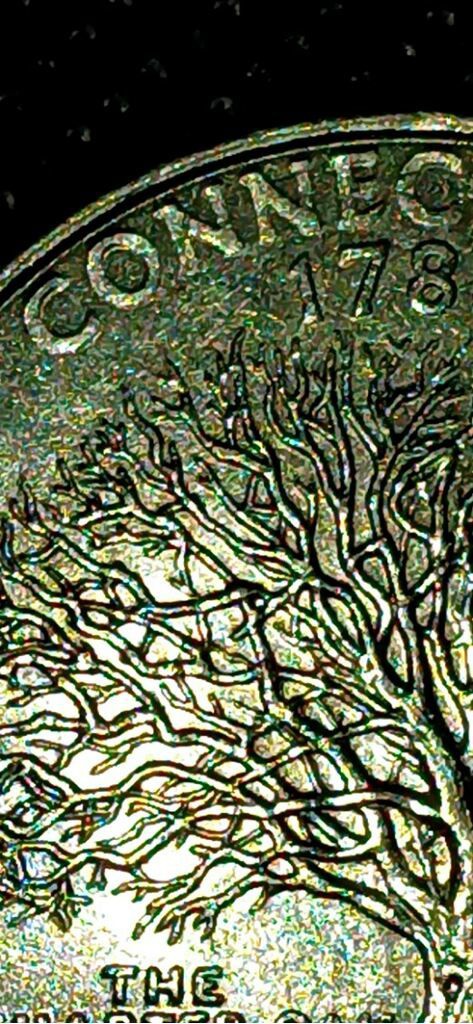
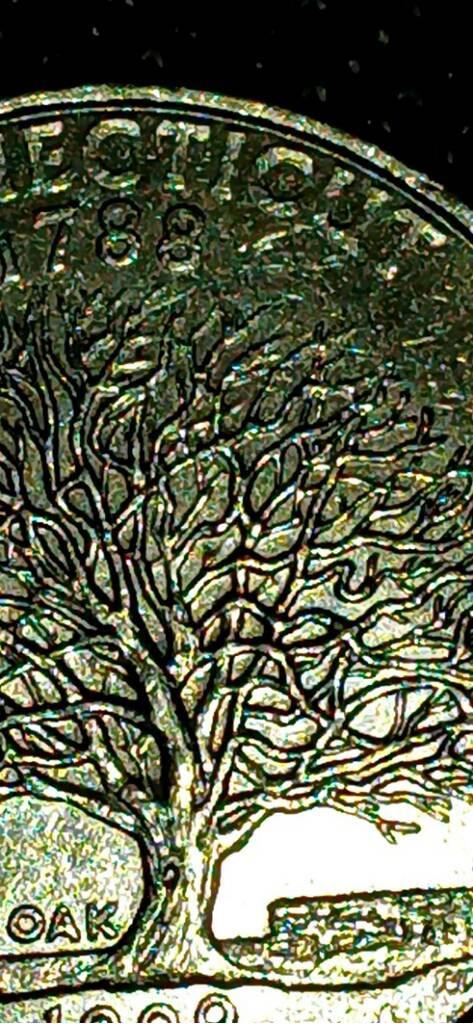
At this point, there aren’t too many doubled dies for the Connecticut state quarter known to exist — but there’s at least one out there! It involves doubling in the branches of the Charter Oak on the reverse (tails side) of Philadelphia-minted coins. Values range all over the board, but pieces like this commonly trade for around $10 to $25 apiece.

#2 – Off-Center Connecticut Quarters

These are really cool errors that show the coin struck partially off-center. The more off center the strike, the more this Connecticut quarter error is worth. A Connecticut state quarter that is minimally off-center (say by 5% or 10%) may trade for $25 to $50. But if you find a drastically off-center specimen with more than half of the design missing and the date still showing… a piece like that can bring hundreds of dollars!

#3 – Connecticut Quarters With Die Chips & Die Breaks

Some coins have unintended, raised blobs of metal on the surface. These are caused by areas of damage to the die (the device that strikes an image onto a blank coin) and are known as die chips, die breaks, and die cuds.

  • Connecticut state quarters with die chips (or tiny die breaks) can range in value from $3 to $10 apiece — sometimes more.
  • Find a die break on your Connecticut quarter that appears as a long line running across the surface of the coin? These errors can bring more than $100.
  • A 1999 Connecticut state quarter with a large die cud can inspire intense bidding among error coin specialists and go for hundreds of dollars!

How Much Is A Regular 1999 Connecticut Quarter Without Errors Worth?
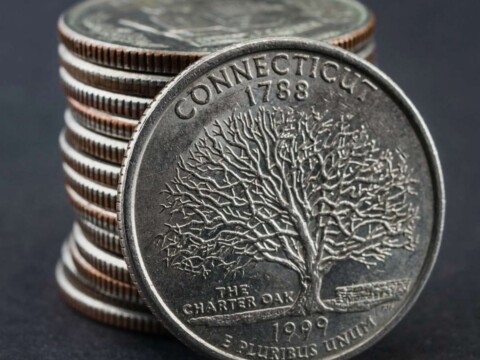
We all want to find rare and valuable errors in our pocket change, but most likely you’ll wind up finding a bunch of Connecticut state quarters without errors.

So, are they worth only face value?

For the most part, yes. A regular 1999 Connecticut state quarter from the Philadelphia Mint (P mintmark) or Denver Mint (D mintmark) that’s worn and has no errors is worth only its face value of 25 cents.

However, there is some extra value for Connecticut quarters that have never been spent as money:

  • Uncirculated 1999-P and 1999-D quarters are worth 50 cents and up
  • Proof Connecticut quarters (those struck only for collectors) are also worth more than face value:
    • Copper-nickel 1999-S Connecticut quarters are worth $1.50 to $3 each 
    • 90% silver 1999-S Connecticut quarters are worth $8+ each 

How Many 1999 Connecticut Quarters Were Made?

In a nutshell? LOTS! More than 1 billion were struck.

But you came here looking for a more precise mintage figure, didn’t you?

Here’s how many Connecticut state quarters were made:

  • 1999-P quarter — 657,880,000 minted
  • 1999-D quarter — 688,744,000 minted
  • 1999-S copper-nickel clad proof quarter — 3,713,359 minted
  • 1999-S silver proof quarter — 804,565 minted

So… 1999 Connecticut state quarters aren’t rare coins. But if you find a super-nice one, or one with an error, you may have hit the jackpot!

Fun Facts About Connecticut And Its State Quarter

There’s so much interesting trivia about the quarters that pay homage to “The Constitution State.”

Here are a few cool facts about the 1999 Connecticut quarter and the New England state it honors:

  • John Flanagan designed the portrait of George Washington depicted on the obverse (heads side) of the Washington quarter beginning in 1932. Sculptor-engraver William Cousins modified the Washington bust design in 1999 to help make more space on the coin for the various designs in the 50 State Quarter series.
  • T. James Ferrell designed the motif featuring the Charter Oak — a large tree that dated to perhaps the 12th century and sadly fell during a storm in 1856. Legend says Connecticut’s Royal Charter of 1662 was tucked away inside the hollow of the tree to hide it from the English governor-general. Over the centuries, the tree became symbolic of American independence. In addition to its appearance on the 1999 Connecticut state quarter, the Charter Oak is also found on the 1935 Connecticut Tercentennial half dollar.
  • Connecticut was the 5th state to join the Union. It ratified the U.S. Constitution on January 9, 1788.
  • Connecticut’s nickname, “The Constitution State,” is derived from the first constitution of Connecticut — drafted 1638-39 and known as “The Fundamental Orders.” Many say “The Fundamental Orders” inspired the drafting of the Constitution of the United States in the 1780s.
  • You probably already know the official Connecticut state song… It’s “Yankee Doodle Dandy!”
PUBLISHED June 28, 2026
UPDATED July 20, 2026

Joshua McMorrow-Hernandez

Numismatic Specialist

Hi, I’m Josh! I’m the Editor here at the US Coins Guide. My love for coins began when I was 11 years old. I primarily collect and study U.S. coins produced during the 20th century.

I’m a member of the American Numismatic Association (ANA) and the Numismatic Literary Guild (NLG). I have won multiple awards from the NLG for my work as a coin journalist. I’m also the editor at the Florida United Numismatists Club (FUN Topics magazine), and author of Images of America: The United States Mint in Philadelphia (a book that explores the colorful history of the Philadelphia Mint). I’ve contributed hundreds of articles for various coin publications including COINage, The Numismatist, Numismatic News, Coin Dealer Newsletter, Coin Values, and CoinWeek.

I’ve authored over 1,000 articles here at the US Coins Guide (many with over 50K shares).

I welcome your coin questions!

27 responses to “Your 1999 Connecticut Quarter Could Be Worth $10,000: Here’s How to Tell”

  1. Ray Nelson Avatar
    Ray Nelson

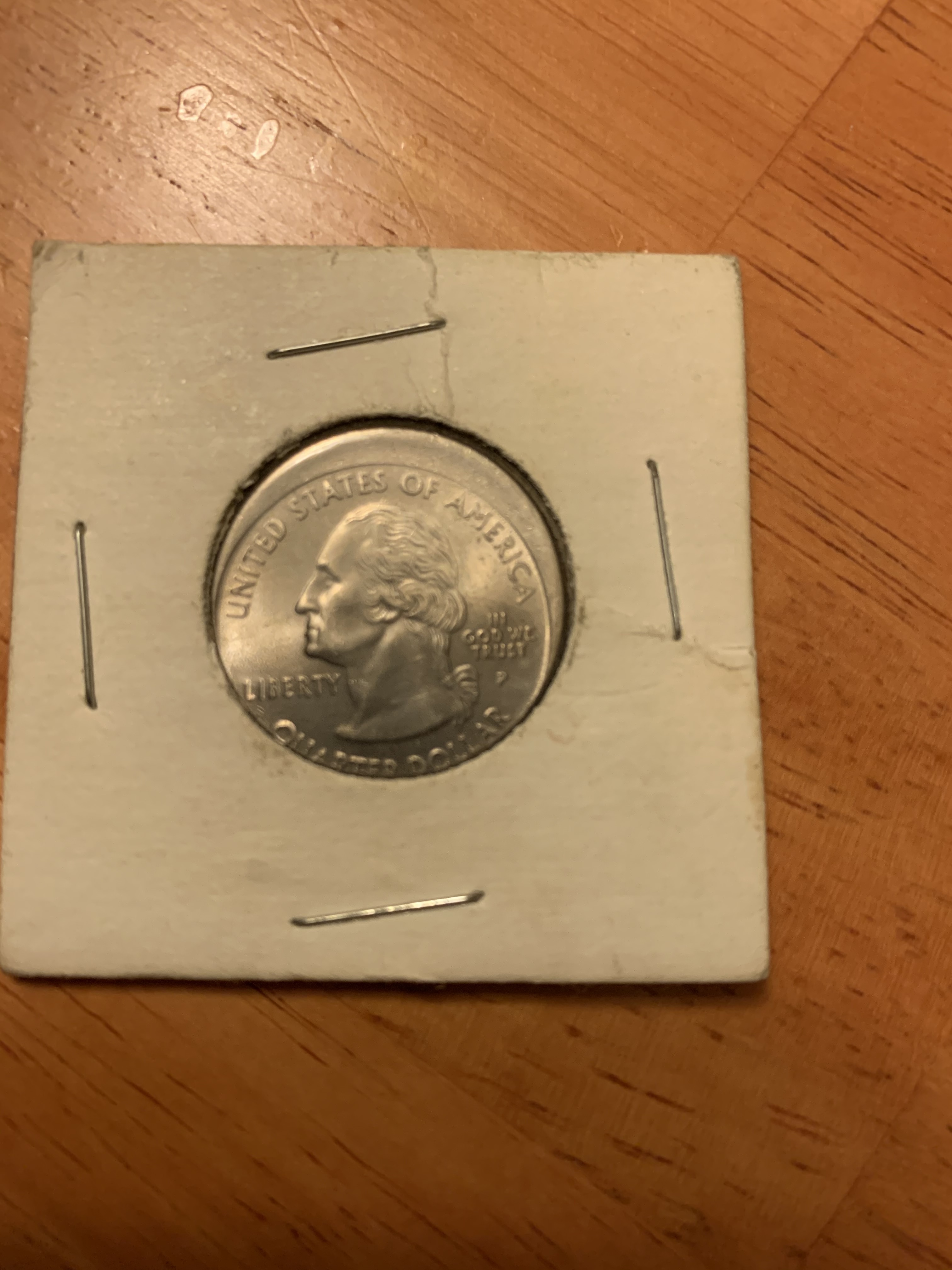
    I have a 1999 Connecticut state quarter that has a slight error and I am hoping you can help me get an accurate value of this coin. I appreciate your help. https://uploads.disquscdn.com/images/148a8f7b53347e959a50f8bf0f776c8ded2ec048564f9844d93b3855196085db.jpg https://uploads.disquscdn.com/images/6d5717a29c546ffe7defef368d841b435439d30f050f82882a2d98cdacda5eba.jpg

    1. JoshuaTheFunTimesGuide Avatar
      JoshuaTheFunTimesGuide

      Hi, Ray!

      Awesome off-center error! Something like this could trade for about $10 to $20 — maybe even more if the right collector wanted to buy it.

      Congrats,
      Josh

    1. JoshuaTheFunTimesGuide Avatar
      JoshuaTheFunTimesGuide

      Hi, Lily —

      While this coin is worth its face value, it unfortunately isn’t worth anything more due to the heavy dings, dents, and other abrasions.

      Thanks for reaching out,
      Josh

  2. linda110751 Avatar

    I have a 1999 D connecticut state quarter dollar
    The image on the back is reverse rotated.
    Does that make it more valuable?

    1. JoshuaTheFunTimesGuide Avatar
      JoshuaTheFunTimesGuide

      Hi, Linda —

      I’d need to please see clear images of the coin posted here to be of any assistance on this one.

      Thank you,
      Josh

          1. JoshuaTheFunTimesGuide Avatar
            JoshuaTheFunTimesGuide

            Hi, Linda —

            If Washington is right side up when you’re looking at the quarter and then you flip the quarter right or left and the tree is upside down, that’s normal. Virtually all US coins are designed that way, and it’s called “coin alignment” — the two sides are oriented 180 degrees from each other. Conversely, Canadian coins (and coins from many other nations around the world) are oriented to something called “medal alignment,” or both sides oriented the same direction.

            I hope this answers your question and addresses what you were asking about. If I misread something or you need further explanation, please let me know.

            Thanks,
            Josh

          2. linda110751 Avatar
  3. Phb88 Avatar
    Phb88

    I have a mis-stamped charter oak and

    cannot find its value…..
    Stephanie

    1. JoshuaTheFunTimesGuide Avatar
      JoshuaTheFunTimesGuide

      Hi, Phb88 —

      Please post a couple clear photos of your coin and I’ll do my best to help…

      Thank you,
      Josh

    1. Chrystal Wallace Avatar
      Chrystal Wallace

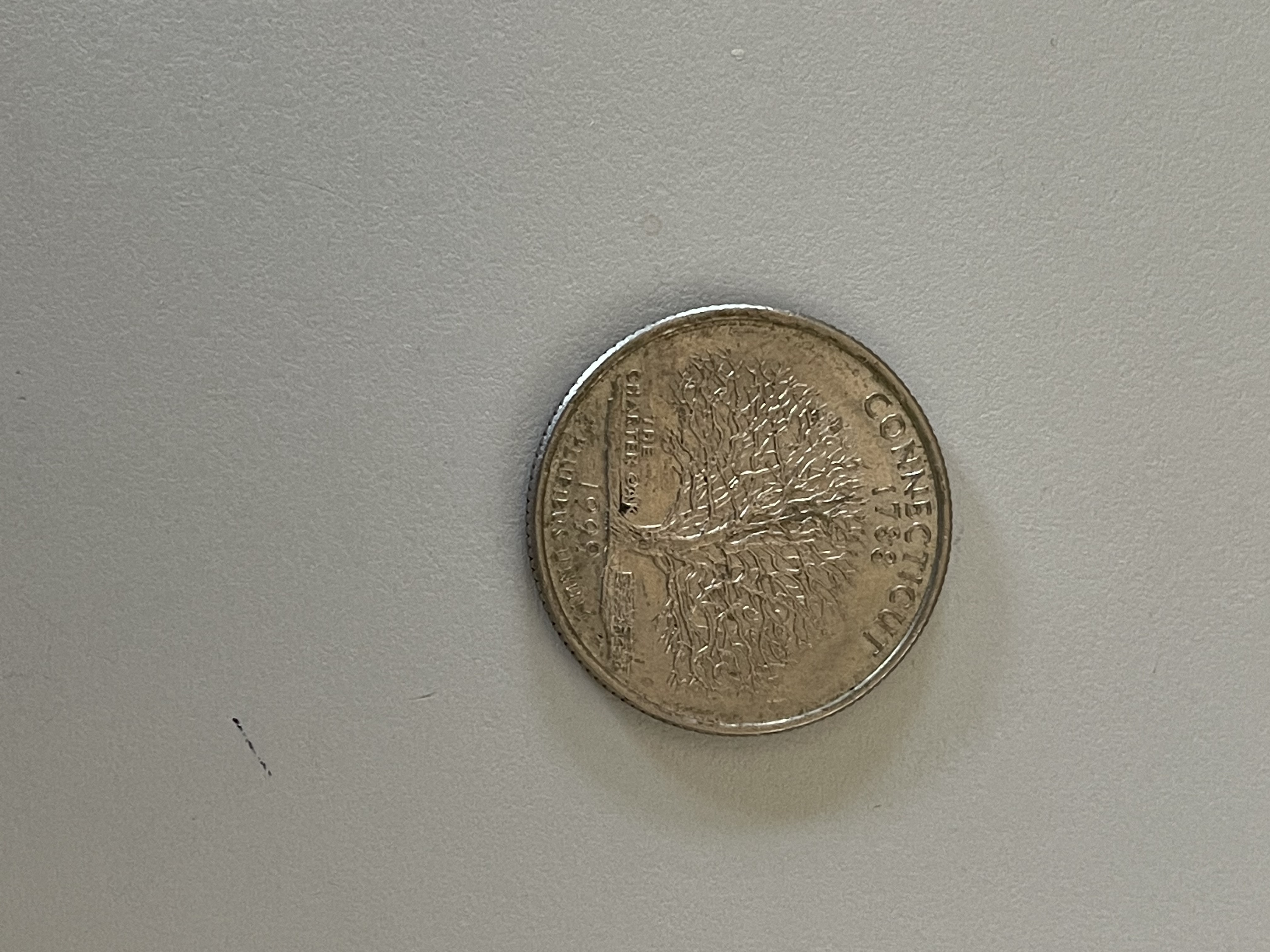
      This is front of my coin.. https://uploads.disquscdn.com/images/3f6b129f8bb8a5448ae5c8ad42ae639583b387fa0017fa0e6688e63d91ea4a3a.jpg https://uploads.disquscdn.com/images/e7ab6721d1b5f76784b7322cb865e6bfe85928e000f4fbc084ea4d6175ee41df.jpg

    2. JoshuaTheFunTimesGuide Avatar
      JoshuaTheFunTimesGuide

      Hi, Chrystal —

      It looks like the weakness in “OAK” could possibly be due to a filled die. While weaknesses like that don’t generally trigger extra value, there’s a chance you might find a collector willing to pay a small premium for something like this.

      Best,
      Josh

  4. Bridget Acereto Avatar
    Bridget Acereto

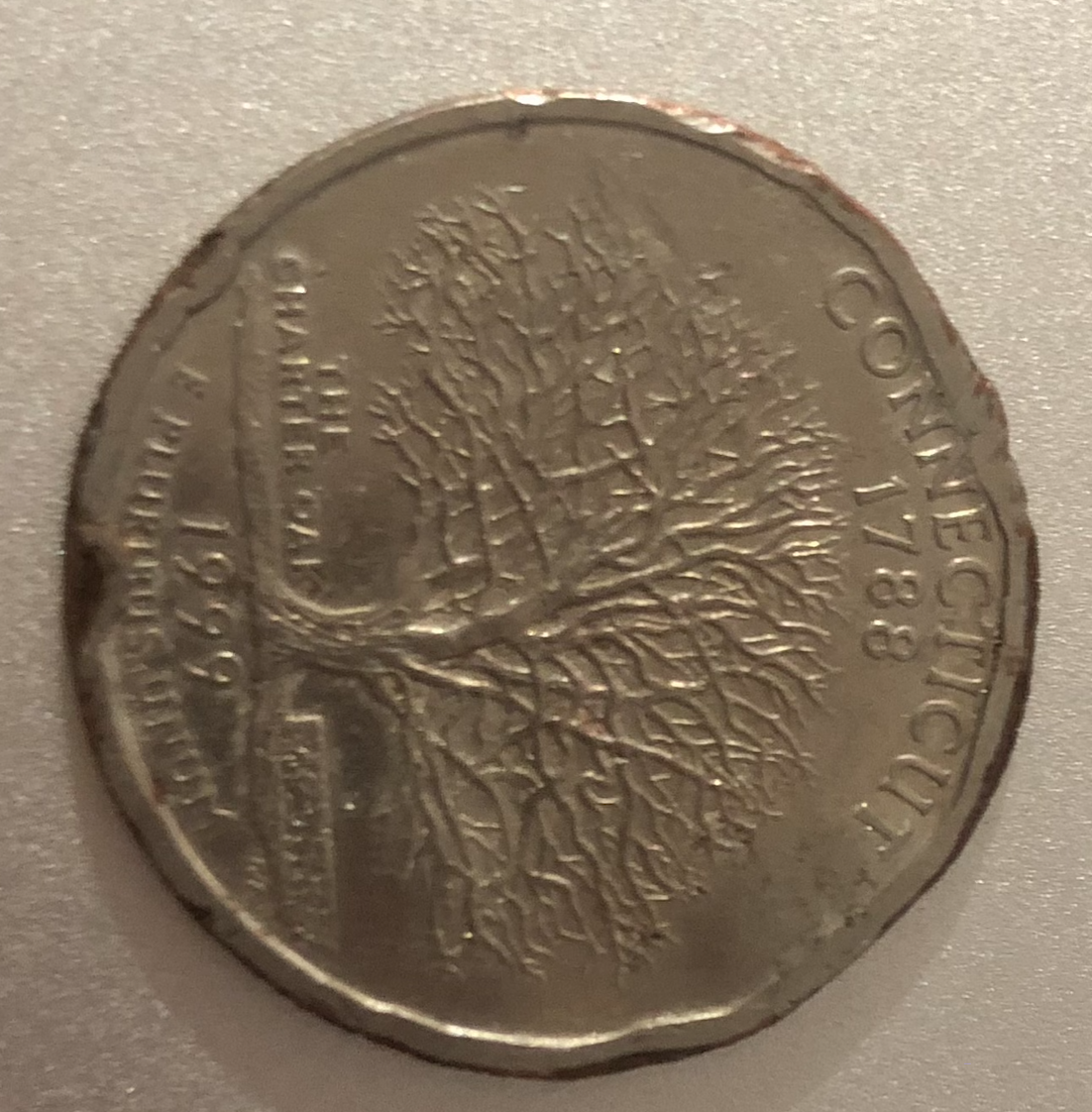
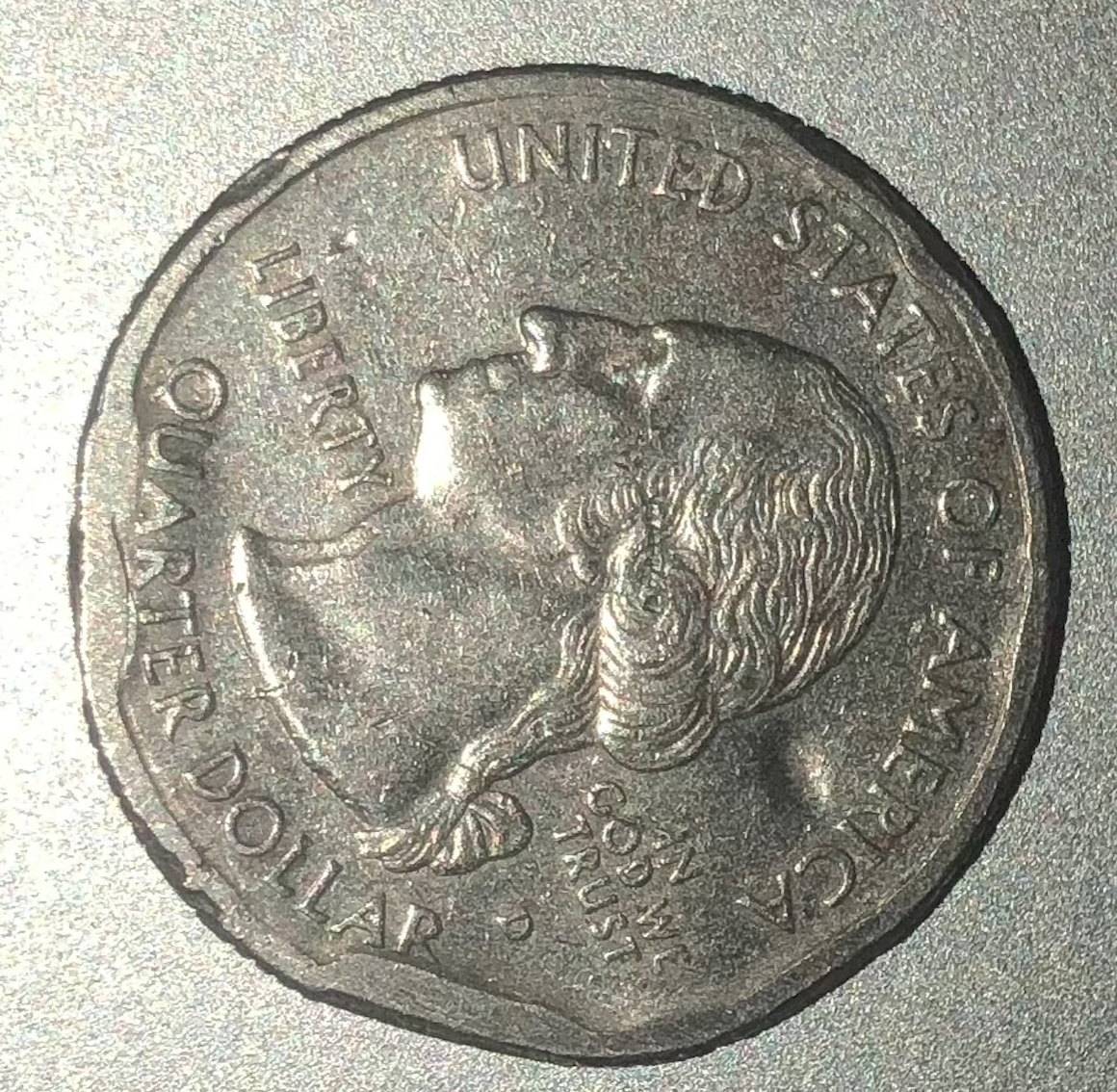
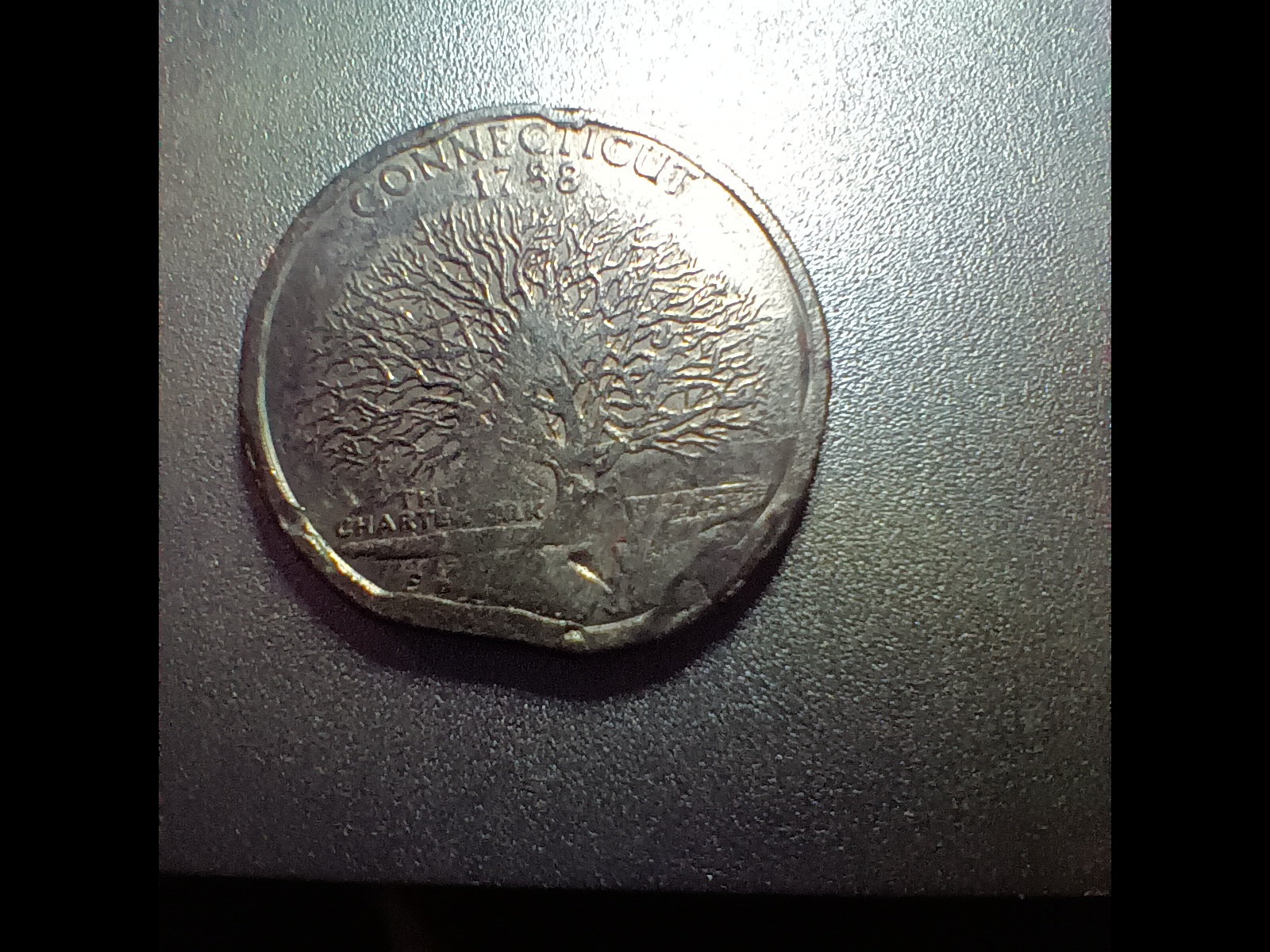
    Hello. So I have a Connecticut quarter with all kinds of errors on it. It’s so messed up, you can’t even see the year. Is it worth anything? https://uploads.disquscdn.com/images/250d9010c3d8af08d842e6761fbe64d99037bcbf8c21b6902a23fc7cde4ba3a2.jpg https://uploads.disquscdn.com/images/7d2f80f013e9fe6faf88c1b0527d04c19874449d74cbbd95e554e6d8011d0b32.jpg

    1. JoshuaTheFunTimesGuide Avatar
      JoshuaTheFunTimesGuide

      Hi, Bridget —

      Unfortunately, this piece has been heavily damaged in circulation or perhaps through intentional manipulation. While it’s worth only its face value of 25 cents due to the damage, I’d be curious about the story this coin could tell if only it could talk!

      Thank you for reaching out,
      Josh

  5. Greg Avatar
    Greg

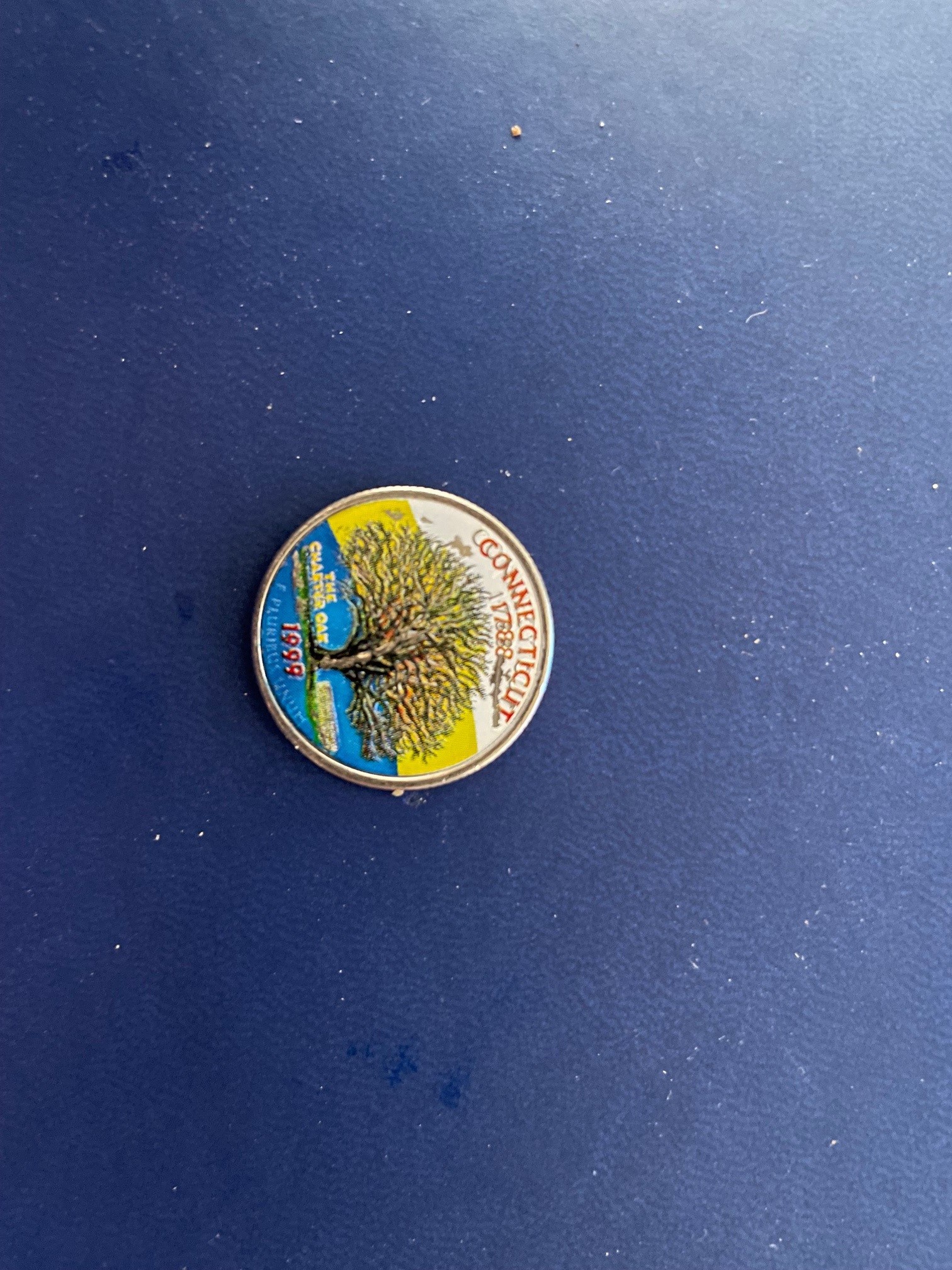
    I have a Connecticut painted quarter that appears to be off center with the painted part. The painted part is off to the right. Does this increase the value? i haven't seen much online about this https://uploads.disquscdn.com/images/01443584741fbf9b93f561d712edeafb6b0817b7980a7cd30e7a86d1c53f3163.jpg

    1. JoshuaTheFunTimesGuide Avatar
      JoshuaTheFunTimesGuide

      Hi, Greg —

      This is a regular quarter that was painted after it left the mint by most likely a major promotional company that colorized the coin. During the early 2000s painted or colorized versions of the 50 State Quarters were extremely popular items, especially among non coin collectors who nevertheless appreciated these quarters, which at the time were unlike anything the U.S. Mint had ever produced.

      While cool novelty coins, so many were produced and the number of collectors who seek these today so small that there isn’t generally much value for them in the secondary market. However, they still trade for about a dollar or so.

      What could make your piece more valuable is the fact that the colorization is indeed off center — that is highly unusual. I have never seen a piece quite like that before. While I still don’t think it would sell for a whole lot because it’s not really a “mint error,” per se, I am very sure there are at least a few collectors out there who would pay a small premium for the printing error relating to the colorization template.

      Neat find!
      Josh

    1. JoshuaTheFunTimesGuide Avatar
      JoshuaTheFunTimesGuide

      Hi, Maddy!

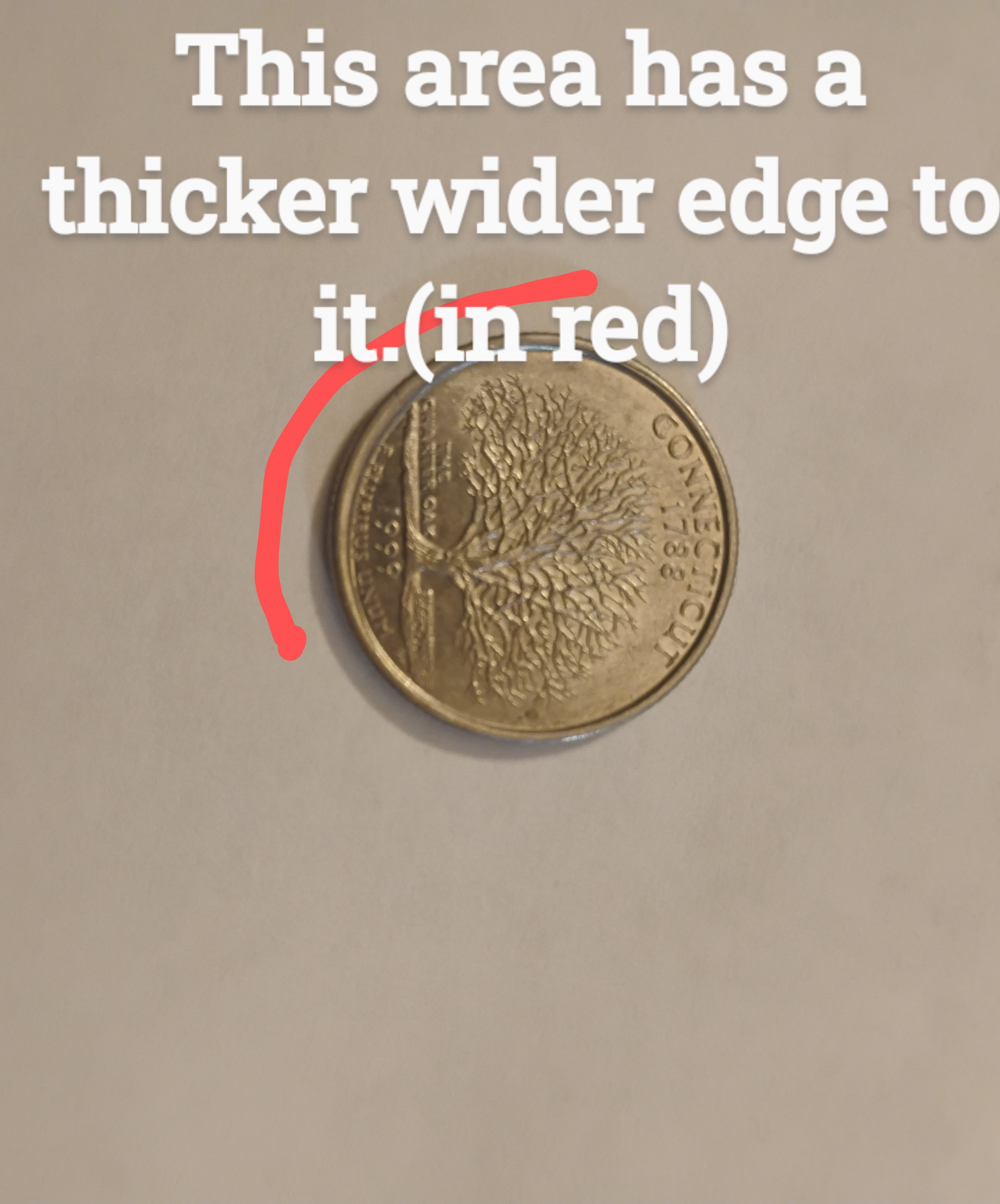
      While your quarter isn’t 100% centered, I’m afraid that the amount by which it is off center isn’t quite enough (and too common/ too frequently encountered at this amount) to really prompt any premium in value.

      Thank you for reaching out!
      Josh

      1. Maddy Reed Avatar
        Maddy Reed

        Thank you for replying.

  6. Jaclyn R Avatar
    Jaclyn R

    Double dies and matching doubling confuse me. What would this be considered? 1999 p Connecticut

    1. Jaclyn R Avatar
      Jaclyn R

      Sorry it won’t let me add a photo

    2. JoshuaTheFunTimesGuide Avatar
      JoshuaTheFunTimesGuide

      Hi, Jaclyn!

      Yes, I’m sooooo(!!!!) sorry but I will definitely need to please see a photo of the quarter so I can really help here. I know you’ve tried. Is the image saved as a jpg? Is it under, say, 2 mb? Did you click the little rectangular photo-upload icon on the bottom left side (should be) of the comment box? I hope you attempt again so I can try to help.

      Best of luck!
      Josh

    1. JoshuaTheFunTimesGuide Avatar
      JoshuaTheFunTimesGuide

      Hi, Christina —

      Unfortunately, those little scratches are signs of post-mint damage and not a mint error. With the absence of any other errors, this piece is worth its face value of 25 cents.

      Thank you for reaching out,
      Josh

Leave a Comment

Ezoic/Google Ad

300x250

Content Widget

Ezoic/Google Ad

300x600 Sticky