


This post may contain affiliate links. If you buy thru these links, we may earn a commission at no additional cost to you.
Are you wondering if your 1966 quarter is worth more than face value?
Think you might have a 1966 silver quarter?
Curious if there are any rare and valuable 1966 silver quarters?
Today, I’m going to answer these questions and many more — so you’ll know exactly which 1966 quarters are worth holding onto!
What Is Unique About 1966 Quarters?
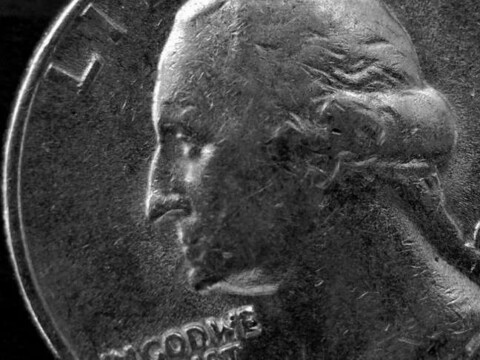
Let’s talk about that 1966 Washington quarter you just found in your pocket change or coin jar…
Unless it looks brand new and appears to have just been minted yesterday, your 1966 quarter is probably worth only face value.
Why only face value?
For one, 1966 quarters are so common! The U.S. Mint struck 821,101,500 for circulation. (That’s nearly 1 billion… with a “B”.)
Also, 1966 quarters are made from copper-nickel clad — which is a base metal that doesn’t have a very high bullion value. So, any worn 1966 quarters have no value beyond the 25 cents inscribed on the coin, because their intrinsic metal value is even lower than that!
What if your 1966 quarter has no mint letter on the front of the coin where you sometimes see one (just to the right of George Washington’s head, sort of behind it)? Then surely, a 1966 quarter with no mint mark must be worth something, right?
Unfortunately, no.
Those little letters you usually see on Washington quarters are called mintmarks, and mint marks tell us where a coin was made. The lack of a mintmark can also usually clue us in as to where the coin came from. Most often, no mintmark on a United States coin means it was made at the Philadelphia Mint.
But that’s not necessarily the case with the 1966 quarters…
The 1960s Coin Shortage
A major coin shortage in the early 1960s — along with rising bullion values for the silver quarters that were still being made then — led to a perfect storm.
A rising demand for coinage was bad enough, especially when it seemed the Mint couldn’t make enough coins to satisfy consumer demand.
But when the value of a silver quarter began rising close to and eventually over the face value of the coin, silver stackers were compelled to remove these coins from circulation and hoard them.
This is what happened to the 90% silver dimes, quarters, and half dollars being struck in the early 1960s. And it also affected silver dollars — which you could buy from the bank for just $1 back in the 1950s and early ’60s.
How did the U.S. Mint solve that problem?
Well, for one, it debased the metallic composition of the silver coins. The dime and quarter were made from a copper-nickel clad composition beginning in 1965, while the half dollar went to a 40% silver composition.
Furthermore, to help reduce collector activity of the new clad coins that were coming out to relieve the coin shortage, the U.S. Mint removed mintmarks from all coins — pennies, nickels, dimes, quarters, and half dollars. The Philadelphia, Denver, and San Francisco Mints all struck coins in the mid-1960s, but you’d never be able to tell them apart. They all look identical and are indistinguishable as to which Mint they came from!
Making matters even more frustrating for coin collectors is the fact that the U.S. Mint stopped making proof sets and mint sets during the 1960s. They focused virtually all coin-making energies on producing circulation coinage.
But that doesn’t mean collectors were left empty-handed…
The U.S. Mint did produce Special Mint Sets from 1965 through 1967. These contain high-end versions of the Lincoln pennies, Jefferson nickels, Roosevelt dimes, Washington quarters, and Kennedy half dollars struck during those years.
Are There Any 1966 Quarters Worth More Than 25 Cents?
Here’s the good news…
YES, there are 1966 quarters that are worth much more than their face value!
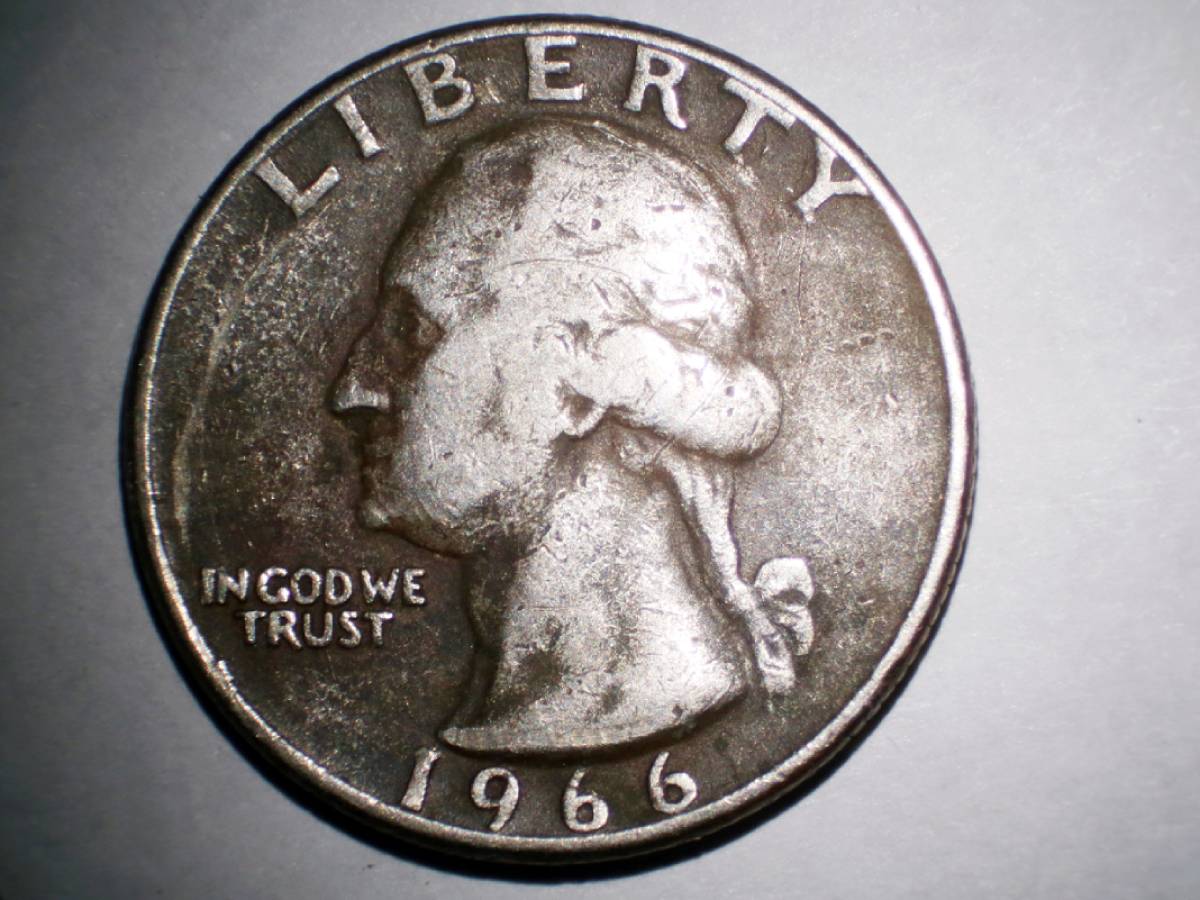
These are the 1966 quarters you should be looking for:
- Uncirculated 1966 quarters are usually worth about $1 to $3.
- 1966 quarters from Special Mint Sets have a value of around $2 and higher.
- Certain 1966 quarter errors and varieties range from $5 to $25. (For example, some 1966 doubled die quarters worth $50 or more.)
The most valuable 1966 quarter ever sold was graded MS68+ by Professional Coin Grading Service (PCGS) and took a whopping $21,000 in a 2023 auction.
The 1966 SMS quarter, which saw 2,200,000 examples struck, claims a record price of $3,738 for a specimen that was graded MS67DCAM by Professional Coin Grading Service and traded hands in a 2006 auction.
Is There A 1966 Silver Quarter Error Coin?
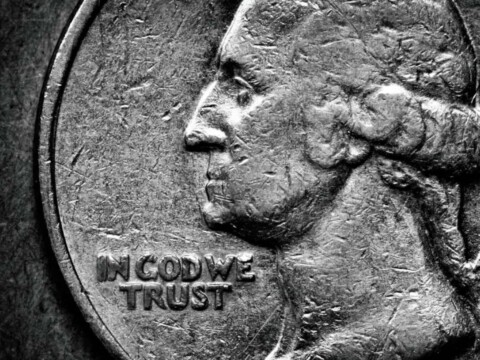
You may have heard about the very rare and valuable 1965 silver quarter error worth more than $7,000.
You’re probably wondering if there’s a similar 1966 silver quarter worth the big bucks.
It’s a great question to ask… especially when there are so many valuable error coins out there.
The exciting news is that there is at least one 1966 silver quarter out there! The lone known example was graded AU-53 by PCGS.
How much is the rare 1966 silver quarter worth? The one example mentioned above has not yet been sold at auction, therefore there is no actual hammer price realized for us to share here yet. However, given auction records for similar valuable silver quarter errors it’s likely the 1966 silver quarter is worth at least $10,000.
How To Identify A 1966 Silver Quarter
When it comes to transitional off-metal errors like the 1966 silver quarter, your ability to know if you’ve landed such a piece comes down to weighing the coin in question.
The only problem is a lot of people don’t have the right kind of scale for weighing coins — which often leads to a lot of false positives and plenty of dashed hopes.
How would you know if you found a 1966 silver quarter?
You can’t go by looks alone. A lot of 1966 quarters may “look silver” but aren’t. The weight of the coin is the giveaway. A 1966 silver quarter weighs about 6.25 grams, whereas a clad quarter typically weighs 5.67 grams.
You’d need a gram scale that provides readouts in increments of at least one-tenth gram or less to really know for sure that you landed a silver quarter.
If you do find a 1966 silver quarter — or one you think is silver — it’s best to get it authenticated by a professional coin grader.
READ NEXT: A List Of All Rare U.S. Quarters (And Their Values)


Leave a Comment