

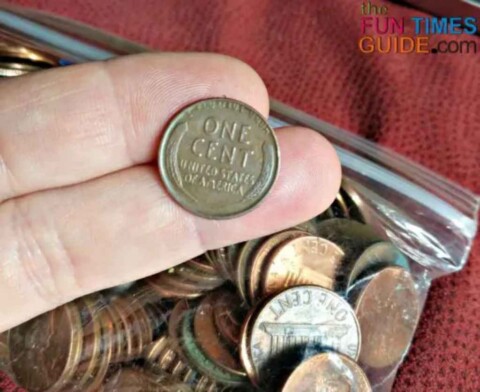
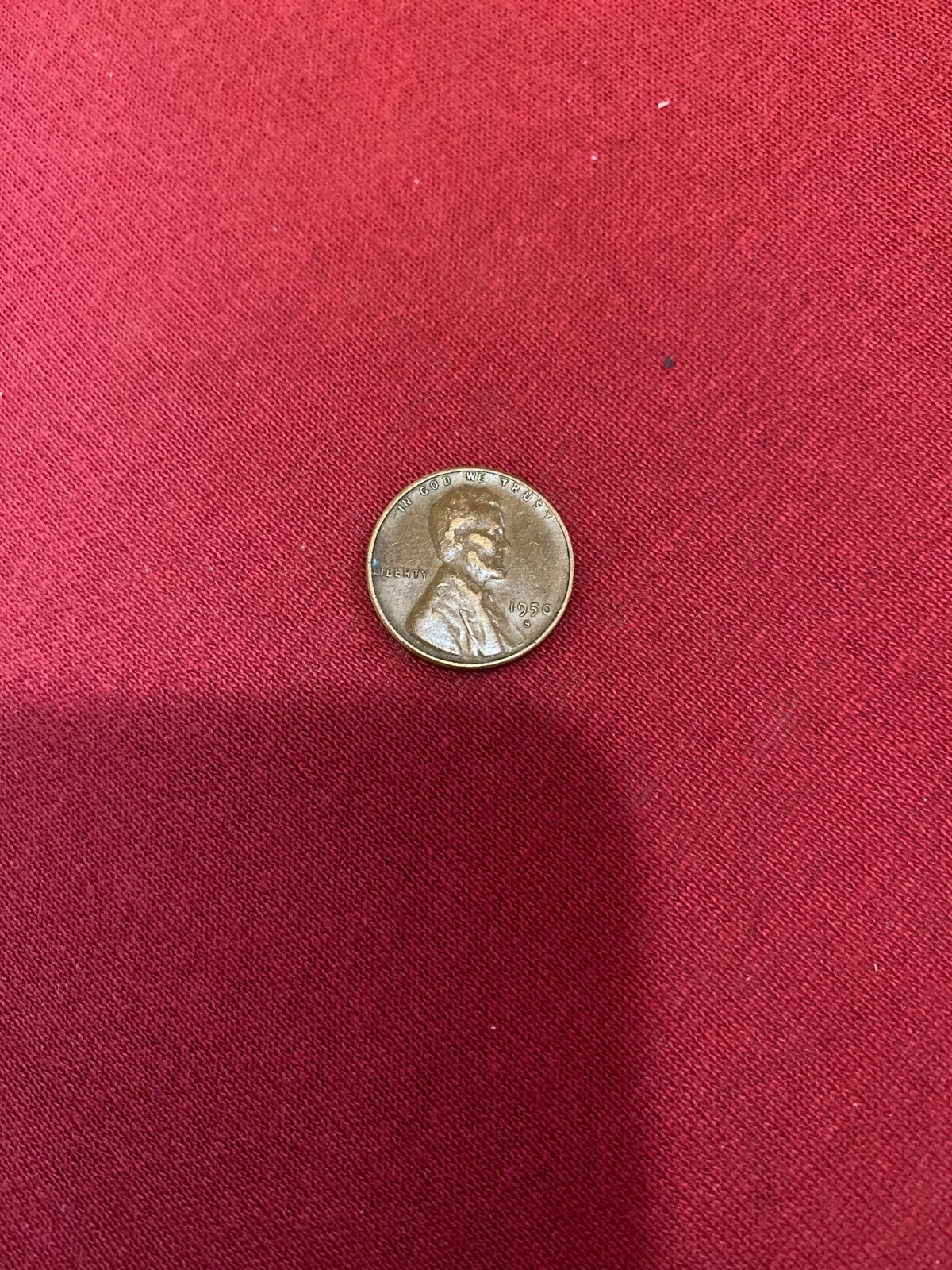
Have a 1950 wheat penny and want to know its value?
1950 pennies are hard to find in pocket change these days — because more and more of these old pennies have been plucked from circulation and squirreled away in collections, estates, and coin hoards.
Some 1950 wheat pennies are worth $100, even $1,000 — or more!
So, how do you know whether your 1950 penny is worth a few hundred dollars or just a few cents?
Read on to see how much your 1950 wheat penny is worth…
Circulated 1950 Wheat Penny Values
All 1950 pennies range in value — depending on their condition. So, it’s important to know whether your 1950 penny is circulated or uncirculated.
If you’ve found your 1950 wheat penny in pocket change, then it will have some degree of wear. It is, therefore, considered circulated.
Worn 1950 pennies may be challenging to find in pocket change but they’re not rare. Millions are tucked away in coin collections, so there are plenty around — even though we don’t see them in circulation too often.
Here’s a look at how many 1950 pennies were made at each U.S. Mint facility and how much circulated 1950 wheat pennies are worth today:
- 1950 penny with no mintmark (Philadelphia): 272,635,000 minted; Value: 3 to 15+ cents
- 1950-D penny (Denver): 334,950,000 minted; Value: 3 to 15+ cents
- 1950-S penny (San Francisco): 118,505,000 minted; Value: 5 to 25+ cents
Uncirculated 1950 Wheat Penny Values
So what about those more valuable 1950 pennies?
The record price for any penny dated 1950 is $15,275 — paid in 2013 for a 1950-D Lincoln cent graded Mint State 67+ (very high-end uncirculated) by the Professional Coin Grading Service.
Most uncirculated 1950 pennies are worth $100 or less.
In fact, the vast majority of uncirculated 1950 pennies are worth less than $5. (These are the ones in “typical” Mint State grades of MS-64 or lower.)
Proof 1950 Penny Values
While the US Mint struck hundreds of millions of pennies for use in circulation in 1950, there were also tens of thousands of special proof 1950 pennies made at the Philadelphia Mint for coin collectors.
Proof coins are struck on polished coin blanks (called planchets) by specially prepared dies. They generally exhibit mirror-like surfaces.
These special 1950 pennies were sold in proof sets to coin collectors. While it’s possible that a few may have been spent over the years, most of the surviving 1950 proof pennies exist in coin collections.
Generally speaking, 1950 proof pennies are worth $25 and up.
Exceptional 1950 cameo proof pennies with deep-mirrored surfaces and frosted designs and lettering are worth $1,000 or more.
Wondering if you have a rare 1950 error penny? Grab a 10x loupe and examine the mintmark and lettering. You’re checking for a repunched mintmark on 1950-D or 1950-S cents. See if there’s a bold, raised second serif or shadow bar jutting out from the “D” or “S” (rather than flat machine doubling). See if the word “LIBERTY” has a vertical BIE die break (an extra raised lump of metal wedged between the “B” and “E”). You’ll also want to weigh the coin — it should weigh around 3.11 grams.
IMPORTANT: What Is The Grade Of Your 1950 Penny?
To determine the true value of your 1950 Lincoln wheat penny, you first need to know what condition (or grade) your coin is in.
These are the best coin grading apps that will make grading coins yourself much easier.
Do you have a 1950 wheat penny? Think there may be something unique about it? Post a picture of your coin in the comments below and I’ll try to help!
READ NEXT: A List Of The Most Valuable U.S. Pennies




Leave a Comment