




This post may contain affiliate links. If you buy thru these links, we may earn a commission at no additional cost to you.
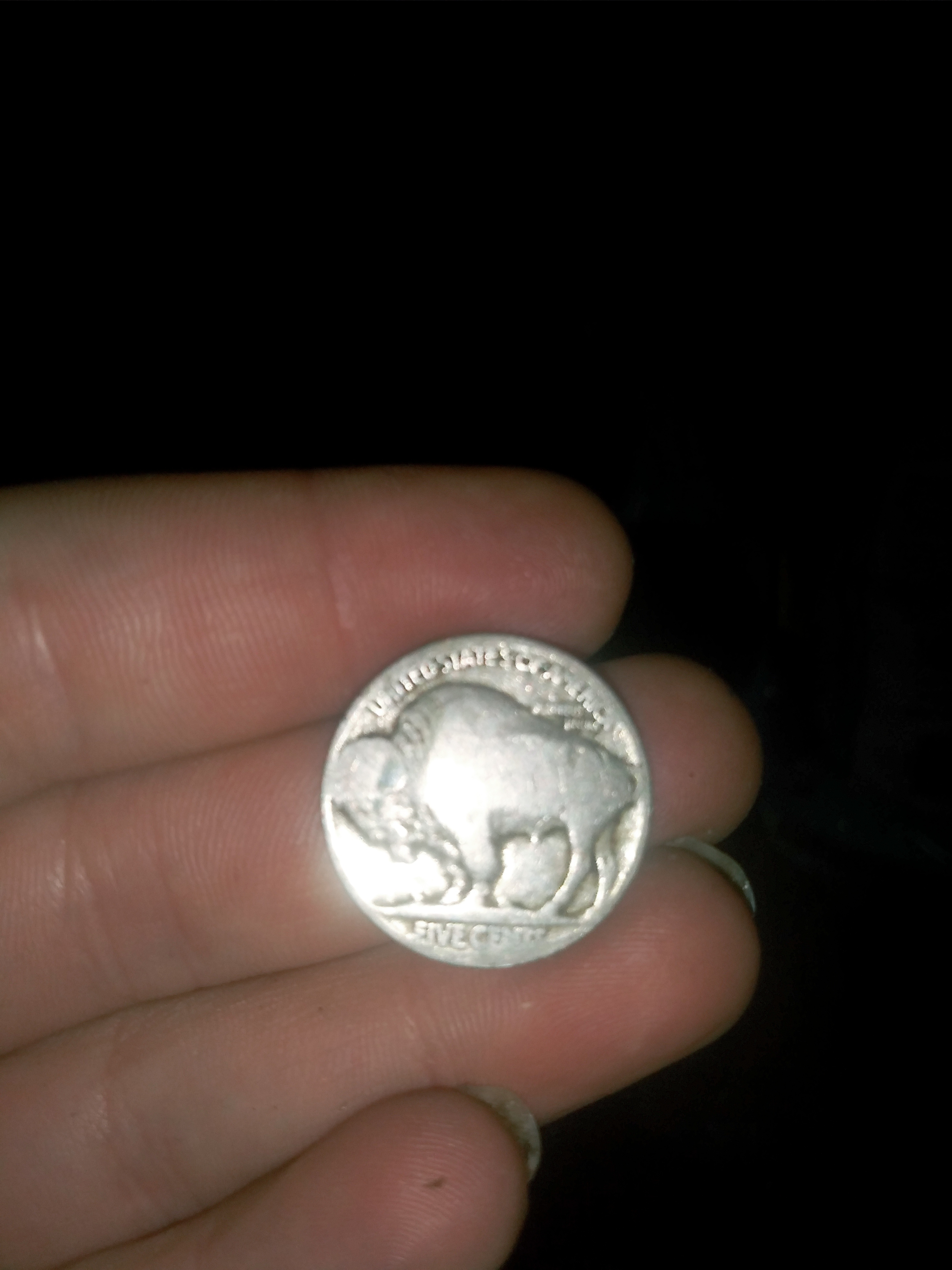
Five cent Buffalo no-date nickels (those without visible dates, also called dateless Buffalo nickels and Indian Head nickels with no date) may not be worth very much money — but they’re still interesting coins to collectors and non-collectors alike!
It’s important to know that every dateless Buffalo nickel did have a date at one time. Because the U.S. Mint did not make any Indian Head nickels without dates.
So, why are some Buffalo nickels dateless and others are not?…
The Reason No-Date Buffalo Nickels Exist
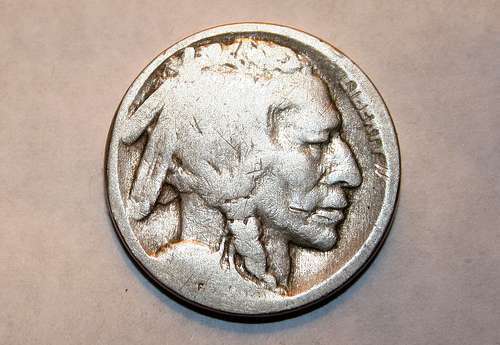
Indian Head nickels were made from 1913 to 1938.
The reason some Buffalo nickels have no dates is simply because the dates have been worn off after many years in circulation.
The dates on these Buffalo nickels wore off mainly due to the location of the date on the coin itself.
The date is located just on the bottom left on the Buffalo nickel — on the shoulder of the Native American. This means the date sits high off the surface of the coin, which is one of the first places that wear & tear will take place on the Indian Head nickel.
It can take many years (sometimes decades) of normal wear to rub a date off a Buffalo nickel.
The coin’s overall longevity was helped when the design was reworked a bit just months after the coin was released in 1913. Changes included turning the mound on which the buffalo stands into merely a line. Below the line is a recessed area where the denominational inscription “FIVE CENTS” is located.
These design changes aided in eliminating the problem of the date wearing off the coin prematurely, even prolonging the coin’s typical lifespan in circulation in some cases.
Still… millions of dateless Buffalo nickels exist.
For a coin which saw heavy use during the Great Depression, you can bet that Indian Head nickels with no date would tell interesting stories if they could talk!
FUN FACT: James Earle Fraser designed the Buffalo nickel. His inspiration for the buffalo motif was an American bison named “Black Diamond” in a New York City zoo. For the portrait, he used a composite bust of 3 Native American chiefs: Iron Tail, Two Moons, and John Big Tree.
How Much Are Dateless Indian Head Nickels Worth?
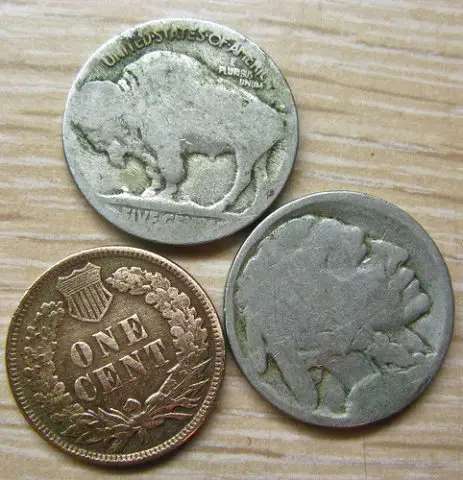
Not knowing what year a coin was made makes it harder for that coin to tell its story, so to speak.
That’s why some people tend to “throw away” dateless Buffalo nickels, presuming they’re worthless.
But wait… those no-date Indian Head nickels are NOT worthless!
While still cheap to buy, they have risen somewhat in value over the past decade.
For example, dateless Buffalo nickels were obtainable for less than 20 cents years ago. (In fact, they were often spent for face value by those who just wanted to get rid of them!)
More recently, Indian Head nickels with no date have been going for as much as 50 cents — and more.
Coin dealers may be willing to pay you 20 to 30 cents for a dateless Buffalo nickel today.
The Popularity Of Buffalo Nickels With No Date
While not highly valuable, five-cent Buffalo no-date nickels are collected for many reasons.
First off, even a dateless Buffalo nickel is still highly valued by those who appreciate the romance behind the legendary American coin.
Indian Head nickels hearken to an earlier, golden time in American history. Dateless Buffalo nickels would often find homes within the workshops and studios of artisans and jewelers.
In fact, many decades ago, those down on their luck would scrape new designs onto the Buffalo nickel and pass off their artwork in exchange for meals, clothing, or a bed to lie on overnight. Those artistic Buffalo nickels are referred to as Hobo Nickels.
These days, dateless Indian Head nickels make wonderful gifts for young collectors. Handling an old Buffalo nickel — even one without a date — can spark the interest in a child to a pursue a hobby that can last a lifetime!
How To Find The Date On A Dateless Buffalo Nickel
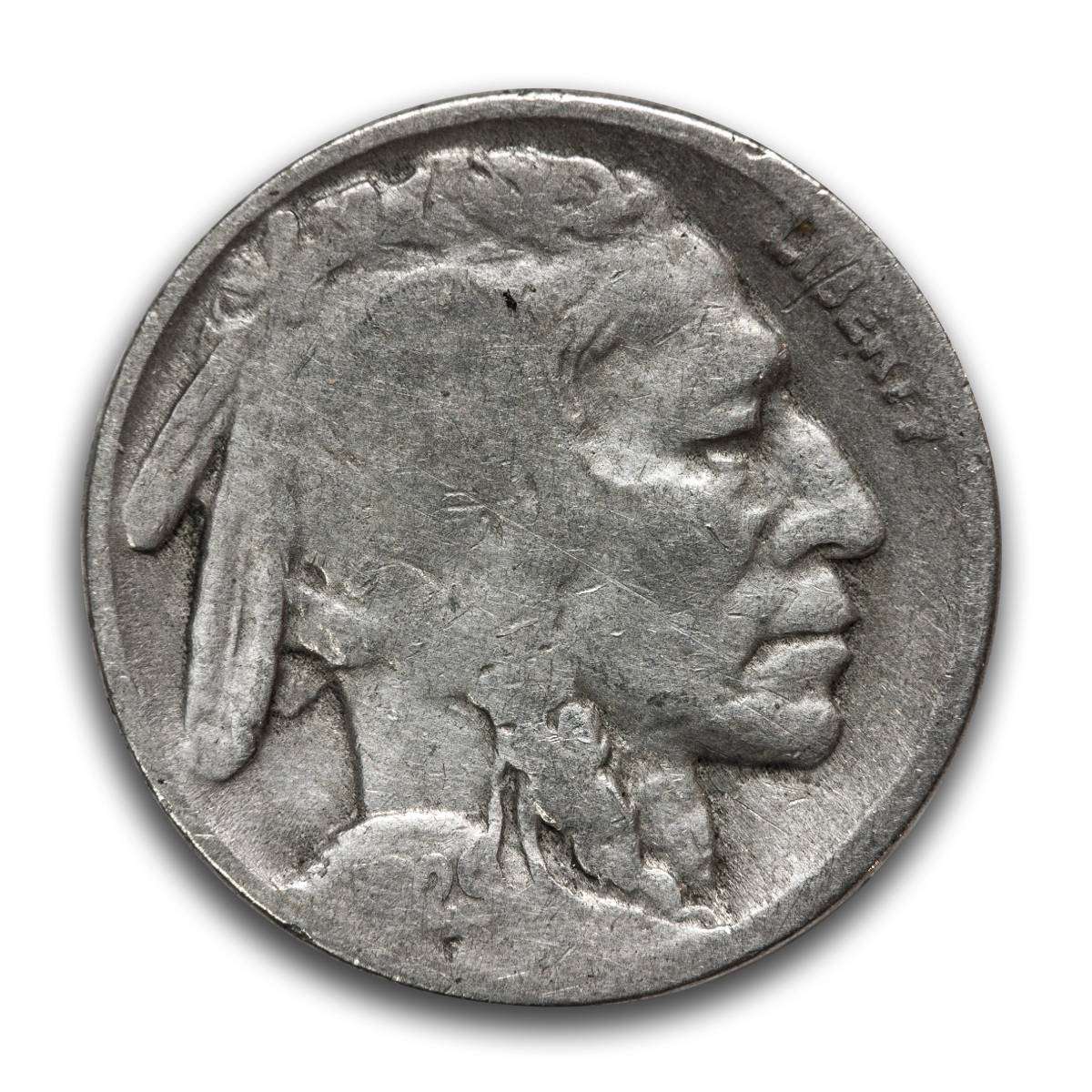
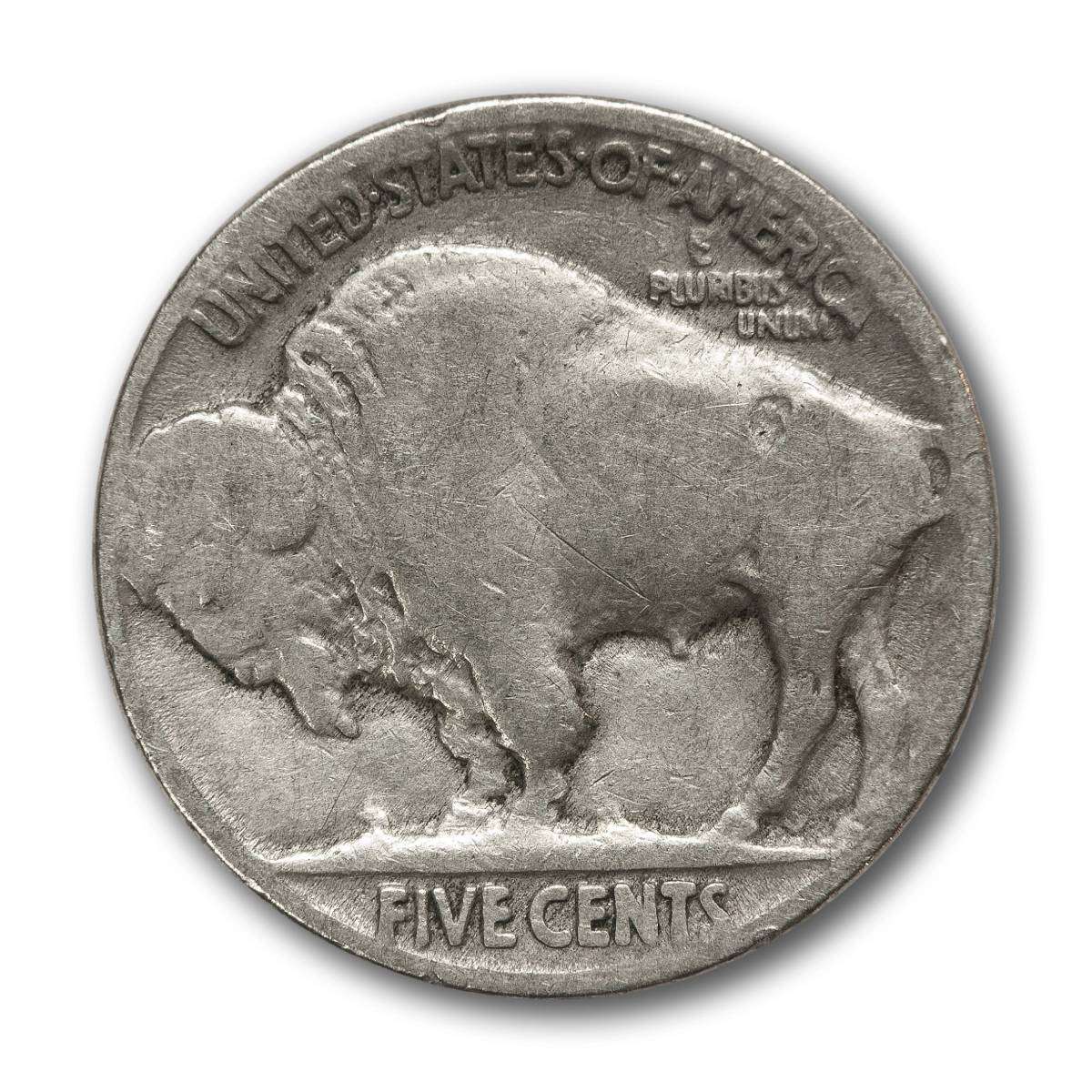
Using chemicals on five-cent Buffalo no-date nickels to reveal the date has its pros and cons.
Most importantly, using acid (or ferric chloride, sold as Nic-a-Date restorer) to reveal the date on a Buffalo nickel can be physically hazardous to a careless user. It also ruins the value of the coin.
It can be tempting to grab a bottle of ferric chloride or Nic-A-Date from the hobby shop when you find a Buffalo nickel with a completely worn-off date. Sure, the acid will bite into the nickel and make the numbers pop back up. But it will also leave a nasty rough, blotchy acid scar that permanently ruins any collector value the coin ever had. To make matters worse, that acid-restored date actually fades away again over time — and if you keep reapplying the chemical, it brings back less of the numbers each time, while making the metal look increasingly uglier. That’s why you should never use chemicals on a coin that still has a partial date peeking through! Real partial-date Buffalo nickels are worth way more than completely dateless ones. So keep it original and step away from the acid!
Numismatically speaking, applying any cleaner, acid, or chemical to a coin damages it in the eyes of virtually every numismatist on the planet — which, effectively, lowers its value.
Applying acid to a dateless Buffalo nickel should be done only for the entertainment value of seeing what date used to be on the coin.
That said, using acid on a dateless Buffalo nickel can sometimes reveal a scarce date, or even a rare date for this particular coin. In such a circumstance, using acid on a five-cent Buffalo no-date nickel could actually be beneficial and possibly increase the value of a formerly dateless Buffalo nickel.
Still… in most cases, using acid on an Indian Head nickel (or any coin) effectively ruins the coin in the eyes of coin collectors. So you should think of any coin that you apply acid to as one that you are sacrificing — simply for curiosity’s sake. And if you just so happen to find out that your Buffalo nickel has a scarce or rare date… well, that would be a bonus!


Leave a Comment