






This post may contain affiliate links. If you buy thru these links, we may earn a commission at no additional cost to you.
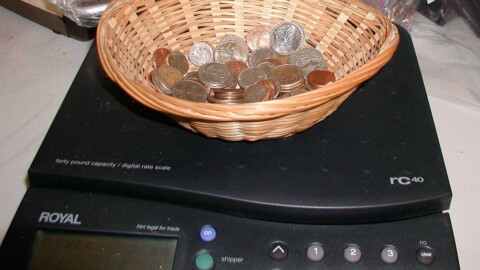
Many people have asked the question: “How much do coins weigh?”
The United States has many different types of coins — so naturally there isn’t a single answer, but rather several.
With regard to denomination, the most asked questions we get about coin weights are:
“How much does a quarter weigh?“
And…
“How much does a dime weigh?“
So today I’m going to show you how much all U.S. coins weigh — by denomination.
Can You Weigh Coins To Count Them?
Yes, you can!
In fact, many different coin counting machines can accurately calculate a quantity of coins simply by weighing them.
If you want to weigh coins to count them yourself (instead of using a coin counter), then your best bet is to buy a coin electronic weighing machine — a digital coin scale.
The Best Coin Scale To Use
A digital coin scale is probably the most convenient method for weighing coins, but an analog coin scale could work too.
Whichever type of coin scale you decide to use, be sure that it can provide an accurate, unrounded weight down to at least 1/10th of a gram (preferably 1/100th of a gram).
Scales that measure only in whole grams will round off the fractions to the nearest whole gram which can provide incomplete and even downright misleading readings. That’s not good when weighing coins — especially those whose metallic variants are distinguished by weight differences of less than 1 gram!
Conventional kitchen scales and postage scales are handy and probably what you have the easiest access to. However, those types of scales generally provide readouts only to the nearest whole gram. That’s why it’s best to avoid using food scales and postage stamp scales.
If you want to weigh coins accurately like a pro, buy a good coin scale! (These are my coin scale recommendations.)
In this video, I’m showing you the 5 things you need to know before weighing coins PLUS my favorite coin scale:
How To Count Coins By Weight
So, you want to group all of your coins together and count them by weighing them, right?
Here’s how to do it:
- Separate all of your coins by denomination.
- Next, within each denomination, separate them by type of metal (pre-1965 90% silver dimes, quarters, and half dollars versus post-1982 zinc pennies, etc.)
- Then, place all coins of the same denomination and metal type on a coin scale.
- Finally, divide the number in the weight readout by the standard weight of a single coin of that type. (See individual coin weights listed in this article below.)
Voila… The result of your calculation should be the number of coins on the scale!
NOTE: It’s important that you realize the accuracy of the quotient (the final number you arrive at with your calculation after division) depends on the scale providing an accurate readout to at least 1/10th of a gram. That’s because the U.S. Mint is permitted to strike coins within a certain range (or deviation) of the standard weight. This difference is known as “tolerance.” The weight difference based on tolerance depends on the denomination in question — discussed in more detail below. Also, coins that have a lot of wear may weigh less than the standard weight for a coin of that type. Therefore, when you weigh coins to count them, you must take these minor differences into account.
How Much Coins Weigh By Denomination
If you’re going to weigh coins to count them, then their weight in grams is absolutely important to know.
So let’s explore all U.S. coin weights by denomination…
How much does a dollar coin weigh?
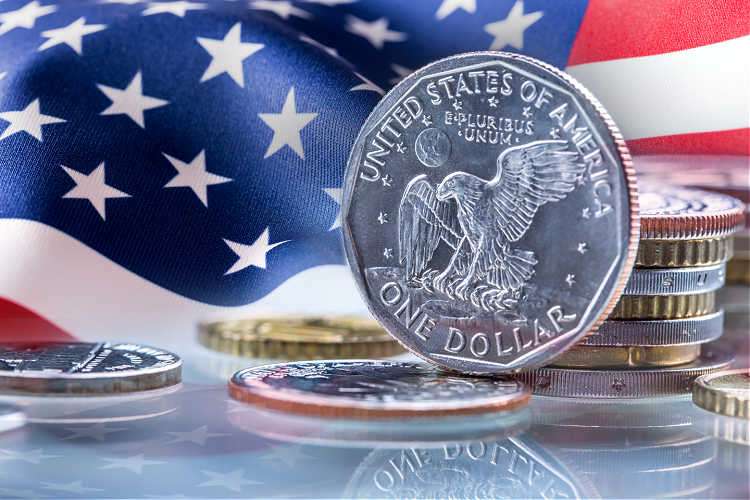
U.S. dollar coins were first struck in 1794 and have been made in different sizes and with various metals. Therefore, there is no single standard weight for all silver dollars or other dollar coins made by the United States Mint.
Interested in the weight of circulating U.S. dollar coins?
Here’s how much a dollar coin weighs:
| Type of Dollar | Years of Production | Weight (grams) |
|---|---|---|
| Silver dollars | 1794 – 1835 | 26.96 |
| Silver dollars | 1836 – 1839 | 26.73 – 26.96 |
| Silver dollars | 1840 – 1970 | 26.73 |
| 40% Silver dollars | 1971 – 1976 | 24.59 |
| Copper-nickel clad dollars | 1971 – 1978 | 22.68 |
| Copper-nickel clad dollars | 1979 – 1999 | 8.1 |
| “Golden” dollars | 2000 – Present | 8.1 |
*Tolerances are .097 grams more or less for classic silver dollars and .907 grams more or less for copper-nickel clad Eisenhower dollars.
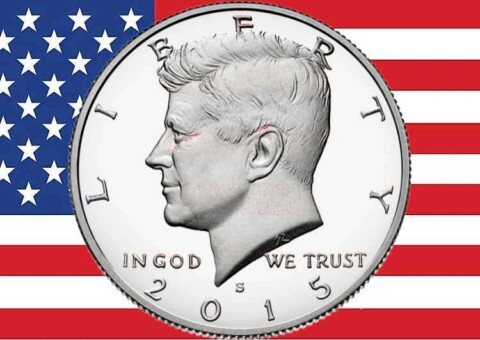
How much does a half dollar weigh?
Like silver dollars, the U.S. half dollar coin has been minted since 1794 — and there have been some changes to this denomination over the years.
Want to know how much a circulating 50-cent coin weighs?
Here’s how much a half dollar weighs:
| Type of Half Dollar | Years of Production | Weight (grams) |
|---|---|---|
| Half dollars (larger size of 32.5 mm) | 1794 – 1836 | 13.48 |
| Half dollars (smaller size of 30 mm) | 1836 – 1839 | 13.36 |
| Half dollars (no arrows at the date) | 1839 – 1853 | 13.36 |
| Half dollars (1853-55 with arrows at the date) | 1853 – 1873 | 12.44 |
| Half dollars (1873-74 with arrows at the date) | 1873 – 1964 | 12.5 |
| 40% silver half dollars | 1965 – 1970 AND 1976-S | 11.5 |
| Copper-nickel clad half dollars | 1971 – Present | 11.34 |
*Tolerances for classic silver half dollars struck through 1947 are .097 grams more or less, .259 grams more or less for Franklin half dollars and 1964 Kennedy half dollars, .400 grams more or less for 1965-1970 Kennedy half dollars, and .454 grams more or less for clad Kennedy halves struck since 1971 .
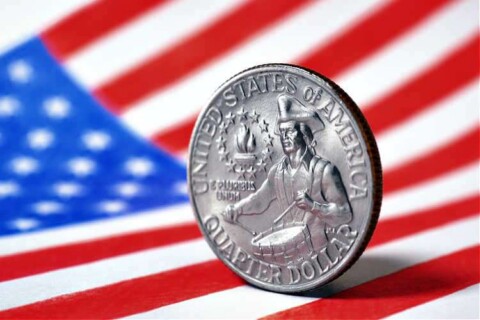
How much does a quarter weigh?
The U.S. Mint has been making quarters since 1796, and there have been changes to the weight of the denomination since the first examples of this workhorse coin were made back in the late 18th century.
Interested in the standard weights for circulating U.S. quarters?
Here’s how much a quarter weighs:
| Type of Quarter | Years of Production | Weight (grams) |
|---|---|---|
| Quarters | 1796 – 1838 | 6.74 |
| Quarters (Liberty Seated design, no arrows at date) | 1838 – 1853 | 6.68 |
| Quarters (1853-55 with arrows at date) | 1853 – 1873 | 6.22 |
| Quarters (1873-74 with arrows at date) | 1873 – 1964 | 6.25 |
| Copper-nickel quarters | 1965 – Present | 5.67 |
| 40% silver Bicentennial quarters | 1976-S | 5.75 |
*Tolerances for quarters struck from 1796 through 1930 are .097 grams more less, .194 grams more or less for the 90% silver Washington quarters struck from 1932 through 1964, and .227 grams more or less for clad quarters struck since 1965.
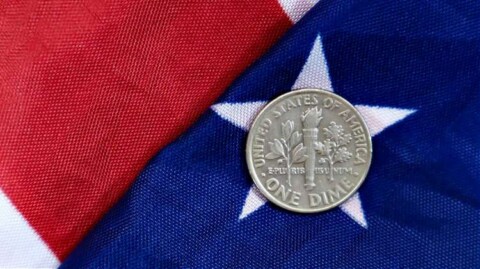
How much does a dime weigh?
Dimes have been made in the United States since 1796, and these coins have been made in various weights.
Wondering about the standard weights for circulating U.S. dimes?
Here’s how much a dime weighs:
| Type of Dime | Years of Production | Weight (grams) |
|---|---|---|
| Dimes | 1796 – 1808 | 2.7 |
| Dimes (no arrows at the date) | 1809 – 1853 | 2.67 |
| Dimes (1853-55 with arrows at the date) | 1853 – 1873 | 2.49 |
| Dimes (1873-74 with arrows at the date) | 1873 – 1964 | 2.5 |
| Dimes | 1965 – Present | 2.27 |
*Tolerances for dimes are .031 grams more or less for dimes struck from 1796 through 1837, .092 grams more or less for Liberty Seated dimes struck from 1837 through 1872, .097 grams more or less for dimes struck from 1873 through 1964, and .091 grams more or less for clad dimes struck since 1965.
How much does a nickel weigh?
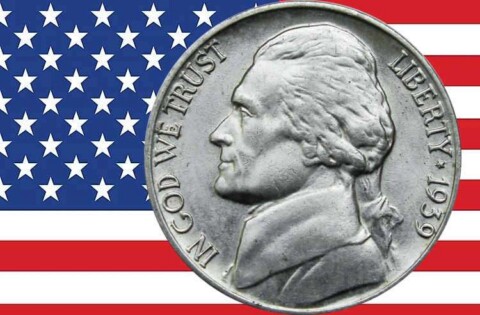
The “nickel” is really just a shorthand term for the U.S. five-cent coin — which has technically been in production since 1794. Originally, it was a small silver coin known as a half dime (or half disme).
The nickel, as we know it today, is made from a copper-nickel alloy — it debuted in 1866.
With the lone exception of silver war nickels that were made from a 35% silver alloy from 1942 through 1945 to save nickel for making World War II artillery, U.S. nickels contain a 75% copper, 25% nickel composition. However, even with the metallic changes during World War II, the weight of the coin remained unchanged.
Here’s how much a nickel weighs:
- All U.S. nickels made since 1866 weigh 5 grams.
*Tolerances for nickels are .130 grams more or less for Shield nickels (1866-1883) and .194 grams more or less for all nickels made afterward.
How much does a penny weigh?
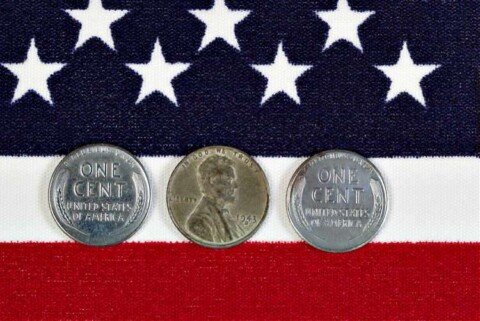
The iconic penny, or one-cent coin as this denomination is officially known in the United States, has been an American staple since 1793.
The penny has shrunk in size over the years. Once nearly the size of a modern-day half dollar, the penny was reduced to its current diameter of 19 millimeters in 1856.
The metallic composition of the “small” cent has also changed from copper-nickel to bronze, and then onto copper-plated zinc as we see today.
Here’s how much a penny weighs:
| Type of Penny | Years of Production | Weight (grams) |
|---|---|---|
| Copper-nickel pennies | 1856 – 1864 | 4.67 |
| Pennies (exception of 1943) | 1864 – 1982 | 3.11 |
| 1943 pennies (zinc-plated steel) | 1943 | 2.7 |
| Copper-coated zinc pennies | 1982 – Present | 2.5 |
*Tolerances for pennies are .130 grams more or less for all small cents struck from 1856 through 1981, .130 grams more or less for the 1982 copper pennies, .100 grams more or less for the zinc-based pennies struck since 1982, and .130 grams more or less for the copper 2009 pennies struck for coin collectors.
Other Questions About How Much Coins Weigh
How much does a silver coin weigh?
I’ve already listed silver coin weights in the dime, quarter, half dollar, and dollar coin weight sections above.
Hopefully, that info answers your questions about how much silver coins weigh.
How much does a gold coin weigh?
Finally, what about the weight of gold coins?
Let’s look at the weights of some of the most common types of classic U.S. gold coins.
Here’s how much gold coins weigh:
| Denomination | Years of Production | Weight (grams) |
|---|---|---|
| $2.50 Gold Coins | 1834 – 1929 | 4.18 |
| $5 Gold Coins | 1839 – 1929 | 8.359 |
| $10 Gold Coins | 1838 – 1933 | 16.718 |
| $20 Gold Coins | 1849 – 1933 | 33.436 |
What coin weighs 1 gram?
There aren’t any U.S. coins that weigh precisely 1 gram. But there is a common Chinese coin that does. The Chinese yen coin weighs 1 gram to a tee!
Specifically with regard to United States coins, there’s always the chance that a very well-worn example of a pre-1982 U.S. penny could weigh a little over 1 gram.
Here’s why…
Most U.S. pennies minted before 1982 were made from 95% copper and 5% zinc (and often tin, too), and they have a standard weight of 3.11 grams when they are uncirculated. The amount of weight loss due to wear typically ranges from 1% to 15% for circulated pennies — meaning a well-worn penny plucked from circulation could weigh several tenths of a gram less than the standard weight you’ll find listed in hobby resources like this one.
What coin weighs 2 grams?
If you’re looking for coins that weigh 2 grams, check out the reform coinage of Chile. A 1975 1 centavo coin made from aluminum weighs exactly 2 grams!
If you’re talking about U.S. coins, then the answer could be a well worn U.S. dime.
Clad dimes made since 1965 are made of 75% copper and 25% nickel, and they weigh 2.27 grams when they are brand new. Some very heavily worn examples of these dimes from circulation today could weigh closer to 2 grams.
What coin weighs 200 grams?
You’re not going to find many coins, medals, or much of anything else in the numismatic arena that individually weighs 200 grams — that’s 7.05 ounces, or nearly half a pound!
But, there is a handy coin you can find in pocket change that, in multiples, easily adds up to 200 grams. It’s the nickel, which weighs 5 grams. It takes 40 nickels to equal 200 grams.
You know what else 40 nickels adds up to? A $2 roll of nickels!
And that’s a great segue into this next question about weighing coins in rolls…
How much do rolled coins weigh?
To answer this question, you need to know how many coins come in a standard bank roll:
| Denomination | Coins per Roll |
|---|---|
| Pennies | 50 |
| Nickels | 40 |
| Dimes | 50 |
| Quarters | 40 |
| Half Dollars | 20 |
| Large-Size Dollars | 20 |
| Small-Size Dollars | 25 |
As you’ve already learned, each denomination of coin has been produced in different metals and weights over the years. So if you want to find out how much rolled coins weigh, then you’ll need to:
- Know what period or generation of coin is inside the roll.
OR
- Resort to using coin weight averages — not an exact number, but close enough.
Using the coin weights listed above, the number of coins in each roll by denomination, and the unique weight of a paper coin wrapper for each denomination, here’s how much a roll of coins weighs — by denomination:
| Coin Type | Unwrapped Roll Weight (grams) | Wrapped Roll Weight (grams) |
|---|---|---|
| Pre-1982 Pennies | 155.5 | 155.6 – 155.7 |
| Post-1982 Pennies | 125 | 125.1 – 125.2 |
| All U.S. Nickels | 200 | 200.15 – 200.25 |
To perform those same types of calculations with the other denominations (dimes, quarters, half dollars, and dollar coins) use these weights for the empty coin wrappers:
| Coin Denomination | Empty Wrapper Weight (grams) |
|---|---|
| Dime | 0.15 – 0.2 |
| Quarter | 0.25 – 0.35 |
| Half Dollar | 0.3 – 0.4 |
| Dollar | 0.25 – 0.35 |
Do banks weigh rolled coins?
Some do. But even banks that weigh rolled coins may do so only as a secondary means of verifying the number of coins in a roll.
For example, a roll of 50 pennies that are all copper-coated zinc coins made since late 1982 could weigh some 30 grams less than a roll of 50 bronze pennies struck prior to 1983.
Therefore, weighing rolls might provide some rough idea as to the number of coins within — but because of differences in weight caused by tolerances, heavy coin wear, various metallic compositions, and other factors, weighing rolls of coins can be tricky business.
Like this post? Save it to read again later… or share with others on Pinterest!
Leave a Comment