



These are the most popular questions I routinely receive here at the US Coins Guide…
Question #1:
How do I clean my coins?
Don’t! Cleaning your coins will actually reduce their value.
Why? Because coin collectors and coin investors prefer coins with their original, natural toning and color.
Cleaning your coins will wash away their natural toning and even strip away some of its metal. As a result, most coin cleanings actually result in damage.
Coins with loose dirt and debris can be safely removed with gently running, clean water. Afterward, you can softly pat the coins dry with a soft towel.
Any coins which have heavy amounts of grime, grease, or residue should be cleaned only by a professional. Refer to a coin dealer for information on where to have your coin cleaned by a local professional or recommended mail-order service.
Here are even more reasons to NOT clean coins. Plus the ONE safest way to clean coins… if you must!
Question #2:
What is my coin worth?
This is one of the most common questions I get.
The US Coins Guide has lots of great articles that will help you figure out how much your coin is worth.
Generally speaking… most of the common coins that you find in circulation that are worn are worth only face value.
Determining how much other coins (like uncirculated coins that have never been spent as money and error coins which have unique features) are worth requires a bit more work.
The age of a coin, how much or how little wear it has, how many of that coin were made, and the metal with which it was made — all factor into a coin’s value.
Without seeing your coin in person, it’s impossible to tell you how much your coin is truly worth. But we do our best to give a ballpark range (or a fair estimate) to anyone who uploads their photo as a comment to any of our coin articles here at the US Coins Guide.
These are the 5 factors that are used to determine a coin’s value.
Question #3:
What is the most valuable U.S. coin?
At present, the coin with the highest recorded value at auction is the 1933 Saint-Gaudens Double Eagle. This particular coin was sold at auction in 2002 for $7.5 million.
The owner of that 1933 Saint-Gaudens Double Eagle eventually sold the coin on June 8, 2021, for an even more stunning $18,872,250!
That’s the new world record for the most valuable coin to ever sell at public auction.
Here’s a list of all U.S. coins worth more than face value by denomination.
Question #4:
Where can I buy coins?

Banks are the most common way to acquire coins.
Most any bank should have a good supply of pennies, nickels, dimes, quarters, half dollars, and small-sized dollar coins.
Banks handle loose cash every single day, and if you know how to ask, you can buy coins from them at face value.
If you’re seeking older, obsolete coins, then you will have to visit a coin dealer. Coin dealers sell all kinds of coins. If there aren’t any coin dealers in your area, you can find plenty of reputable coin dealers who sell coins online.
Here’s what to expect when buying coins from a coin dealer.
Question #5:
Is my old coin rare?
Most people wonder if the old coin they’ve found is rare.
Truth be told, most of the old coins that collectors usually encounter are neither rare, nor highly valuable. That’s because most coins the U.S. Mint has made since the late 1800s were struck in high numbers (into the millions and, more recently, billions) — which means there are still plenty to go around for people to pull out of circulation for their own personal collections.
There are, however, certain old coins that were struck in the past century which are considered highly scarce and valuable. Among the most famous rare coins from the last 150 years are:
Each of these is worth around $1,000 and up.
The US Coins Guide has many articles which will help you find out if the old coin you have is rare and valuable.
Here are 9 rare coins you can still find in pocket change today!
Question #6:
What’s the difference between a penny and a cent?
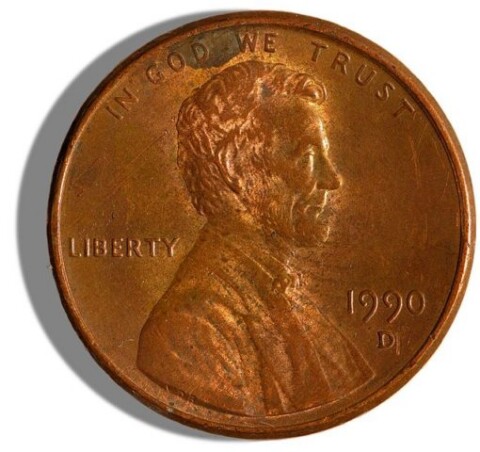
In the United States, it’s common for people to refer to our 1-cent coin as a penny.
But you might be surprised to learn that there actually isn’t any such thing as a United States penny!
It’s true. The coin that many Americans frequently call a penny is “officially” called a one-cent coin or a cent.
So where does the term “penny” come from?
Our mother country, Great Britain, has been making pennies for centuries. Yes, their pennies really are pennies. “Penny” is the official denomination name for Britain’s small copper coin.


Leave a Comment