






This post may contain affiliate links. If you buy thru these links, we may earn a commission at no additional cost to you.
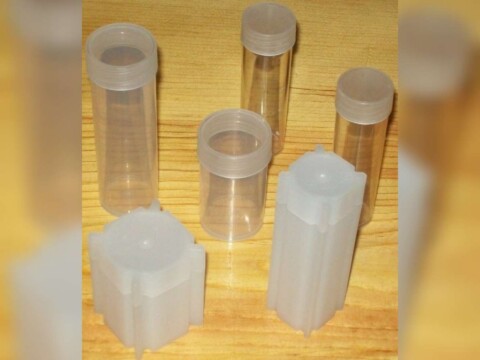
Here’s an effective, safe, and cheap way to store a lot of coins: use coin tubes.
These are plastic, (usually) chemically safe ways to protect many coins all in one compact area.
Be sure to read my tips about PVC in the last section of this article!
Coin tubes house a number of coins equivalent to the quantities found in normal coin rolls.
Here’s how many coins each tube holds, by denomination:
- 50 pennies
- 40 nickels
- 50 dimes
- 40 quarters
- 20 half dollars
- 20 large-size dollar coins
- 25 small-size dollar coins
Round vs. Square Coin Tubes
When you’re buying plastic coin tubes, you’ll see 2 main styles: classic round tubes and square “flat-side” tubes.
- Round tubes look traditional, but there’s one thing to keep in mind. If you drop one or stack them on a shelf, they will roll around like runaway logs and knock over everything on your desk!
- Square tubes won’t roll around. Instead, they stack neatly on top of each other, and store way better in large boxes.
If you’re building a serious collection, stick with square tubes so you don’t end up chasing 50 pennies across the floor!
Look For PVC-Free Tubes
Never store high-value coins in old, flexible, rubbery plastic tubes from decades ago!
Old-school cheap plastic coin tubes were made with PVC (polyvinyl chloride) and chemical plasticizers to make them soft. But over time, that PVC breaks down, leaches out of the plastic, and covers your coins in a sticky, green acidic film that physically eats into the metal surface.
Always look for coin tubes made of rigid, archival-safe polypropylene or polystyrene (which are 100% PVC-free).
If a tube feels greasy or smells like a fresh plastic shower curtain, toss it in the trash!
Coin tubes cost anywhere from about 50 cents apiece up to $2.00 or so (based on the model and overall quality) and can be found at your local coin dealer. They can also be found on most online coin dealer websites.
Budget-Friendly Coin Tube Hacks
#1 – What about using old pill bottles?
Don’t want to buy brand-new plastic tubes just to hold your copper penny hoards?
Standard prescription pill bottles (especially the tall, orange ones) are made of food-grade, PVC-free polypropylene plastic. And… they happen to be the perfect diameter for holding nickels and pennies!
Pill bottles are great for keeping similar coins together while protecting the rims of your coins — and they cost you absolutely nothing.
#2 – What are the safest ways to “fill” the empty space?
If you put 15 or 20 coins inside a 50-coin tube and leave a bunch of empty air space at the top, do not shake the tube or toss it loosely into a backpack! Every time that tube tilts, those coins will slam face-to-face and edge-to-edge inside the chamber.
On raw junk silver coins, it’s not a huge deal, but if you have uncirculated coins in there, you’ll give them instant rim nicks, marks, and scratches that will damage the grade and numismatic value of the coins.
If a tube isn’t full to the top brim with coins, plug the remaining gap with a small wad of archival-safe cotton before capping it!
Keep in mind… standard cosmetic cotton balls are not inherently “archival-safe” — they’re often treated with chemical bleaches, fragrances, or synthetic fibers (like rayon or polyester mixes). Over years of storage, such chemicals and synthetic impurities can break down or “outgas” — reacting with your coins and causing ugly, permanent spotting or discoloration.
The safest “fillers” to choose from:
- Archival-Safe Cotton — This refers to 100% pure, unbleached, undyed, and acid-free natural cotton. It contains zero synthetic filler, zero chlorine bleaches, and zero acidic properties. You can find genuine conservation-grade cotton from museum supply stores like Gaylord Archival or Conservation Support Systems.
- Archival Foam Rounds — You could also buy some pre-cut, inert polyethylene or polystyrene foam plugs specifically designed by coin supply companies. These will fill the empty space in your coin tubes without pressing fibers against the metal.
- Pure Unbleached Cotton Cosmetic Pads — If you’re looking for a retail store option, skip the standard puffy cotton balls and look for some flat organic, 100% pure, unbleached, and dye-free cotton cosmetic rounds. These are less likely to have chemical processing residues.
- Acid-Free Tissue Paper: You could also crumple up a small piece of archival, acid-free tissue paper to fill the empty space inside your coin tubes. This is the same type of paper used to preserve wedding dresses and heirloom textiles.
READ NEXT: Affordable Coin Folders, Holders, Flips, And Tubes
Leave a Comment