

Quick Collector Takeaways
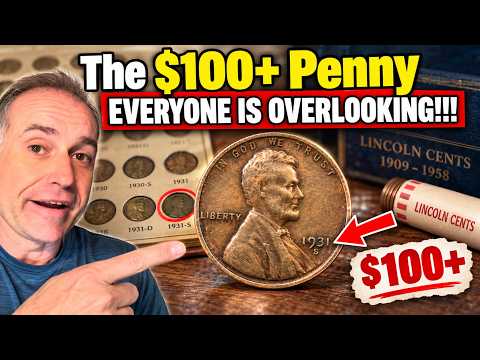
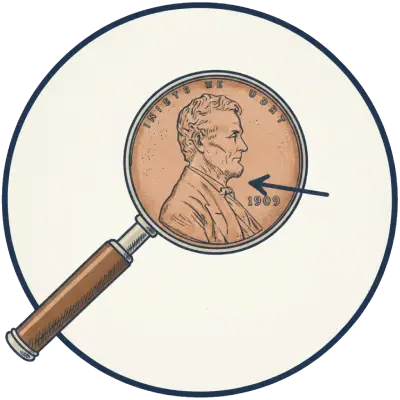
- Identify the San Francisco issue: A genuine 1911-S Lincoln wheat cent has an S mintmark below the date on the obverse and wheat ears on the reverse. Josh argues that this regular issue deserves consideration as the series’ “5th key.”
- Look beyond mintage: San Francisco struck 4,026,000 examples, but Josh discusses an estimated surviving population of about 40,000. Survival figures are estimates, not a complete census of every remaining coin.
- Compare equivalent coins: The video quotes $20–$40 for Good through Very Fine examples and presents a $14,400 MS66 Red auction sale. Grade, copper color, and surface problems explain much of that enormous spread.
- Use your loupe carefully: Examine the date, mintmark, and surrounding metal for suspicious alterations, then check for cleaning hairlines or damage. Seek experienced authentication when a coin’s appearance raises questions.
Video Breakdown & Chapter Highlights
0:00 — Why Josh Calls the 1911-S the “5th Key”
Josh introduces the 1911-S as a serious collecting challenge alongside the familiar 1909-S VDB, 1909-S, 1914-D, and 1931-S. His argument focuses on regular date-and-mint issues, separating that set-building goal from collecting errors and varieties such as the 1943 bronze cent and 1955 doubled die. Whether you prefer “fifth key” or “semi-key,” the important question is how difficult an acceptable example is to obtain.
2:04 — Mintage vs. Survival: Why the Numbers Matter
Four million pennies may sound plentiful, but Josh contrasts that production with the much larger Philadelphia output and the limited preservation of early branch-mint cents. The 1924-D sharpens his point: its lower mintage does not automatically mean fewer survivors. His comparison demonstrates why original production, estimated survival, and availability in your chosen grade belong together when assessing scarcity.
5:20 — What Is a 1911-S Penny Worth?
Josh begins with circulated value ranges, then examines Heritage Auctions results including XF45 examples at $69, an AU58 at $159, and an MS64 Brown at $353.80. His cited MS64 Red Brown sale at $750 and MS66 Red sale at $14,400 show how preservation and copper color can transform the price. Treat these sales as historical comparisons, and evaluate cleaned or Details-graded specimens separately from problem-free examples.
Josh’s Director’s Cut: Practical Numismatic Advice
“Brown is usually the more common designation.”
That observation helps explain why two uncirculated 1911-S cents can carry very different prices. Brown, Red Brown, and Red describe copper color, while the numerical grade addresses condition. A Brown coin can still be an attractive, desirable example. Decide whether your priority is original surfaces, stronger detail, or retained red color before comparing listings.
Use our 1911 penny identification and value guide to distinguish the issues, then consult the guide to grading pennies when evaluating wear. Compare examples with similar grades, color designations, and surface quality. A cleaned coin may retain impressive detail, but that does not make it equivalent to a problem-free specimen.
For an album builder, a pleasing circulated example fills the same regular-issue slot as an expensive Mint State coin. The useful tradeoff is how much additional preservation your budget buys. Choose an example you enjoy examining, rather than paying solely for a rarity label. Once purchased, handle it by the edges, keep it dry, and avoid polishing away its collectible surfaces.
Historical Context & Mint Specifications
Struck just two years after the Lincoln cent debuted in 1909, the 1911-S was ordinary spending money before it became a sought-after collectible. These bronze cents served everyday commerce, where repeated handling gradually wore away design detail. Their production total records how many were struck; it cannot reveal how many survived with attractive surfaces or without circulation wear.
Josh connects today’s scarcity with early collectors’ preference for Philadelphia issues and limited saving of branch-mint cents. Loss, damage, and prolonged circulation further reduced collectible supply. That history makes preservation central to the 1911-S story: locating an example is one challenge, while finding the right combination of detail, originality, and price is another.
| Series / Denomination | Lincoln wheat cent (1909–1958) / One cent ($0.01) |
| Mint Mark / Key Dates | S below the date: San Francisco. Josh’s “Big Four”: 1909-S VDB, 1909-S, 1914-D, and 1931-S; 1911-S is his proposed fifth key. |
| Composition & Weight | 95% copper, 5% tin and zinc / 3.11 grams |
| Original Mintage | 4,026,000 |
| Designer / Engraver | Victor David Brenner, obverse and wheat reverse |