



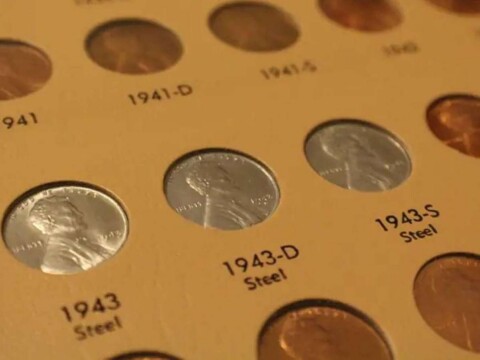
Do you have an old 1943 penny?
Maybe you’ve got a 1943 steel penny. Or, you might even have the super-valuable rare 1943 bronze penny.
Want to know what your 1943 pennies are worth?
You’ve come to the right place! You’ll find all 1943 penny values in this post.
In this article, I’m going to cover:
- 1943 steel pennies
- 1943 copper pennies
- The value of all 1943 pennies
1943 Penny Facts
The 1943 penny is unusual among U.S. one-cent coins.
It’s the only regular-issue United States one-cent coin to be minted from steel. (The 1944 steel penny off-metal error is not considered a regular issue.) And it’s therefore one of the most popular coins people collect.
Why was the 1943 penny made from steel?
To save copper for World War II ammunitions. The war years of the 1940s was a time of rations. Everything from rubber to sugar was rationed because America needed to send these items to its troops fighting overseas. Copper, like so many other common materials, was one of those items.
Officials with the United States Mint had to find a way to replace the copper in the one-cent coin with a low-cost material. Plastic was among the many materials the Mint considered before determining zinc-coated steel to be the choice among its cost-effective options.
The steel cents were a creative solution, but they weren’t without their problems:
- Many people confused the silver-colored pennies for dimes.
- The magnets in vending machines that were designed to weed out counterfeit coins actually filtered out authentic 1943 steel Wheat pennies.
- The steel inside the coin was prone to rusting after exposure to moisture.
These and other issues plagued the 1943 steel cents.
After just 1 year, the Mint reverted back to copper — using the metal from spent copper shell casings to strike Lincoln pennies from 1944 through 1946.
Common 1943 Steel Pennies vs. Rare 1943 Copper Pennies
Here’s a really easy test to see if you’ve got the common 1943 steel penny OR a rare copper 1943 penny…
Try sticking your 1943 penny to a magnet:
- If your 1943 penny sticks to the magnet, it is a common steel cent and NOT worth the big bucks.
- If your 1943 penny does NOT stick to the magnet, it may be a rare 1943 copper penny. (Further authentication is required to see if it’s a legitimate 1943 copper cent.)
Here’s a great video that can help you better understand how to tell a common 1943 steel penny from the 1943 copper cent — and how to identify fake 1943 copper pennies:
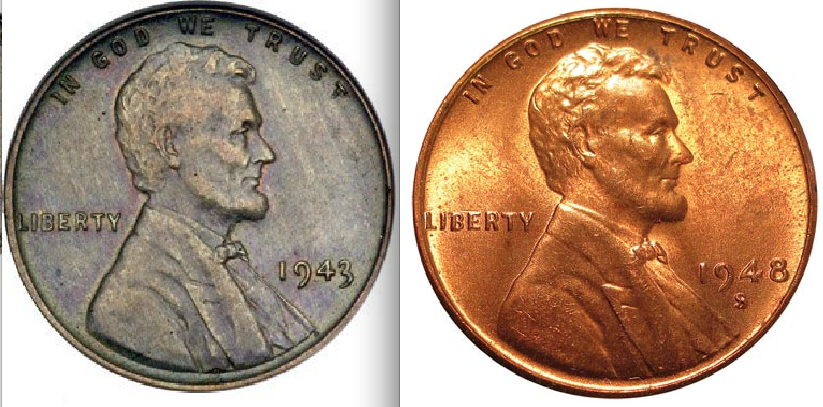
Because original zinc coatings oxidize into a dull, dark gray matte over time, you will find thousands of brilliantly shiny 1943 steel pennies on online marketplaces advertised as “uncirculated.” Many of these are deceptive reprocessed coins. Unscrupulous people strip off the original corroded zinc layer using acid to “electroplate” a fresh, unnatural layer of zinc or chrome over the coin. To verify a fake 1943 steel penny, look at the coin’s edge reeds under a 10x loupe. Genuine mint-struck steel cents have raw, dark steel exposed on the coin’s edge — where the planchets were punched out of sheet metal. If the edge is fully coated, bright, and mirror-shiny, it has been altered and carries zero numismatic premium value.
What about those rare 1943 copper pennies?
It’s believed that they were accidentally made from a few remaining blank copper planchets that were left in hoppers at the coin presses.
These copper blanks were unintentionally fed into the coining equipment along with steel planchets — resulting in the creation of perhaps a couple dozen 1943 copper cents.
MUST READ: Have A Silver Penny That’s NOT A 1943 Steel Cent?
What Are 1943 Pennies Worth?
What’s the difference in values between a 1943 steel penny and a 1943 copper penny?
Quite a bit!
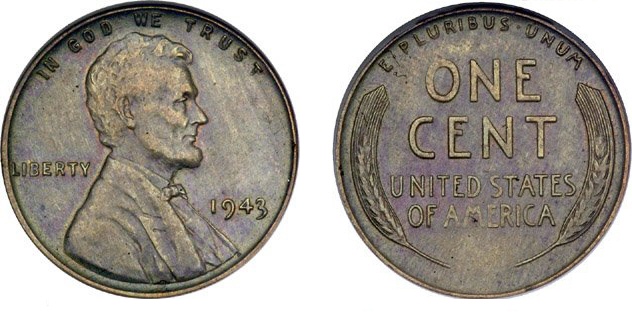
All 1943 pennies are worth more than their face value. But how much more is the question a lot of folks want to know the answer to.
Here are the types of 1943 Wheat Pennies and their values:
| Type | Minted | Min Price | Max Price |
|---|---|---|---|
| 1943 steel penny | 684,628,670 | $0.10 | $0.50 |
| 1943-D steel penny | 217,660,000 | $0.10 | $0.50 |
| 1943-S steel penny | 191,550,000 | $0.15 | $0.60 |
| 1943-D boldly doubled mintmark | Unknown | $35.00 | $60.00 |
| 1943 copper pennies (any mintmark) | 25-40 | $100,000.00 | $1,000,000.00 |
To confirm that you have the genuine 1943-D doubled mintmark variety, focus your coin magnifier directly on the “D” mintmark under the date.
Look closely at the inside loop and the bottom cross-serif of the primary “D”. A genuine variety will show an unmistakable secondary “D” mintmark tracking strongly to the southwest of the main letter. This leaves a bold, raised vertical metal bar inside the primary “D’s” negative space AND an extra corner notch that points out at the bottom left.
If the mintmark shape is just slightly blurry or wider on one side, it’s common mechanical machine doubling, not the premium variety asset.
READ NEXT: A List Of The Most Valuable U.S. Pennies
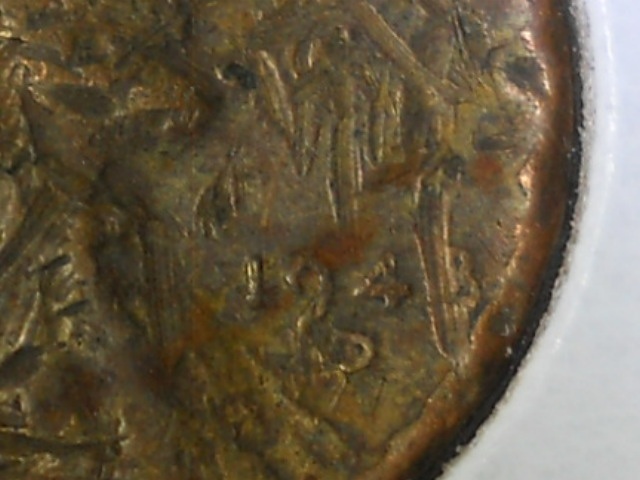
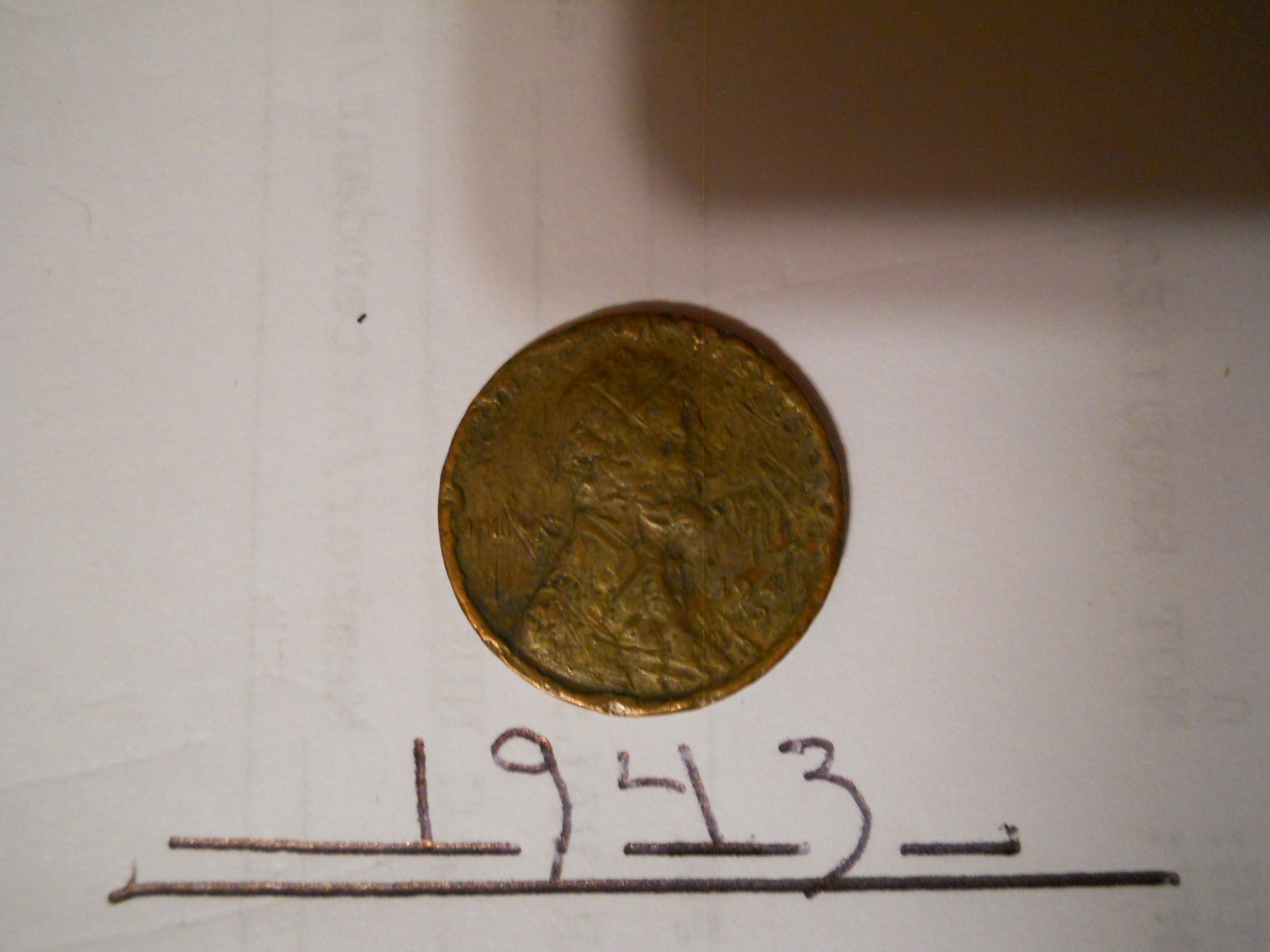
Do you have a 1943 Wheat penny? Think there may be something unique about it? Post a picture of your coin in the comments below and I’ll try to help!


Leave a Comment