
Quick Collector Takeaways
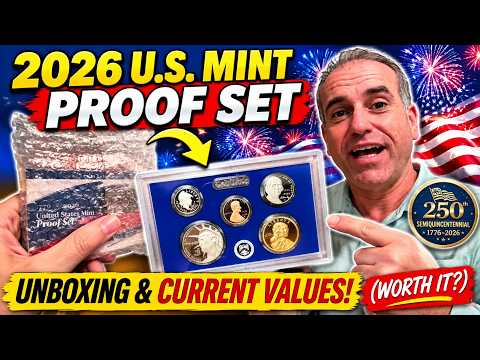
- Look for the anniversary dates: The 2026 Semiquincentennial coins feature 1776–2026 dating. Josh covers the penny, nickel, Emerging Liberty dime, five quarter designs, and Enduring Liberty half dollar.
- Separate availability from rarity: The 2026 penny is a collector issue rather than a coin produced for everyday circulation. Finding anniversary coins locally does not establish their nationwide scarcity or final mintages.
- Put prices in context: Josh quotes $50–$100 for cents, $1–$5 for nickels, dimes, and quarters, and $3–$10 for clad halves. These are recording-time observations, not guaranteed current values.
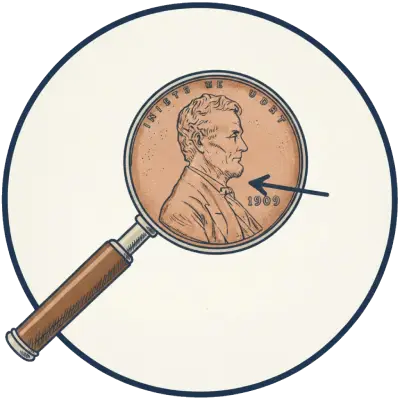
- Inspect before paying a premium: Use a loupe to check the date, mintmark, contact marks, and hairlines. Distinguish ordinary circulation pieces from uncirculated coins, clad proofs, and silver proofs before comparing prices.
Video Breakdown & Chapter Highlights
2:29 — Anniversary Dates and the Collector-Only Penny
The Lincoln cent and Jefferson nickel retain familiar portraits and reverses, making their dual dates especially useful identification features. Josh explains why a 2026 penny can exist even though circulation-cent production ended in 2025: collector production is a separate purpose. That distinction matters when deciding whether to search pocket change or shop for a collector example.
4:37 — Emerging Liberty and the Anniversary Designs
The Emerging Liberty dime prompts a closer look at symbolism: its eagle carries arrows without the accompanying olive branch Josh associates with peace and diplomacy. He then explores quarters honoring the Mayflower Compact, Revolutionary War, Declaration of Independence, U.S. Constitution, and Gettysburg Address. The Enduring Liberty half dollar completes this tour with the Statue of Liberty and a torch passed between generations.
13:40 — What Are the 2026 Coins Worth?
Josh distinguishes ordinary worn examples, generally worth face value, from collector pieces commanding premiums. He identifies the collector-only cent as a potential standout while acknowledging that initial demand and limited availability can push early prices higher. His quoted ranges provide context for the recording, while silver proofs require separate comparisons because their metal content also influences value.
Josh’s Director’s Cut: Practical Numismatic Advice
“So it’s not like every coin that comes out at any given time is evenly distributed across the entire country.”
Josh’s wait for his first anniversary quarter illustrates the difference between local availability and collectible rarity. A design missing from your change may simply reflect distribution patterns. Before paying extra because a coin seems impossible to find, decide whether your goal is an affordable design set, pristine uncirculated pieces, or proofs. Each approach creates different expectations for price and preservation.
Start with our 2026 Semiquincentennial coin design guide to organize the issues you want. Then compare completed sales for the same denomination, mintmark, finish, and condition. Asking prices alone can exaggerate the market. A proof’s reflective appearance also does not establish silver content; check the product specifications before treating it as a precious-metal purchase.
The penny requires a different collecting strategy. Our explanation of why circulation-penny production ended helps clarify that distinction. Paying for immediate ownership can be worthwhile, but it means accepting uncertainty about future supply and demand. Buy for your collection, preserve original surfaces, and avoid assuming an early premium guarantees lasting appreciation.
Historical Context & Mint Specifications
America’s 250th anniversary brings historical themes into everyday coin collecting. These designs connect founding documents, independence, national unity, and the continuing promise of liberty. For collectors, the anniversary offers a focused project spanning several denominations rather than a single commemorative design.
Mintage measures production, while survival measures what remains. A new issue has no established long-term survival record, and future availability will depend on saving, circulation, loss, and damage. Keep collector-only cents separate from circulation issues when assessing supply, and distinguish final mintages from interim production figures.
| Series / Denomination | 2026 anniversary issues covered: cent, nickel, dime, five quarters, and half dollar. |
| Mint Mark / Key Dates | 1776–2026 dual dates; Philadelphia, Denver, and San Francisco issues vary by product and finish. |
| Composition & Weight | Standard versions: copper-plated zinc cent, 2.50 g; copper-nickel nickel, 5.00 g; copper-nickel clad dime, 2.268 g; quarter, 5.670 g; half dollar, 11.340 g. Silver proofs have different specifications. |
| Original Mintage | No final series-wide total established by the supplied video. Evaluate each denomination, design, mint, and finish separately. |
| Designer / Engraver | Multiple artists and sculptors; credits vary by denomination and design. The cent and nickel retain their familiar principal designs. |