⚡ Quick Collector Takeaways
- Four collectible varieties: The first Lincoln cents were issued in 1909 with or without designer Victor David Brenner’s VDB initials, and with or without the San Francisco “S” mintmark.
- The rarest regular issue: Only 484,000 1909-S VDB pennies were minted, making this one of the most important key dates in the Lincoln Wheat cent series.
- Value differences: Josh discusses circulated examples ranging from approximately $4 for a 1909 Philadelphia cent to $750–$1,000 for a problem-free 1909-S VDB. Actual prices depend on grade and market conditions.
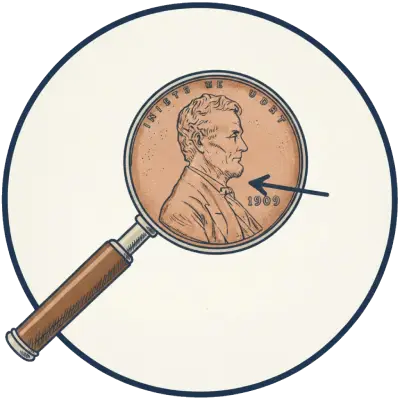
- Inspection tip: Use a coin loupe to check for the small VDB initials at the bottom of the reverse, between the wheat stalks. On San Francisco examples, also inspect the S mintmark below the date.
Video Breakdown & Chapter Highlights
[00:10] Why 1909 Lincoln Pennies Are Historically Important
In 1909, the United States Mint introduced the Lincoln cent, replacing the Indian Head design and beginning one of America’s most widely collected coin series. Josh opens his Dansco album to show the four major 1909 Lincoln cent varieties and explains why these first-year issues remain especially desirable to collectors. He also shares how discovering a 1941 Wheat penny as a child sparked his lifelong fascination with coin collecting.
[07:10] The VDB Controversy That Changed Lincoln Pennies
Victor David Brenner originally placed his VDB initials near the bottom of the Lincoln cent’s reverse. The Mint removed them shortly after the coin’s introduction, reportedly following criticism of their prominence, although Josh discusses historical interpretations that question whether public outrage was the real reason. This design change created separate VDB and non-VDB issues in 1909, with the initials eventually returning in a much smaller location on Lincoln’s shoulder in 1918.
[11:09] 1909 Penny Values: From Affordable to Six Figures
Josh compares retail values for all four varieties and examines Heritage Auctions records showing that exceptional 1909-S VDB pennies have sold for more than $100,000. However, he emphasizes that collectors do not need a museum-quality example to complete their collections. Circulated specimens, lower-grade certified coins, and even carefully selected problem coins offer different price points for collectors with different budgets.
Josh’s Director’s Cut: Practical Numismatic Advice
“I prefer to buy a straight graded example because to me it looks nicer. It’ll tend to appreciate in value better. But it’s really up to you, whatever you can afford to do.”
One of the most important lessons in this video is that owning a rare coin and owning a perfect example of that coin are two very different goals. The 1909-S VDB is a classic Lincoln cent rarity, but its value changes dramatically with condition, color, surface preservation, and authentication. Josh purchased his own example on layaway in 2010 for approximately $1,000, illustrating how patience and planning can make an expensive key date more attainable.
For collectors building a complete Wheat cent album, a problem-free circulated example can be a sensible alternative to a costly Mint State specimen. Coins with corrosion, cleaning, or other damage may sell for less, but their defects can affect future resale opportunities. Particularly with an expensive 1909-S VDB, professional authentication and a clear understanding of grading terminology are important before purchasing.
Collectors on tighter budgets can begin with the Philadelphia issues and work toward the San Francisco coins over time. Our 1909 penny value guide provides a useful comparison of the different issues, while our 1909-S VDB rarity and value guide explores the series’ most famous first-year cent.
Historical Context & Mint Specifications
The Lincoln cent debuted in August 1909 during the centennial year of Abraham Lincoln’s birth. Sculptor Victor David Brenner created the portrait, while the reverse featured two wheat ears symbolizing agricultural prosperity. The introduction marked an important change in American coinage: a real historical president appeared on a regular-issue circulating U.S. coin.
The removal of Brenner’s initials divided the first-year production into four major collectible issues. Philadelphia produced approximately 27.9 million VDB cents and 72.7 million without the initials, while San Francisco struck approximately 484,000 VDB cents and 1.8 million without them. Original mintages explain part of their relative scarcity, but surviving populations, collector demand, and condition ultimately influence market prices.
| Series / Denomination | Lincoln Wheat Cent / One Cent ($0.01) |
| Mint Mark / Key Dates | Philadelphia (no mintmark); San Francisco (S). Key dates: 1909-S and 1909-S VDB. |
| Composition & Weight | 95% copper, 5% tin and zinc; 3.11 grams; 19.05 mm diameter |
| Original Mintage | 1909 VDB: 27,995,000 1909-S VDB: 484,000 1909 (no VDB): 72,702,618 1909-S (no VDB): 1,825,000 |
| Designer / Engraver | Victor David Brenner |
Value note: Prices discussed in this video are illustrative retail estimates and historical auction examples, not guaranteed current offers. Always evaluate the coin’s condition, authenticity, and recent comparable sales before buying or selling.