
⚡ Quick Collector Takeaways
- Scarcest regular issue: The 2008-D Oklahoma quarter tops the podcast’s list of lower-mintage circulation strikes.
- Mintage matters: Even relatively scarce state quarters were produced in the hundreds of millions. Most circulated examples remain worth 25 cents.
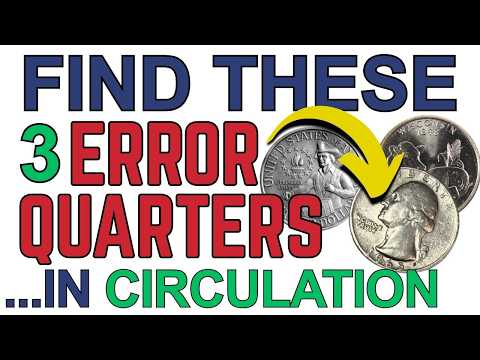
- Valuable errors: Look for Wisconsin Extra Leaf quarters, Minnesota doubled dies, Delaware Spitting Horse quarters, and Kansas IN GOD WE RUST examples.
- Inspection tip: Use a 5X to 10X loupe to examine the corn on Wisconsin quarters, the trees on Minnesota quarters, and the lettering on Kansas quarters.
Video Breakdown & Chapter Highlights
The 10 Scarcest Regular-Issue State Quarters
The podcast begins by exploring lower-mintage quarters from the 1999–2008 50 State Quarters Program. Among the featured coins are the 2004-P Wisconsin, 2003-P Illinois, 2004-D Michigan, 2003-P Alabama, 2003-P Missouri, 2008-P Oklahoma, 2003-P Maine, 2002-P Ohio, 2004-P Iowa, and 2008-D Oklahoma quarters.
The important distinction is between scarcity and market value. These quarters may be relatively difficult to find in pristine condition, but ordinary worn examples generally remain worth face value. Uncirculated pieces may bring modest premiums.
Five Valuable State Quarter Error Varieties
Next come the errors and varieties that make searching state quarters particularly exciting. The 1999-P Delaware Spitting Horse features a raised die-crack line near the horse’s mouth. The 2004-D Wisconsin Extra High Leaf and Extra Low Leaf varieties show unusual additional details beside the corn stalk.
The discussion also covers doubled-die varieties of the 2005 Minnesota quarter, where extra tree details may appear, and the 2005-P Kansas IN GOD WE RUST quarter, where a grease-filled die can cause the letter T to appear weak or missing. The podcast discusses potential premiums ranging from a few dollars to $50 or more, depending on the variety, condition, and collector demand.
Where To Find Rare State Quarters In Circulation
The final discussion focuses on practical coin hunting. Bank-wrapped quarter rolls, everyday pocket change, family change jars, and Coinstar reject trays are all suggested as places to look for overlooked coins.
Persistence matters more than buying enormous quantities of coins. Examine dates and mintmarks, inspect unusual design details, and separate possible errors for closer examination. One or two unsuccessful rolls should not discourage a collector from continuing the search.
Josh’s Director’s Cut: Practical Numismatic Advice
“The surprise is if you find something really cool.”
That simple observation, attributed to Josh in the podcast, captures an important part of searching circulation coins: most of what you examine will be ordinary change. A successful hunt doesn’t require finding a valuable quarter every afternoon. It requires knowing what to look for and recognizing an unusual coin when one finally appears.
Start by separating your state quarters by date and mintmark. Set aside attractive uncirculated examples, but give special attention to recognizable error varieties. For example, compare a suspicious Wisconsin quarter with the photographs and diagnostics in our Wisconsin Extra Leaf quarter guide. A raised design feature deserves closer examination; ordinary scratches and circulation damage do not automatically indicate a valuable mint error.
One common misconception is that a low-mintage state quarter must be worth substantial money. Condition, collector demand, and the nature of an error can matter much more. Before paying a premium or submitting a coin for professional grading, compare verified examples and consider whether the potential value justifies the expense. Our 15 rare state quarters guide provides a useful starting point.
Historical Context & Mint Specifications
The United States Mint introduced the 50 State Quarters Program in 1999, releasing five different state designs annually through 2008. The series encouraged millions of Americans to examine their change and build collections. Although billions of quarters entered circulation, production totals varied by state, year, and mint facility.
The 2008-D Oklahoma quarter illustrates the connection between coin production and economic conditions. Its relatively low mintage coincided with the Great Recession, when demand for circulating coinage weakened. Yet original mintage is not the same as surviving collector-quality supply. Many quarters have circulated for years, developing wear that limits their value. Meanwhile, distinctive mint errors and varieties may command premiums because collectors seek specific, recognizable features rather than merely low production totals.
| Series / Denomination | 50 State Quarters / 25 cents |
| Mint Marks / Key Dates | P (Philadelphia), D (Denver); 1999–2008. Featured scarce issue: 2008-D Oklahoma. |
| Composition & Weight | Circulation strikes: copper-nickel clad over copper core; 5.67 grams. |
| Original Mintage | Varies by issue; approximately 194.6 million for the 2008-D Oklahoma quarter. |
| Designer / Engraver | John Flanagan’s Washington obverse, modified for the series; individual state reverse designers vary. |