⚡ Quick Collector Takeaways
- Look beyond the date: The 1909-S VDB, 1914-D, 1922 Plain, and 1931-S Lincoln cents are among the valuable varieties and key dates Josh highlights.
- Not every old penny is rare: Josh explains that many ordinary circulated Wheat cents are worth only a few cents, while certain dates, mintmarks, and varieties command substantial premiums.
- Watch for unusual 1943 cents: Most 1943 Lincoln cents were struck in zinc-coated steel. The rare bronze errors require careful authentication.
- Inspect lettering carefully: A 5x to 10x loupe can help identify promising doubled die varieties, including examples dated 1955, 1972, 1983, and 1984. Compare suspected discoveries with authenticated reference images.
Video Breakdown & Chapter Highlights
[00:56] — The Legendary Lincoln Wheat Cent Key Dates
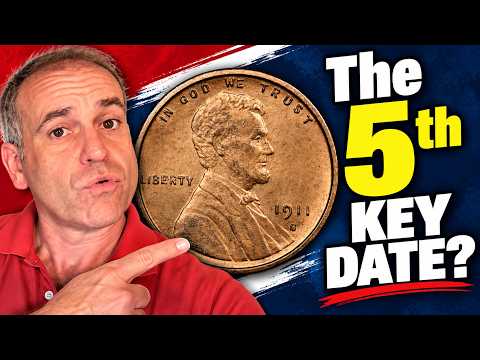
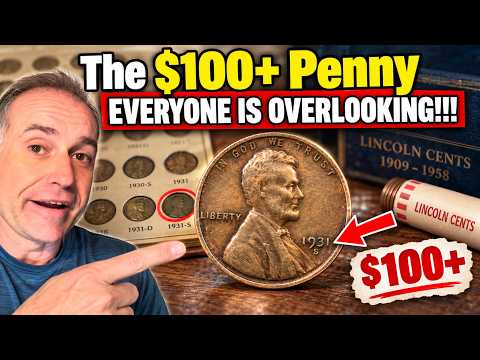
Josh begins with one of the most famous Lincoln cents ever produced: the 1909-S VDB penny. He then examines the 1914-D, the unusual 1922 Plain cent with its missing or weak D mintmark, and the low-mintage 1931-S. These coins illustrate why a particular date-and-mintmark combination can make an otherwise ordinary-looking penny especially desirable.
[03:55] — Rare 1943 Pennies And Doubled Die Errors
Not all 1943 pennies are valuable. Josh distinguishes the common zinc-coated steel cents from the exceptionally rare bronze errors before moving into doubled die Lincoln cents. His discussion of the 1955, 1972, 1983, and 1984 varieties demonstrates how differences in die production can create collectible coins that are easily overlooked by people unfamiliar with their diagnostic features.
[06:58] — Indian Head, Flying Eagle And Early Large Cents
The search expands beyond Lincoln pennies to earlier American cent designs. Josh introduces the 1859 and 1877 Indian Head cents, the 1856 Flying Eagle cent, and the large cents produced from 1793 through 1857. Although finding one of these historic coins in everyday change would be extraordinarily unusual, understanding their designs helps collectors recognize potentially important discoveries in old collections and inherited coin jars.
Josh’s Director’s Cut: Practical Numismatic Advice
“Not ALL of them are worth lots of money.”
That simple observation is one of the most important lessons for anyone beginning to search through pocket change. Age alone doesn’t determine a penny’s value. A heavily worn Lincoln Wheat cent from the 1940s may be fairly common, while a much newer doubled die variety can be worth considerably more. The key is learning to recognize the specific dates, mintmarks, and design details that collectors actually seek.
Start by sorting your pennies into manageable groups. Separate Wheat cents from Lincoln Memorial cents, check dates and mintmarks, and set aside anything that matches a recognized collectible variety. For a broader reference, consult our guide to the most valuable pennies worth keeping. If you notice unusual doubling, compare the affected letters and design elements with examples in our doubled die coin identification guide.
Finally, resist the temptation to clean a promising discovery. Cleaning can permanently damage original surfaces and reduce collector value. Keep potentially valuable pennies protected, examine them under good lighting, and consider professional authentication before making assumptions based on online asking prices. An accurately identified, original coin is far more useful to a collector than a polished penny with an exciting but unverified story.
Historical Context & Mint Specifications
American one-cent coins have undergone several major design and composition changes. Early large cents contained substantially more copper than today’s pennies and were physically much larger. The smaller Flying Eagle cent appeared in 1856 as a pattern issue before regular production began in 1857. Indian Head cents followed in 1859, and the Lincoln cent debuted in 1909 to commemorate the centennial of Abraham Lincoln’s birth.
The Lincoln series also reflects important events in American history. During World War II, copper shortages led the U.S. Mint to manufacture 1943 cents from zinc-coated steel. A tiny number of bronze cents were struck in error, creating one of the hobby’s best-known rarities. Meanwhile, coins such as the 1909-S VDB, 1914-D, and 1931-S became desirable because of their relatively limited original production and collector demand. Survival rates, condition, authenticity, and demand ultimately influence what individual specimens are worth.
| Series / Denomination | U.S. One-Cent Coins: Large Cent, Flying Eagle, Indian Head, Lincoln Wheat and Lincoln Memorial |
| Mintmarks / Key Dates | 1909-S VDB, 1914-D, 1922 Plain, 1931-S; 1943 bronze errors; selected doubled dies |
| Composition & Weight | Varies by series: 1909–1942 bronze Lincoln cents approximately 3.11 g; 1943 steel cents approximately 2.70 g; 1982–present copper-plated zinc cents generally 2.50 g |
| Original Mintage | 1909-S VDB: 484,000; 1914-D: 1,193,000; 1931-S: 866,000; 1943 bronze errors: no authorized mintage |
| Designer / Engraver | James B. Longacre (Flying Eagle and Indian Head); Victor D. Brenner (Lincoln obverse); Frank Gasparro (Lincoln Memorial reverse) |