
⚡ Quick Collector Takeaways
- Not a Philadelphia penny: Every 1922 Lincoln cent was struck at Denver. The valuable 1922 Plain variety lost its D mintmark through die-related production problems.
- Key identification markers: The recognized strong-reverse No D variety features a weak, mushy-looking obverse, a weaker first 2 in the date, and a comparatively sharp wheat-ear reverse.
- Scarcity and value: Denver struck approximately 7.16 million cents in 1922, but only a small, unquantified portion are the desirable Plain variety. Josh cites roughly $500–$800 for lower-grade certified examples in the video, with much higher historical auction results for better grades.
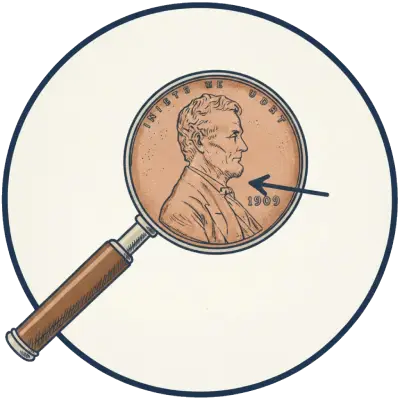
- Inspect before buying: Use a loupe to examine the mintmark area, date digits, and reverse details. A weak D is not automatically the valuable strong-reverse No D variety. Third-party certification is strongly recommended.
Video Breakdown & Chapter Highlights
[00:11] — Why the 1922 No D Penny Isn’t From Philadelphia
Most American coins without mintmarks are associated with Philadelphia, but the 1922 Lincoln cent is a famous exception. Josh explains why every penny struck that year originated in Denver and why collectors nevertheless need the unusual Plain variety for many traditional Lincoln cent albums. Its inclusion makes this manufacturing variety particularly interesting to collectors assembling a complete set.
[03:37] — How the Missing D Mintmark Error Happened
The video traces the Plain variety to clashed dies and subsequent die polishing at the Denver Mint. Josh describes how removal of damage from the obverse die also eliminated the mintmark, while a replacement reverse die produced sharper details on the opposite side. This combination helps explain why genuine strong-reverse examples can show such a striking difference between the two faces.
[05:54] — 1922 Plain Penny Values and Buying Advice
Using Heritage Auctions records, Josh demonstrates how dramatically prices vary according to grade and preservation. He also compares genuine Plain pennies with more common Weak D varieties, explaining why an apparently missing mintmark is not enough to establish authenticity. The most important buying lesson is to study recognized die diagnostics and purchase a properly certified example from a reputable source.
Josh’s Director’s Cut: Practical Numismatic Advice
“You get what you pay for, you know. And know what you’re buying. Do your research.”
That advice is particularly important when shopping for a 1922 Plain Lincoln cent. An absent mintmark may look like the easiest possible coin variety to identify, but the real challenge is determining why the D is missing. Die wear, weak strikes, and altered coins can create misleading appearances. The premium strong-reverse variety requires much more than simply finding a 1922 cent without a visible D.
Before committing hundreds or thousands of dollars, compare both sides of the prospective purchase with authenticated examples. Look for the characteristic weakness of the first 2 in the date, the overall obverse appearance, and the unusually well-defined reverse. Our 1922 penny value and identification guide provides additional information for distinguishing collectible varieties.
There’s also an important collecting distinction here: a coin’s importance to an album doesn’t make every example equally desirable. A problem-free, authenticated coin may be a better long-term collecting choice than an uncertified bargain with questionable surfaces or uncertain attribution. Josh’s discussion of why the 1922 Plain penny belongs in Lincoln cent collections explains the unusual place this variety occupies in the hobby.
Historical Context & Mint Specifications
In 1922, the Philadelphia and San Francisco Mints produced no Lincoln cents, leaving Denver as the only facility striking the denomination. Its production of 7,160,000 pennies was modest compared with many other years in the series. Consequently, every authentic 1922 Lincoln cent originated at Denver, whether its D mintmark remains visible or not.
The most desirable No D variety developed through a die-production problem rather than an intentional design change. After the dies clashed, extensive polishing of the obverse die removed the mintmark and weakened other details. Paired with a stronger reverse die, the resulting coins displayed the distinctive appearance collectors recognize today. The exact number struck from this die pairing is not established, so Denver’s overall mintage must not be mistaken for the number of valuable Plain examples produced or surviving.
| Series / Denomination | Lincoln Wheat Cent / One Cent |
| Mintmark / Key Variety | Denver (D); 1922 Plain / No D, Strong Reverse |
| Composition & Weight | 95% Copper, 5% Tin and Zinc; 3.11 grams |
| Original Mintage | 7,160,000 total 1922-D cents; Plain variety quantity unknown |
| Designer / Engraver | Victor David Brenner |