
⚡ Quick Collector Takeaways
- Best collectible discovery: A circulated 1942 Lincoln wheat penny, which Josh estimates at 5 to 10 cents.
- Copper penny keepers: Josh separates 108 copper Lincoln cents, estimating approximately $3 in combined metal value, although melting them for their copper is prohibited under current U.S. rules.
- The scale test: Copper-alloy cents weigh approximately 3.11 grams, while copper-plated zinc cents weigh approximately 2.5 grams. This is especially helpful when identifying 1982 pennies.
- The final tally: The search produces $12.44 in spendable coins, 108 copper cents set aside, and one 1942 wheat cent. A 10x loupe helps Josh investigate possible doubled dies and other varieties without assuming every unusual-looking coin is valuable.
Video Breakdown & Chapter Highlights
[00:44] — The Essential Tools For Searching Old Coins
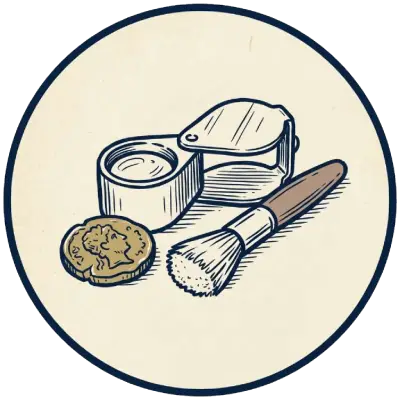
Josh begins with a mystery container of loose change and coins stored in pill bottles from a house cleanout. Before examining the coins, he introduces the reference books, magnifier, and digital scale that help him distinguish ordinary pocket change from potentially collectible discoveries. These inexpensive tools provide a practical starting point for beginners who want to search coins at home.
[13:20] — Checking Wide AM, Close AM & Doubled Die Pennies
The search turns into a lesson on Lincoln Memorial cent varieties, including Wide AM and Close AM reverses and possible doubled die pennies from 1984, 1992, and 1995. Josh demonstrates why a date alone does not establish rarity: collectors must inspect specific lettering, design details, and mintmarks. Several coins receive closer attention, but an interesting appearance is not the same as a confirmed valuable variety.
[34:17] — Weighing Copper Pennies & Revealing The Final Value
Josh puts his coin scale to work on the 1982 pennies, demonstrating the weight difference between copper-alloy and zinc cents. His final results include 108 copper cents, a 1942 wheat penny, and $12.44 in spendable change. The experiment shows how careful sorting can uncover collectible coins and potential metal-value premiums even when no spectacular mint error turns up.
Josh’s Director’s Cut: Practical Numismatic Advice
“So, that’s how we’ll tell if we have copper or zinc.”
One of the most useful lessons from this search is that coin collecting does not require an expensive collection or a spectacular discovery. Josh’s ordinary-looking container of change offers opportunities to practice identifying dates, recognizing varieties, and separating coins by composition. The 1982 pennies are especially instructive because the U.S. Mint produced both copper-alloy and copper-plated zinc versions that year. A reliable scale can settle a question that color or appearance alone may not answer.
When examining your own finds, start by sorting coins into groups by denomination, date, and mintmark. Use a 10x loupe to inspect the areas where known varieties occur, and compare your observations with reliable photographs. Our copper versus zinc penny identification guide explains the differences to look for.
Finally, separate collectible value from theoretical metal value. A copper penny may contain more than one cent’s worth of metal, but that does not mean a dealer will pay its full calculated copper value. Similarly, a common circulated wheat cent is collectible without being exceptionally rare. For perspective, consult our wheat penny value guide before deciding which older cents deserve a permanent place in your collection.
Historical Context & Mint Specifications
Lincoln cents have undergone several important changes since their introduction in 1909. The original wheat-reverse design, created by Victor David Brenner, remained in production through 1958. In 1959, the Lincoln Memorial replaced the wheat ears on the reverse. Both designs appear in the types of collections Josh examines, including his World War II-era 1942 wheat penny and later Memorial cents.
Another major change came in 1982, when rising production costs helped drive the transition from predominantly copper cents to lighter copper-plated zinc coins. Both compositions were produced during that transitional year. Older copper cents survive in jars, rolls, and accumulated household change, making searches like this one an accessible way to discover the history of U.S. coinage firsthand.
| Series / Denomination | Lincoln Wheat & Memorial Cents / $0.01 |
| Mintmarks / Key Dates | P (no mintmark on most dates), D, S; 1942 wheat cent; 1982 copper/zinc transition |
| Composition & Weight | Copper-alloy: 95% copper, 3.11g; copper-plated zinc: 97.5% zinc, 2.5% copper, 2.50g |
| Original Mintage | Varies by date and mint; 1942 Philadelphia wheat cent: 657,796,000 |
| Designer / Engraver | Victor David Brenner (obverse and wheat reverse); Frank Gasparro (Memorial reverse) |