
⚡ Quick Collector Takeaways
- Start With Older Copper Pennies: Most pre-1982 Lincoln cents contain 95% copper. Josh and Jeanine identify 14 copper-era cents in their 50-cent roll, demonstrating how common older coins can make searching worthwhile.
- Know Your Key Dates: Wheat cents, including the 1909-S VDB, 1914-D, and 1931-S, are important collecting targets. Even ordinary wheat pennies are worth checking rather than immediately spending.
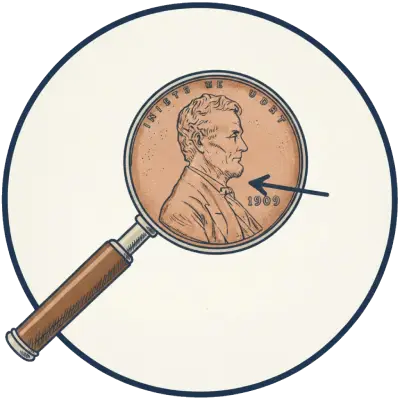
- Look Beyond the Date: The 1995 doubled die, 1999 Wide AM, and 1992 Close AM varieties demonstrate why small design details can matter more than a coin’s age.
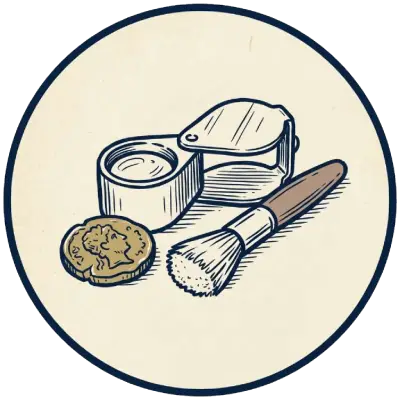
- Inspect Before Assuming Value: Use a magnifier to examine lettering and spacing, and a gram scale to distinguish 1982 copper and zinc cents. Corrosion, scratches, and missing mintmarks do not automatically indicate valuable mint errors.
Video Breakdown & Chapter Highlights
[01:10] — What to Look for in Penny Rolls
Josh and Jeanine begin by identifying their main targets: older copper pennies, Lincoln wheat cents, and collectible dates or varieties. Josh recalls the 1941 wheat penny that first sparked his interest in coin collecting, illustrating why even a modest bank roll can provide an enjoyable introduction to numismatics.
[04:47] — Identifying 1982 Copper and Zinc Pennies
The 1982 Lincoln cent presents an important challenge because the U.S. Mint produced both copper-alloy and copper-plated zinc versions that year. Josh explains how weight and other physical characteristics help distinguish them, while also examining coins with corrosion and post-mint damage that might otherwise be mistaken for rare errors.
[12:36] — Valuable Penny Varieties and the 1990 No S Mystery
Near the end of the search, Josh highlights the 1999 Wide AM and 1992 Close AM varieties, explaining how lettering on the reverse can reveal valuable differences. He also clears up confusion about 1990 pennies without mintmarks: ordinary Philadelphia circulation strikes are common, whereas the rare 1990 No S variety is a proof coin.
Josh’s Director’s Cut: Practical Numismatic Advice
“Now what are we looking for? The copper pennies for sure. The pre-1982 pennies.”
One of the most useful lessons from this roll search is that successful coin hunting does not depend on discovering an extremely rare penny every time. A collector can enjoy the process by identifying older compositions, examining condition, and learning the differences between ordinary circulation coins and recognized varieties. Josh and Jeanine finish with 14 copper-era cents, showing that an inexpensive roll can still contain interesting material worth examining.
When sorting pennies at home, establish a consistent routine. Separate wheat cents, pre-1982 copper-alloy cents, 1982 transitional-year pieces, and coins requiring closer variety inspection. A scale is especially useful for 1982 cents because copper-alloy examples normally weigh approximately 3.11 grams, compared with 2.50 grams for copper-plated zinc examples. Our copper versus zinc penny identification guide explains the differences in greater detail.
Finally, avoid treating every unusual appearance as evidence of a minting mistake. Surface damage and corrosion can create dramatic effects without adding collectible value. Compare questionable pieces with authenticated examples before setting them aside as errors. For a broader checklist, consult our guide to searching penny rolls for rare and valuable pennies. Remember that copper content and collector value are different things, and U.S. one-cent coins remain subject to federal melting and export restrictions.
Historical Context & Mint Specifications
The Lincoln cent debuted in 1909, replacing the Indian Head cent and introducing Victor David Brenner’s portrait of Abraham Lincoln. The original wheat-ear reverse remained in production through 1958, followed by the Lincoln Memorial design in 1959 and the Union Shield reverse in 2010. These design changes help explain why collectors encounter several visually distinct types when searching ordinary penny rolls.
Another major transition occurred in 1982, when rising production costs prompted the U.S. Mint to replace the traditional 95% copper composition with copper-plated zinc. Because both compositions were produced during the transition year, 1982 pennies deserve special attention. Original mintages vary substantially by date and mint, while survival and collector demand influence the premiums associated with key dates and recognized varieties.
| Series / Denomination | Lincoln Cent / One Cent ($0.01) |
| Mintmarks / Key Dates | P (usually no mintmark), D, S; 1909-S VDB, 1914-D, 1931-S; selected doubled dies and AM varieties |
| Composition & Weight | Pre-1982: 95% copper, 3.11 g; 1982: both compositions; later zinc-core cents: 97.5% zinc, 2.5% copper, 2.50 g |
| Original Mintage | Varies by year and mint; some key-date issues have mintages of only a few hundred thousand to several million |
| Designer / Engraver | Victor David Brenner (Lincoln obverse); Frank Gasparro (Memorial reverse); Lyndall Bass (Shield reverse) |