


If you read any magazines, newspapers, or online publications, then you have probably come across at least one or two advertisements for coins.
Beware! It is not uncommon to find a few misrepresentations in coin advertisements.
Now, to be clear, I am not referring to advertisements placed by reputable coin dealers. I’m talking about the glossy, half-page and full-page color advertisements seen in newspapers, circulars, general readership magazines, and the like.
The types of ads I am referring to are the kinds which may remind you of “shop at home,” “As Seen on TV” type advertisements. Often, the prices are set at $XX.95. And in some cases, a certain number of “easy” payments are permitted.
Deceptive Coin Ads
Why am I telling you to be careful?
Because some (not all) of these coin advertisements can be misleading.
These coin ads typically catch the eye of non-collectors (or brand new collectors) who do not really know much about the nature of coin pricing, coin buying, or the coin market in general.
A new coin collector may see an advertisement for a pretty, supposedly rare coin and not even think twice about the coin’s true value. When, in reality, the coin could be worth far less than the ad wants you to believe.
The fact of the matter is, some coin ads attempt to lure unsuspecting buyers into purchasing coins which are quite common.
I feel pretty impassioned about this, because I have seen way too many of these types of offers which snag the newbie collector and other innocent people into buying overpriced and misrepresented coins.
Here are some examples of misleading coin ads to watch for…
Red-Flag Phrase Checklist (Watch For These!)
While none of the following phrases come from any specific advertisement, they are similar to the types of slogans found in some coin advertisements.
Why must you be careful?
Because you shouldn’t let these phrases lead you to believe that the coin that “you must buy now” is as rare, special, or valuable as the advertisement may suggest.
“The Rare Wheat Back Cent”
Many coin ads will lead you to believe that finding a Lincoln Wheat penny is like striking oil! They’ll use words like “historic hoard rescue” to justify a $5 price tag on a single coin.
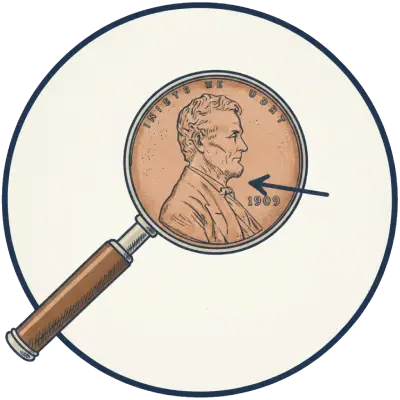
Yes, there are a few rare Wheat cent dates — like the 1909-S VDB penny or the 1914-D penny — that are genuinely scarce and command massive premiums. However, you absolutely need to know that Lincoln Wheat cents as a design (type or series, as we say in coin collecting) are NOT rare at all.
Even though we don’t encounter Wheat pennies in circulation all that often today, Wheat cents are still highly common in the hobby of coin collecting. In fact, during the course of the Wheat cent series (1909 through 1958), BILLIONS of Lincoln cents with the Wheat reverse (tail’s side) were made.
Virtually all Wheat cents you encounter made from 1934 to 1958 (the bulk of those you will find) are worth about 5 cents each in typical circulated grades. Most dates from 1909 to 1933 are worth less than $2.50 in lower grades.
Here’s a list of the rare and uncommon Lincoln cents.
“Never To Be Minted Again”
Yes, there is truth to such a phrase — when it refers to now-obsolete designs like:
- Morgan dollar
- Peace dollar
- Barber half-dollar
- Walking Liberty half-dollar
- Franklin half-dollar
- Mercury dime
- Buffalo nickel
- Indian Head cent
- Lincoln Memorial cent (last made in 2008, and “never to be struck again” as U.S. Mint plans currently state)
However, the fact that a coin is “never to be minted again” does not mean that you will never be able to buy the coin again. Nor does it mean that the coin is necessarily rare.
Truth be told, the majority of “never to be minted again coins” that you find offered in typical coin advertisements refer to the very coins listed above. The ad is relying on your emotional connection to such obsolete designs.
The truth is most dates of these coins are extremely common — even if they aren’t found in circulation anymore, and even if they really are never to be minted again.
Most coin dealers have large stocks of these coins, and they will be readily available in huge quantities for the foreseeable future.
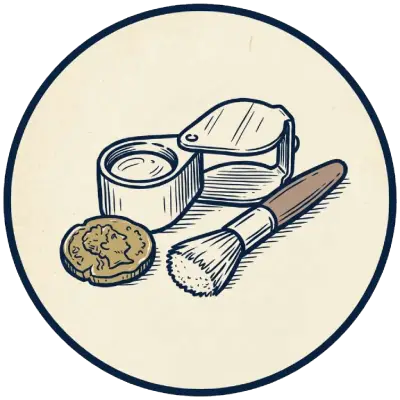
Watch out for ads selling old coins that have a suspiciously bright, mirror-like sheen. Unscrupulous companies often take common, worn coins and harshly dip them in acid or polish them with wire brushes to make them look falsely uncirculated. In the numismatic world, harsh cleaning permanently destroys a coin’s value. You want an honest, original chocolate-brown or original mint luster patina, not a ruined coin that’s been artificially shiny-fied!
“Must Buy Now” and “Last-Chance Opportunity”
Creating “artificial scarcity” is the oldest trick in the book! They want you to panic-buy under the assumption that if you don’t order within the next 10 minutes, the coin vanishes from the Earth forever.
These kinds of coin advertisements particularly annoy me as a numismatist. There is virtually no coin that will never be available again (see above).
While it is sometimes true that a certain advertiser may not be offering a certain coin in its catalog again, to say that now is your “last chance” to buy a particular coin is a huge misstatement.
If one seller is not going to be offering a specific coin again, another one will. Even coins offered directly from the U.S. Mint (which stops selling certain coins after a period of time) will be found in private dealers’ catalogs in the near future — if not already.
Be wary of advertising which makes you believe that you will never be able to buy a certain coin if you don’t buy it now. Unless the coin in question is a novelty coin being offered exclusively from that advertiser, I can practically guarantee you will find that “never to be offered again” coin somewhere else!
Many rare coins are certified by top-tier independent grading services like PCGS or NGC in hard plastic holders that collectors often called “slabs.” If a “Buy Now” ad promises authentication but ships the coin in a cheap, unbranded plastic flip accompanied by a generic paper “Certificate of Authenticity” printed by the company itself, walk away! That certificate usually isn’t worth the paper it’s printed on.
“Rare Morgan Silver Dollars” or “Rare [Insert Coin Name Here]”
Again, I take issue with the word “rare.”
I have seen all too many advertisements blaring the word “rare” while showing a picture an incredibly common date — such as a 1921 Morgan dollar. (1921 was the single highest-mintage year for the Morgan series, with over 86 million coins struck across Philadelphia, Denver, and San Francisco combined!)
Yes, there are rare (even very rare) Morgan dollars. And there are rare examples of other coins, too. However, only specific (and relatively few) date-and-mint mark combinations are actually considered rare.
Anytime you see an advertisement offering a “rare” Morgan or Peace silver dollar with a price tag of “just $69.95,” “only $79.95,” or “3 easy payments of “$29.95” (or something similar to any of these examples), the coin is most likely going to be a typical, common-date example of a Morgan or Peace silver dollar. Furthermore, it will probably be an overpriced coin, and perhaps even a cleaned coin as well.
Unless you’re buying a coin from a reputable coin dealer, take the word “rare” with a grain of salt.
If a company is charging $79.95 for a common-date silver dollar, they are including a massive, retail markup into the price. Always verify live bullion values and retail trends before buying.
The Bottom Line…
When it comes to coin ads seen on TV, in newspapers & magazines, and even in social media ads… You can usually get the same coins from a regular coin dealer for a much better price — sometimes less than half the price of the deals advertised!
Leave a Comment