





Coin collecting and paper money collecting may strike non-money collectors as one and the same — but (as those inside the hobbies know), they really are two very different animals that manage to share several commonalities.
You see, not all currency collecting is the same.
While many coin collectors have a few paper bills in their collections, and many paper currency collectors have some coins in theirs… for the most part, coin collecting and paper money collecting are separate pursuits with their own interesting aspects and traits.
What Makes Paper Money Collecting Different From Coin Collecting
Aside from the blatant difference of paper versus coin money, there are several defining attributes that separate coin collecting and paper money collecting on some principal levels:
- Coins have been around for a longer time (in general), so collectors can dig further back in time with coins.
- A good deal of paper money is more expensive than coins — because of higher face values.
- Paper money offers color varieties, design variations, and new challenges that coins don’t always present.
- Paper currency can take less space to store than coins.
You’ll find, as you delve into collecting coins and paper money (either one or the other or both) that, in many ways, each has its perks!
What I Like About Coins & Paper Currency
While I have been drawn more to coins, I’ve enjoyed collecting and admiring paper money, too.
Collecting either type of currency celebrates our nation’s monetary and social history. However, on the artistic side, I always liken coins to sculptures — whereas paper currency is really a form of printed art.
I’ve always liked the inherent solid feel of a coin in my hand versus paper currency.
However, when talking about paper money… I’m particularly fond of the fact that serial numbers can be traced to when a note was printed. I like how errors on paper currency can be just as bewildering to look at as a mistruck coin.
Going back over the decades — seeing how portraits have changed and how security features have been modified — illustrates how our nation has evolved over the years.
Holding a gold or silver certificate (and knowing it once had the power to be exchanged for gold or silver) places me back to an earlier time when the precious metals were at the core of our monetary system.
MUST READ: What U.S. Coins And U.S. Paper Currency Is Made Of
Both Hobbies Have Their Rewards & Require Due Diligence
As you can see, collecting coins and paper currency can be equally exciting. The key is figuring out what types of goals you’re after!
Either way you go about it, collecting paper currency, coins, or both (as many do) is a way to express your appreciation of and interest in our nation’s social and economic history.
You’ll need to buy albums, sleeves, and other supplies for paper currency in much the same manner that you buy albums, folders, and vinyl flips for coins.
Paper money requires every bit as much care and diligent handling as coins do — so you won’t be “saving any effort” by choosing one hobby over the other.
Just like the occasional old and rare coin pops up in circulation, so too will the every-now-and-then old bill.
Both coins and currency can be easily obtained for your collection through circulation or through dealers.
Either pursuit can feature rare pieces that draw top-dollar bids at auction and a host of ‘oohs’ and ‘ahs’ from friends, family, and colleagues!
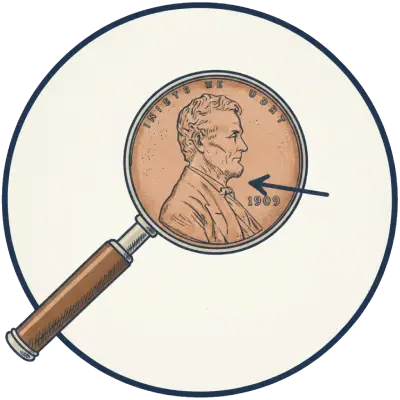
The question is, do you get your kicks holding an 1882 $100 gold certificate or a 1909-S VDB penny?
Interesting U.S. Paper Money Facts
As a collector who primarily focuses on coins, I’m thinking others who are in the same boat might find these tidbits about U.S. paper currency interesting:
- The first paper money to be printed in what would become the United States was made in the Massachusetts Bay Colony in 1690.
- Federally printed paper currency as we’ve come to know it today was first made in 1862. These bills had one side printed in green — which gave way to the popular use of the term “greenbacks” to refer to U.S. paper money.
- To compensate for a massive coin shortage during the Civil War, fractional notes were printed in several small denominations:
- 3 Cents
- 5 Cents
- 10 Cents
- 15 Cents
- 25 Cents
- 50 Cents
- The highest-denomination dollar bill ever made in the United States is the $100,000 bill. It was made for a few weeks during the end of 1934 into 1935 to satisfy transactions within the government.
- Just like people hang onto half-dollars for whatever reason, the $2 bill is also hoarded by many. Interestingly, the novelty of seeing either a half dollar or a $2 bill in circulation is likely worth more than the actual collector value of those items. Most likely, any half dollar or $2 bill you find is worth only face value, or perhaps a small premium above.
READ NEXT: All U.S. Paper Currency Values
Leave a Comment