

Start Here

Values

Buying & Selling

Rare U.S. Coins

How To's

Myths & History

Have A Coin With No Mintmark? See Why There Are No Mint Marks On Coins Dated 1965, 1966, And 1967

by Joshua McMorrow-Hernandez

Ezoic/Google Ad Code Here

A lot of people want to know why they can’t seem to find any coins from 1965, 1966, or 1967 with a mint mark.

Are they rare?

Here’s an example of a 1966 Kennedy half-dollar with no mintmark:

In fact, the United States Mint did not officially produce any coins with a mintmark during the years 1965, 1966, 1967.

Why not?

Well, collectors may not like the answer very much…

Why Mintmarks Were Removed From 1965-1967

Mint marks were removed because too much coin collecting caused a nationwide coin shortage!

During the early 1960s, the coin collecting craze was in full swing. People left and right were collecting coins.

Many were trying to build complete date sets. Others were pulling silver coins out of circulation to benefit from the rising silver bullion values of the time.

In the end, though, what resulted was a nationwide coin shortage. This resulted in the U.S. Mint trying to discourage coin collectors from saving coins based on mint marks by not putting any mint marks on coins at all!

This effort can be seen on the coins without mint marks dated 1965, 1966, and 1967. The Coin Act of 1965 required the removal of mint marks, and this was to be the case for 5 years.

Silver Was Also Eliminated From Coins In 1965

On another note, the U.S. Mint responded to rising silver prices.

In 1965, the U.S. Mint:

  • Eliminated silver completely from the dime and quarter.
  • Reduced the half-dollar’s composition from 90% to only 40%.

In 1971, the U.S. Mint eliminated silver from circulating coins completely. (The half-dollar was converted to a copper-nickel clad composition.)

Mint Sets & Proof Sets Were Not Produced 1965-1967

Another move made by the U.S. Mint in 1965 was to temporarily stop producing traditional mint sets and proof sets.

During the years 1965, 1966, and 1967, the U.S. Mint offered “Special Mint Sets” — which contained one specimen of each coin:

  • the cent
  • nickel
  • dime
  • quarter
  • half-dollar

These coins were struck with a “proof-like” finish.

In other words, special mint set coins have a decidedly higher-quality appearance than typical uncirculated strikes, but not nearly as brilliant (in most cases) as an average proof coin.

Mint Marks, Mint Sets, And Proof Sets Returned In 1968

In 1968, Congress acted to restore mint marks on coins.

From this point on, all mint marks were to be located on the obverse (heads side) of the coin. Most coins minted before 1968 have mint marks located on the reverse. Lincoln pennies were an exception. Lincoln pennies did bear mint marks on the obverse before 1968.

In 1968, the United States Mint also resumed production of regular proof sets and mint sets.

Clearly, the U.S. Mint’s efforts to reduce the number of coins being pulled from circulation did not result in collectors forever shying away from date-and-mint-mark series collections. People to this day continue to pull millions of coins out of circulation based on mint mark.

This was particularly evident during the striking of the 50 State Quarters program. People were constantly on the lookout for coins with mint marks from the opposite region of the nation. People in the eastern half of the U.S. vied for Denver-minted coins, and people in the west were on the lookout for Philadelphia issues.

Like this post? Save it to read again later… or share with others on Pinterest!

PUBLISHED July 28, 2019
UPDATED August 29, 2026

Joshua McMorrow-Hernandez

Numismatic Specialist

Hi, I’m Josh! I’m the Editor here at the US Coins Guide. My love for coins began when I was 11 years old. I primarily collect and study U.S. coins produced during the 20th century.

I’m a member of the American Numismatic Association (ANA) and the Numismatic Literary Guild (NLG). I have won multiple awards from the NLG for my work as a coin journalist. I’m also the editor at the Florida United Numismatists Club (FUN Topics magazine), and author of Images of America: The United States Mint in Philadelphia (a book that explores the colorful history of the Philadelphia Mint). I’ve contributed hundreds of articles for various coin publications including COINage, The Numismatist, Numismatic News, Coin Dealer Newsletter, Coin Values, and CoinWeek.

I’ve authored over 1,000 articles here at the US Coins Guide (many with over 50K shares).

I welcome your coin questions!

22 responses to “Have A Coin With No Mintmark? See Why There Are No Mint Marks On Coins Dated 1965, 1966, And 1967”

  1. Julie Avatar
    Julie

    I have one 1965 and one 1966 half dollar. Are they worth anything ?

    1.  Avatar
      Anonymous

       Yes, Julie – each is worth around $3.

  2. gabriel Avatar
    gabriel

    i have a 1886 morgan silver dollar and a 1922 liberty dollar and a 1959 franklin half dollar what is it worth

  3. Tonya Delisle Avatar

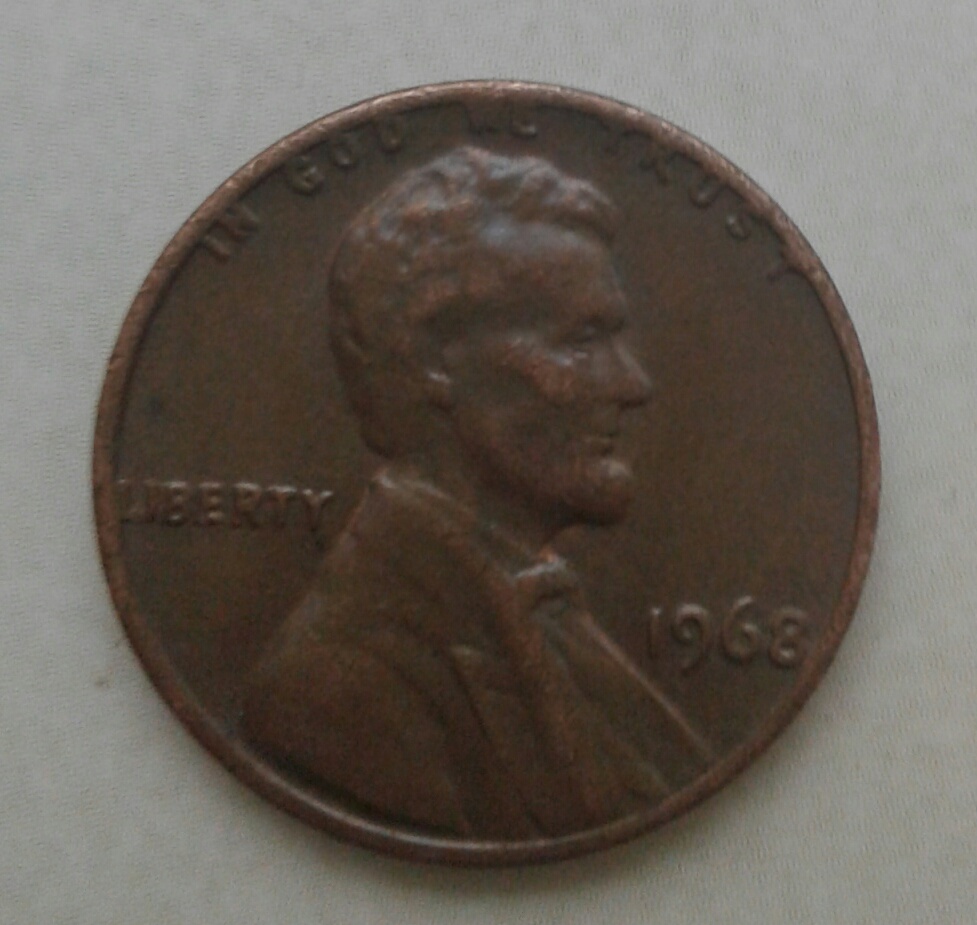
    I have a 1968 penny with no mint mark. Is it worth anything?

    1. JoshuaTheFunTimesGuide Avatar
      JoshuaTheFunTimesGuide

      Hi, Tonya –

      Unless your 1968 Lincoln cent is in mint state condition (meaning it has no wear) it’s worth face value.

      Thanks for your question!

  4. Donald LaBona Avatar
    Donald LaBona

    I have a 1918, 1945 penny and a 1940 nickel a 1965 quarter all with no mint mark are they worth anything?

    1. JoshuaTheFunTimesGuide Avatar
      JoshuaTheFunTimesGuide

      Hello, Donald —

      Here are approximate values for your coins, assuming them to be in worn condition:

      1918 penny – 20 cents
      1945 penny – 5 cents
      1940 nickel – 15 cents
      1965 quarter – 25 cents

      Best,
      Josh

  5. Robert Stiver Avatar
    Robert Stiver

    Hi I have a 1978, 1983 quarter with no mint mark on them why is that

    1. JoshuaTheFunTimesGuide Avatar
      JoshuaTheFunTimesGuide

      Hi, Robert —

      The 1983 quarter has no mintmark? Would you mind posting a photo of it here, please?

      Thank you,
      Josh

  6. Robert Stiver Avatar
    Robert Stiver

    Sorry it’s an 85

    1. JoshuaTheFunTimesGuide Avatar
      JoshuaTheFunTimesGuide

      Hi, Robert —

      The mottling on the surface is a chemical reaction due to substances with which the coin has come into contact in circulation. This piece is worn, and thus is worth face value.

      Thank you for your question and photo!
      Josh

    1. JoshuaTheFunTimesGuide Avatar
      JoshuaTheFunTimesGuide

      Hi, Ayanna —

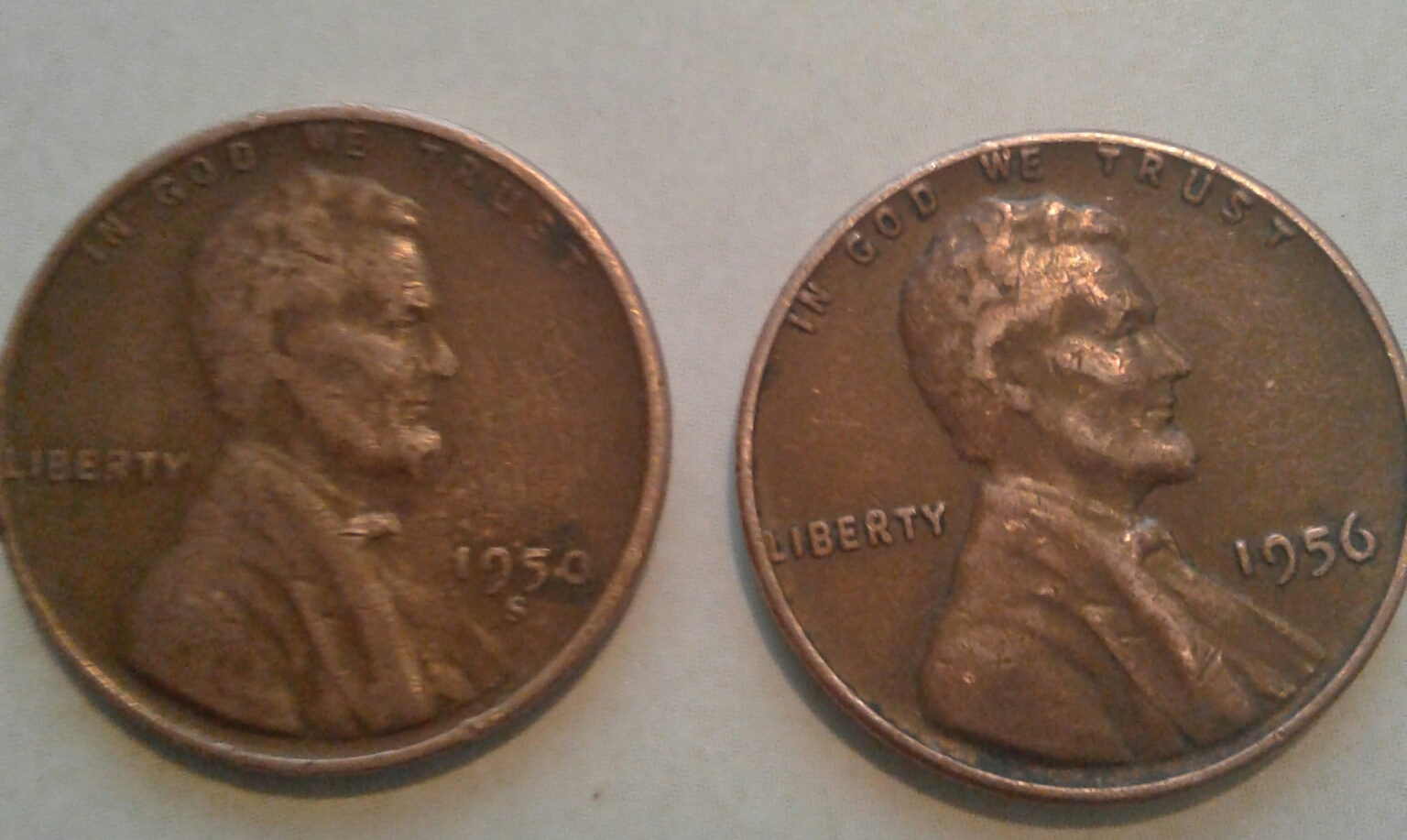
      In addition to the 1950-S and 1956 cents, which are each worth about 5 cents (as mentioned in my previous reply), this 1968 cent is worth 2 cents for its intrinsic copper value.

      Thank you for your questions,
      Josh

  7. Ayanna A Avatar
    Ayanna A

    https://uploads.disquscdn.com/images/e64b98bd34ca3a7d40e0aea5e6c423aea075d283834351e1e3269ca48f067389.jpg I’m a newbie to giving coin collecting a try. I was told to look for double stamping on 1967 pennies and I have yet to find any…… Can someone please tell me other than “1967 & 1955” what other years/coins have double down or unique flaws???

    1. JoshuaTheFunTimesGuide Avatar
      JoshuaTheFunTimesGuide

      Hi, Ayanna —

      Interesting you were told 1967 is the year to look for since that really isn’t a very popular year for doubled dies. The most famous is, as you mentioned, 1955. None of these coins seem to exhibit any doubling or other errors, and each of these coins is worth 2 cents for their intrinsic metal value.

      Actually, doubled dies and errors can appear on any coins from any year. You will find out more about some of these dates and what they’re worth: https://uscoinsguide.com/valuable-pennies/

      Best wishes,
      Josh

      1. Angela Avatar
        Angela

        Thanks for replying.

        This is telling me to go back and check every single one of my coins. This will take a while but I will come back and post anything interesting and things I have questions about.

        Thanks again!

  8. Rene Avatar
    Rene

    1968 dime with no mint mark is it worth anything?

    1. JoshuaTheFunTimesGuide Avatar
      JoshuaTheFunTimesGuide

      Hi, Rene —

      Without seeing a photo of the coin, I’m going to assume you found this coin in pocket change and that it’s a worn 1968 Philadelphia (normally with no mintmark) dime, which is worth face value. However, if you wish to post a photo of this coin, I would be happy to take a look and provide you with more insight!

      Best wishes,
      Josh

  9. Dave Home Avatar
    Dave Home

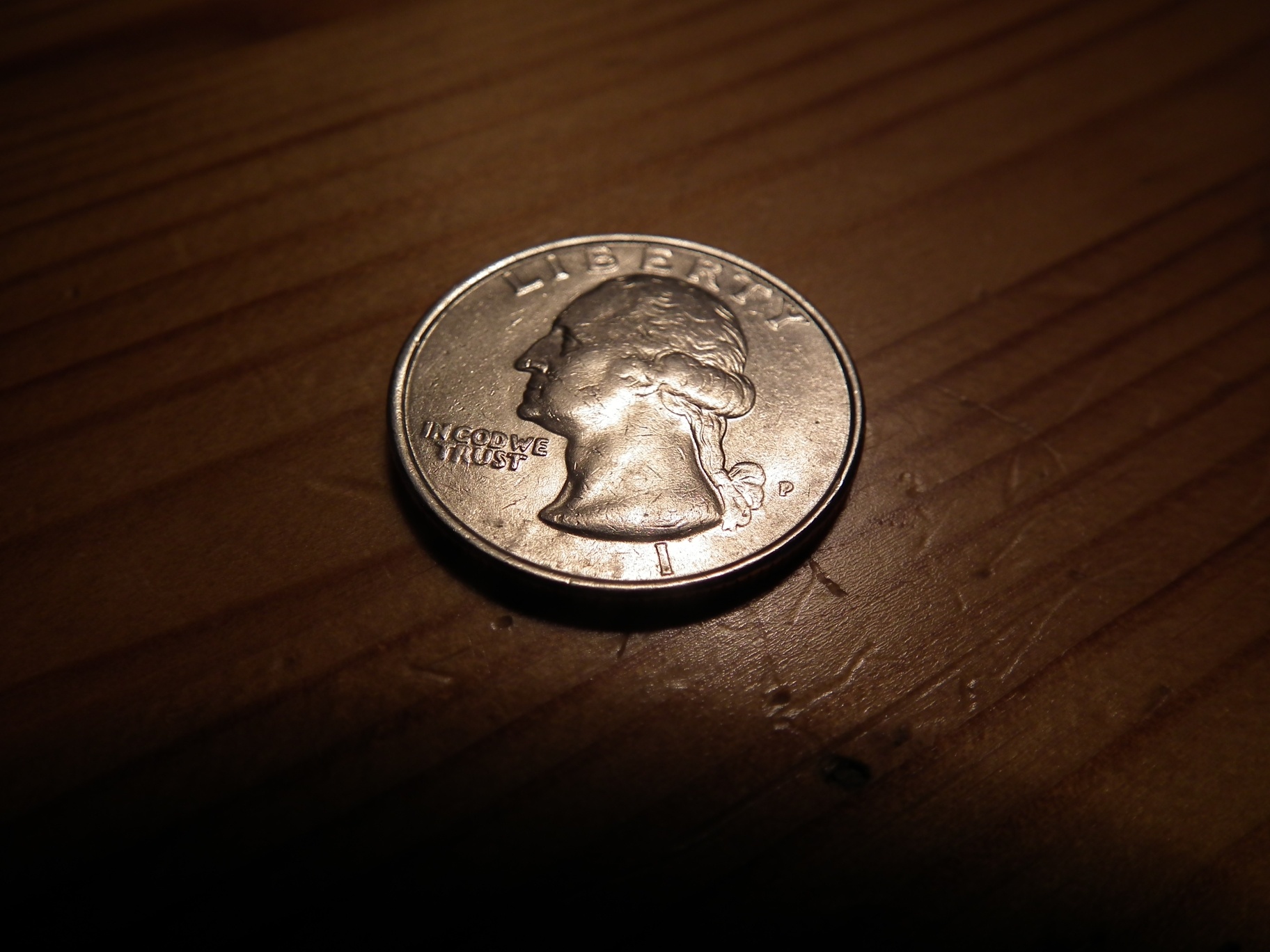
    Quarter with just last number of year… Just worn out, filed down, or…? https://uploads.disquscdn.com/images/11e8fb6727ae992fd208cf1bee95ff1786935f5318d65fd53b02c2e25b8ef04f.jpg

    1. JoshuaTheFunTimesGuide Avatar
      JoshuaTheFunTimesGuide

      Hi, Dave —

      Hmm…. This one needs an in-hand inspection or a few more close-ups. Actually, it looks like it may be a filled-die error (where grease or something else got into the first three digits of the ate on the die) but this would need more attention from a variety/error expert. For that, you might try asking the folks at CONECA: https://varietyvista.com/index.htm

      Good luck!
      Josh

    1. JoshuaTheFunTimesGuide Avatar
      JoshuaTheFunTimesGuide

      Hi, Dee ACTive,

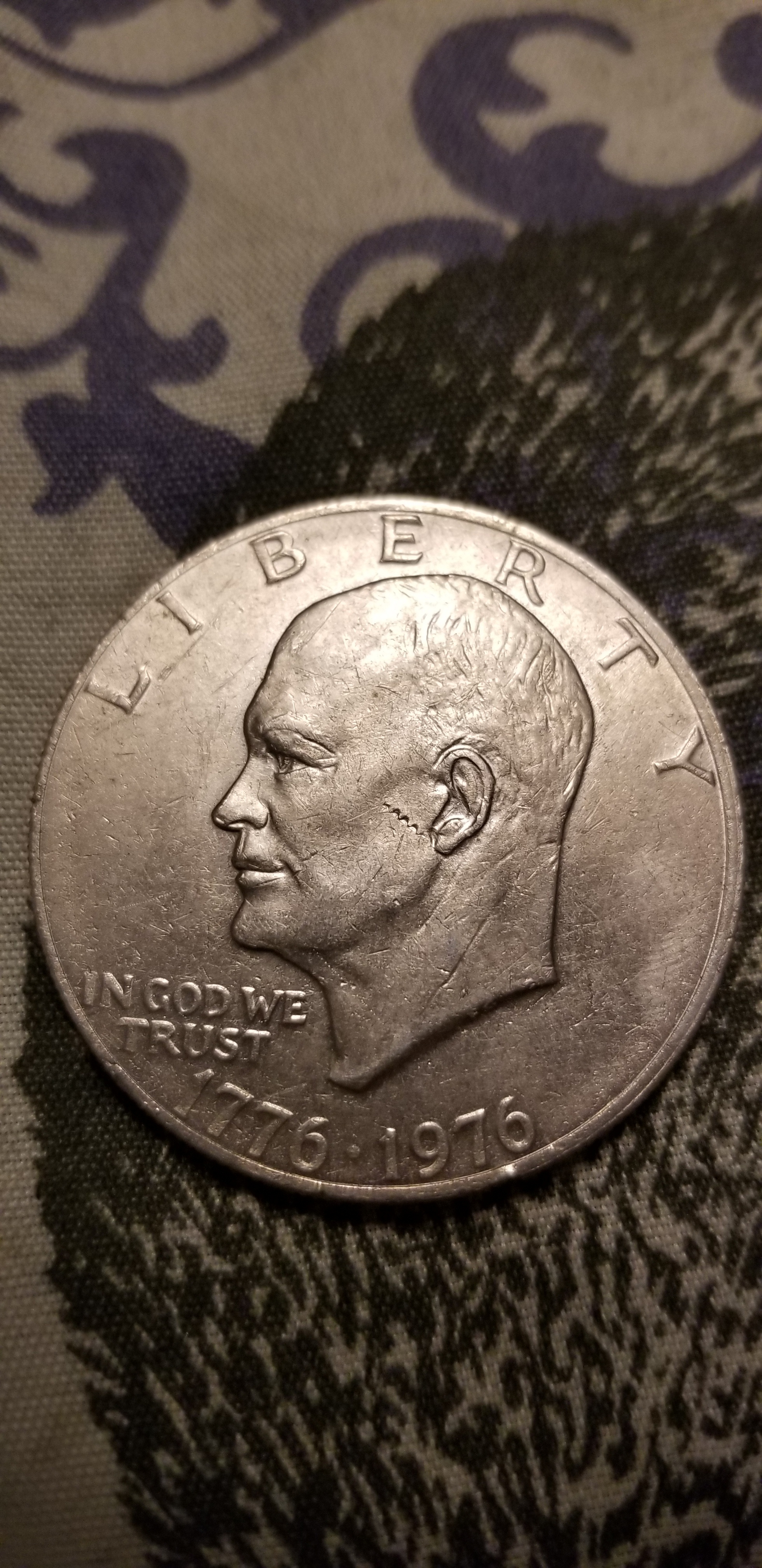
      What you have is a Philadelphia-minted regular-issue 1776-1976 Bicentennial Eisenhower dollar. These are common and yours is worth about $1.10 to $1.20 in the condition it’s in.

      Thank you for reaching out!
      Josh

Leave a Comment

Ezoic/Google Ad

300x250

Content Widget

Ezoic/Google Ad

300x600 Sticky