



2009 marks the Bicentennial (200th anniversary) of Abraham Lincoln’s birth.
To honor this special occasion, the United States Mint struck 2009 Lincoln pennies with 4 different reverse designs — as part of a circulating commemorative coin series. The 4 reverse designs depict Lincoln’s life and career. They were struck in intervals and released throughout 2009.
Here’s everything you want to know about the Lincoln Log Cabin penny, the first 2009 Lincoln Bicentennial penny to be released.
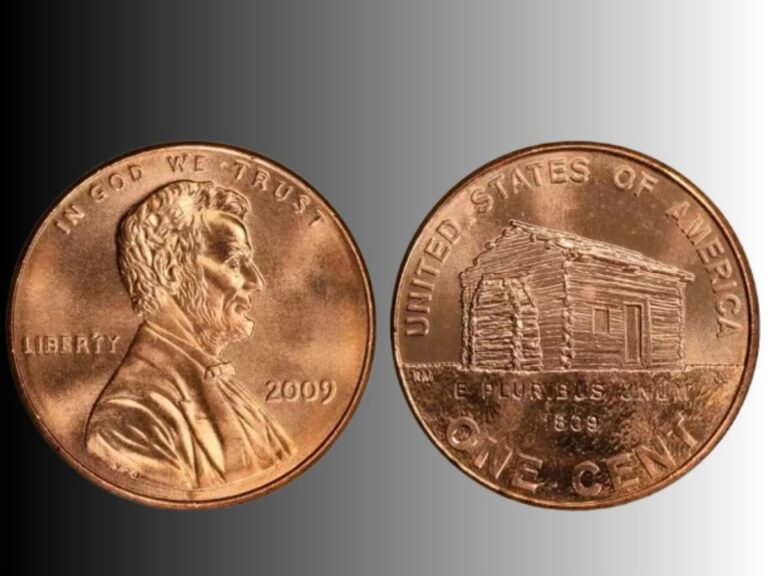
The Lincoln Log Cabin Penny
The 1st of the 4 designs is a reverse design honoring Lincoln’s early years in Kentucky.
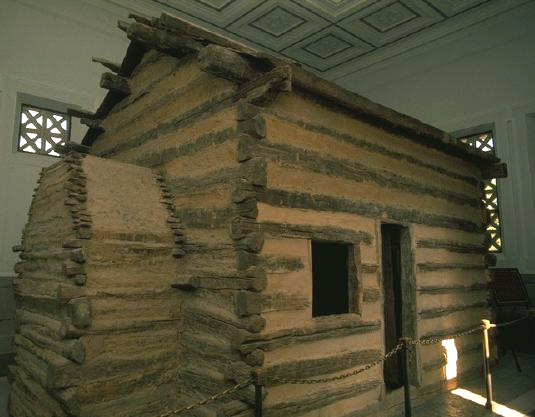
The design depicts a modest, one-room log cabin — the place where Lincoln was born and raised during his early childhood.
2009 Lincoln Log Cabin Penny Value
At the time of this writing, Log Cabin pennies struck for circulation are worth face value if worn.
Lincoln Log Cabin pennies sell for roughly 10 to 25 cents if bought uncirculated from a coin dealer.
One of the most famous modern penny errors out there is what collectors call the “Extra Logs” doubled die variety, which appear near the front-facing corner of the log cabin of the 2009 (Philadelphia, no mintmark) Log Cabin penny. There are actually a few different iterations of this variety. To identify them, use a 10x magnifier and look at and near the centrally located corner of the log cabin for the appearance of doubled log ends and extra log ends. These are relatively minor doubled dies but are worth looking for. Most of the 2009 Extra Logs pennies sell for between $5 and $10, though some take more.
The Log Cabin Coin’s Composition
Some of the 2009 Lincoln pennies were struck from the same composition as pennies struck in 1909 — the first year the Lincoln cent was made.
These special pennies consist of 95% copper and 5% tin and zinc. They can be found in 2009 proof and mint sets, which are produced and sold by the U.S. Mint.
In fact, for most of the 20th century, the Lincoln penny contained mostly copper. However, as the price of copper rose, replacing the mainly copper penny with a cheaper metal content became necessary.
After experimenting with aluminum and other materials during the 1970s, the U.S. Mint struck the first 97.5% zinc penny in 1982.
Now, Lincoln pennies struck for circulation contain only a thin outer coating of copper. That means only 2.5% of the penny is actual copper.
Ways To Obtain The 2009 Log Cabin Penny
The Lincoln log cabin penny entered circulation by the millions. You should be able to find them in everyday pocket change.
You can also buy the log cabin penny from coin dealers. Many of them offer the Lincoln Log Cabin penny for sale individually and by the roll.
2009 Log Cabin Cent Design
When first released, the Lincoln Log Cabin design excited the nation’s active and passive coin collectors alike.
On February 12th, 2009, when the Log Cabin penny was released, a major ceremony was held in Hodgenville, Kentucky.
It was there that U.S. Mint Director Andy Brunhart and Kentucky Governor Steven L. Beshear celebrated the release of the log cabin penny by giving thousands of them to children at a presentation at LaRue County High School.
The log cabin penny was conceptualized by Richard Masters, who is a master designer in the United States Mint’s Artistic Infusion Program. The design was sculpted by Jim Licaretz, a U.S. Mint sculptor-engraver.
The Other 2009 Lincoln Bicentennial Pennies
As mentioned, there are 4 coins in the Lincoln Bicentennial cent series. Here are the remaining 3 coins — their designs and values:
- 2nd in the series: Lincoln’s Formative Years, in which he studied books and was extensively educated in Indiana (1816-1830)
- 3rd in the series: Lincoln’s Professional Life as a lawyer and senator for Illinois (1830-1861)
- 4th in the series: Lincoln’s Presidency in Washington, D.C. (1861-1865)


Leave a Comment