





Reasons To Get Rid Of The Penny
Is it time to get rid of the penny? YES.
And there are a lot of people who agree with me.
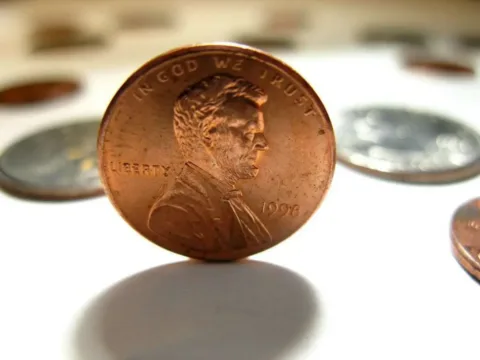
But it’s not a new argument.
Since at least the 1980s, everybody from politicians to everyday Joes and Jolenes have been pushing to put an end to the penny.
And then there’s me.
But who am I? I’m a longtime coin collector who absolutely loves the penny. I began collecting Lincoln cents from pocket change when I was 11 years old. And to this day I love Lincoln pennies so much that I spend much of my time writing about them.
So why am I for getting rid of the penny?
Let me explain my top reasons to get rid of the penny in the United States…
The Penny Costs Too Much To Make
My #1 reason to get rid of the penny comes down to a simple matter of dollars and cents.
Do you know how much it costs the United States Mint to produce one penny?… Just one single penny?
Think it costs one cent? One and a half cents?
Try 3.17 cents!
Yep, it costs slightly more than 3 cents just to make a single 1-cent coin.
A little weird huh? So, for every penny the U.S. Mint makes, we, the taxpayer, effectively lose one cent!
Pennies Aren’t Used Very Often
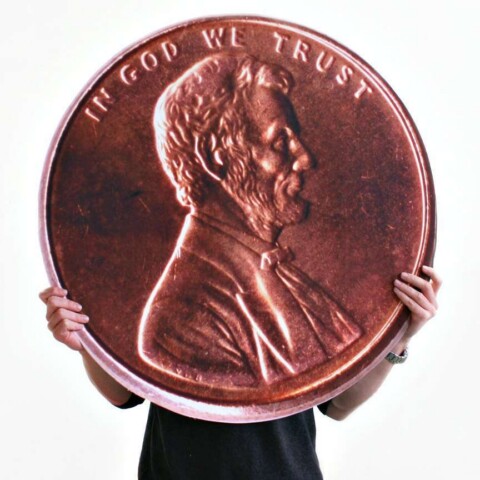
What’s more, a good number of those pennies that get struck by the billions each and every year simply wind up in piggy banks, sock drawers — even in the trash!
Think about it for a moment… When was the last time you actually gave a penny (or multiple pennies) to pay for something? Goodness knows I haven’t used pennies to pay for anything in a long time.
I’m guessing you may fall into the same camp.
And, if by chance, you just so happen to be a judicious penny pincher who spends (actual) pennies carefully and wisely, then more power to you. But if you’re like most of my friends and family — and me — we’re either whipping out our plastic cards or laying out cash by the $1s, $5s, $10s, and $20s.
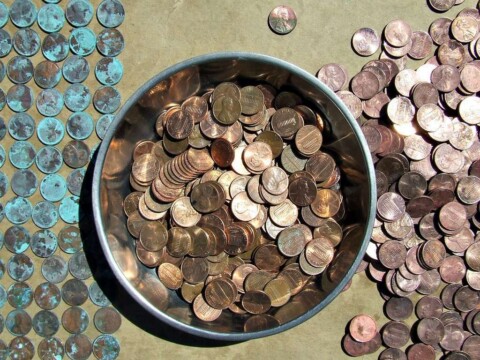
Most of the pennies I get back from cash transactions quickly go into my change jar where they’re largely forgotten until I roll them up or cash them in via CoinStar on a proverbial rainy day.
RELATED: U.S. Coins Worth More Than Face Value
Don’t Americans Want The Penny?
According to a 2006 Gallup poll on the subject, 55% of Americans were in favor of keeping the penny, versus 43% who voted to get rid of the penny.
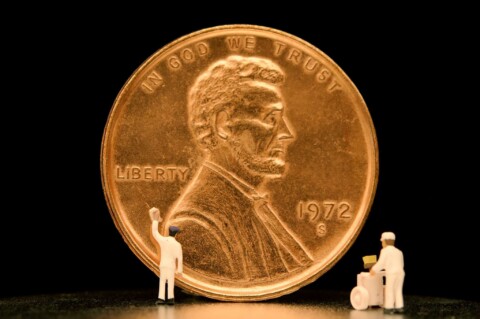
More recent polls by Americans for Common Cents show stronger numbers supporting the penny. In their 2019 poll, 68% of Americans supported keeping the penny around — that’s more than 2/3rds of the poll respondents. In fact, that support is actually up from 2012, when the same organization showed 66% of poll respondents submitting a “Yay” for the penny.
But wait… What’s the name of that group again? Hmm… Americans for Common Cents. Yup, you guessed it. American for Common Cents is a lobbyist group in Washington, D.C., advocating for the penny.
Those who support keeping the penny in production include those in the zinc and copper industries, which supply the metal for making one-cent coins.
OK, ok, no harm, no foul. I mean it’s not like the penny is that bad. In fact, it’s not bad at all. There are far worse things to be lobbying for in Congress than pennies. So to the folks involved with American for Common Cents… no hard feelings here. I get where you’re coming from.
Without The Penny, Prices Would Increase
The penny is a beloved part of American culture.
And, yes, if we get rid of the penny we may see a degree of automatic inflation for cash transactions. That’s because we would have to round up (or sometimes down) to the nearest nickel — this could adversely affect lower-income people and those who mainly use cash to pay for things.
One Pennsylvania State University estimated Americans would pay $600 million more each year because of such rounding.
However, a study from Wake Forest University refuted this by suggesting there would be no change.
But the United States wouldn’t be the first country to tackle this issue and come out the other side ok…
Other Countries Got Rid Of The Penny, And The Sky Isn’t Falling
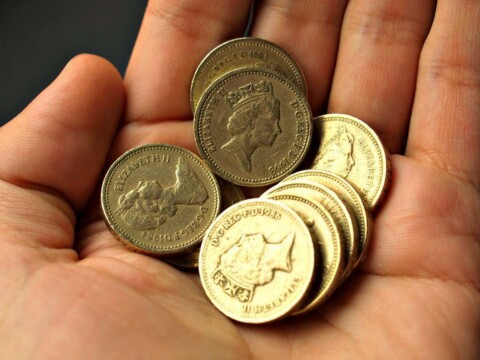
Many Americans think of “the penny” as an American thing.
And, sure, it’s become a uniquely American coin — even if its origins are from the United Kingdom and England. (The only nation that officially strikes a coin with a denomination called “penny.”)
That’s right, the official name of the United States one-cent coin is simply that… “one cent.” Through the years, Americans have casually renamed our one-cent coin “a penny.”
However, the U.S. penny — er, one-cent coin — is ironically enough becoming ever more uniquely an American thing as time goes on.
That’s because as we continue to hang onto the penny here in the States, many other nations have been scrapping their one-cent coins (or other denominations of similar value).
We don’t need to look too far for examples of this.
Canada, our neighbors to the north, nixed its one-cent coin in 2012:
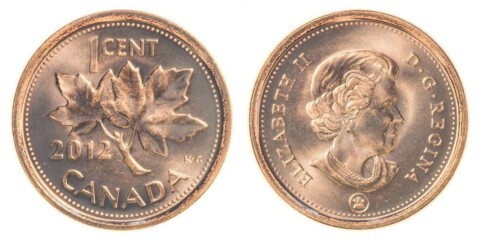
Today, as Canadian pennies (which are still legal tender) get spent there, they’re getting turned over to the recycling center. There will likely come a day in the not too distant future when pennies become rare sightings in Canadian circulation. At any rate, I’m still finding them here on occasion south the border in my pocket change.
The same is true of our neighbors just beyond the eastern horizon of South Florida — the Bahamas is demonetizing and abolishing its one-cent coin beginning in 2020:
A major poll there showed 52% of Bahamians were using the one-cent coin in circulation and nearly 80% “never” or “just rarely” turned their coins in at a bank or other depository. Barely 4 in 10 merchants and banks received the Bahamian one-cent coin during the course of daily business.
Here’s a partial list of other nations that have abolished their low-denomination coins:
- Australia
- Brazil
- Denmark
- Ireland
- Norway
- Sweden
- South Africa
- Trinidad and Tobago
Eliminating the U.S. penny won’t cause the sky to fall HERE either. So that is yet another one of my reasons to get rid of the penny.
Benefits To Coin Collectors If We Got Rid Of The Penny
Do you realize that doing away with pennies would actually HELP coin collectors?
You might be scratching your head over this one, but let me explain. It’s one of my top reasons to get rid of the penny.
#1 – Pennies would still be widely collected.
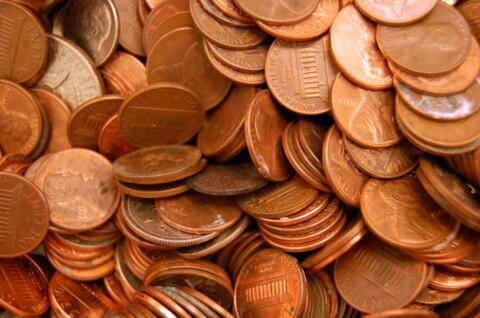
The one-cent coin has helped bring millions of coin collectors (including yours truly) into the hobby.
That’s in part because it is the lowest-denominated coin. For most people, it’s a cheap coin to hold aside. And you can find them everywhere!
If the United States government eliminated the penny tomorrow, there would still be billions upon billions of pennies sitting in jars, boxes, and bags across the country. That’s plenty of pennies to look through, collect, and enjoy for years to come.
#2 – Nickels would be collected more.
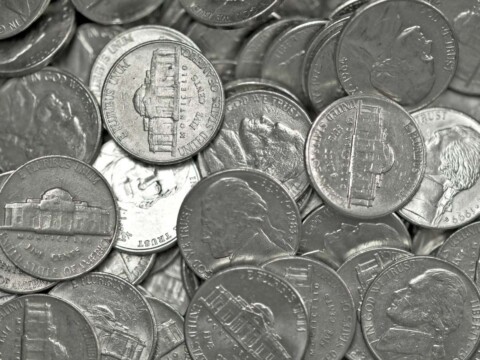
At the same time, Americans would slowly turn to collecting more and more nickels — which would presumably become the lowest-denominated circulating coin. (Hence, the next most affordable coin to collect.)
#3 – Interest in the hobby would increase.
Interestingly, the simultaneous elimination of the United States half cent and the reduction in the size of the one-cent coin in 1857 helped kickstart the popularity of coin collecting in this country. People who had been using the so-called “large cent” for their entire lives suddenly took an interest in collecting them!
Today, large cents remain among the most popular collectible coins — even as their replacement, small-cents, also enjoy extreme popularity with collectors.
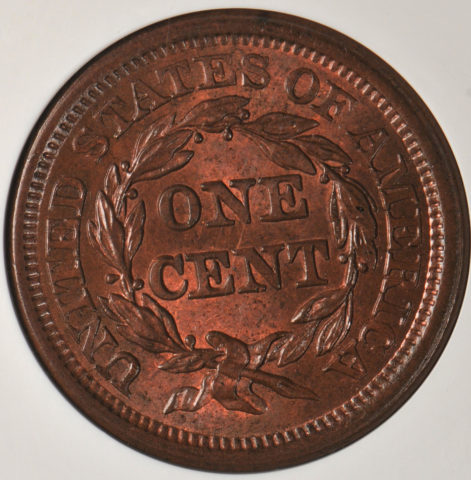
Surely, we would likely see a similar surge in popularity for the hobby if even more people became interested in collecting one-cent coins after their demise!
#4 – The U.S. penny would become a scarce collectible.
So, here we have just painted a scenario in which more people are collecting pennies, and more are collecting nickels.
Here’s yet another benefit that the hobby would enjoy with the end of the penny: all one-cent coins would become an obsolete denomination. This then automatically helps lift the importance of the series in the eyes of hobbyists, elevating the penny to the status of a vintage denomination — one for which no more new coins are being made.
The series would become scarcer by the day — as millions upon millions of circulating pennies get cashed in by Americans (possibly for recycling, as in the Canadian model mentioned above).
As U.S. pennies become scarcer, they become more valuable and ever more a collector curiosity for both numismatists and non-numismatists alike.
Also, collectors of the one-cent coin — including those assembling sets of Lincoln cents — would have the convenient benefit of collecting a closed series! (That is, a series which is bookended by a fixed start date and end date.)
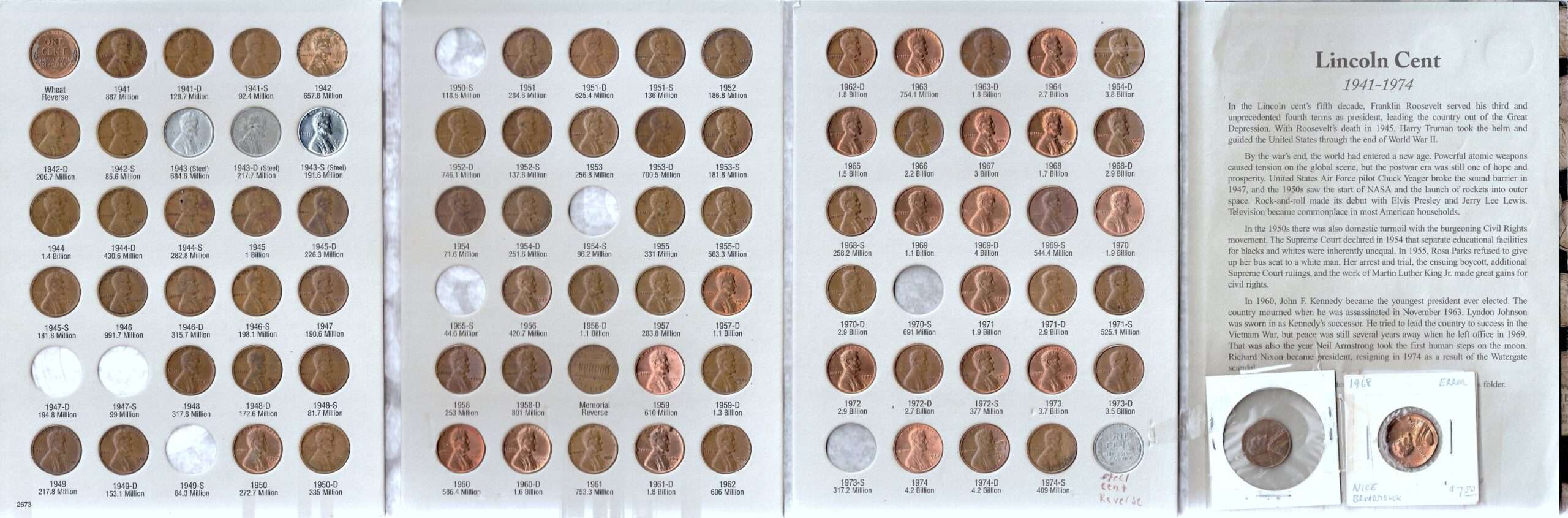
Get where I’m going with all of this? If we get rid of the penny, it would only help coin collectors — longtime and new.
The Bottom Line…
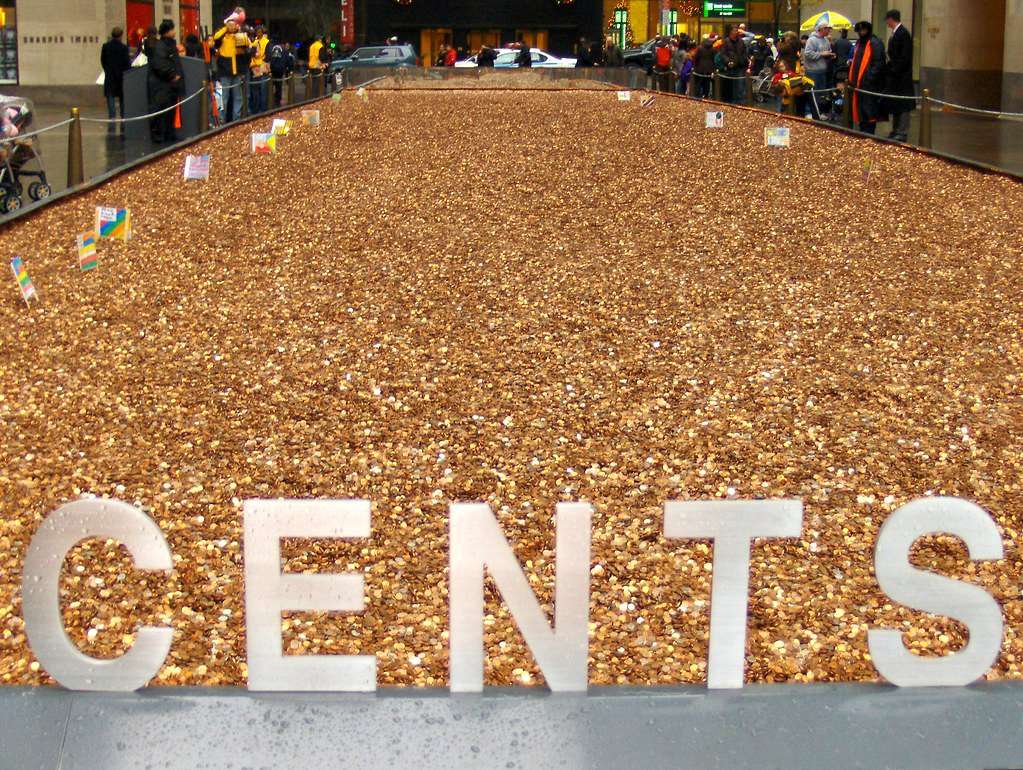
So, what do you say?
I love the penny with all of my heart. But it’s time for it to enjoy a well-deserved retirement.
I know plenty of comfy retirement homes (coin folders, albums, and displays) where all of these pennies can live long, happy lives!
What are YOUR top reasons to get rid of the penny… or not?


Leave a Comment