





Start Here

Values

Buying & Selling

Rare U.S. Coins

How To's

Myths & History

These Coins Are Disappearing From Circulation!

by Joshua McMorrow-Hernandez

Ezoic/Google Ad Code Here

This post may contain affiliate links. If you buy thru these links, we may earn a commission at no additional cost to you.
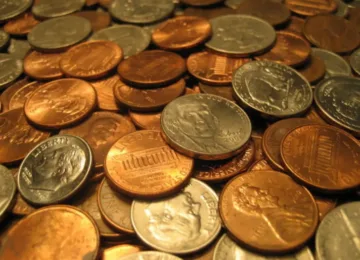

A lot of people like to know about the kinds of coins they can find in circulation. I’m one of those folks.

As a coin collector, I always keep my eye on the change that comes in and out of my hand.

As an active numismatist since 1992, I can’t honestly tell you how many coins I have checked out, but I know the number is safely well into the tens of thousands.

Of course, I am counting coins I find in circulation, too — not just the ones I have.

But many coins are getting hard to find in pocket change…

Certain Coins Becoming Rare

Over the years, I have been noticing some trends.

I am starting to notice it is getting a little harder to find certain coins I used to come across relatively frequently years ago.

Maybe you have see that too, too. Or maybe it’s just me.

Or perhaps I can attribute my counts to local circulation trends.

Nothing I am stating here is scientific. It is simply anecdotal. Hopefully, you find these observations helpful to you.

In fact, none of the coins I mention here are really worth much money. I am not suggesting they make great investments, either. I am not a coin investment expert, by the way.

Disappearing Wheat Pennies
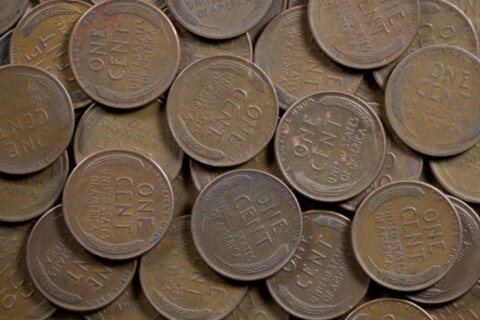
Question: Can you guess the first coin I ever officially collected?

Answer: Wheat pennies, struck from 1909 to 1958.

In fact, it was my discovery of a 1941 penny in change from my allowance that got me into this hobby as a tween-age boy. But you know what? I am not finding wheat pennies too often anymore.

Wheat pennies were last struck a bit more than 30 years before I first got into this hobby. Now, the last wheat penny was officially struck over 50 years ago. Is it just a coincidence, or does nearly 20 years more of being “obsolete” mean something to a coin’s circulation habits? Perhaps it does.

I remember when I first started collecting coins in the early 1990s, I could find wheat cents every now and then. Maybe I was just lucky. Or maybe there were still enough wheat cents floating around back then that it wasn’t that hard to find them.

At any rate, I find myself having to look much harder now for a wheat cent to pop up in circulation. I have to wonder if wheat pennies will still be coins that the average person could expect to find in circulation a decade from now.

Not that wheat pennies are worth all that much. The most common ones are worth only a few cents if well worn.

But that doesn’t matter to many people. Simply finding an old wheat penny warrants some to take it out of circulation and store it away in a collection, a jar, a drawer, or a cigar box. Whenever I see a wheat penny, I tuck it away, too. It’s almost a natural reflex.

Old Jefferson Nickels Are Disappearing
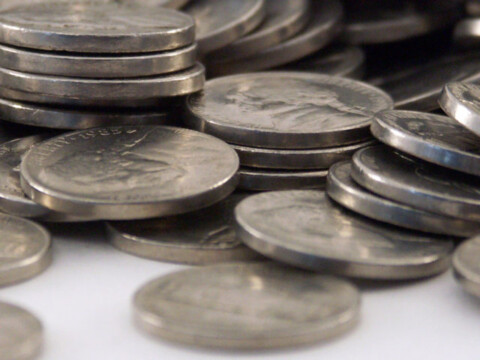
Jefferson nickels are probably among the easiest coins to collect and one of the cheapest series to complete.

Jefferson nickels, first made in 1938, do have some scarce dates (like the 1939-D and 1950-D). But even the scarce dates don’t cost a whole lot. They can be had for under $20 apiece. Common dates made before the 1960s are often worth less than 20-50 cents apiece in worn grades.

Yes, Jefferson nickels provide few real challenges for collectors, but some of the old ones are getting tough to find in circulation. By 1993, I was on the Jefferson nickel bandwagon, and I was collecting them left and right.

I confess I had to buy several dates from a coin dealer to fill up my 1938-1961 Jefferson nickel Whitman coin folder back then. But, you know what? I was able to find a good deal of the common dates for that folder right from circulation — save for the silver, wartime issues.

Even then, I found a 1943 silver piece. I did not even have to look all that far to find those nickels. I did minimal roll searching. Many of the old Jefferson nickels (in my view, that would include any from before 1960) I pulled from simple pocket change.

I still do equivalent searching today for those old Jefferson nickels and do not find it so easy anymore to locate anything dated from the 1930s, 1940s, and 1950s. I can’t tell you why. Most were made from the same composition as the more recent Jefferson nickels (75% copper, 25% nickel).

They look the same as the newer Jefferson nickels. I have to chalk it up to a bunch of collectors like me who are realizing that the old Jefferson nickels are indeed getting old and are storing them away for hoards, collections, and investments.

At any rate, I bet I will be getting much more excited about finding a dirty 1939, 1941, or 1956 nickel in 10 years than I even do now.

Disappearing Bicentennial Quarters
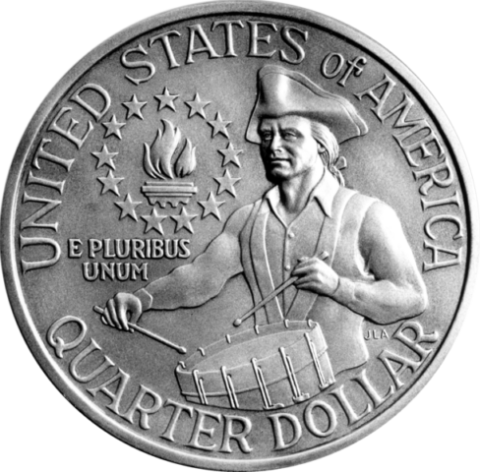
Wow — who would have thought I would be putting the highly common 1976 Bicentennial quarter on this list? I would not have guessed that a few years ago.

Believe it or not, I am simply not finding these coins anymore. Strange.

In the early and middle 1990s, I recall times where I would find several in a week. Why am I not finding Bicentennial quarters much anymore?

It probably has a lot to do with the attention the 50 State Quarters program (1999-2008) drew to the Washington quarter. With tens of millions of people turning their eyes to the quarter, many undoubtedly began snapping up the unique Colonial drummer boy design featured on the back of the 1776-1976 Washington quarter.

As things go, the Bicentennial quarter is still worth only face value if worn. However, it also makes for a neat addition to any coin collection regardless of the coin’s grade.

PUBLISHED May 19, 2009
UPDATED August 29, 2026

Joshua McMorrow-Hernandez

Numismatic Specialist

Hi, I’m Josh! I’m the Editor here at the US Coins Guide. My love for coins began when I was 11 years old. I primarily collect and study U.S. coins produced during the 20th century.

I’m a member of the American Numismatic Association (ANA) and the Numismatic Literary Guild (NLG). I have won multiple awards from the NLG for my work as a coin journalist. I’m also the editor at the Florida United Numismatists Club (FUN Topics magazine), and author of Images of America: The United States Mint in Philadelphia (a book that explores the colorful history of the Philadelphia Mint). I’ve contributed hundreds of articles for various coin publications including COINage, The Numismatist, Numismatic News, Coin Dealer Newsletter, Coin Values, and CoinWeek.

I’ve authored over 1,000 articles here at the US Coins Guide (many with over 50K shares).

I welcome your coin questions!

8 responses to “These Coins Are Disappearing From Circulation!”

  1. Ridgerunner72160 Avatar
    Ridgerunner72160

    Hi Josh, I was just reading your article because I’ve noticed that it’s getting harder and harder to find pre-1982 copper pennies.  I always sort through my pocket change whenever I buy anything and like you, I’ve noticed that bicentennial quarters are harder to find too.  Also, when I cash part of my paycheck I always ask the bank teller if she has any half dollar coins or any dollar coins whether they’re Ikes, Anthonys, Sacagaweas or Presidential, and there just aren’t many of them.  I don’t know what the problem is.     

    1.  Avatar
      Anonymous

      Ridgerunner,

      I’ve been collecting coins for 20 years now, ever since I was a boy, and yes, it IS getting harder to find pre-82s and Bicentennial quarters. I have also noticed it is getting equally harder to find 1982 and 1983 Washington quarters and Roosevelt dimes as well as even common wheat pennies (which were already scarce in circulation by the 1990s but still reasonably locatable).

      Collecting trends are pushing more and more people to pull these coins out of circulation. Especially as is the case with any pre-82 Lincolns (both Memorial and wheaties), the rising price of copper is encouraging people to hoard these coins, even though it is illegal to melt pennies for their copper.

      Half dollar coins have been scarcely seen in circulation since the 1970s, and dollar coins have come and gone with minting trends.

  2. Thomas Vaultonburg Avatar
    Thomas Vaultonburg

    I’ve started collecting nickels now for the reasons you cited. Do you foresee a melt ban on the nickel and penny anytime soon, or even America suspending production the way Canada has? https://zombielogic.wordpress.com/2013/01/31/when-is-a-nickel-worth-more-than-a-nickel/

    1. JoshuaTheFunTimesGuide Avatar
      JoshuaTheFunTimesGuide

      Hi, Thomas –

      Great question; there’s been a lot of talk on Capitol Hill as of late about changing metal compositions in our coins to lessen production costs. As for ceasing the melt ban, I don’t know if that would happen until at least the time that the government changes the metals, because lifting the ban now would cause an immediate shortage of copper one-cent coins and copper/nickel five-cent coins, with nothing else in circulation to replace them.

  3. kamron Avatar
    kamron

    Hello my love for coins started when I was was 8 I found a wheat penny in my change and told my father he then told me about it almost all of my coins I get are from circulation probably the coolest was a 2 cent piece I reiceved as a penny I agree all coins are getting harder to find but there out their you just have to keep looking

    1. JoshuaTheFunTimesGuide Avatar
      JoshuaTheFunTimesGuide

      Thanks for sharing your story, Kamron! Our coin collecting adventures seem to have started in much the same way. Always check your change!

      Happy coin collecting,
      Josh

  4. Douglas Force Avatar
    Douglas Force

    I too have notice that wheat pennies ate becoming harder to find. That is why I did a Google search asking if that was the case. So you are not the only one who has noticed this. I myself have maybe a dozen. But I have not found one in quite some time. And I am just one stashing away wheat pennies. Multiply that by the.number of people doing the same and it is no wonder why they are becoming harder to find. It is because us wheat penny collectors are taking them out of circulation. I believe there are still thousands of wheat pennies out there; but also that the vast majority thereof are being taken and kept out of circulation by us wheat penny collectors. Until one of us passes away and our next of kin releases them back out into the proverbial wild.

    1. JoshuaTheFunTimesGuide Avatar
      JoshuaTheFunTimesGuide

      Hi, Douglas –

      I absolutely agree with you. I’ve been at this for nearly 30 years now and there’s been a definite drop off in wheat cents for me. That you say the same as have others suggest we are probably in the last years of finding wheat cents that are organically left in circulation (not counting intentional drops of wheat cents into circulation). Hang onto any you do manage to find!

      Good luck,
      Josh

Leave a Comment

Ezoic/Google Ad

300x250

Content Widget

Ezoic/Google Ad

300x600 Sticky