


This post may contain affiliate links. If you buy thru these links, we may earn a commission at no additional cost to you.
Did you find a 1946 penny and want to know its value?
There are still some 1946 pennies floating around in circulation today.
If you’re lucky enough to find one of these old coins, you’ll be glad to know that it’s worth more than face value!
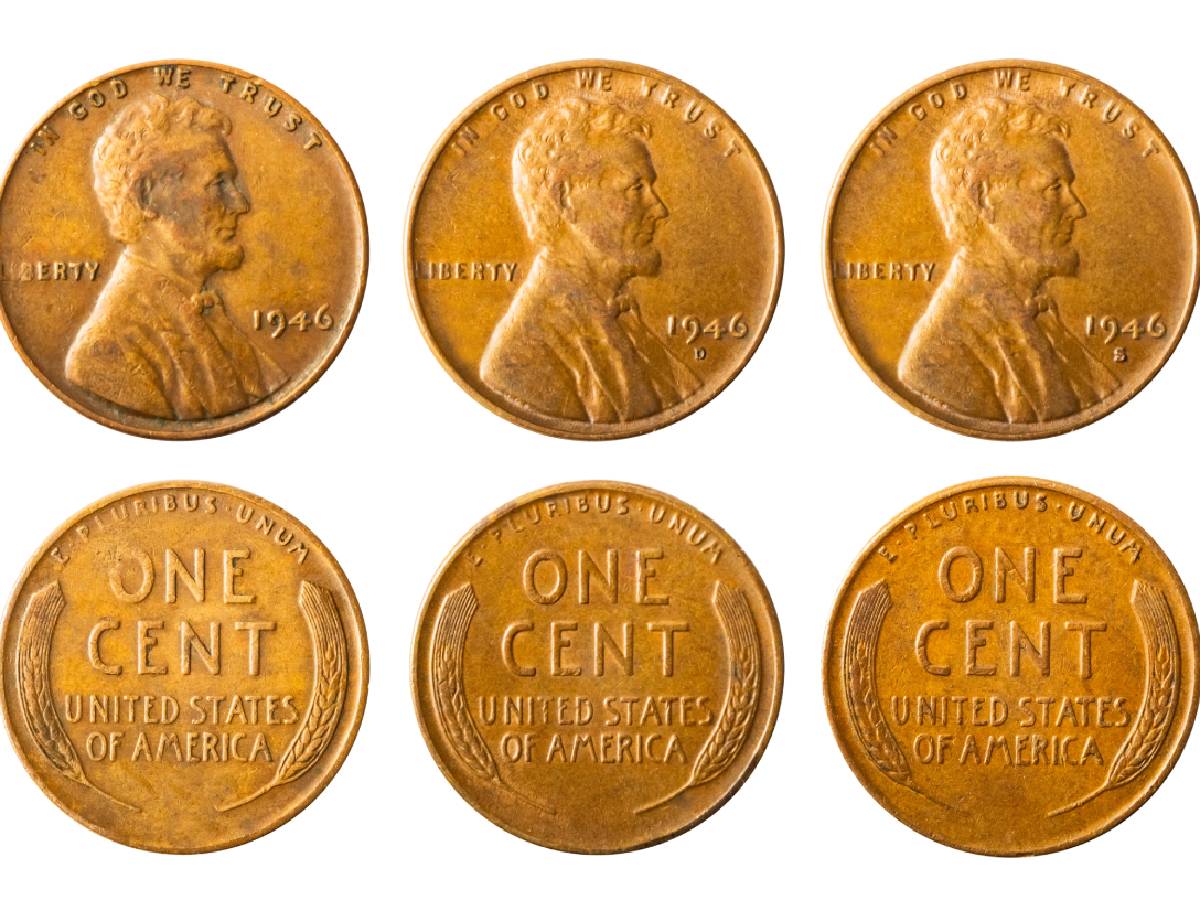
So… Just how much is your 1946 Wheat penny worth? Are old Wheat pennies from 1946 worth hanging on to?
In this article, you’ll learn all the important details about these old Lincoln cents, including:
- How much a 1946 Wheat penny is worth today.
- Whether or not a 1946 penny is a rare coin.
- Why the U.S. Mint made 1946 Lincoln cents from a very special bronze alloy.
What Is A 1946 Penny Worth?
Those 1946 pennies are now obsolete. Therefore, they’re collectible and worth more than face value.
Still, they are relatively common coins in that millions were made. So, if you find a 1946 penny in pocket change or a bank roll, it’s likely to have much wear. Therefore, it will be worth less than an uncirculated 1946 penny.
Here is a rundown on the current 1946 penny value, as well as mintage figures — so you’ll know exactly how many were made:
- 1946 penny (no mintmark, made in Philadelphia) — 991,655,000; worth 3 to 5+ cents
- 1946-D penny (produced in Denver) — 315,690,000; worth 3 to 5+ cents
- 1946-S penny (struck in San Francisco) — 198,100,000; worth 5 to 10+ cents
- 1946-S “S Over D” mintmark variety — unknown mintage; $10+
*The 1946 penny values listed above are for coins with average circulation wear and free of damage — such as holes, bends, or any signs of cleaning. Uncirculated 1946 pennies are worth more than the values listed here.
When it comes down to adding the most valuable 1946 pennies to your collection, you’ve got to focus on quality. No matter the grade, mintmark, or variety of your 1946 penny, it needs to have original color for it to be worth the most. What’s original color on 1946 pennies? Circulated specimens should have chocolate brown surfaces; uncirculated examples will range from chocolate or glossy brown to orange-red.
IMPORTANT: What Is The Grade Of Your 1946 Penny?
To determine the true value of your 1946 Wheat penny, you first need to know what condition (or grade) your coin is in.
How to Grade Coins Yourself
Grab a coin magnifier and a copy of the U.S. Coin Grading Standards book. Then, watch this video to see how to grade coins yourself at home:
These are the best coin grading apps that will make grading coins yourself much easier.
Do You Have A 1946-S Penny?
Check it closely to see if you have a valuable error coin!
Many Lincoln Wheat pennies have evidence of certain design or die adjustments, and the 1946-S “S Over D” overpunched mintmark variety is one such piece. It’s actually one of the more popular overpunched mintmark varieties in the Lincoln cent series.
How was this error coin made?
Apparently, a 1946 penny working die with a “D” mintmark from Denver was overpunched with the “S” mintmark for San Francisco, and then this die was put into operation.
It’s easy to tell if you have a 1946-S “S Over D” penny by using a basic 5x magnifying glass.
You should be able to see traces of the “D” mintmark around the inside of the “S.” In fact, the bottom serif of the “S” (the bulbous part of the S, or its wide tail) on the 1946 error penny will appear to be connected by a thin line to the middle part of the “S.”
If you find a 1946-S “S Over D” penny, you’ll be glad to know that it’s worth significantly more than face value.
This scarce 1946 overpunched mintmark error penny is worth about $10 in the lower circulated grades and $100 or more in uncirculated condition!
1946 Pennies Contain A Special World War II Alloy
The bronze alloy of your 1946 penny isn’t just ordinary copper!
All 1946 Wheat pennies contain a special blend of copper from recovered ammunition shell cases that were salvaged from United States military training grounds.
Why were shell cases used to make pennies?
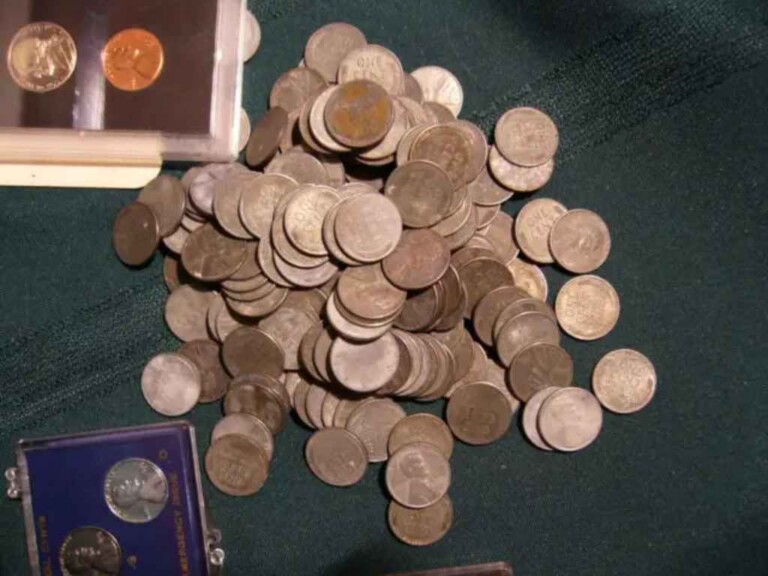
It all goes back to the one-time unpopularity of the 1943 steel pennies, which were struck to ration copper for the World War II effort.
Many people complained that the 1943 steel cents were too easily confused with the dime. Others didn’t like how quickly the steel pennies rusted (as most of them eventually did). Some folks simply missed handling copper pennies.
Of course, many coin collectors today think 1943 steel pennies are pretty neat, but back in the day steel cents were more apt to be seen as a nuisance. So, the U.S. Mint responded by returning to a copper-based composition in 1944. (Though some 1944 pennies were accidentally made from steel. These 1944 steel pennies are now very rare and valuable!)
1946 pennies mark the last year that the U.S. Mint made so-called shell case pennies.
By the way, circulated shell case pennies look about the same as ordinary copper Wheat pennies. However, uncirculated shell case cents look a little darker in color than their regular bronze counterparts. The difference in color is caused by the composition of the shell case pennies, which — unlike most Wheat pennies — don’t contain any tin.
The 1946 Wheat penny contains the following alloy:
- 95% copper
- 5% zinc
Most bronze Wheat pennies are made from this composition:
- 95% copper
- 5% tin and zinc
Yep, that’s a very tiny difference, or so it seems… But it goes to show how even just one slight adjustment in a coin’s metallic composition can really make a difference in the way a coin looks!
Isn’t chemistry cool?
READ NEXT: A List Of The Most Valuable U.S. Pennies
Do you have a 1946 Wheat penny? Think there may be something unique about it? Post a picture of your coin in the comments below and I’ll try to help!
Leave a Comment