


Silver dollar coins have a long history. In fact, America’s first silver dollar coins were made way back in 1794.
We usually spend most our time talking about Morgan dollars and Peace dollars, which are by far the most popular silver dollars ever made.
But you probably haven’t thought much about the forerunners to the Morgan silver dollar and Peace silver dollar.
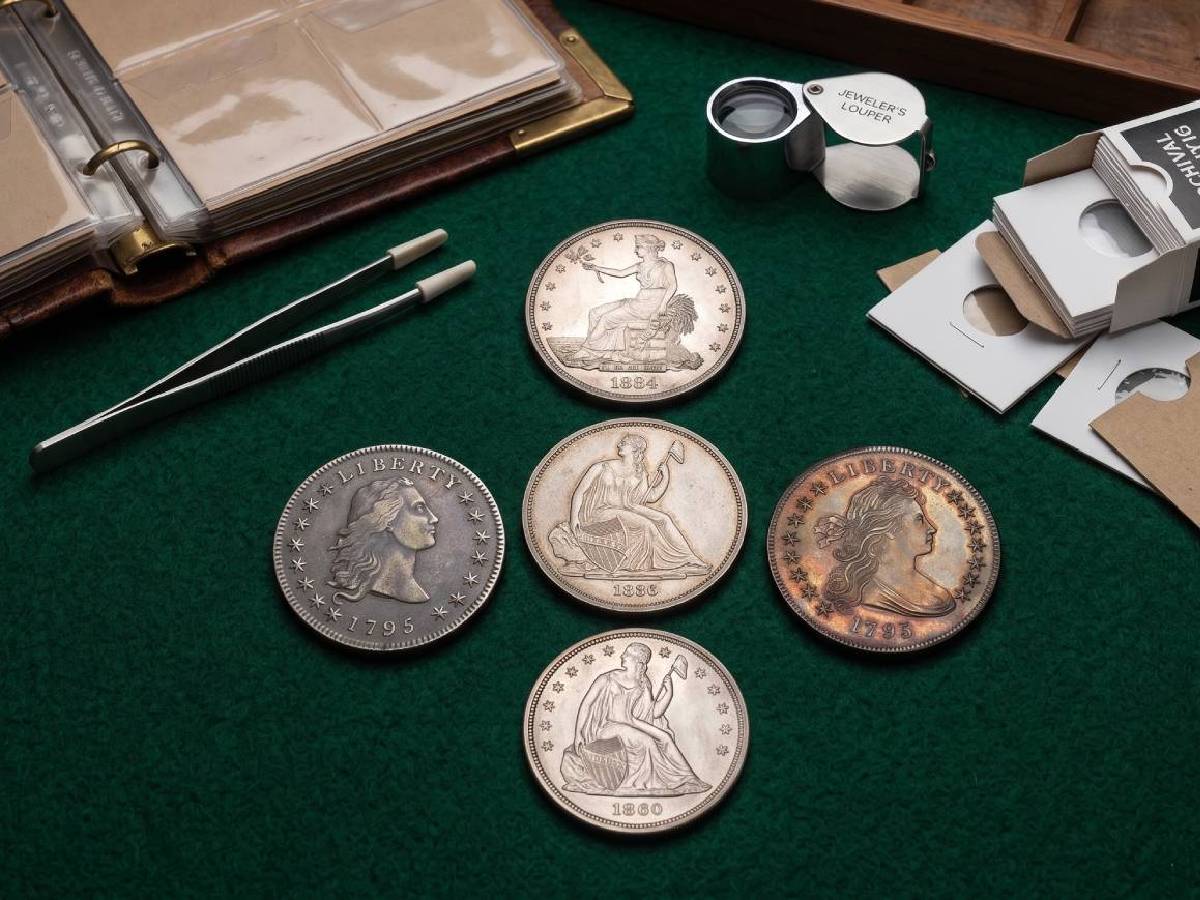
Let’s take a look at the coins that came before the Morgan and Peace dollars by exploring 18th and 19th century silver dollars.
The First Silver Dollar Coins
The United States Mint was still quite young when, in 1794, the first silver dollars were made for U.S. circulation.
Though silver dollars often saw more use in trade between banks and nations than in day-to-day transactions, the silver dollar has always been important.
After all, the dollar is the base unit of currency in the United States!
Here’s a closer look at the silver dollars that came before the Morgan and Peace dollars to see how the most symbolically important denomination in U.S. currency changed over the decades of the 1790s to the 1870s.
Flowing Hair Dollars
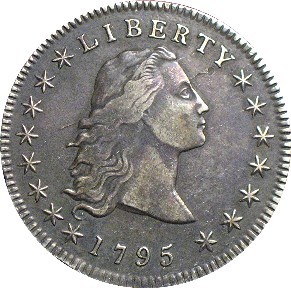
Flowing Hair silver dollars started it all. They were the very first dollar coins our nation ever had.
Though they were struck from 1794 to only 1795, they have gone down in history as not only the first silver dollars but also among the rarest as a series.
Buying an example from 1795 will cost you around $2,000 and up for a decent specimen with lots of wear.
If you’re after the very first of the nation’s silver dollars from 1794, you can expect to pay nothing less than $50,000!
Draped Bust Dollars
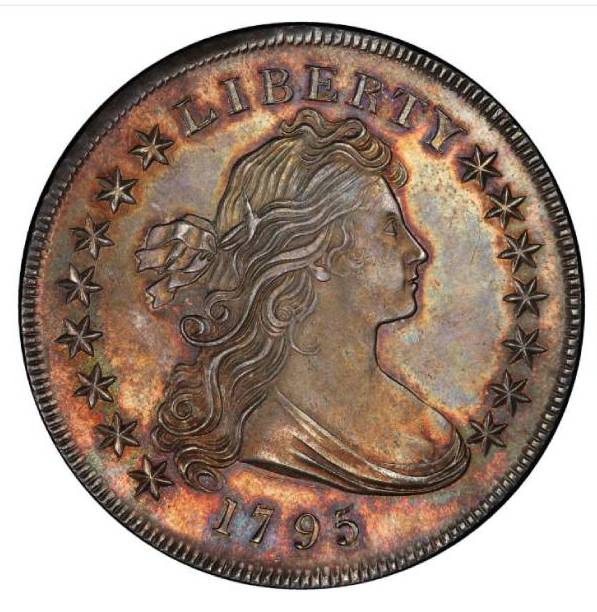
Flowing Hair dollars and Draped Bust silver dollars both belong to the same category of coins: early American silver dollars (those dated 1794 to 1804).
Though Draped Bust silver dollars are more common than their earlier Flowing Hair dollar counterparts, Draped Bust dollars are still very scarce coins that are very important to numismatists.
Circulation-issue Draped Bust silver dollars are dated from 1795 to 1803.
The 1804 Draped Bust dollar coin was made decades later for inclusion in rare special proof sets and restrikes for coin collectors.
In general, a nice Draped Bust silver dollar without much damage and deep but honest wear is worth around $1,000 to $1,500. (Values are higher for coins with minimal wear.) Heavily worn or damaged Draped Bust dollars can be had for $500 to $800.
Gobrecht Dollars
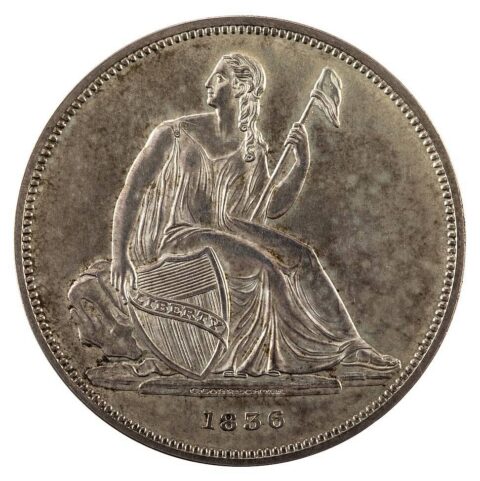
Named for designer Christian Gobrecht, this dollar coin was the first silver dollar minted in over 30 years.
Generally regarded as a precursor to the Seated Liberty silver dollar design that would follow, only a couple thousand Gobrecht silver dollars were made during their 1836 to 1839 run. They were struck in small, limited quantities to test public reception before full-scale production.
Gobrecht silver dollars are rare as a series and are easily worth over $15,000 with typical wear.
Seated Liberty Dollars
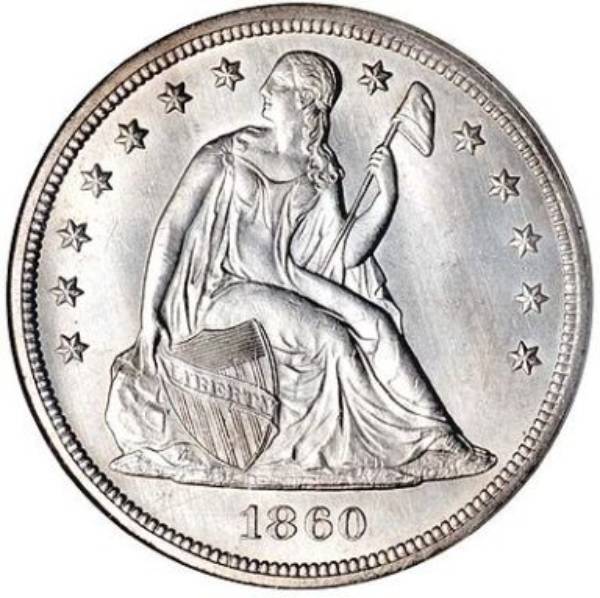
In 1840, the U.S. Mint adapted the then-popular Liberty Seated design for the silver dollar.
Seated Liberty silver dollars were struck by the millions during several years of its 1840 to 1873 run.
However, the passage of time has not been good to Seated Liberty silver dollars. Many dates in the series are not as common as their mintages would indicate — due to losses both in mass meltings and general circulation.
$250 will buy a common-date, well-worn Seated Liberty silver dollar. You’ll need to pony up at least $2,000 for an example in uncirculated grades.
Trade Dollars
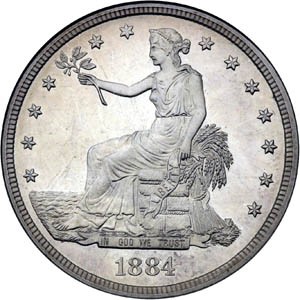
Foreign exchange with Asian nations (mainly China) led to the creation of the Trade dollar in 1873.
Trade dollars have seen varying “legal tender” status in the United States and have largely been regarded by coin collectors as something other than normal silver dollars.
However, because they represent a coin bearing one dollar of value, Trade dollars have found their way into many silver dollar coin collections. Some coin collectors even specialize in Trade dollars as a separate pursuit.
Some Trade dollars bear “chop marks” — counterstamped identification marks from some of the Chinese merchants that handled Trade dollars.
In general, a nice Trade dollar will set you back about $200 for an example (without chop marks) with moderate wear.
Several dates from the latter portion of the coin’s 1873 to 1885 run are very rare and worth thousands of dollars.
READ NEXT: A List Of The Most Valuable Silver Dollars
Leave a Comment