






The cash in your wallet got a major futuristic facelift on October 8, 2013.
The Federal Reserve officially dropped a brand new, ultra-high-tech $100 bill purposely engineered to make life a nightmare for counterfeiters.
The government even launched a dedicated website just to get everyone acquainted with the design — because the changes were that huge.
Here’s what makes the new $100 bills a total 21st-century marvel…
What’s Tucked Inside the New Design?
While founding father Benjamin Franklin is still holding down his legendary spot on the front, almost everything else around him has been completely re-engineered with high-tech defenses:
- The 3-D Blue Security Ribbon: This is the ultimate mic-drop feature. It’s a vertical blue stripe woven directly into the paper — not just printed on top. It features holographic micro-designs of Liberty Bells that magically morph into the number “100” when you tilt the bill at different angles.
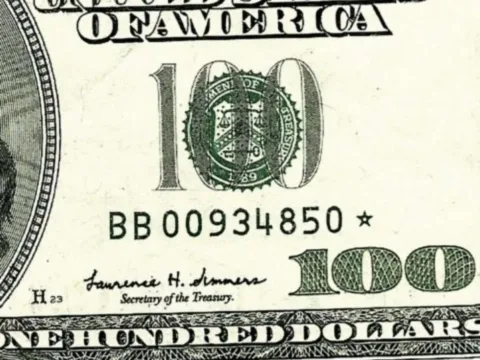
- The Color-Shifting Inkwell: Right on the front, there’s a copper-colored inkwell. If you tilt the note, a hidden green Liberty Bell appears inside it, seamlessly shifting colors right before your eyes.
- The UV Pink Glow: Look at it under an ultraviolet light, and a hidden security thread stamped to the left of Ben’s portrait will glow bright pink.
Old-School History Meets Modern Art
The Mint didn’t just update the security, they gave the bill some serious aesthetic upgrades, too:
- The Obverse – Ben is freed from his old oval frame, showing off a clean head-and-shoulders look on the front.
- Historical Callouts – The classic quill pen and background text from the Declaration of Independence are prominently featured.
- The Reverse – An updated, crisp depiction of Independence Hall on the back.
Are Your Old Hundreds Still Good?
The Verdict on Legal Tender: Absolutely. If you’ve got a stash of older $100 bills, they remain 100% legal tender. The government never devalues older currency, so you’ll keep seeing the old oval-portrait hundreds floating through circulation alongside the new ones for years to come.
The Bottom Line
While paper currency has been widely circulating in the United States since the 1800s, currency styles have changed through the years — both with social customs and with the advances in technology.
Ultimately, the U.S. $100 bill is the single most popular denomination on the international stage, meaning it’s a prime target for high-level fakes.
This massive tech overhaul ensures our money stays several steps ahead of counterfeiters while looking incredibly sleek in the process.
What do you think of the new blue ribbon look? Or do you prefer the classic, old-school greenbacks?
Drop a comment below and let me know your thoughts on the new $100 bills!


Leave a Comment