


This post may contain affiliate links. If you buy thru these links, we may earn a commission at no additional cost to you.
Most people who look at their coins like to see details — all the details.
When should you buy a high-priced coin microscope?
And when is it best to simply stick with the trusty 5X magnifying glass you almost certainly already have?
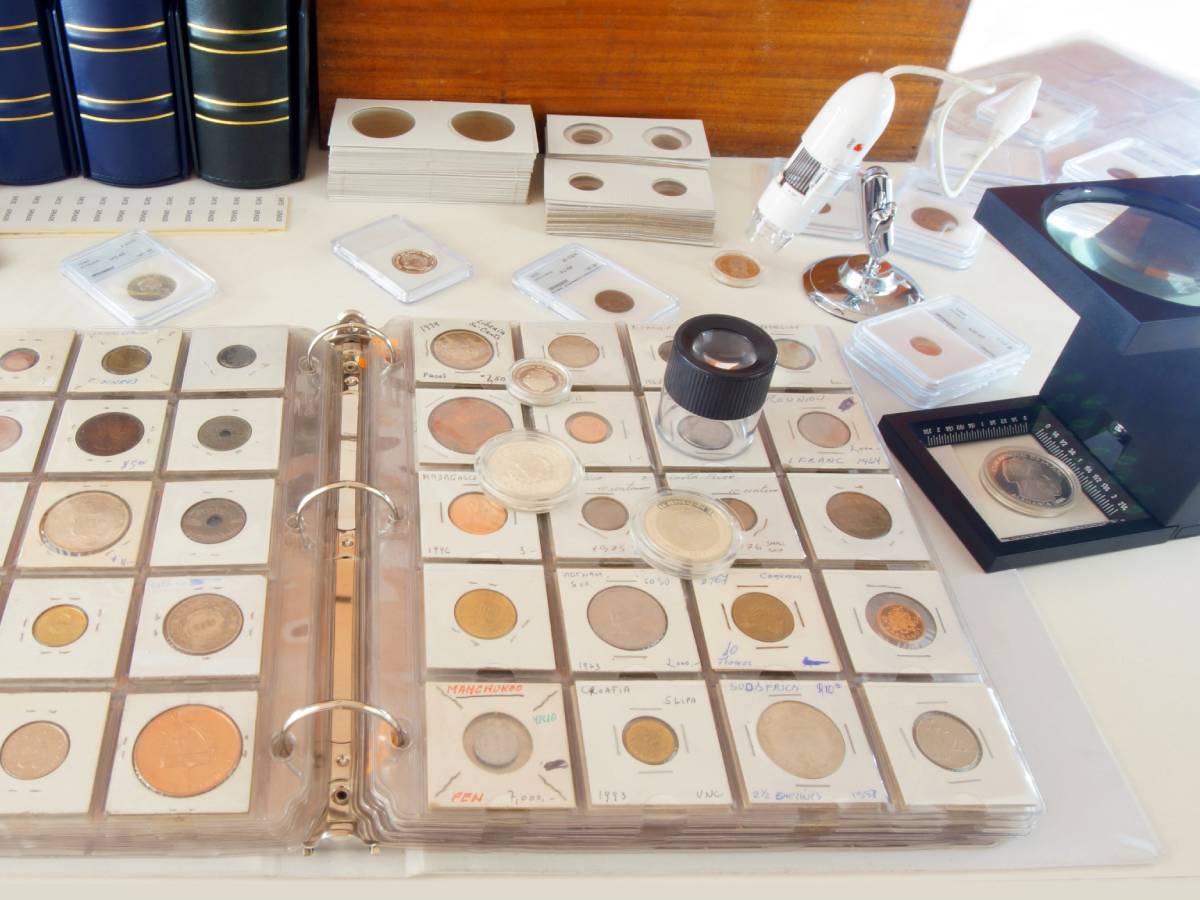
The question can be answered this way:
- What are you looking for on your coins?
- Do you need to see every detail or can you live with what you can see through a good magnifying glass?
Benefits Of A Coin Microscope
If you’re grading coins on a regular basis, then you need to be able to investigate tiny minuscule errors and variances on coins.
When it comes to picking out the very best coins for your collection (or investment portfolio), you want to be able to focus down to the tiniest detail.
Even if you simply want to highly scrutinize the coins in your collection, a coin microscope can be a great purchase.
Coin microscopes help you to spot things that you may not see so easily — if at all — through a regular magnifying glass.
Things You Can See With A Coin Microscope
Here are some of the things a coin microscope can help you clearly see:
- Flow lines – Tiny lines that occur on the coin after striking. (Their absence on an uncirculated coin or a coin with only slight wear may mean the coin has been abrasively cleaned.)
- Die-polishing marks – Raised lines or swirls on a coin produced by cleaning of the die — which is the stamp that produces an image on a coin.
- Slight errors – A mistake produced on a coin while still at the Mint. (Many errors are very valuable!)
- Traces of mintmarks – A mintmark — or lack thereof — indicates where a coin was struck. (On some coins, like the 1922 No Mintmark “Plain” Penny, the complete absence of a mintmark makes for very valuable coins.)
- Evidence of counterfeiting – Often detected through the discovery of added or removed mintmarks, date digits, or other lettering and design details. (Also, counterfeiting can be detected on coins which appear to be manufactured outside the Mint.)
All of the above (and other elements) are the crucial issues that professionals consider when examining coins. What’s more, all of these variables are best seen through a high-powered, well-made coin microscope.
A Good Coin Microscope Is Worth The Money
A good coin microscope can cost you well into the hundreds of dollars and is a fantastic buy for studious coin collectors and professional scrutinizers.
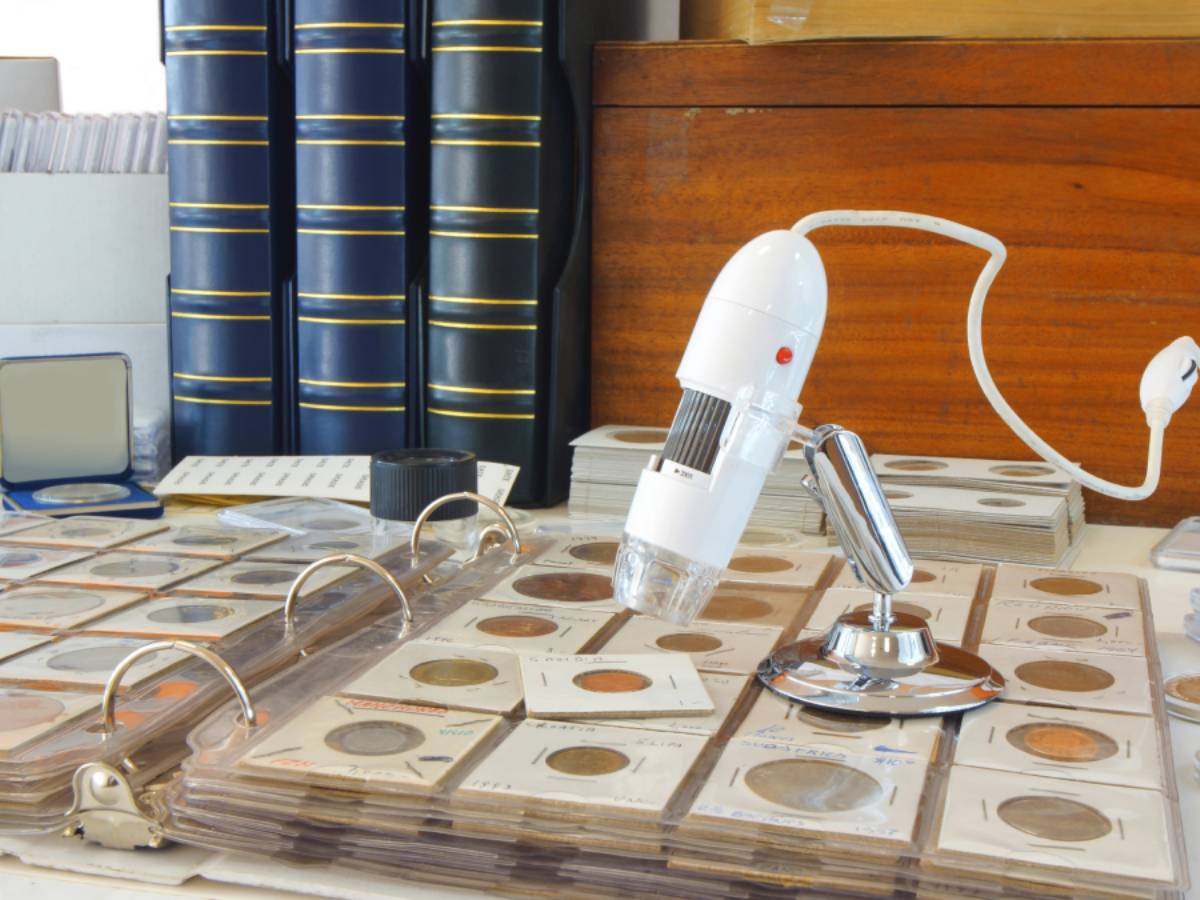
And if you buy one that plugs into a computer or smartphone, it can also take close-up photos of your coins!
- If your job entails studying coins close-up…
- Or you’re a photographer who snaps a lot of pictures of coins…
- Or you just want to be able to see everything that there is to see on the coins in your collection…
…those are the times when a coin microscope makes sense. Yes, it really is worth the money to invest in a coin microscope.
So, Coin Microscope Or Magnifying Glass?
In my opinion, the average collector does NOT need to spend the money on a coin microscope.
Here’s why: a well-made 5X to 20X magnifying glass or coin loupe can handle most of the duties that typical coin collectors need to take care of day-to-day.
I leave the counterfeiting detection to reputable third-party graders. I don’t even bother to buy super-scarce, rare, or expensive coins not housed in a “slab.”
As you may know, third-party graders examine the coins they put into their tamper-evident containers called slabs. Therefore, anyone buying a coin in a slab need not worry much about buying a counterfeit coin — unless somehow the slab has been breached by an unscrupulous individual. However, such a situation would be rather obvious, due to damage that would usually be seen on the slab.
For the inexpensive, unslabbed coins I purchase, I’m not that worried about counterfeiting. I’m more concerned about cleanings, nicks, bruises, discoloration, dings, and other damage that is usually visible under low magnification — and very often quite evident to the trained, naked eye.
I do enjoy studying the details on my coins, but even this can be satisfactorily handled with a 5X to 10X coin magnifying glass or coin loupe!
Coin magnifying glasses and coin loupes can be purchased from most any coin dealer (both online and at a physical store) for less than $20.
Coin microscopes generally cost $40 to $100+ and are a smart purchase for some people.
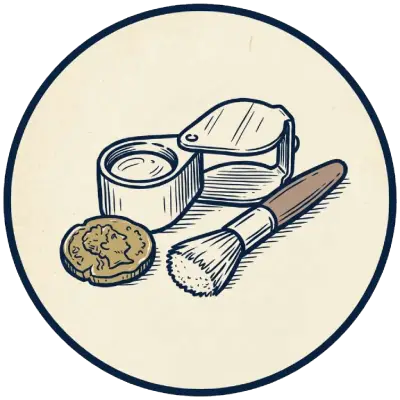
This is the coin loupe that I use to closely inspect my coins these days.
READ NEXT: The Best Coin Scale For Weighing Coins
Leave a Comment